
Pool Startup Chemistry for a New Fort Myers Gunite Pool
Explore Our Services
Contact Us Today!
(239) 322-9295
A new gunite pool needs a careful chemical routine before it becomes a carefree backyard feature. Pool startup chemistry affects how fresh plaster cures, how much dust appears, and whether the surface develops scaling, etching, or discoloration.
Fort Myers conditions add pressure to the process. Strong sun, warm water, heavy rain, evaporation, and differences in fill water can change readings quickly. Your plaster manufacturer and pool builder's written startup instructions should control the schedule, while the checklist below helps you understand what to monitor.
If you're still planning a pool, new pool construction in Fort Myers should include a clear discussion of the finish, fill water, startup service, equipment, and owner instructions.
Why Pool Startup Chemistry Matters for Fresh Gunite
Fresh plaster continues curing after the pool is filled. During this period, the surface can release fine calcium material into the water. Improperly balanced water may increase the risk of deposits or surface damage, especially when circulation and brushing are inconsistent.
The goal is controlled water balance, not aggressive chemical adjustment. A new pool should be managed according to the finish manufacturer's protocol because plaster, quartz, pebble, and other interior systems can have different requirements.
A chemical target that works for an established pool may be wrong for fresh plaster.
Your builder should give you written instructions covering the first 30 days. Ask who performs the initial startup, which products are approved, how often the water will be tested, and when the pool can be used normally.
Day 0: Test the Fill Water Before Adding Chemicals
The first day begins with testing, not guessing. Fill water can vary by source, plumbing conditions, and location, so don't rely on assumptions about Fort Myers water chemistry.
Check the main water-balance factors
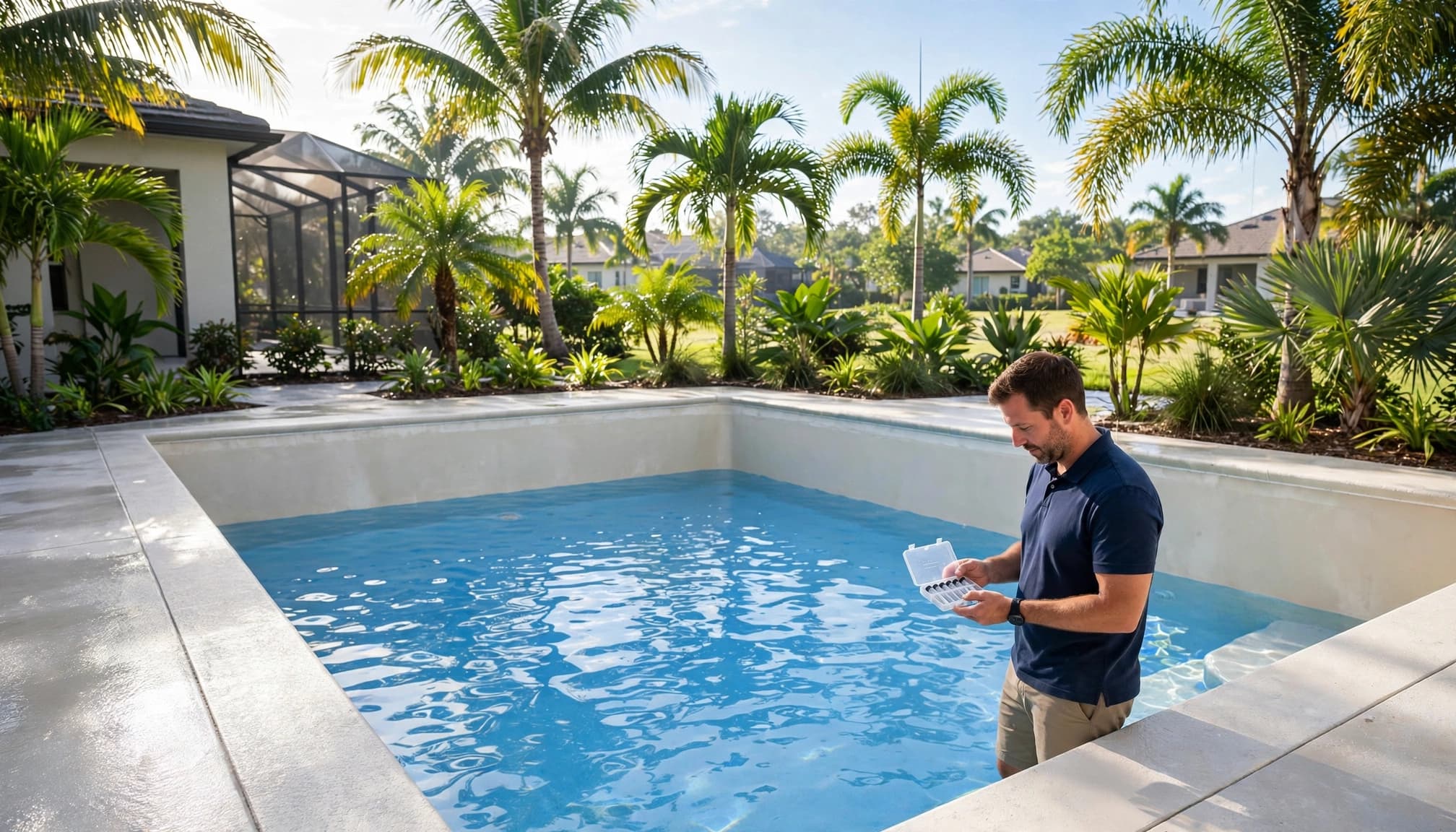
Test the water as soon as the pool reaches operating level. At minimum, check:
- pH
- Total alkalinity
- Calcium hardness
- Free chlorine
- Metals, especially iron and copper, when the source water or plumbing creates a concern
The National Plasterers Council, often referenced as NPC, emphasizes testing the fill water before making adjustments. Record the results, the test time, and every product added afterward.
Use a reliable drop-based test kit or have a qualified pool professional test the water. Test strips can provide a quick indication, but they may not offer enough accuracy for fresh plaster adjustments.
Let the actual readings guide the plan
Fill-water differences can change the amount of acid, alkalinity increaser, calcium increaser, or metal treatment required. Never add a fixed quantity just because it worked in another pool.
Some startup guidance recommends raising low calcium hardness to at least 150 parts per million. Other protocols use a broader target of 200 to 400 ppm, with staged targets during the first several weeks. These differences are why the finish manufacturer's instructions matter more than a general online chart.
Avoid correcting several readings at the same time unless your professional directs you to do so. Make one adjustment, allow circulation, and retest before adding another product.
The First 72 Hours: Balance Carefully and Delay Chlorine
The first three days require close attention. Fresh plaster, active circulation, and early water adjustments can change the readings several times in one day.
Follow the approved pH and alkalinity range
Many startup procedures place early pH near 7.2 to 7.6 . Total alkalinity is often targeted around 80 to 100 ppm , although some instructions allow a broader range up to 120 ppm.
Do not chase a perfect number every hour. Instead, keep the water within the manufacturer's range and avoid large swings. Add acid or other chemicals slowly, with the pump running and the product handled exactly as directed.
NPC-style startup guidance commonly calls for no chlorine during the first 48 hours. Another newer trade guide recommends a low initial free-chlorine level of roughly 1 to 2 ppm. These instructions differ, so use the written protocol supplied for your particular finish.
If chlorine is approved after the initial waiting period, liquid or pre-diluted chlorine is commonly preferred. Avoid adding calcium hypochlorite or granular chlorine to fresh plaster unless the manufacturer specifically approves it.
Keep circulation running and brush as directed
One common startup checklist recommends continuous filtration for the first 72 hours. Confirm the pump schedule with your builder, especially if the system includes variable-speed equipment, automation, or a heater bypass.
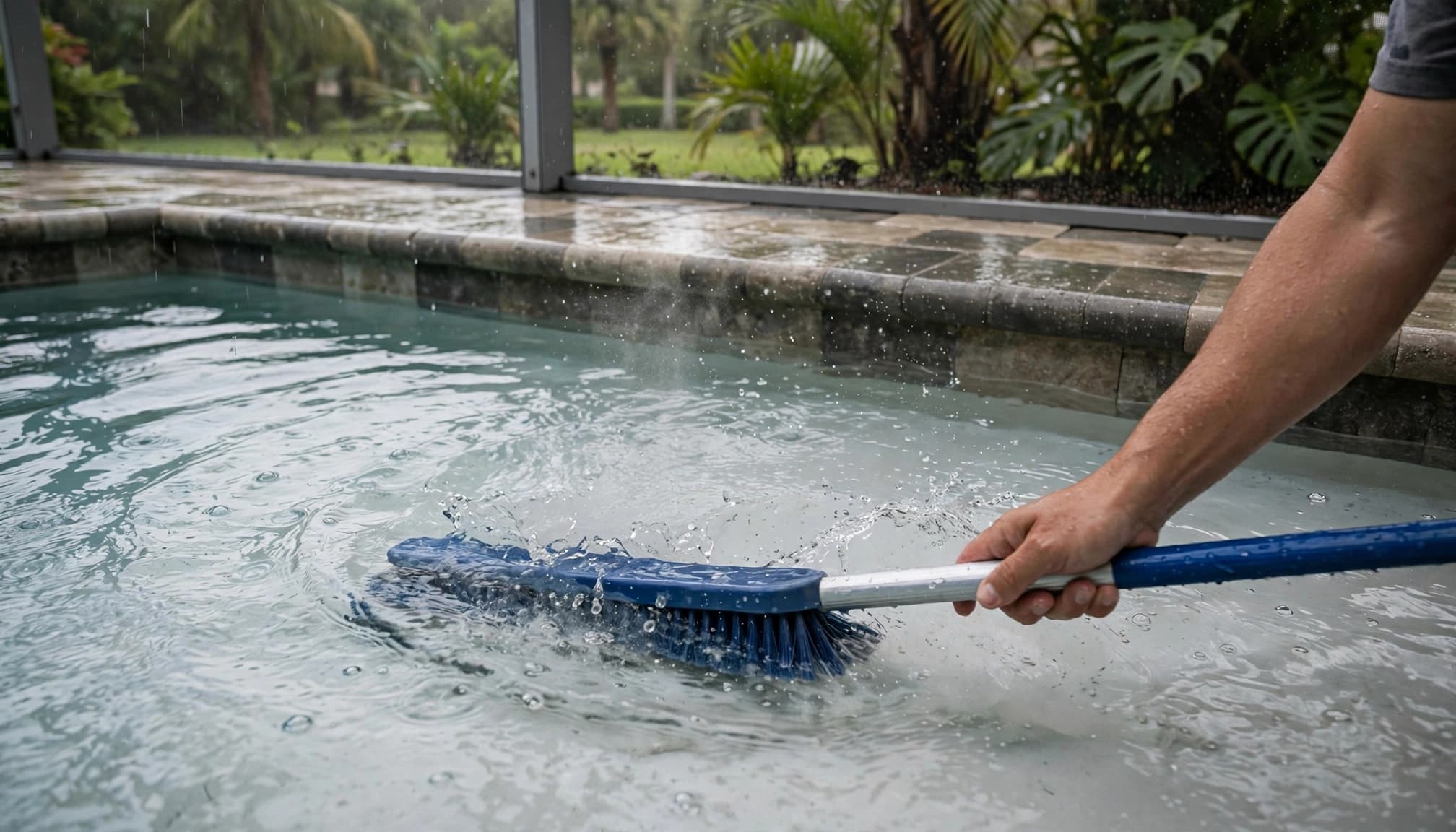
Brush the pool with the type of brush approved for the finish. Brushing helps move plaster dust toward the drains and keeps material from settling in one area. Don't use a harsh brush or cleaning method that the finish manufacturer prohibits.
Keep the heater off while visible plaster dust remains. A startup guide from the National Plasterers Council also advises delaying heater operation until the dust has cleared.
Days 4 to 7: Start the Routine
By the second half of the first week, your routine should include testing, brushing, equipment checks, and careful observation. Test at least daily, or more often when the readings move quickly.
| Startup period | Main homeowner tasks |
|---|---|
| First day | Test fill water, document readings, follow the finish protocol |
| Days 1 to 3 | Maintain circulation, brush as directed, manage pH and alkalinity |
| Days 4 to 7 | Continue daily testing, begin approved chlorine routine, inspect water clarity |
| Days 8 to 30 | Keep testing and brushing, delay salt equipment, follow staged targets |
Brush the walls, floor, steps, benches, and other surfaces according to the builder's instructions. Some checklists call for frequent brushing early, followed by daily brushing. Other guidance recommends brushing twice daily during days 4 through 28.
Check the filter pressure and clean the filter only according to the equipment instructions. A rising pressure reading may indicate that the filter is collecting startup material. Don't backwash, rinse, or open equipment unless you understand the system and have confirmed the correct procedure.
Keep swimmers out until the builder confirms that the water and finish are ready. Children and pets should stay away from the pool area during chemical additions and while equipment covers are open.
Days 8 to 30: Protect the Plaster During Curing
The first month is still part of startup. Fresh plaster needs consistent water management while it continues to cure, so daily testing remains useful even when the water looks clear.
Handle stabilizer and salt-system timing carefully
Cyanuric acid, or CYA, protects chlorine from sunlight. However, startup sources disagree about when to add it. One protocol advises waiting until at least day 14, while another allows adding it after day 4 and reaching approximately 30 to 50 ppm by the end of startup.
Follow the finish manufacturer's written timing rather than choosing the earliest date. Adding stabilizer too soon can make it harder to correct chlorine levels if the initial startup plan changes.
Don't add salt or activate a salt chlorine generator during the first 30 days unless the plaster manufacturer gives written approval. Fresh plaster and salt systems require a coordinated startup plan.
Watch calcium hardness and the water surface
Calcium hardness targets vary because fill water and finish systems vary. Some instructions call for a minimum near 150 ppm, while other schedules move toward 250 to 300 ppm around day 14 and 300 to 350 ppm later.
Adjust calcium only after pH and alkalinity are under control. Record the product, amount, date, and test result. Too little calcium can contribute to aggressive water, while excessive calcium can increase the risk of deposits.
Look for unusual plaster dust, cloudy water that doesn't improve, rough areas, scale-like deposits, or uneven discoloration. A little change during curing doesn't automatically identify a defect, but persistent or worsening conditions deserve professional review.
Fort Myers Weather Can Change Your Readings
Southwest Florida weather makes frequent observation practical, not excessive. Intense sunlight can consume chlorine quickly. Warm water can increase chemical activity and evaporation. Heavy rainfall can dilute the pool, add organic material, and alter pH and alkalinity.
Test after storms and heavy evaporation
Test after a major rain event, especially if the pool overflows or receives substantial runoff. Avoid allowing lawn fertilizer, mulch, soil, or deck water to enter the pool.
Evaporation removes water but leaves dissolved minerals behind. If the water level drops and you add fresh water repeatedly, calcium hardness and other readings may shift. Keep the water at the level recommended for the skimmer and record unusual water loss.
A screened lanai can reduce debris but doesn't stop sunlight or rain from affecting the water. Fort Myers homeowners should also check equipment for storm-related power interruptions, clogged baskets, and changed pump schedules.
Protect people while handling chemicals
Store pool chemicals in their original, labeled containers in a cool, dry, ventilated location. Keep children and pets away from the storage area and never leave an open container beside the pool.
Never mix chemicals together. Don't pour water into a chemical container, and don't combine chlorine with acid. Follow the product label, wear the recommended protection, and add products separately with the pump operating when the instructions require circulation.
When to Call the Pool Builder or a Pool Professional
Contact the builder or a qualified pool professional when readings remain abnormal after careful adjustment, or when you can't tell which product the finish protocol allows.
Ask for help if pH or alkalinity keeps moving outside the specified range, calcium hardness is difficult to correct, or chlorine demand seems unusually high. Professional testing may also identify metals that a basic homeowner kit misses.
Call promptly about persistent discoloration, rough or scaling areas, visible etching, unusual plaster dust, hollow-sounding finishes, or cracks. Don't attempt to remove suspected scale with aggressive acid treatment while the finish is still new.
Keep your test records, chemical receipts, photos, builder instructions, and service notes together. That documentation helps the builder evaluate a concern and prevents different technicians from making conflicting adjustments.
Key Takeaways for Fort Myers Homeowners
- Follow the plaster or interior-finish manufacturer's startup protocol before generic pool advice.
- Test fill water for pH, alkalinity, calcium hardness, chlorine, and possible metals.
- Use a reliable test kit and record every reading and chemical addition.
- Expect guidance to differ on chlorine, calcium hardness, and CYA timing.
- Brush and circulate the pool according to the written startup schedule.
- Delay the heater until plaster dust clears.
- Don't add salt or activate a salt system during the first 30 days unless approved.
- Retest after heavy rain, strong evaporation, equipment changes, or unusual water loss.
- Never mix chemicals, and keep children and pets away from chemicals.
- Call the builder or a qualified professional when readings or finish appearance remain abnormal.
FAQ About New Pool Startup Chemistry
How long does startup chemistry last?
Plan on active startup care for about 28 to 30 days, although the exact schedule depends on the finish, weather, water chemistry, and manufacturer instructions. Daily testing is common during the first week and may continue through the curing period.
When can chlorine go into a new gunite pool?
There isn't one universal answer. NPC-style guidance commonly delays chlorine for the first 48 hours, while another trade guide recommends a low 1 to 2 ppm level earlier. Use the written instructions for your finish. When chlorine is approved, liquid or pre-diluted products may be preferred over granular products.
Should I use acid to lower the pH?
Only when testing shows that pH is above the approved range and the startup protocol allows it. Add the product carefully, never mix it with chlorine, and allow circulation before retesting. A pool professional can calculate the adjustment when the reading is far outside range.
Can I swim during the first week?
Wait for approval from your builder or finish professional. The water must meet the required chemical and circulation conditions, and the surface may still release plaster material. Children and pets should stay away from the pool during chemical handling regardless of whether swimming is allowed.
What if the new plaster looks discolored?
Contact the builder and avoid aggressive treatment until the cause is identified. Discoloration may relate to water balance, metals, curing, deposits, or another finish condition. Persistent discoloration, scaling, or etching needs a professional assessment.
Conclusion
A new Fort Myers gunite pool needs measured care during its first month. Test the actual fill water, follow the finish manufacturer's schedule, brush and circulate consistently, and adjust chemicals only with reliable readings.
Florida sun, rain, warm water, and evaporation can change the plan quickly. Good pool startup chemistry is less about adding more products and more about following the right instructions, documenting results, and getting professional help when the water or plaster doesn't behave as expected.