Impact-Resistant Shingles for Southwest Florida Homes
Explore Our Services
Contact Us Today!
(239) 322-9295
A roof in Southwest Florida has to handle more than ordinary rain. Intense sun, hurricane winds, airborne debris, humidity, salt air, algae, and wind-driven water can all shorten its useful life. For many homeowners, impact-resistant shingles offer an added layer of protection during severe weather, but the shingle rating is only one part of a dependable roofing system.
The strongest choice depends on the entire assembly, including the roof deck, underlayment, flashing, ventilation, fastening pattern, permits, and installation quality. Here's how Southwest Florida homeowners can compare impact ratings, wind performance, code requirements, and long-term maintenance before replacing a roof.
Key Takeaways for Southwest Florida Homeowners
- UL 2218 Class 4 measures resistance to impact, not a roof's complete hurricane performance.
- Wind ratings depend on the approved shingle system, fastening schedule, roof design, and installation method.
- Lee, Collier, and Charlotte counties follow Florida requirements, but local permitting and inspection procedures differ.
- A strong roof assembly includes sound decking, reliable underlayment, correctly installed flashing, proper ventilation, and approved fasteners.
- Insurance treatment varies by carrier. Keep product approvals, permits, inspection records, and installation photographs.
- Professional installation matters as much as the material selected.
Why Impact-Resistant Shingles Matter in Southwest Florida
Southwest Florida homes face repeated weather stress even when a hurricane doesn't make a direct landfall. Tropical storms can produce long periods of heavy rain, gusty winds, and flying branches. Strong afternoon storms can also expose weak edges, loose shingles, and aging sealant.
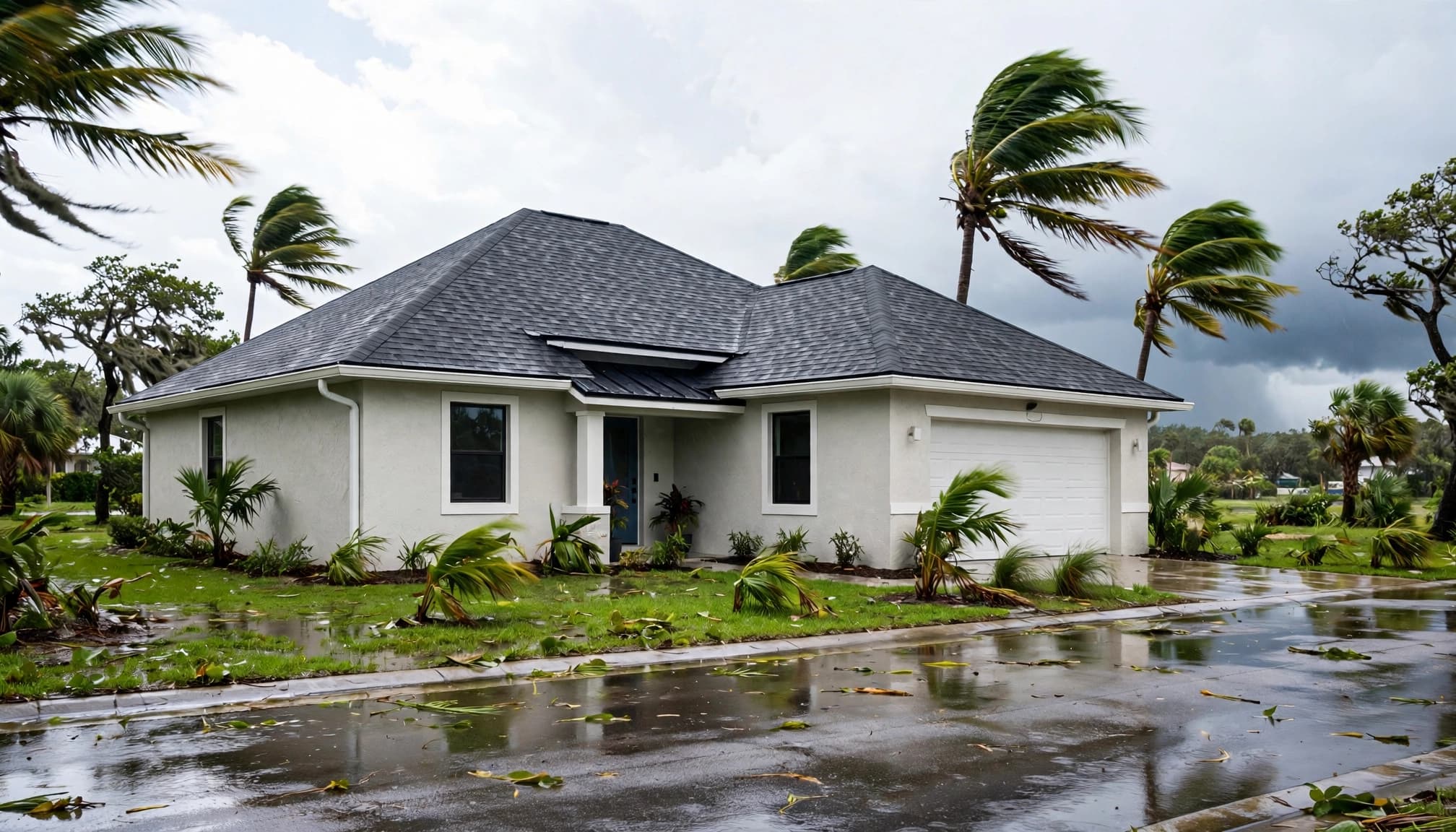
Impact resistance helps with debris damage
Impact-resistant shingles are designed to better withstand certain impacts than standard shingles. That can matter when small branches, palm fronds, or other debris strike the roof during a storm.
However, impact resistance doesn't make a roof stormproof. Large debris can damage any roofing material, and the roof may still suffer from wind uplift, water intrusion, or damage around vents and penetrations.
The most useful question is not whether a shingle is marketed as impact-resistant. Ask which tested assembly was approved, what impact classification it carries, and whether the installation instructions match your home.
Coastal exposure affects the whole roof
Homes near Fort Myers Beach, Sanibel, Bonita Springs, Cape Coral, and other exposed areas may experience more salt air and wind than homes farther inland. Salt can accelerate corrosion on exposed metal components when materials are incompatible or poorly protected.
Heat and ultraviolet exposure also age asphalt surfaces and sealants. Humidity can support algae growth, while wind-driven rain can reach small gaps around valleys, chimneys, skylights, vents, and roof-to-wall transitions. A durable roof must address each of these conditions together.
Class 4 Impact Resistance Versus Wind Resistance
The terms "impact-resistant" and "hurricane-rated" are sometimes treated as if they mean the same thing. They measure different aspects of roof performance.
What UL 2218 Class 4 means
UL 2218 is a test standard for impact resistance. In the test, steel balls are dropped onto roofing material from a set height. Class 4 is the highest classification under this standard, and the test uses two-inch steel balls dropped from 20 feet.
That result tells you how the tested product responded to the specified impact test. It doesn't tell you how the roof will perform under every hurricane condition, and it doesn't replace proper installation.
Class 4 is generally a voluntary upgrade for homeowners. Florida's building requirements don't automatically require every home to use Class 4 shingles. A homeowner may still choose them when the added impact resistance fits the property, budget, and insurance questions.
Wind ratings depend on the installed system
Wind performance involves the shingles, nails, roof slope, underlayment, starter strips, ridge caps, edge details, and fastening pattern. The same shingle family may have different approved installation methods and wind ratings depending on the exact product and assembly.
Florida Product Approval documents and, where applicable, a Miami-Dade Notice of Acceptance identify approved products and installation details. A label on a package isn't enough. The contractor should verify that the selected assembly is approved for the project and installed according to its requirements.
The Florida Building Code references wind design methods associated with ASCE 7-22. Wind design remains site-specific, based on factors such as location, roof height, exposure, building shape, and surrounding conditions. A coastal home and an inland home may not have identical design requirements.
Class 4 addresses impact testing. A separate, documented wind rating addresses wind performance. One rating cannot replace the other.
The Roof Assembly Matters More Than the Shingle Label
A shingle is the visible surface of the roof, but water and wind protection depend on the layers beneath and around it. Poor preparation can reduce the performance of even a well-rated product.
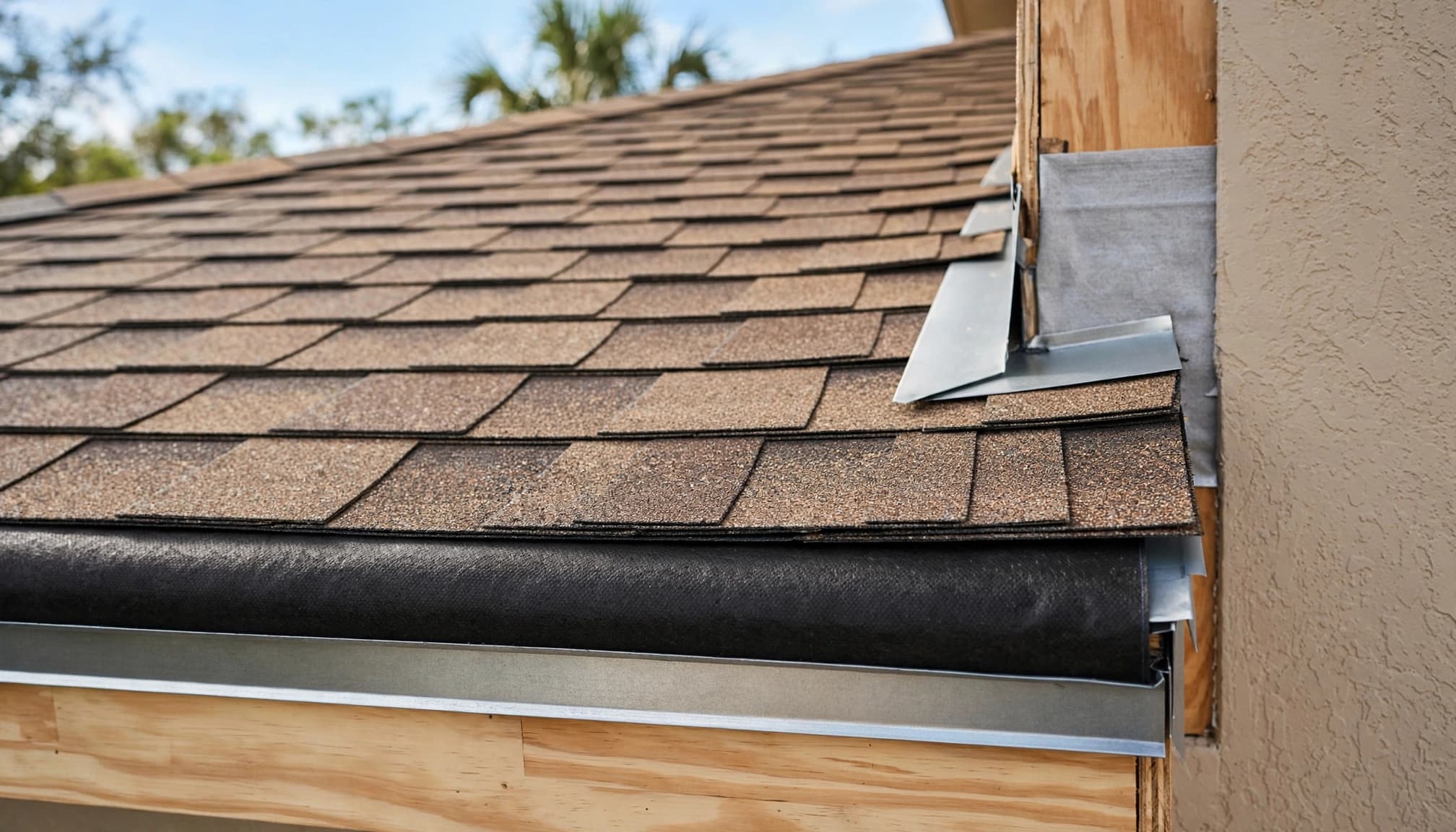
Start with the roof deck
Before new shingles are installed, the contractor should inspect the roof deck for rot, soft areas, delamination, water staining, and inadequate fastening. Damaged decking may need replacement before the roof covering goes on.
Deck fasteners also affect wind resistance. Nail type, length, spacing, placement, and penetration into the framing all matter. Edge zones can face higher uplift forces, so the fastening approach should follow the approved plans and installation requirements.
Homeowners should ask how damaged decking will be handled and whether the estimate includes a reasonable allowance for replacement. Covering weak or wet panels can create problems that remain hidden until the next major storm.
Underlayment, flashing, and ventilation complete the system
Underlayment helps protect the structure when water gets beneath a shingle. Flashing directs water around walls, valleys, chimneys, vents, and other penetrations. Drip edge helps manage water at roof edges, while starter shingles and ridge caps complete important perimeter details.
Ventilation also deserves attention in Southwest Florida. A properly designed system helps manage heat and moisture in the attic, although vents must be installed and flashed correctly. Too much or poorly placed ventilation can create openings for wind-driven rain.
A quality installation should include more than the field shingles. Ask whether the scope covers underlayment, flashing, starter shingles, ridge caps, ventilation components, fasteners, and cleanup.
For a broader look at the installation process, review Southwest Florida roof installation.
Florida Codes, Permits, and Documents to Confirm
The 9th Edition of the Florida Building Code, effective in 2026, provides the statewide baseline for current construction requirements. Lee, Collier, and Charlotte counties are not part of Florida's High-Velocity Hurricane Zone, but homes in these counties still face significant wind and rain exposure.
Local wind design is site-specific
Wind requirements can vary by property. The design may account for the home's location, elevation, roof geometry, height, exposure category, and nearby open terrain or water.
Secondary commentary often places some coastal Southwest Florida design speeds in the approximate range of 145 to 165 mph, with lower speeds farther inland. That range should not be treated as one universal requirement. The applicable wind information should come from the project documents and official county wind-map resources.
For new construction, the roof should be coordinated with the structural plans. For a replacement, the contractor should determine which existing conditions and current requirements apply to the permitted scope.
You can review the broader context in this guide to Southwest Florida hurricane building codes.
Reroofing procedures differ by jurisdiction
A roof replacement generally requires a building permit, but the application, inspection sequence, and documentation vary by city and county. Collier County, for example, requires a Florida Product Approval or Miami-Dade NOA number for the roofing product. Its requirements also include a Re-Roof Affidavit for wood roof decks, which must be available for the dry-in and flashing inspection.
Older structures may have additional requirements. Collier County's hurricane mitigation affidavit provision can apply to some wood-deck structures permitted before September 14, 1993, when the appraised value is at least $300,000.
Cape Coral homeowners can review local considerations in this guide to Cape Coral remodeling permits. Before work begins, confirm the current requirements with the local building department and make sure the contractor handles the required inspections.
Climate, Maintenance, and Insurance Questions
Impact-resistant shingles can improve a roof replacement plan, but homeowners should also plan for ongoing inspection and documentation. Florida's climate continues to affect the roof after installation day.
Protect the roof against heat, algae, and salt air
Inspect the roof after major storms and look for lifted, cracked, missing, or displaced shingles. Check valleys, flashing, vents, and roof edges closely. Damage is easier to address before water reaches the decking, insulation, ceilings, or walls.
Algae staining doesn't always mean the roof has failed, but heavy growth can affect appearance and may signal conditions that deserve attention. Avoid aggressive pressure washing, which can strip protective granules from asphalt shingles. Ask a qualified professional about cleaning methods suitable for the selected material.
Near the coast, exposed fasteners, flashing, vents, and other metal parts need compatible materials and appropriate corrosion resistance. The correct choice depends on the approved assembly and the home's exposure.
Ask the insurer before making assumptions
Insurance companies don't all treat impact-resistant shingles the same way. Some may consider impact resistance, wind mitigation features, roof age, installation records, or other factors. Any premium adjustment depends on the carrier's current rules and the documentation it accepts.
Before signing a contract, ask your insurer:
- Does the company recognize UL 2218 Class 4 shingles?
- Is a wind mitigation inspection required?
- Which product approval or installation documents should you keep?
- Does the carrier distinguish impact resistance from wind resistance?
- Will roof age or prior storm damage affect eligibility?
Keep the permit, approved product information, inspection records, invoices, warranty documents, and photographs taken before the deck is covered. These records can help with future repairs, inspections, and insurance conversations.
Frequently Asked Questions
Are Class 4 shingles required in Southwest Florida?
Generally, no. Class 4 is an impact-resistance classification and is usually a voluntary upgrade. The roofing system still has to meet applicable Florida and local requirements, including approved installation and wind design details.
Do Class 4 shingles make a home hurricane-proof?
No. They can offer improved resistance to the tested impact conditions, but they don't prevent all wind, water, or debris damage. Roof decking, fasteners, flashing, underlayment, edges, and installation quality remain important.
Are impact-resistant shingles worth considering for a roof replacement?
They may be worth considering when your home faces frequent debris exposure, your budget allows the upgrade, and the exact product has suitable approvals for the project. Compare the full installed cost, expected maintenance, warranty terms, and possible insurance treatment rather than looking only at the impact label.
What should homeowners ask a roofing contractor?
Ask for the exact product name, impact classification, wind rating, Florida Product Approval or Miami-Dade NOA information, fastening schedule, underlayment specification, flashing details, permit plan, and inspection process. Also ask how the contractor will handle damaged decking discovered after tear-off.
Conclusion
Impact-resistant shingles can be a practical upgrade for Southwest Florida homes, especially when wind-driven debris is a concern. Their value depends on how they fit into the full roof assembly and whether the installation follows approved product and code requirements.
Focus on the complete system: sound decking, secure fastening, reliable underlayment, careful flashing, proper ventilation, and clear documentation. A well-installed roof gives your home a stronger starting point before the next storm arrives.