Roof Decking Repair: Cape Coral Plywood Warning Signs
Explore Our Services
Contact Us Today!
(239) 322-9295
Water stains on a ceiling can be easy to dismiss, especially when they dry after a storm. However, if you're searching for roof decking repair in Cape Coral, the real concern may be hidden above the shingles: plywood that has absorbed water, weakened, or started to separate.
Plywood decking supports the roofing materials and connects the roof covering to the framing below. Learn which exterior and attic signs point to replacement, what causes the damage, and what a professional inspection should include before the problem spreads.
Why Roof Decking Matters in Cape Coral Homes
Roof decking, also called roof sheathing, is the layer installed over the rafters or trusses. Shingles, metal panels, or other roof coverings sit above it. The decking helps create a stable surface and transfers roof loads to the framing system.
When plywood stays wet, it can swell, soften, delaminate, or lose its ability to hold fasteners. A small leak around a vent may eventually affect a much larger section than the original entry point. Water can also travel along the underside of the decking before it appears as a ceiling stain.
Cape Coral roofs face heavy rain, strong sun, high humidity, and wind-driven water during tropical storms. These conditions place extra stress on roof coverings, flashing, vents, and sealants. A roof can look acceptable from the street while moisture continues damaging the plywood underneath.
Older roofs may also have several layers of past repairs. Each patch can hide the original leak source or make it harder to see how far the decking has deteriorated. That is why a visible stain should be treated as a reason to investigate, not as a complete diagnosis.
Roof Decking Repair Signs That Point to Plywood Replacement
Some warning signs appear outside the home. Others become visible only in the attic. Neither group should be ignored when the roof has experienced repeated leaks or storm damage.
Exterior signs visible from the ground
A sagging roof plane is one of the most serious signs. You may notice a dip along the roof slope, a low area between framing members, or a section that looks uneven compared with the rest of the roof. Sagging can involve damaged decking, framing problems, trapped moisture, or a combination of issues.
Buckled, lifted, or uneven shingles can also point to moisture below the roofing surface. Shingles may wrinkle because of age or installation problems, so this sign alone doesn't prove the plywood needs replacement. It does, however, justify a closer inspection.
Look for water-related damage around roof penetrations. Dark areas near plumbing vents, skylights, chimneys, exhaust vents, and flashing may indicate a leak. Missing shingles, exposed underlayment, and damaged metal flashing can allow water to reach the decking.
At the eaves, rotted fascia, stained soffits, or peeling paint may show that water is moving toward the roof edge. These areas deserve attention even when the ceiling inside looks normal.
Granules in the gutters usually indicate shingle wear, not plywood damage. Still, an aging roof covering may have allowed water to reach the deck, so both conditions should be evaluated together.
Attic signs homeowners should take seriously
A professional inspecting the attic may find clues that aren't visible outside. They may see dark water marks, swollen plywood edges, mold-like growth, rusted fasteners, or damp insulation. Plywood with separated layers has lost its original integrity and may need replacement.
Soft or crumbly areas are also concerning. A qualified inspector can assess suspicious areas without turning a homeowner's quick look into a dangerous roof-access project. Don't walk on the roof or step across attic surfaces unless a trained professional has confirmed a safe inspection path.
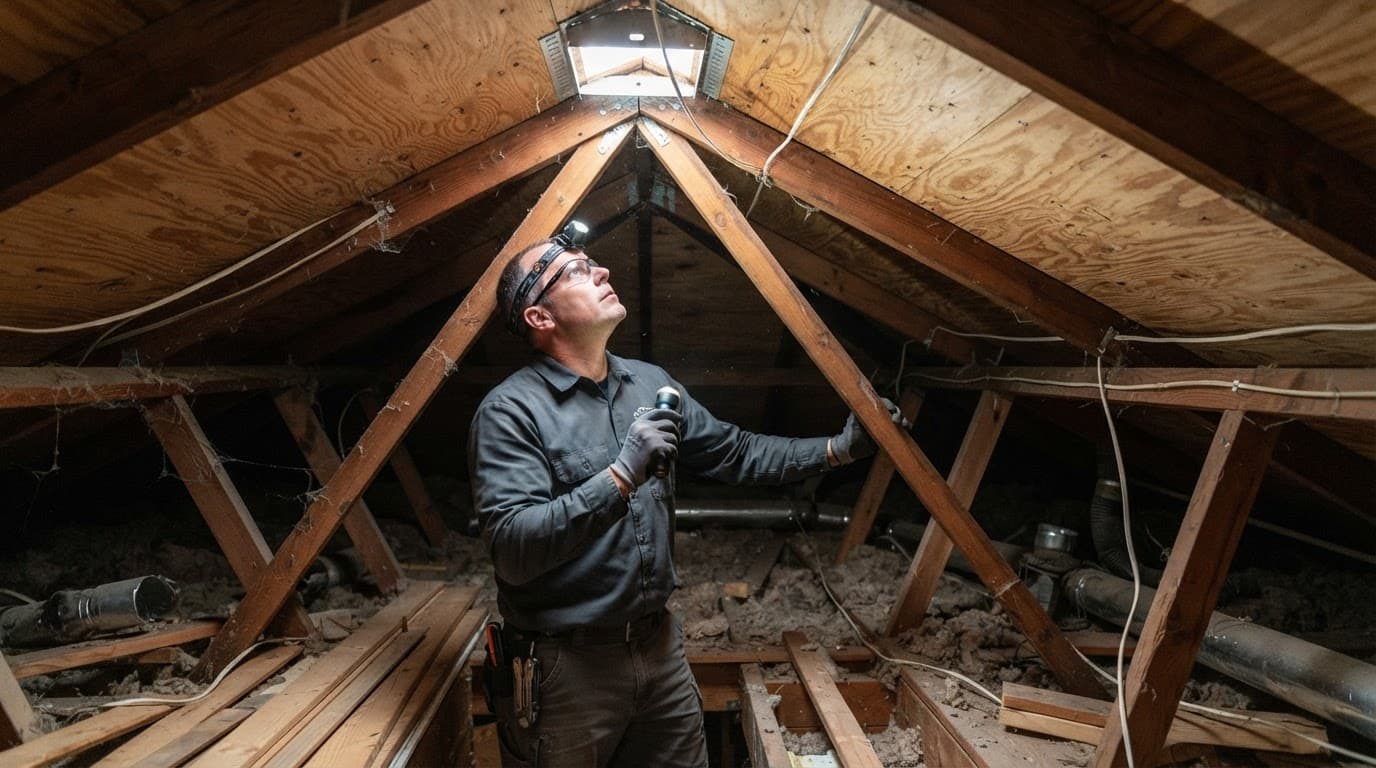
Daylight showing through an unexpected opening is an urgent finding. Small points of light may come through designed ventilation openings, but light around a damaged penetration, roof seam, or broken panel can indicate a path for rain.
A ceiling stain doesn't always mean the plywood is still wet. The leak may have stopped, or the water may be entering somewhere else. However, old stains can still mark previous damage, so the roof assembly needs a professional assessment before anyone covers or paints the ceiling.
A roof can stop dripping before the plywood has dried or recovered its strength.
Common Causes of Deteriorated Roof Plywood
The most common cause is a leak that continues long enough to saturate the decking. Roof penetrations are frequent trouble spots because vents, pipes, and flashing interrupt the roof's weather barrier. Sealants can crack, flashing can loosen, and fasteners can back out after years of exposure.
Wind damage creates another path for water. A storm may lift shingles, damage flashing, or expose underlayment without leaving an obvious hole. Wind-driven rain can then enter beneath the roof covering and soak the plywood.
Poor attic ventilation can add moisture from inside the house. Warm, humid air may condense on cooler roof surfaces, especially when bathroom exhaust vents discharge into the attic instead of outside. That moisture can stain the decking and support decay over time.
Roofing installation problems can also contribute. Improper fastening, damaged underlayment, insufficient flashing, and poor transitions around roof sections can all create recurring leaks. If a repair addresses only the shingles but leaves damaged plywood or the original leak source untouched, the problem may return.
Age matters as well. Repeated wetting and drying cycles weaken wood products, while long exposure to Florida heat can shorten the useful life of roofing materials above them. An inspector should identify the cause, not only the damaged panel.
What to Expect During a Professional Roof Inspection
A proper inspection starts with the roof covering and the home's interior. The inspector may review the roof's age, material, repair history, visible storm damage, flashing, penetrations, drainage, and areas where shingles appear uneven.
The attic inspection focuses on the underside of the decking and the surrounding framing. The professional may look for stains, active moisture, soft areas, fastener corrosion, poor ventilation, damaged insulation, and evidence of past repairs. Moisture meters or other tools may help confirm whether a suspicious area remains damp.
The inspection should also distinguish between a localized problem and widespread deterioration. One damaged panel near a failed vent may call for a focused repair. Multiple soft areas, widespread staining, or recurring leaks may require a larger scope.
Ask for photographs and a written explanation of the findings. A useful report should identify:
- Where the suspected damage is located.
- Whether the leak appears active, inactive, or unresolved.
- Whether the plywood is stained, swollen, delaminated, or structurally weakened.
- What caused the water entry.
- Which materials need repair or replacement.
- Whether permits or additional evaluations may be required.
A wind mitigation inspection can document roof and opening features related to storm resistance. It is different from a decking diagnosis, so it shouldn't replace a roof inspection when plywood damage is suspected.
Likewise, a four-point inspection in Florida can document roof age and visible condition for insurance purposes. It may identify concerns, but a roofing professional still needs to determine the repair scope.
Repair or Replace? The Right Option Depends on the Damage
Plywood doesn't always need replacement because it has a dark stain. If the panel dried fully and remains solid, a professional may recommend correcting the leak and monitoring the area. Staining, however, must be considered alongside swelling, softness, separation, and fastener performance.
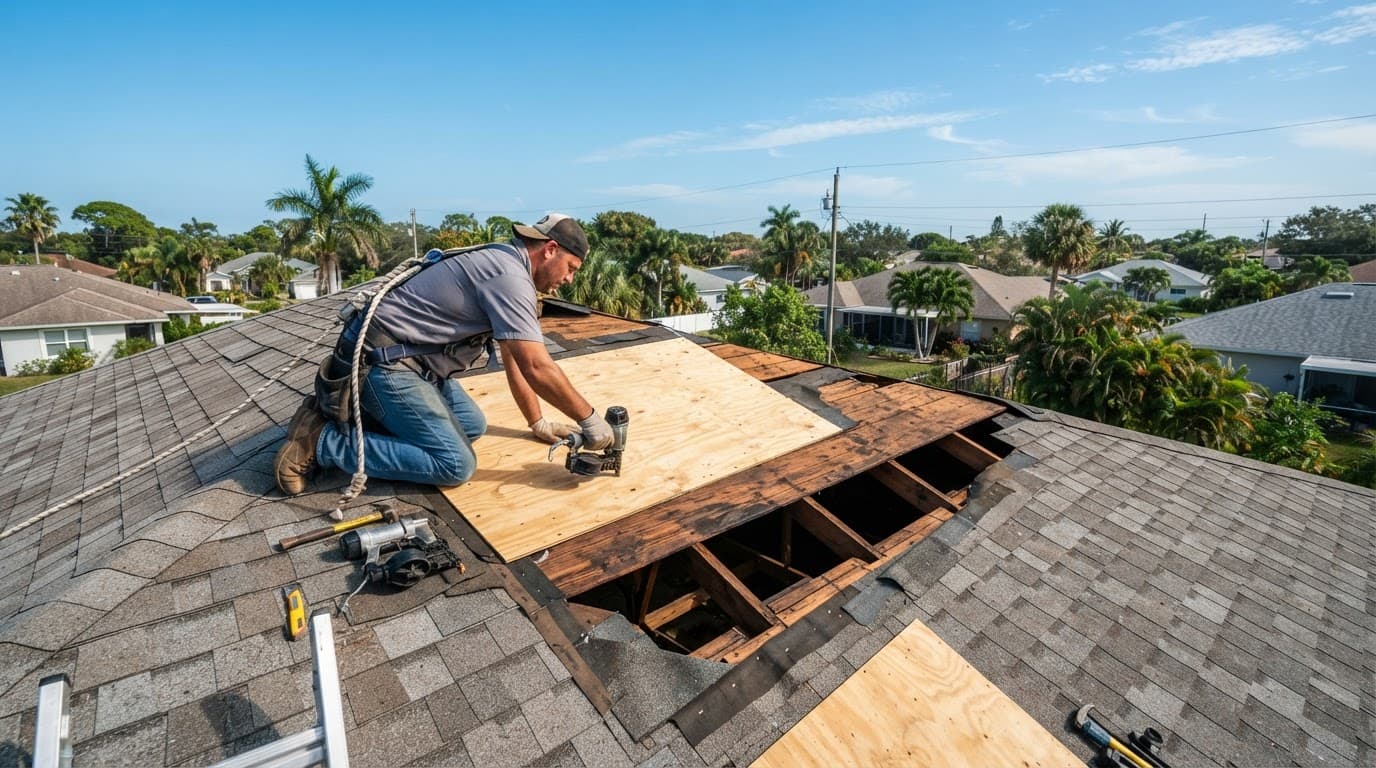
A localized roof decking repair may work when damage affects a limited area. The contractor typically removes the roof covering above the affected section, takes out compromised plywood, checks the supporting framing, and installs an appropriate replacement panel. New underlayment, flashing, and roofing materials then restore the weather barrier.
The replacement panel needs proper support and fastening. A contractor should also address the leak source, such as failed flashing or a damaged vent boot. Replacing wood without correcting the entry point leaves the home exposed to the same problem.
Wider damage may require several panels or a larger roof section. This option becomes more likely when water has traveled along the deck, multiple leaks exist, or the plywood has deteriorated around several penetrations.
A full roof replacement can make sense when the covering is near the end of its service life and the decking damage is widespread. Removing the roof covering gives the contractor better access to inspect the entire deck. It can also prevent homeowners from paying for new shingles over plywood that may soon fail.
Your written estimate should separate the work into clear items. Look for the affected decking area, material removal, replacement panels, fasteners, underlayment, flashing, roofing replacement, disposal, permits, and any framing repairs. Clear scope details make it easier to compare proposals and avoid surprises.
How Urgent Is Roof Decking Damage?
Schedule an inspection soon when you notice stains, missing shingles, recurring leaks, or attic discoloration. Early attention may limit the affected area and help identify the source before another storm adds more water.
Treat these conditions as urgent:
- Active water entering the home.
- A sagging roof surface or ceiling.
- A ceiling bulge that may hold water.
- Exposed decking or underlayment.
- Wet insulation near electrical fixtures.
- New damage after a tropical storm or hurricane.
Move furniture and belongings away from a leak, place a container under interior dripping, and keep people away from a bulging ceiling. If water is near electrical equipment, avoid contact and have a qualified professional address the hazard. Don't climb onto the roof to inspect or cover the damage yourself.
Photograph visible interior damage from a safe position. Then schedule a professional roof inspection with a qualified local contractor who can assess the roof covering, plywood, framing, and leak source together.
Conclusion
Plywood roof decking can deteriorate before a Cape Coral homeowner sees a clear problem inside the house. Sagging areas, uneven shingles, damaged flashing, attic stains, soft wood, and unexpected daylight all deserve professional attention.
The right roof decking repair depends on the extent of the damage and the condition of the roof covering above it. Schedule a professional inspection before repairing cosmetic symptoms, especially when the home has an active leak or recent storm damage. Acting while the problem is localized can help protect the roof system and the rest of the home.