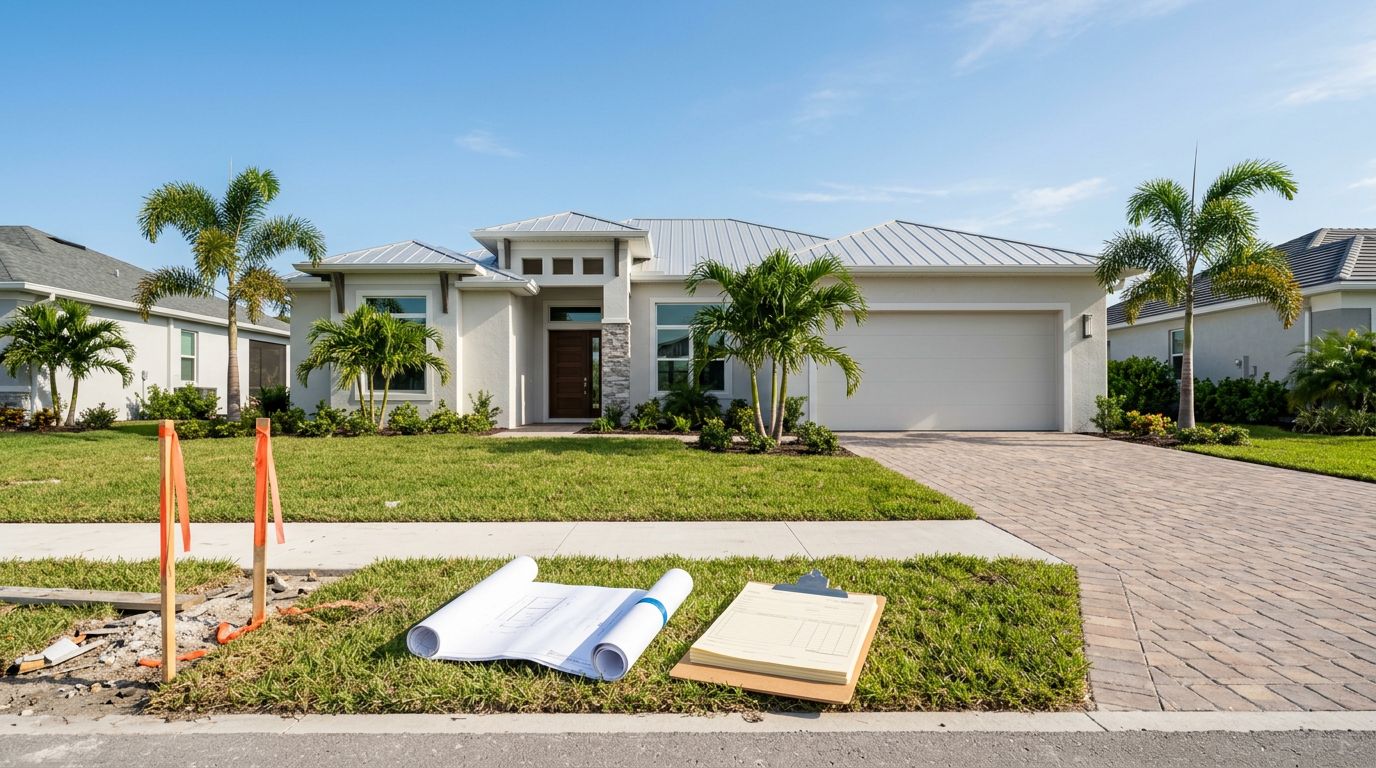
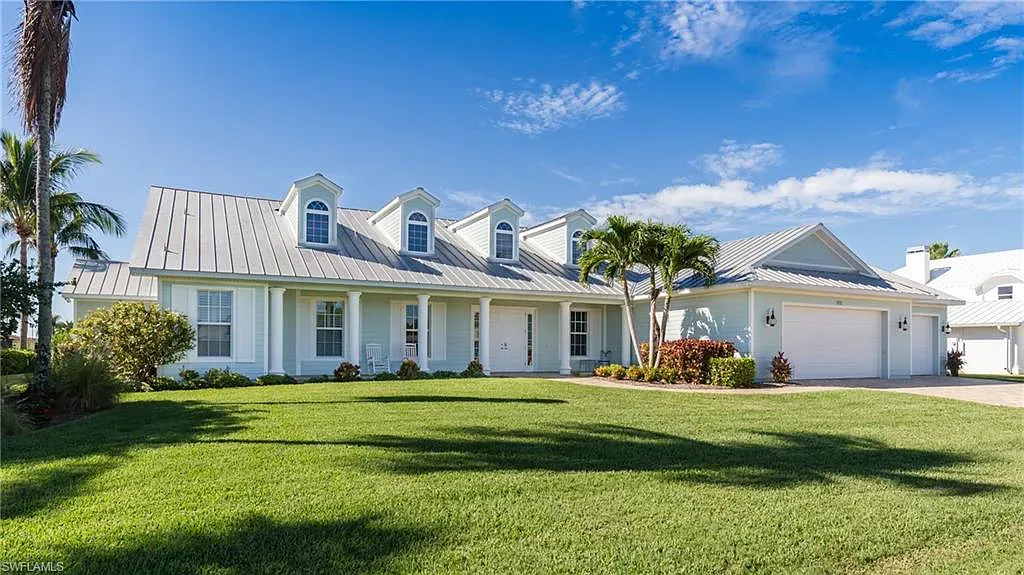



Building a new primary residence in Southwest Florida can change when you claim the Florida homestead exemption , not whether the benefit matters. The timing depends on when you own and occupy the home, how far construction has progressed, and when you file with your county property appraiser.
A new home also brings questions about the lot, construction assessment, permits, and future tax increases. The right steps can prevent a missed deadline from adding unnecessary taxable value to your first full year of ownership.
Key Takeaways
- You generally must own and occupy the new house as your permanent residence by January 1 to qualify for that tax year.
- The regular filing deadline is March 1, although a late-filing period may apply after TRIM notices are mailed.
- The basic exemption can reduce taxable value by up to $50,000, with different rules for school taxes.
- A new home may not receive the exemption until the tax year after you move in, depending on the January 1 timeline.
- Confirm current eligibility, deadlines, and county procedures directly with your county property appraiser.
How the Florida homestead exemption works for a new home
Florida's homestead exemption reduces the taxable value of a qualifying primary residence. The standard exemption can reduce taxable value by up to $50,000.
The first $25,000 applies to all property taxes, including school taxes. The additional exemption, up to another $25,000, applies to assessed value above $50,000. That second portion doesn't apply to school taxes.
This reduction affects taxable value, not the market price of your home and not the tax rate itself. For example, a newly built home with a $500,000 assessed value won't receive a $50,000 cash payment. Instead, the property appraiser subtracts the applicable exemption before taxing authorities calculate their portions of the bill.
New construction creates a timing issue because Florida property taxes use a January 1 assessment date. The property appraiser looks at the ownership, use, and condition of the property on that date. A home completed later in the year may not qualify as a finished primary residence until the following tax year.
The exact treatment can depend on construction status and county records. A house under construction may receive a partial or incomplete improvement assessment, while a completed home may receive a full assessment in the next roll. Contact the property appraiser in Lee, Collier, Charlotte, or your home county for the result that applies to your parcel.
When can you claim the exemption after moving into a new house?
The main eligibility test is straightforward: you generally must own and occupy the property as your permanent residence on January 1 of the tax year.
If you closed on the property and lived there by January 1, you may apply for that year's exemption. If you moved in after January 1, the exemption usually begins with the next tax year, assuming you meet the other requirements.
For a custom build, the closing date and move-in date may be different. You might own the lot for months before the house is complete. Owning the land alone doesn't always mean the finished home qualifies as your homestead. Your permanent-residence status, construction condition, and county assessment records all matter.
A practical timeline might look like this:
- You buy a lot and begin construction during 2026.
- The home remains under construction on January 1, 2027.
- You complete the home and move in during spring 2027.
- You apply for the exemption by March 1, 2028, for the 2028 tax year.
That example isn't a guarantee for every property. The county may assess the lot and improvements differently based on the permit, completion status, and information available on January 1.
If you already owned a Florida homesteaded property, ask about portability. Florida's Save Our Homes portability rules may allow some of your prior assessed-value benefit to transfer to the new residence. Portability is a separate process, and it isn't something you should assume will happen automatically.
Florida homestead exemption filing deadlines and applications
The standard deadline is March 1 of the tax year for which you're applying. Counties may move the effective business-day deadline when March 1 falls on a weekend or holiday.
You typically file Form DR-501 with the county property appraiser. Lee County accepts applications through several methods, including online submission, email, mail, and in-person delivery. Other Southwest Florida counties may use different portals or document requirements.
Late filing may still be possible. Florida law provides a limited late-filing period that generally runs through 25 days after the county mails its TRIM, or Notice of Proposed Property Taxes, notice. This period often falls in late summer or early fall, but the date changes each year and by county.
Don't treat a late-filing window as your normal deadline. Missing March 1 can create an avoidable problem, especially if construction records or residency documents need review. Apply as soon as you meet the requirements, then keep your confirmation or receipt.
The application commonly asks for:
- Your deed or other proof of ownership
- Florida driver's license or identification card
- Florida vehicle registration
- Florida voter registration, if applicable
- Social Security numbers for the owners and spouse
- Proof of Florida residency or a change in domicile, when requested
Your name and address should match across your documents whenever possible. If you recently moved from another state, update your Florida driver's license, vehicle registration, voter registration, and mailing address promptly.
What new construction records should you keep?
A new-home owner should keep a complete file even after receiving a certificate of occupancy. Property appraisers may need information that shows when the structure became habitable and when you established the property as your permanent residence.
Keep copies of the building permit, final inspection records, certificate of occupancy, closing statement, deed, utility activation records, and insurance policy. These documents can help resolve questions about the home's completion date or your occupancy.
Permitting also affects the county's property record. In Cape Coral, a new single-family home needs a full permit package along with related trade permits. Electrical, plumbing, mechanical, roofing, site work, utility, and stormwater details may all affect the construction file. You can review this Cape Coral new home permit requirements before construction begins.
The property appraiser, not your builder, decides the property's assessed value and exemption status. A contractor's estimate, final invoice, or certificate of occupancy doesn't approve the exemption. Those records only help establish facts when the county reviews your application.
The contract structure also doesn't control eligibility. A cost-plus home builder can provide itemized construction costs, but the exemption still depends on ownership and permanent occupancy. If you choose an owner-builder arrangement, understand the separate construction responsibilities and legal limits described in this guide to Florida owner-builder exemption rules for custom homes.
How much can the exemption reduce your tax bill?
The exemption can reduce taxable value by up to $50,000, but the actual dollar savings depend on local tax rates and which taxing authorities apply to your property.
Suppose the applicable assessed value is $400,000. The county may subtract the full general exemption from the value used for many taxes. School taxes receive only the first $25,000 portion. The final bill still depends on the rates set by Lee County, the city, the school district, special districts, and other taxing authorities.
Your first tax bill may also look different from later bills. A home that was incomplete on January 1 may receive a partial improvement assessment. Once the property appears as a completed residence on a later tax roll, the assessed value may rise sharply. That increase isn't necessarily caused by losing the exemption. It may reflect the completed structure being added to the roll.
After you receive homestead status, the Save Our Homes assessment limitation can restrict future annual increases in assessed value to 3% or the change in the Consumer Price Index, whichever is lower. The limitation applies to qualifying homestead property and future assessments under Florida law. It doesn't freeze your tax bill, because tax rates and approved assessments can change.
Budget for the completed home's likely tax exposure rather than relying on the first bill. Southwest Florida projects can include pools, seawalls, elevated foundations, generators, detached structures, and other improvements that affect value. A Southwest Florida home building budget breakdown can help you account for costs that don't appear in conditioned square-foot pricing.
Common mistakes new Florida homeowners make
One common mistake is waiting until the house feels fully settled before applying. You don't need to delay the application because landscaping, furniture, or small punch-list items remain. The key facts are your ownership, permanent residence, and the property's condition under the county's assessment rules.
Another mistake is assuming the builder will file for you. Builders may handle permits and project paperwork, but the homestead application belongs to the property owner.
Some homeowners also confuse a homestead exemption with an automatic tax cap. The exemption must be approved first. Future assessment limits depend on maintaining homestead status and meeting the applicable rules.
Watch for these problems:
- Filing with the wrong county after moving from another Florida property
- Using a mailing address that doesn't match your claimed permanent residence
- Forgetting to report a spouse's information when the application requests it
- Assuming a late application will be accepted without checking the county's final date
- Failing to ask about portability after selling a prior homesteaded home
- Believing a new construction permit automatically proves January 1 occupancy
Once approved, the exemption usually renews automatically each year. Still, you should review your property record and tax notice. Contact the appraiser if your ownership, marital status, residency, or property use changes.
Property-tax rules and county procedures can change. Confirm your eligibility, filing method, and deadlines with the property appraiser for the county where your new home sits.
Conclusion
Building a new primary residence adds timing and assessment questions to a Florida homestead application. The strongest point to remember is the January 1 test: your ownership and permanent occupancy usually determine whether the exemption applies for that tax year or the next one.
File Form DR-501 with your county property appraiser, keep construction and residency records, and ask about portability if you are moving from another homesteaded property. A new home deserves an accurate tax record, and timely filing is one of the simplest ways to protect it.