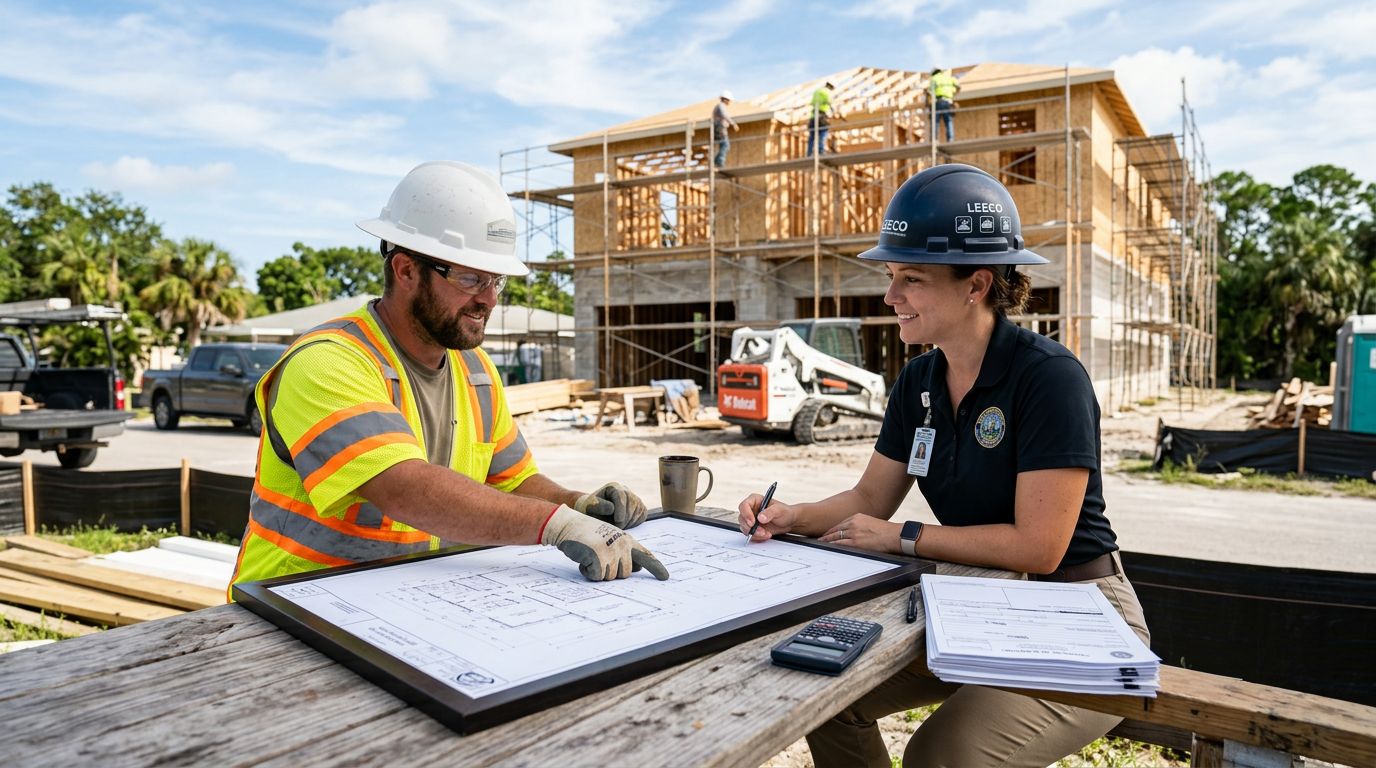



Miss one document, and a permit package can sit untouched while your schedule slips. For a new home in Cape Coral, the slowdowns usually come from small gaps, a missing survey note, a mismatch between drawings and lot data, or a product approval that doesn't match the exact installed item.
A strong cape coral permit checklist keeps those problems out of the file before it reaches review. That matters in 2026, because Cape Coral's permitting process still rewards organized submittals, clean coordination, and fast responses to corrections.
Key Takeaways
- A new home permit package needs more than an application, it needs matching plans, surveys, approvals, and contractor documents.
- Cape Coral reviewers pay close attention to setbacks, flood information, impervious surface, and utility details.
- Product approvals, stamped drawings, and trade permits should match the job exactly.
- A complete first submittal saves time, because corrections often come from small mismatches.
- If a requirement seems unclear, verify it with the City of Cape Coral before you submit.
What Cape Coral reviewers want before they open the file
Cape Coral's review team is looking for a complete package, not a rough draft. The city wants the documents to agree with each other, which means the application, survey, site plan, and construction drawings should tell the same story.
That starts with the basics. The application must be signed by the owner or authorized agent, and the contractor information has to be current. If a licensed builder is involved, the permit file should include license details and insurance. If you're doing an owner-builder route, the affidavit matters just as much as the plans.
The July 1, 2026 Florida law update that created small-job exemptions under $7,500 does not change the normal path for a new single-family home. A new house still needs a full permit package, plus the trade permits that go with it.
If a document feels optional, treat it as required until the permitting authority says otherwise.
If you want the bigger construction picture, the guide to building a home in Southwest Florida gives helpful context for the steps that lead up to permit submittal.
The core checklist items for a new home permit
A clean file usually includes the same core pieces, even when the lot or design changes. The table below shows what belongs in the package and why it gets flagged.
| Checklist item | What reviewers want | Common delay trigger |
|---|---|---|
| Signed permit application | Owner or authorized agent signature | Missing authorization |
| Contractor license and insurance | Current Florida contractor details | Expired or incomplete documents |
| Boundary survey and legal description | Current lot lines, easements, and dimensions | Survey doesn't match the plan set |
| Stamped construction drawings | Architect or engineer seal | Unsealed or incomplete sheets |
| Site plan | Footprint, setbacks, driveways, scale, and north arrow | Missing setbacks or easement notes |
| Flood and elevation data | FEMA or other flood-zone information | No elevation certificate where needed |
| Product approvals | Exact approvals for windows, doors, roofing, and similar items | Wrong product number or missing documents |
The takeaway is simple, the reviewer needs every major piece to line up. If one document says one thing and another says something different, the file often gets corrected instead of approved.
Site plans and surveys that keep corrections down
Cape Coral pays close attention to the lot itself, because the site drives the whole permit. Your site plan should show property boundaries, proposed home placement, setbacks, easements, driveways, sidewalks, and the north arrow. It also needs a clear scale.
On many lots, impervious surface calculations matter too. That number helps reviewers see how much of the property will be covered by roof, driveway, walkways, and similar hard surfaces. If the project includes a canal lot, seawall or bulkhead locations may need to appear on the plan.
The survey should be current and should match the proposed construction. If the survey shows one setback and the plan shows another, expect a correction. The same goes for flood-zone data. In flood-prone areas, elevation details and, in some cases, a FEMA elevation certificate become part of the package.
A lot of permit stress starts here, because the site plan is the backbone of the submittal. If the site is wrong, the rest of the packet starts to wobble.
Drawings, product approvals, and trade permits
Stamped drawings carry a lot of weight in Cape Coral. The city wants plans prepared by a Florida-licensed architect or engineer when required, and the sheets should show floor plans, elevations, structural details, and anything else needed to understand the build.
Product approvals matter just as much. Impact-rated windows, exterior doors, garage doors, roofing systems, soffit, and siding all need the correct approvals for the exact products being installed. A close match is not the same thing as the right match.
Trade permits should be part of the overall plan, not an afterthought. Electrical, plumbing, mechanical, roofing, and site work permits may need to move alongside the main building permit. If the project includes utility work, stormwater items, or a septic plan, those details should be ready too.
For timing, think of the permit packet like the first mile of a race. If you start with missing gear, the whole schedule slows down. That's why many builders map the permit file against the broader new construction week-by-week timeline before they submit.
Common mistakes that slow a Cape Coral permit
Most permit delays come from avoidable mistakes. The most common one is a mismatch between documents. The survey says one thing, the site plan says another, and the drawings show a different footprint. Reviewers catch that fast.
Another frequent problem is incomplete local information. If the lot is in an HOA, the approval letter needs to be in the file. If the property sits in a flood hazard area, elevation details need to be clear. If the home will connect to city utilities, that confirmation should be handled early.
A third issue is incomplete product paperwork. Manufacturers' approvals, truss drawings, energy code documents, and related sheets should be organized before you submit, not hunted down after comments arrive.
The biggest mistake is waiting too long to answer correction requests. A permit package can move, then stall for days while someone looks for a missing sheet. Fast responses keep the file alive.
Timing, fees, and 2026 review expectations
Cape Coral's 2026 review windows make file quality matter. Published timelines show master building permits can review in up to 12 business days, while large residential structures can take up to 60 business days. That's before corrections, resubmittals, or outside agency reviews.
Permit fees also belong in the planning stage. Building permit charges, trade permits, and related assessments can add up quickly, especially when the declared valuation is high. If you want a clearer budget picture, the 2026 permit fee guide for Southwest Florida new homes breaks down how those costs are typically assembled.
Cape Coral also now gives new single-family dwelling permits a longer life span, one year after issuance or until the next Florida Building Code edition, whichever comes later. That gives more room than older rules did, but it doesn't help a disorganized submittal. The clock only helps once the permit is issued.
Keeping the packet organized with your builder
A good builder treats the permit packet like a project binder, not a pile of PDFs. That means keeping every revision together, naming files clearly, and matching the survey, drawings, and product approvals before anything goes to the city.
A cost-plus home builder can make this easier, because itemized costs show where permit fees, consultant charges, and trade costs fit into the total. Transparent pricing also helps you see what belongs in the permit budget and what belongs in construction. That matters when you're comparing bids or deciding whether a correction is worth a same-day fix.
If you're building in Southwest Florida, ask for the permit set early and review it line by line. The better the file at the start, the fewer surprises later. The city portal, current permit forms, and any plan notes from reviewers should guide the final submittal, not guesses from a past project or another county.
Conclusion
Cape Coral doesn't reward rushed permit packages. It rewards clean paperwork, matching drawings, and clear site details that tell the same story from page one to the last approval.
If your Cape Coral permit checklist is tight, your review has a much better chance of moving without avoidable corrections. That's the difference between waiting on paperwork and getting the build moving on schedule.
When the file is organized before submittal, the permit process feels less like a roadblock and more like the first real step toward the home you want.