Fort Myers Custom Home Warranty: Coverage After Closing
Explore Our Services
Contact Us Today!
(239) 322-9295
A custom home warranty can protect you from some construction defects after closing, but it doesn't cover every repair or storm loss. In Fort Myers, the details depend on the builder's written warranty, manufacturers' documents, and any separate home warranty service contract.
The most useful first step is to identify which party is responsible for each type of problem. Then keep the documents, dates, and claim instructions together so you can act quickly if an issue appears.
Key Takeaways
- Builder warranties may address workmanship, installed systems, or major structural components under different terms.
- A third-party home warranty is a separate service contract, often focused on listed appliances and household systems.
- Coverage start dates, durations, exclusions, and claim deadlines come from the applicable written documents.
- HVAC trouble, moisture, and storm damage need careful diagnosis because coverage depends on the cause and contract.
- A detailed walkthrough and organized closeout records make it easier to report a defect and show what happened.
What a builder's warranty may cover
A builder's warranty may divide coverage by the type of work or component. The categories below are common ways to organize responsibilities, not a promise that every Fort Myers home has the same coverage.
Workmanship and finish defects
Workmanship coverage may address problems caused by how construction or installation was completed. Examples to review in the warranty include uneven or loose finishes, improperly installed doors or windows, and defects in tile, trim, or paint.
The key issue is usually the cause. A finish problem tied to installation may be treated differently from damage caused by moving furniture, normal use, or a later remodel. The written warranty should explain how to report a defect and what repair the builder may provide.
Plumbing, electrical, and HVAC systems
A systems warranty may address specified components such as plumbing lines, wiring, or heating and cooling equipment. Read the list closely: a warranty might cover a defect in installation without covering every appliance or every part attached to the system.
In Southwest Florida, pay particular attention to air conditioning, condensate drainage, and moisture control. A malfunctioning HVAC component, a clogged drain, and elevated indoor humidity can lead to different diagnoses and different coverage decisions.
Structural components
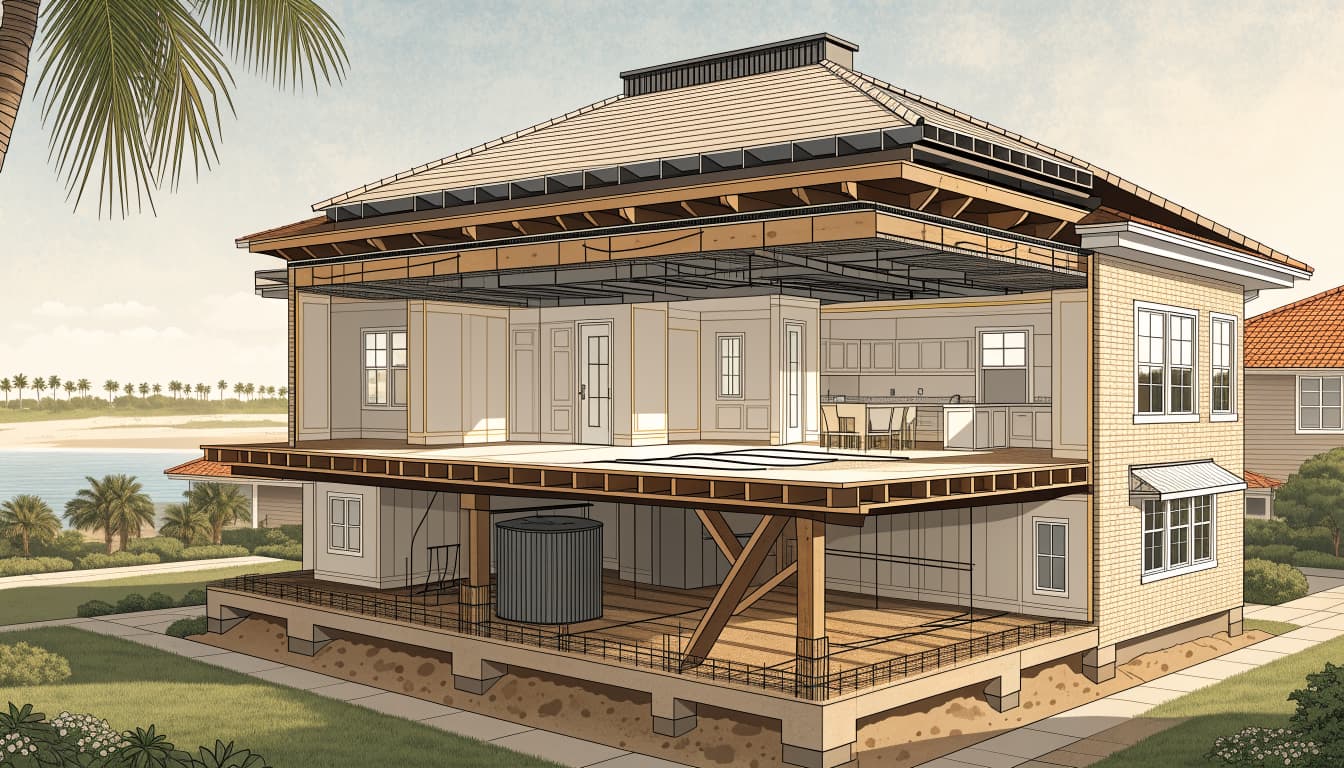
Structural coverage may apply to major parts of the home, such as load-bearing framing or the foundation, if a problem meets the warranty's definition of a covered defect. Cosmetic cracks or minor movement may be treated differently from a condition that affects structural performance.
Check how the document defines covered damage, which components it names, and what remedies it provides. A broad phrase such as "structural warranty" doesn't reveal the actual limits by itself.
Builder warranty versus a third-party home warranty
A builder's warranty and a third-party home warranty are separate forms of protection. One may address construction quality, while the other may offer repair or replacement service for covered items listed in its contract.
Builder and manufacturer responsibilities
The builder's written warranty describes the builder's obligations for covered workmanship, systems, or structural defects. Product warranties from manufacturers are separate. For example, roofing material coverage may come from the product manufacturer, while installation-related issues may fall under a contractor's workmanship terms.
Those documents may have different start dates, exclusions, and claim contacts. Keep each one with the home records, including equipment model details, product receipts, and installation information.
Third-party home warranty service contracts
A third-party home warranty is generally a service contract, not an extension of the builder's workmanship promise. Depending on the plan, it may list household systems or appliances such as air conditioning, plumbing, electrical components, a water heater, or kitchen equipment.
Coverage applies only under that contract's terms. A service fee, repair limit, excluded part, or pre-existing-condition rule may affect a claim. Read the covered-item list and the claim process before relying on the contract to address a new-home defect.
When coverage begins and how long it lasts
Closing is an important handoff, but it doesn't automatically establish the start date for every warranty. A document may tie its term to closing, substantial completion, installation, or another stated milestone. The builder warranty, a manufacturer's product warranty, and a third-party service contract can all use different dates.
Duration also depends on the specific document and coverage category. A workmanship term may differ from a systems or structural term, and an appliance warranty may follow its own registration and term rules. Avoid treating a general warranty summary or sales conversation as a substitute for the signed terms.
Before closing, make a one-page record for each warranty: the covered item, responsible company, start date, end date, notice deadline, and claim contact. If any promise was made verbally, ask for the agreed term and responsibility to be included in the written contract or closeout package.
Exclusions to understand in Southwest Florida
Warranty exclusions can matter as much as the covered-item list. Depending on the document, exclusions may include normal wear, poor maintenance, owner alterations, unauthorized repairs, or damage caused by an event outside the contractor's control.
Storm losses deserve special attention. Wind, hurricane damage, flooding, and wind-driven rain may be excluded from a builder or service contract, or may be handled through a property insurance claim instead. Don't assume that a roof or window warranty pays for storm damage simply because the home is new.
Moisture problems also require a clear diagnosis. A leak from a construction defect may be treated differently from condensation, plumbing failure, blocked drainage, or humidity linked to maintenance or equipment operation. Likewise, an HVAC issue might involve a covered component, a filter or drain maintenance issue, or a separate manufacturer warranty.
A warranty claim can also be affected by work performed after closing. Before adding roof penetrations, changing ductwork, or modifying plumbing, keep records of the work and understand whether the change affects related coverage.
How to submit a warranty claim
Start with the document that covers the item. The builder, appliance manufacturer, and third-party home warranty company may each require a different notice method and response process.
- Record the problem promptly. Note when it began, where it appears, and what conditions were present. Photograph visible damage and save any relevant messages or service records.
- Limit further damage safely. If water is entering or a system may be unsafe, take reasonable temporary steps and contact the appropriate professional. Document the condition before and after temporary work, and keep receipts.
- Send written notice through the required channel. Describe the issue plainly, identify the affected component, and attach relevant photos. Keep a copy and note the date submitted.
- Arrange the inspection or service visit. Give the responsible party a chance to inspect the condition before permanent repairs when it is safe to do so. For urgent work, preserve documentation and explain why it could not wait.
- Keep the response and next steps in writing. Save the claim number, inspection notes, repair plan, and any decision. If the claim is denied, ask for the reason and the contract provision that applies.
For a third-party service plan, follow its dispatch process and account for any service fee or authorization requirement. For a builder claim, follow the notice and access procedures in the construction contract and warranty.
Protect coverage during walkthrough and after closing
A careful handoff gives you a baseline for the home's condition. It also helps separate an unfinished item from a problem that develops later.
Use the walkthrough to document performance
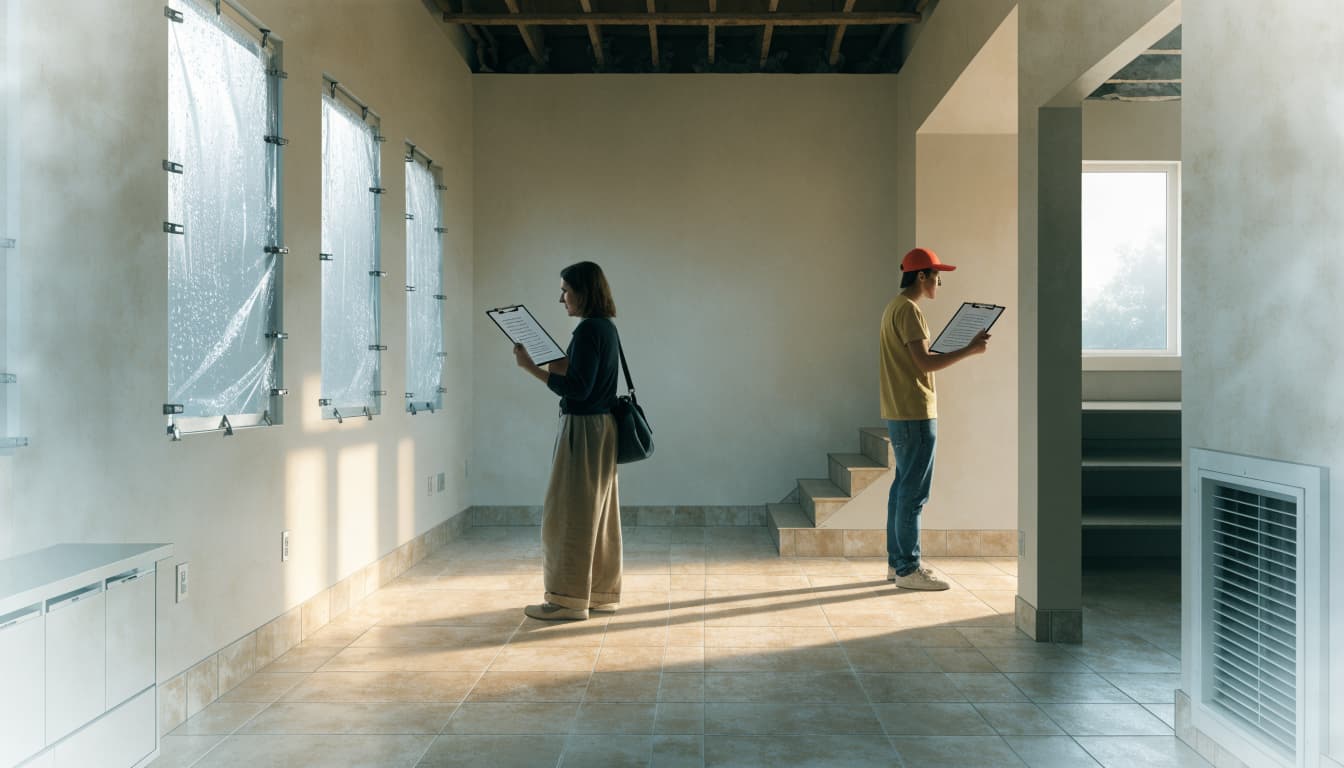
Test installed systems and fixtures with the builder's representative. Run the air conditioning, operate faucets and toilets, check doors and windows, and look for visible leaks, finish damage, or drainage concerns. For roofing and exterior details, use a safe ground-level inspection rather than climbing onto the roof.
Keep a dated list of incomplete work or defects, with clear photos where useful. Note who will handle each item and the agreed follow-up in writing. A walkthrough doesn't create warranty rights or replace any required notice, but it can make the handover record clearer.
Our guide to new home commissioning and move-in testing covers checks that help document cooling, moisture control, drainage, and other home systems before move-in.
Keep a useful closeout file
Store the signed construction contract, warranty documents, approved change orders, final plans, inspection records, equipment manuals, and manufacturer paperwork together. Include model and serial numbers for major appliances and HVAC equipment, plus proof of any required product registration.
After closing, track maintenance and service visits with dates, provider details, and receipts. If a repair or alteration touches a warranted component, save the scope of work and invoice. These records help explain whether an issue followed a defect, routine maintenance, storm exposure, or later work.
Fort Myers custom home warranty FAQs
Does the builder's warranty always start on the closing date?
No single start date applies to every warranty. The written terms may use closing, substantial completion, installation, or another milestone. Check the start date separately for builder, manufacturer, and third-party coverage.
Does a new-home warranty cover hurricane damage?
Don't assume it does. Storm, wind, flood, or wind-driven rain damage may fall outside a warranty and may involve a property insurance claim. The cause of the damage and the written exclusions matter.
Can a third-party home warranty cover a builder defect?
A service contract may cover listed systems or appliances, but that doesn't make it a builder workmanship warranty. Check the contract's covered items, exclusions, fees, and claim rules before deciding which company to contact.
Know who covers what before a problem appears
A Fort Myers custom home may come with several documents that protect different parts of the property. The builder's workmanship terms, system and structural coverage, product warranties, and any third-party service contract should be treated separately.
A well-documented walkthrough and organized closeout file make that distinction easier to manage. When a problem arises, the most useful question is who is responsible for its cause under the written terms.