Fort Myers Gunite Pool Construction Timeline for 2026
Explore Our Services
Contact Us Today!
(239) 322-9295
If you are planning Fort Myers gunite pool construction in 2026, the shell may be sprayed in one day, but the entire project takes much longer. Most homeowners should plan on roughly 16 to 26 weeks from contract signing to a pool ready for regular use .
That schedule can change with lot conditions, pool design, permit review, inspections, weather, subcontractor availability, and the speed of homeowner selections. Knowing the sequence helps you plan your budget, backyard access, and expectations before construction begins.
Fort Myers gunite pool construction timeline at a glance
The following ranges reflect a typical custom residential pool project. Some phases overlap, while others must wait for inspections or curing.
| Project stage | Typical time range | Main factors |
|---|---|---|
| Design and selections | 1 to 3 weeks | Pool shape, features, finishes, deck choices |
| Permit preparation and review | 3 to 8 weeks | Jurisdiction, plan completeness, review comments |
| Site preparation | 1 to 3 days | Access, demolition, utility marking |
| Excavation | 1 to 2 days | Soil, groundwater, rock, weather |
| Steel and plumbing | 1 to 2 weeks | Pool size, plumbing layout, inspections |
| Gunite shell and curing | 1 to 2 weeks | Spray date, curing instructions, weather |
| Tile, coping, and decking | 2 to 3 weeks | Materials, subcontractor scheduling |
| Interior finish, equipment, and startup | 1 to 2 weeks | Finish type, electrical work, inspections |
| Total contract-to-swim timeframe | 16 to 26 weeks | Project scope and scheduling conditions |
The construction portion often takes 8 to 12 weeks after permit approval . A straightforward pool may finish sooner, while a pool with a spa, raised beam, water features, extensive decking, or a screen enclosure may take longer.
What happens before excavation?
Design decisions set the early schedule
The first phase includes the site evaluation, pool layout, engineering details, pricing, and contract. Your builder needs final information about the pool's length, width, depth, steps, sun shelf, spa, lighting, water features, and equipment location.
Selections also include waterline tile, coping, interior finish, decking, automation, heater type, and screen enclosure details. Delaying these choices can hold up plans or force revisions after permit submission.
A Fort Myers lot may have limited equipment access, an existing lanai, a seawall, a canal, drainage concerns, or a high water table. The builder must account for those conditions before excavation begins. Tight side yards can also require smaller equipment or additional labor to remove soil.
You should confirm whether the property is in the City of Fort Myers or an unincorporated part of Lee County. The permit path can differ by jurisdiction. Unincorporated Lee County residential pool permits go through Community Development and the Accela Citizen Access permit portal.
Permit review needs complete drawings
Lee County's published pool guide calls for items such as a plot plan, cross section, plan view, and pool construction drawings. The plot plan should show the lot dimensions, setbacks, existing structures, proposed pool, deck, steps, ladder, and equipment location.
The guide also lists three copies of required documents for its application process. Published fees include a $50 plan review fee and a $25 zoning review fee at submission, followed by permit and electrical fees based on the project scope. Always verify current requirements and fees before submitting.
A permit-ready plan is faster than an application built around unfinished design choices.
Permit comments may require revised drawings. The reviewer may also request clarification about setbacks, drainage, electrical work, pool barriers, or accessory structures. Once the permit is issued, the builder can schedule excavation and inspections with greater confidence.
The Fort Myers gunite pool construction phases
Excavation takes only a few days
After layout and utility marking, the crew excavates the pool shape. The process often takes one or two working days, but soil removal, narrow access, groundwater, and unexpected buried materials can change the schedule.
The crew then shapes the floor, walls, benches, steps, and any raised sections. Excavated soil must leave the property, so driveway access and haul-off scheduling matter. Rain can also turn an open excavation into a muddy work area that needs pumping or additional preparation.
Steel and plumbing create the pool's structure
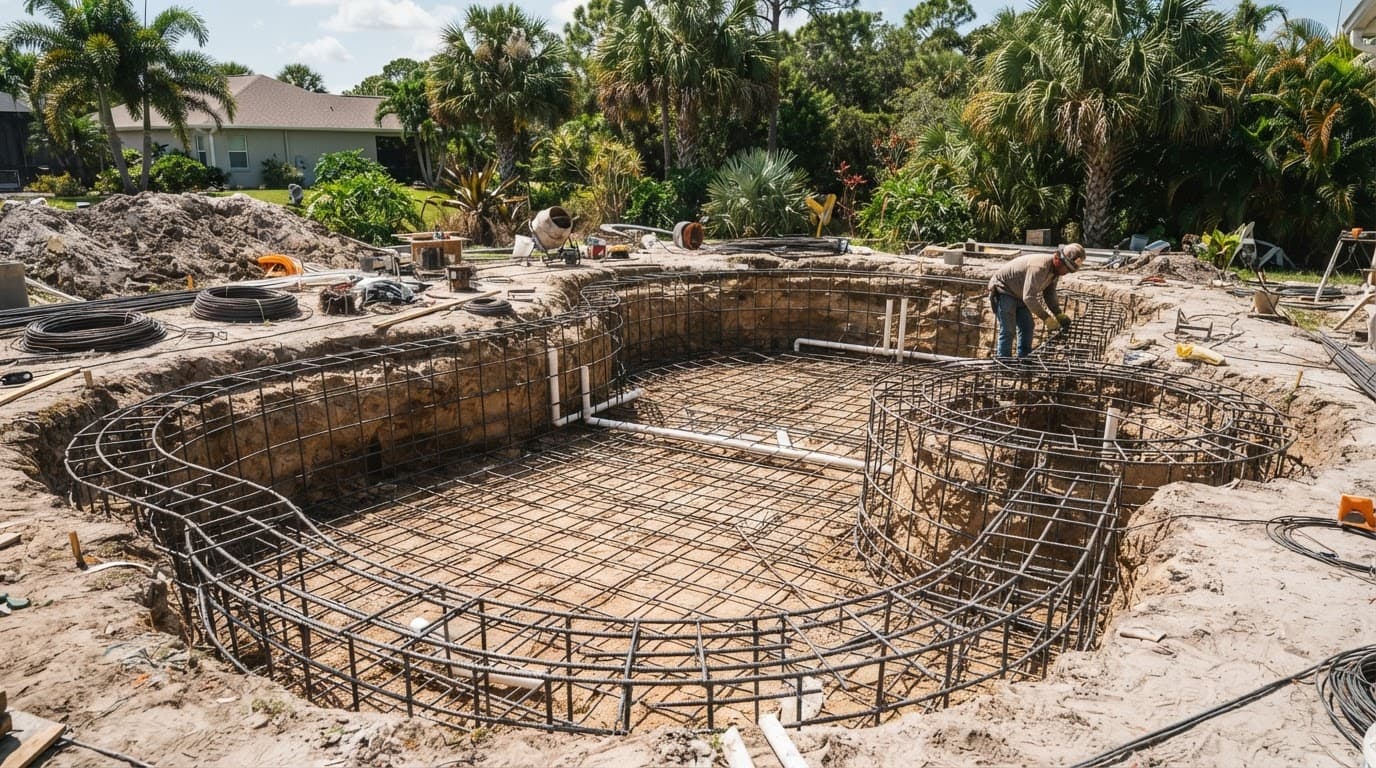
After excavation, crews install the reinforcing steel that supports the gunite shell. They also place suction lines, return lines, drains, skimmer plumbing, conduits, light niches, and plumbing for features such as bubblers or deck jets.
This phase commonly takes one to two weeks, depending on the pool's size and features. A simple rectangle has fewer plumbing paths than a pool with a spa, multiple water features, an infinity edge, or separate heating zones.
Inspections often occur before gunite covers the steel and plumbing. The exact inspection sequence depends on the permit and jurisdiction. Missing an inspection can stop the next phase, so the builder must coordinate requests and approvals carefully.
Gunite placement happens quickly
Gunite is pneumatically applied concrete that forms the pool shell. The actual placement often happens in one day, although a larger or more complex pool may require additional time.
The crew sprays the walls and floor, shapes the contours, and finishes the shell surface. The site can look dramatically different by the end of that day, but the project isn't ready for tile or plaster immediately.
The shell needs time to cure. Many Southwest Florida schedules allow about seven to ten days before the next major phase, while some builders schedule two to three weeks depending on the shell, weather, and their installation standards.
The gunite day is short, but curing time protects the shell and controls when later trades can begin.
Follow the builder's instructions during curing. Avoid walking on the shell, placing materials inside it, or changing drainage around the excavation without approval.
Tile, coping, decking, and equipment finish the project
Tile and coping usually follow curing. Coping forms the pool edge, while decking connects the pool to the rest of the backyard. These materials may include concrete, pavers, travertine, or other approved products.
This phase often takes two to three weeks. Material availability and the number of deck areas can affect the schedule. A separate screen enclosure, outdoor kitchen, fire feature, or extensive landscaping can add more time.
Interior finishes such as quartz or pebble are usually installed near the end. Equipment crews then connect the pump, filter, heater, automation, lights, and sanitation system. Electrical and other trade inspections may happen before the final startup.
After water is added, the builder balances the chemistry and checks circulation, lights, valves, heaters, and automation. The final inspection may also include the pool barrier and other safety requirements. A startup and homeowner orientation can take another day or several visits, depending on the equipment package.
Why your 2026 pool schedule may change
A realistic Fort Myers gunite pool construction timeline includes room for delays. Some causes are outside the builder's control, while others come from decisions made during planning.
Permit review is one of the biggest variables. An incomplete plot plan, missing engineering detail, or plan revision can add days or weeks. Properties in a special jurisdiction, flood-sensitive area, or neighborhood with additional requirements may need more documentation.
Weather affects nearly every outdoor phase. Heavy rain can delay excavation, gunite placement, concrete decking, and finish work. Lightning can stop crews from working safely, while tropical weather may affect deliveries and labor availability.
Lot conditions also matter. Soft soil, groundwater, buried concrete, roots, rock, poor equipment access, or an existing structure near the pool can add preparation time. The crew may need to pump water, stabilize an area, use smaller equipment, or remove unexpected material.
Subcontractor scheduling creates another variable. Tile, decking, electrical, screen enclosure, and landscaping crews may work on different calendars. A material that arrives late can leave the pool waiting even when the shell is complete.
Finally, changes after construction begins can extend the project. Moving a light, adding a water feature, changing the deck material, or revising the equipment location may require new plans, added materials, or another inspection.
How homeowners can prepare for a smoother build
You can't control every weather event or permit comment, but you can remove common sources of delay.
- Finish major selections early. Choose the pool shape, depth, spa, tile, coping, finish, decking, lights, heater, and automation before final drawings are submitted.
- Confirm the permitting jurisdiction. Ask whether your property falls under Lee County, the City of Fort Myers, or another local authority. Then confirm the required site plan, survey, engineering documents, inspections, and pool barrier details.
- Protect equipment access. Move vehicles, outdoor furniture, toys, planters, and stored materials away from the work path. Tell the builder about gates, fences, irrigation lines, septic systems, wells, and existing concrete.
- Plan the entire backyard package. A pool may be ready before the screen enclosure, new deck areas, landscaping, or outdoor kitchen. Coordinate those scopes early so one unfinished project doesn't block another.
- Keep a schedule allowance. Treat the timeline as a planning range, not a promised completion date. A written schedule should identify permit milestones, inspection points, allowances, change-order procedures, and the work that remains outside the pool contract.
For budget planning, review the guide to Southwest Florida pool costs alongside the construction schedule. A clear allowance for decking, cages, electrical upgrades, drainage, and landscaping can prevent surprises later.
When comparing companies, look for a professional pool contractor who explains the permit process, inspection timing, subcontractor responsibilities, and payment milestones in writing.
Conclusion
The shell in a Fort Myers gunite pool project may take one day to spray, but a complete 2026 project commonly takes 16 to 26 weeks . Permit review, curing, inspections, weather, lot conditions, trade scheduling, and finish selections all affect the final date.
Start with a complete site plan, make design decisions before permitting, and build reasonable time into your plans. A detailed schedule won't eliminate every delay, but it will show where the work stands and what needs to happen before your backyard is ready for swimming.