Fort Myers Pool Rebar Inspection Before Shotcrete
Explore Our Services
Contact Us Today!
(239) 322-9295
Once shotcrete covers the steel, the structural work disappears behind the pool shell. That makes a pool rebar inspection one of the most important checkpoints in a new gunite pool build.
For Fort Myers homeowners, this inspection confirms that the visible reinforcement and bonding work match the approved plans before the shell is sprayed. A missed detail is far easier to correct now than after thousands of pounds of shotcrete cover it.
Knowing what happens at this stage can help you follow the project with confidence.
Why a Pool Rebar Inspection Comes Before Shotcrete
Gunite and shotcrete form the concrete shell of a custom pool. The reinforcing steel gives that shell its designed shape and strength, but it must remain exposed long enough for inspection.
A pool rebar inspection is a required hold point. The contractor should not schedule the shotcrete crew until the permit authority approves the visible steel and related work.
The steel must stay visible
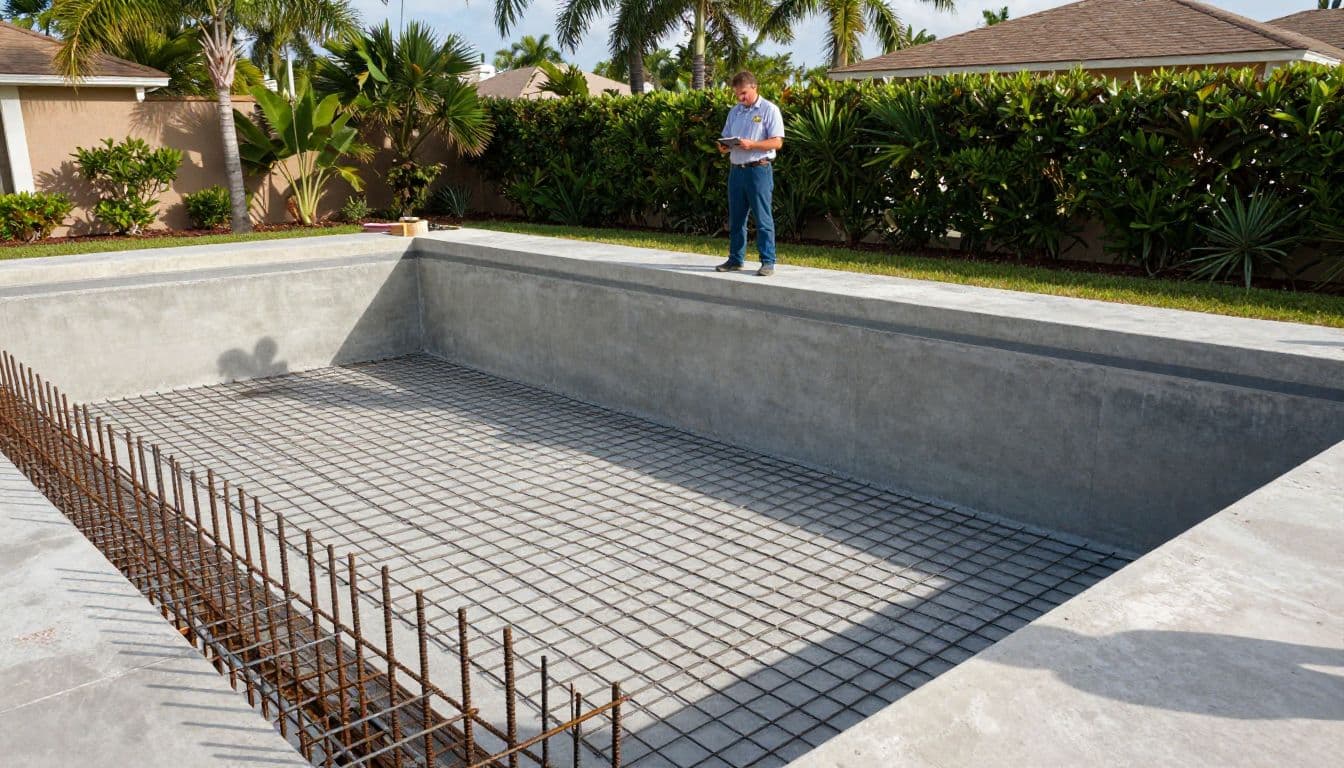
Inspectors need a clear view of the reinforcing layout in the pool floor, walls, bond beam, steps, benches, spa, and other structural features. Once shotcrete is applied, neither the inspector nor the contractor can confirm steel spacing, overlap locations, or placement within the shell.
The review also helps confirm that steel is held in its intended position rather than resting where it could shift during the shoot. Details such as bar size, spacing, bends, lap locations, and clearance come from the approved engineering documents.
Bonding is checked at the same stage
In Lee County, the published inspection guide lists Pool Steel inspection code 108 and Bonding inspection code 304 as inspections that must be requested together. That pairing matters because both systems become difficult or impossible to review after the shell is placed.
Steel and bonding should be ready for inspection before any gunite or shotcrete covers the pool structure.
Electrical bonding is different from ordinary grounding. Your licensed pool contractor and electrical professional should complete it according to the approved plans and applicable code. Homeowners should never cut, bend, move, or re-tie structural reinforcement themselves.
The Local Permit and Plan Set Control the Work
A Fort Myers mailing address does not always identify the authority that controls your permit. Your property may fall under the City of Fort Myers, unincorporated Lee County, or another municipality with its own inspection process.
The permit card, approved plans, and your contractor's permit records should identify the correct jurisdiction. Inspection names, scheduling methods, and required documents can differ by location.
Approved drawings set the inspection standard
The inspector compares visible work with the approved pool plans, not with a general rule of thumb. Engineered drawings may show the shell profile, wall and floor transitions, reinforcing schedule, concrete specifications, plumbing penetrations, and locations near nearby structures.
Site conditions can also affect the design. A pool near a home foundation, retaining wall, seawall, canal, drainage feature, or slope may need added engineering details. Flood-zone conditions and finished elevations can also affect the permit review.
Before construction begins, confirm that the pool location matches the survey, easements, and setbacks. Review the Fort Myers pool setback requirements before finalizing a layout that includes a pool, deck, enclosure, and equipment pad.
A standard pool plan does not fit every lot
Two pools with similar shapes may have different reinforcing requirements because the lots are different. Soil conditions, adjacent structures, water features, raised walls, and depth changes can all affect the engineered design.
For that reason, follow the approved drawings for your property. If field conditions differ from the plans, the contractor may need direction from the pool designer or engineer before moving ahead.
Items Reviewed Before the Shell Is Sprayed
The exact scope of a pool steel inspection depends on the jurisdiction, permit, engineered plans, and site conditions. Still, the inspection usually focuses on whether the structural reinforcement and bonding work are complete, visible, and ready for cover-up.
A clean, organized excavation helps the inspector see the work without delay.
Reinforcement in the pool shell
The inspector and contractor typically review the steel arrangement throughout the proposed shell. This can include the floor, walls, deep-end transitions, bond beam, steps, tanning ledges, benches, spa walls, and raised features.
They may verify that reinforcement follows the engineered layout and has proper support. They also look for steel that has shifted, missing connections, visible conflicts, or areas that do not match the approved pool shape.
The crew should also keep the excavation stable and free of loose material that could interfere with the shoot. However, the homeowner should leave all structural decisions to the licensed contractor and engineer.
Penetrations, plumbing, and bonding connections
Before shotcrete, the pool shell may include skimmers, returns, drains, lights, conduits, suction lines, spa fittings, and other embedded components. Their placement must work with the planned shell, finishes, and equipment layout.
The inspector may also look at bonding components that are visible at this stage. Because these systems cross several trades, clear communication between the pool contractor, electrician, and inspector prevents last-minute confusion.
A pool shell is only one part of the larger build. Fort Myers custom pool construction also involves permitting, excavation, plumbing, equipment, decking, safety features, and final startup.
How Homeowners Can Prepare for Inspection Day
Your contractor will usually coordinate the inspection request and confirm when the site is ready. Still, homeowners can make the day smoother by keeping communication open and avoiding changes to the work area.
Ask your contractor which jurisdiction is handling the permit and whether the inspection has been scheduled. In Lee County, pool inspection requests can be made through eConnect or the automated inspection system. City of Fort Myers properties follow the city's permitting and inspection process.
Keep the work area accessible
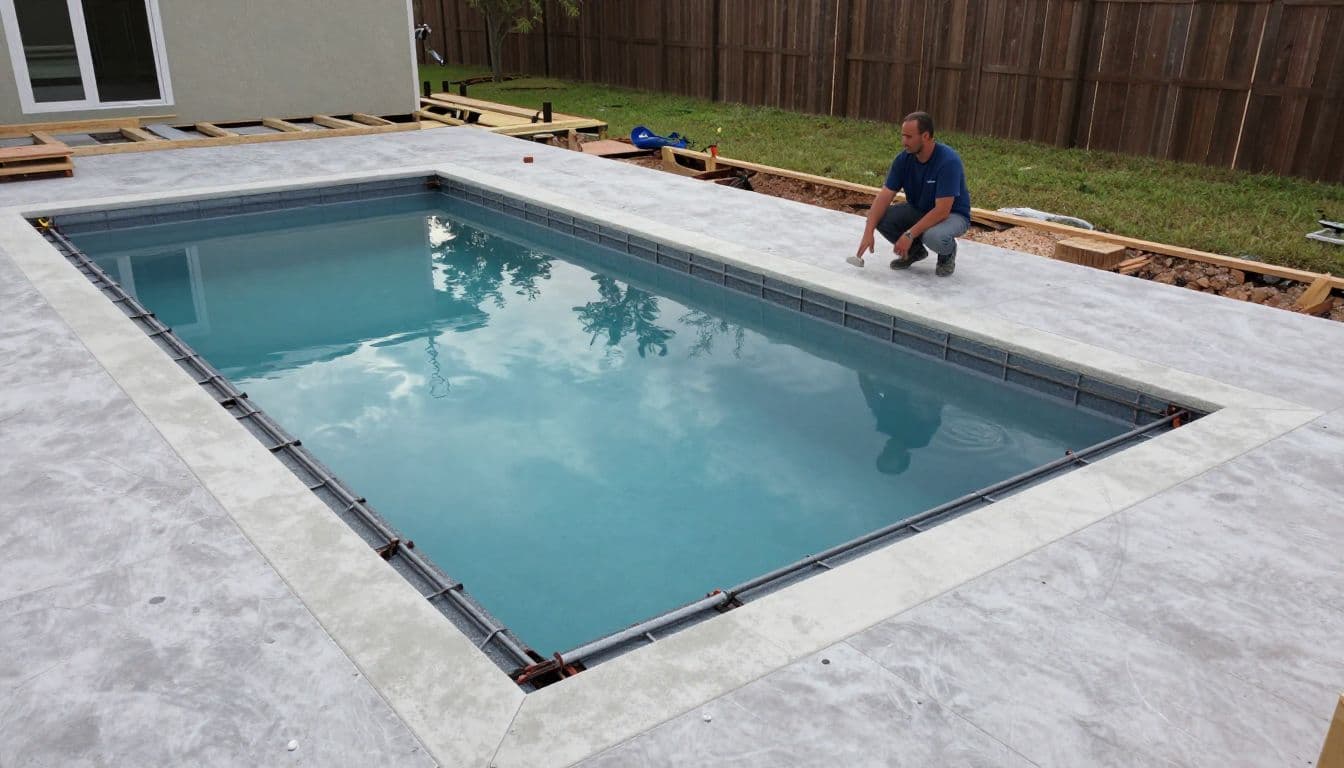
Inspection access matters. Gates should be unlocked if the contractor requests it, and pets should remain safely inside. Move vehicles, patio furniture, or stored materials that block access to the yard or equipment area.
Avoid walking inside the excavation or stepping on steel. Even a small movement can disrupt carefully placed reinforcement or create a safety hazard. Let the pool team handle site access, cleanup, and any preparation needed before the inspector arrives.
Keep your questions tied to the plans
This is a good time to ask practical questions about the next steps, planned shotcrete date, and who will share inspection results. You can also ask for confirmation that the pool's shape, steps, benches, and water features match your selections.
Save design changes for a conversation with the contractor before the inspection. A late request for a deeper shelf, altered spa, or raised wall may require revised drawings or engineering approval.
If the Pool Steel Needs Corrections
A correction does not mean the project has failed. It means the inspector found an item that needs attention before permanent concrete covers it.
The contractor should review the inspection result, determine the needed work, and coordinate with the engineer or permit authority when the correction affects the approved design.
Corrections should follow the approved design
Common issues may involve a misplaced bar, incomplete bonding work, a conflict around a fitting, or a detail that does not match the plan. The appropriate professional should direct the repair.
Do not ask a crew member to make an unapproved structural change to speed up the shotcrete date. A change that seems minor can affect the engineer's design or create another inspection issue.
Once the contractor completes the correction, they request a reinspection. Shotcrete should wait until the required inspection passes.
Scheduling may shift, but the pause protects the project
A failed or incomplete inspection can move the shell schedule, especially if the shotcrete crew has already been reserved. However, correcting visible work is less disruptive than opening a completed shell later.
Lee County's pool permit application also warns that a permit can become void if the first inspection does not occur within six months of issuance, or if six months pass after the most recent approved inspection. Long project pauses deserve prompt attention from the contractor and permit holder.
After Approval: Moving Toward the Shotcrete Shell
A passed steel and bonding inspection gives the contractor permission to move into the shell phase. The crew can then prepare the excavation and schedule the gunite or shotcrete application under the approved plans.
The pool may look dramatically different after one day of shooting. Yet a passed pool steel inspection does not complete the permit process.
The shell starts the next construction phase
After shotcrete cures as directed by the contractor, the project moves through later stages such as tile, coping, deck preparation, equipment installation, interior finish, and startup. Depending on the design, there may also be work for an enclosure, safety barrier, electrical system, gas heater, or outdoor kitchen.
Each phase has its own timing. Weather, material availability, inspection scheduling, and approved changes can affect the sequence.
Final approval comes later
Lee County's inspection list includes a separate Pool Final inspection. Final approval may also involve the completed deck, equipment, barriers, gates, alarms, fencing, enclosure, and other safety items.
Keep copies of inspection results, approved plans, change orders, and warranty documents. Those records are useful during the build and can help future owners understand the pool's construction history.
Final Thoughts
A pool shell can only be inspected properly while the reinforcement remains visible. That is why the pool rebar inspection belongs before shotcrete, not after it.
Follow the approved plans, confirm the correct local jurisdiction, and let your licensed contractor coordinate inspection timing and corrections. Careful work at this stage gives the rest of the Fort Myers pool project a sound place to begin.