Fort Myers Pool Tile Repair: A Gunite Grout Guide
Explore Our Services
Contact Us Today!
(239) 322-9295
A missing strip of grout at the waterline can look like a small weekend job. But if the tile beside it is loose, filling the gap won't solve the problem. In Fort Myers, the first decision in pool tile repair is whether you're seeing worn grout, failing tile, or movement beneath the finish.
That distinction matters in a gunite pool, where tile sits over a concrete shell and meets coping, plaster, and other materials. Start with the signs you can see, then match the repair to what actually needs attention.
Key takeaways
- Missing grout between firmly attached tiles may be a limited repair. Loose tile or recurring gaps call for a closer look.
- A crack that continues through tile, coping, or plaster needs more than a new grout line.
- Don't drain a Fort Myers pool to expose the waterline without professional advice. Groundwater conditions can affect how the pool is safely emptied.
- Ask for a written scope that separates grout work from tile replacement, shell repair, and any other proposed work.
What grout can and can't repair in a gunite pool
Gunite forms the pool shell. The visible finish may include plaster below the waterline, tile at the waterline, and coping along the top edge. Grout fills the joints between tiles; it doesn't hold a damaged shell together or correct loose tile.
A limited grout repair
When a few joints have worn away but the surrounding tiles remain firmly bonded, a contractor may be able to remove unsound grout and refill those joints. The repair area might be small, yet preparation still matters. New material needs a suitable joint and a sound surface beneath it.
Damage beyond the joints
A tile that shifts when touched needs its attachment assessed. A crack crossing several tiles may involve the material behind them. Meanwhile, gaps beside coping or at a designed movement joint may call for a different treatment than the rigid grout between tiles.
If you're comparing finishes for a planned build, custom gunite pool construction in Fort Myers shows how tile fits into the broader sequence of shell, coping, decking, and finish work.
How to read damage at the waterline
Look at the whole tile band before focusing on its worst inch. A short missing joint beside stable tile suggests a different scope than repeated gaps around a pool corner.
Signs that may stay within the grout
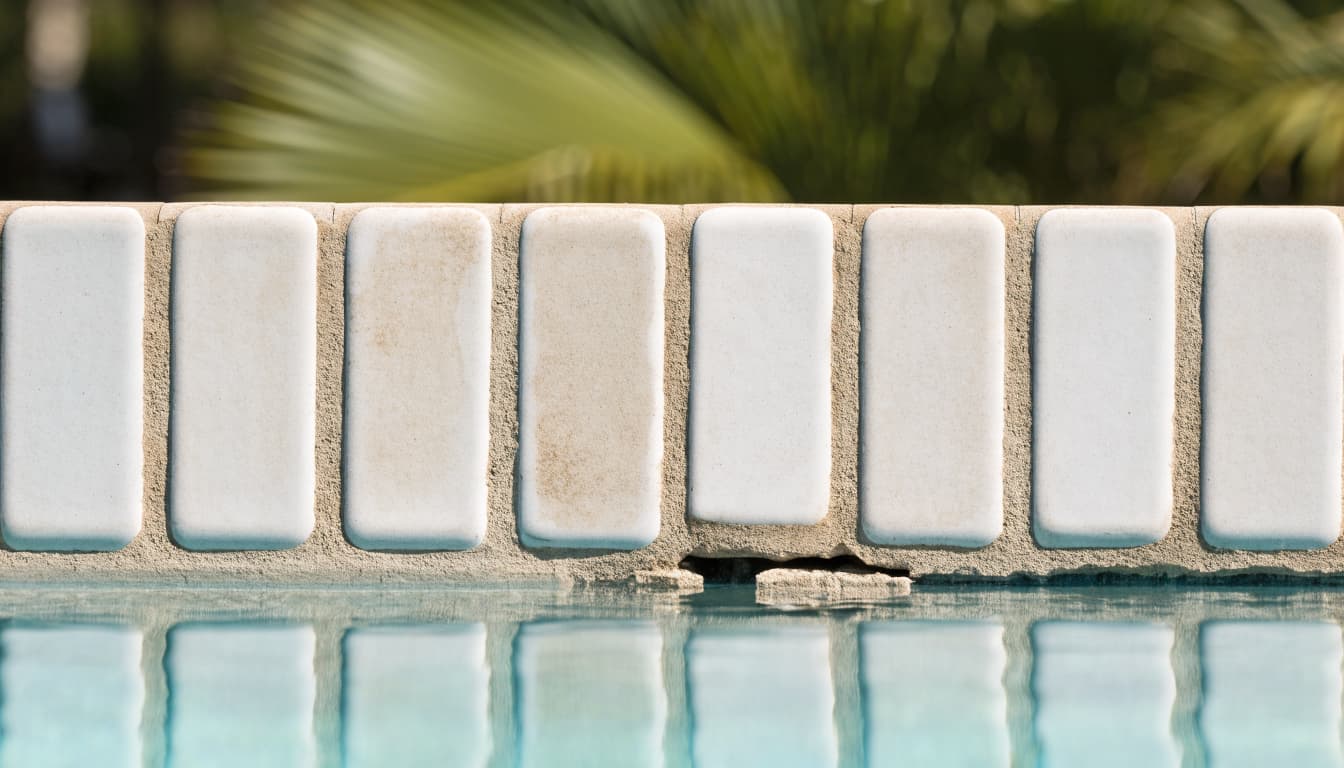
Note which joints have shallow pits, missing sections, or material that comes away during ordinary cleaning. Also check whether the tiles stay aligned with their neighbors. Surface staining alone doesn't tell you whether the joint has failed, so don't assume every discolored line needs removal.
Take clear photos before cleaning or scraping. Include one close view and another showing the pool corner, step, or skimmer nearest the damage. Those wider shots help a contractor find the area and understand its extent.
Signs that call for a broader assessment
Flag tiles that sound hollow when a professional checks them, move under light pressure, or have fallen away. Also record cracks that continue into the coping or plaster, and joints that reopen after a previous repair. Avoid tapping or prying at suspect tile yourself; you could loosen more of the band.
Repeated grout loss in the same spot is a reason to check the tile's bond and the material beneath it before approving another patch.
Why Fort Myers site conditions affect the plan
A local repair doesn't always require major site work. Still, Southwest Florida conditions matter when access, draining, or nearby movement becomes part of the job.
Rain, drainage, and nearby concrete
Heavy rain can interrupt exposed repair work, so ask how the crew will protect the prepared area and decide when it's ready for the next step. Also look beyond the pool wall. A deck that has settled beside the coping or directs runoff toward the pool deserves assessment on its own terms.
Deck movement doesn't prove the gunite shell has moved. However, a contractor should examine a crack that runs across connected areas rather than covering each visible section separately.
Groundwater and water level
Some Fort Myers properties have shallow groundwater. Emptying a concrete pool under unsuitable conditions can create serious problems, so don't drain it as a DIY preparation step . A qualified pool professional can determine whether the work needs a lower water level and how to manage it safely.
The same care applies after storms or unusually wet periods. The repair schedule should follow site conditions and the selected material's instructions, not a fixed promise made without seeing the pool.
When Fort Myers pool tile repair needs an inspection
A professional inspection is the sensible next step when symptoms extend past a few grout joints. It should identify what is damaged before assigning a repair method.
Pool and tile warning signs
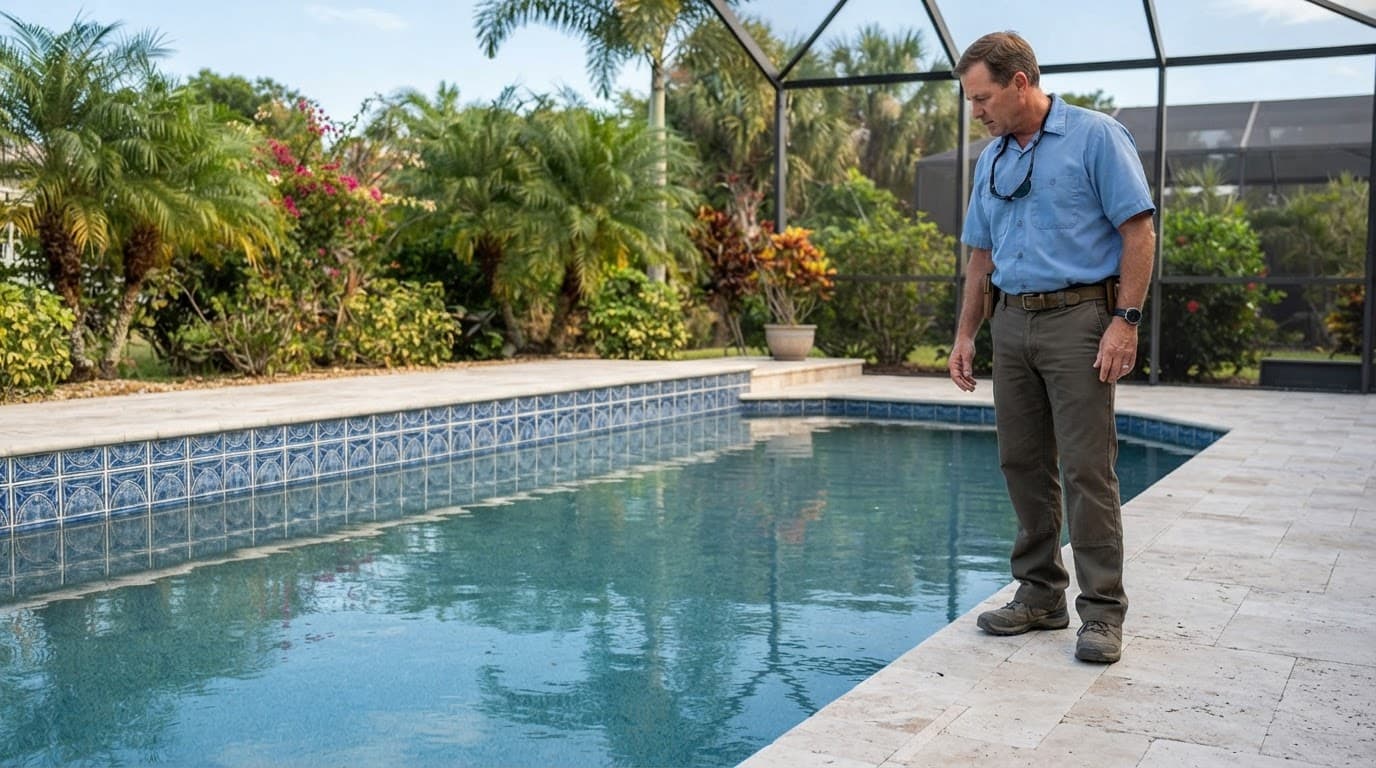
Call a qualified pool contractor if several tiles are loose, large areas sound hollow, cracks cross tile and plaster, or repaired joints keep failing. Unexplained water loss also warrants investigation. A grout gap alone doesn't establish where water is going; plumbing, fittings, and other parts of the pool may need evaluation.
Ask the inspector to distinguish a tile-bond problem from a finish or shell concern. That answer determines whether regrouting, tile replacement, or a larger repair makes sense.
Coping, deck, and drainage warning signs
Check for a widening gap between coping and deck, uneven deck sections, or a crack with one side higher than the other. These conditions deserve separate attention, particularly when runoff collects near the pool or house. Grout won't correct settlement or poor drainage.
For an assessment that considers the pool and surrounding space, start with an experienced Fort Myers pool contractor. Describe both the tile symptoms and any changes you've seen in nearby concrete.
How a qualified grout repair is planned
A lasting repair begins with a defined boundary: which joints can be repaired, which tiles must come out, and whether the surface beneath them is sound.
Diagnosis and preparation
The contractor should inspect the tile band, identify loose material, and explain what must be removed. Sound neighboring tiles and the pool finish need protection during that work. If opening a joint exposes loose tile or damaged material behind it, the scope should change before anyone fills the gap.
Ask how the crew will handle the joint where tile meets coping or another material. A designed movement joint shouldn't automatically receive the same rigid grout used between tiles. The contractor should follow the pool's existing assembly and the chosen repair system.
Material, curing, and return to use
Have the contractor identify the proposed material and confirm that its manufacturer approves the intended pool exposure. Compatibility depends on the joint, substrate, and whether the area sits above, at, or below the normal waterline. No single product choice fits every pool.
The written plan should state the preparation method, any needed water-level adjustment, cure requirements, and when normal pool use can resume. Follow the actual product instructions and site conditions rather than assuming a universal wait time.
A Fort Myers pool tile repair quote should also say what happens if removal reveals a loose tile. That keeps a grout-only estimate from being mistaken for approval to cover hidden damage.
Is a small grout repair a DIY job?
A homeowner can document damage, keep the area free of loose debris, and arrange an assessment. Regrouting becomes less straightforward once the joint reaches the waterline or nearby tile is questionable. Removing old material without nicking tile or the underlying finish takes care, and the replacement must suit the application.
Avoid forcing material over dusty, crumbling grout to hide a gap. Also avoid pulling loose tile to see what is behind it. If a joint keeps opening, treat that as a diagnostic problem rather than an invitation to repeat the patch.
For Fort Myers pool tile repair involving water-level changes, hollow areas, or cracks beyond the joints, use a qualified professional. The cost of inspection is easier to judge than the consequences of disturbing sound tile or draining a pool improperly.
Compare repair quotes without guessing at price
A fair comparison starts with the same description of the damage. Send each contractor photos, the location of the affected tile, and any history of prior repairs. Then ask for an on-site assessment when the condition can't be confirmed from images.
Look for a proposal that identifies:
- The joints and tiles included in the work, plus any areas excluded.
- How the crew will prepare the surface and address loose or hollow material.
- The selected material, its cure instructions, and the plan for water-level management.
- What triggers a revised price if the crew finds additional damage.
There isn't a reliable flat price for every grout repair. Access, the amount of failed material, tile replacement, and underlying conditions all change the scope. If widespread tile loss or worn plaster is involved, compare a targeted fix with pool resurfacing and tile replacement as part of a broader renovation. Ask whether permits or inspections apply if the proposed work extends beyond a limited finish repair.
Check the repair after the pool returns to use
Once the contractor clears the pool for normal use, take photos of the finished joints. They provide a useful reference if a line changes later. Follow the installer and material manufacturer's cleaning guidance instead of using an aggressive cleaner on a fresh repair.
During routine pool care, watch for new gaps, tile that sits proud of its neighbors, or material shedding from the same spot. Keep a record of when you first notice a change, especially after earlier repairs in that area. If the problem returns, ask the contractor to reassess the cause before placing more grout over it.
Frequently asked questions
Can missing pool-tile grout cause a leak?
A missing joint shows that the tile assembly needs attention, but it doesn't identify a leak path. If the water level is dropping unexpectedly, request a pool leak assessment rather than assuming fresh grout will stop it.
Should I replace every tile when one joint fails?
Usually, the decision depends on the condition of the nearby tile and its bond. An intact, firmly attached tile band may allow a limited repair. Loose tiles or widespread hollow areas need a different scope.
Can I repair grout without draining the whole pool?
Possibly, but the access method depends on the joint location and repair material. Have a pool professional decide whether lowering the water is necessary. Don't empty a gunite pool without a site-specific plan.
Conclusion
The smallest visible gap isn't always the full repair. Sound tile and a clear diagnosis are what make a limited grout fix reasonable; loose tile, recurring cracks, or nearby movement change the plan.
Document what you see before work begins. Then choose a scope that addresses the damaged assembly, not only the line visible at the water's edge.