Fort Myers Roof Inspection Checklist Before Hurricane Season
Explore Our Services
Contact Us Today!
(239) 322-9295
A roof can look sound from the driveway and still have loose tiles, failed sealant, or exposed fasteners. A Fort Myers roof inspection can find those problems before wind-driven rain turns a small defect into interior damage.
Atlantic hurricane season runs from June 1 through November 30. Before the first serious storm threat, check what you can safely see from the ground, then have a licensed roofing contractor evaluate areas that require roof access or technical knowledge.
Fort Myers roof inspection: begin with a ground-level check
Walk around your home on a clear day and inspect the roofline, exterior walls, gutters, and nearby trees. Use binoculars for difficult areas, but don't climb onto the roof. Tile can crack under foot, and wet shingles, steep slopes, and metal surfaces create serious fall risks.
A ground inspection won't replace professional work. It can help you identify warning signs and give the contractor useful information when you schedule a full evaluation.
Check the roof covering from the yard
Roof materials respond differently to Southwest Florida weather. Look for signs that match your home's covering:
- Concrete or clay tile: Search for cracked, broken, slipped, or missing tiles. Also look for uneven rows, exposed underlayment, and pieces in the yard or gutters.
- Asphalt shingles: Watch for missing shingles, lifted corners, dark patches, bald spots, and loose or exposed nails. Granules collecting in gutters can indicate surface wear.
- Metal roofing: Check for visible rust, loose fasteners, raised seams, damaged panels, and deteriorated coating. Salt air can speed corrosion near the coast.
- Flat or low-slope areas: Look for standing water, bubbling, open seams, and damaged membrane edges. These areas deserve prompt attention because water can remain after heavy rain.
Don't use roof cement, caulk, or spray coatings to hide a problem. A quick patch may trap moisture or interfere with a proper repair.
Inspect edges, penetrations, and drainage
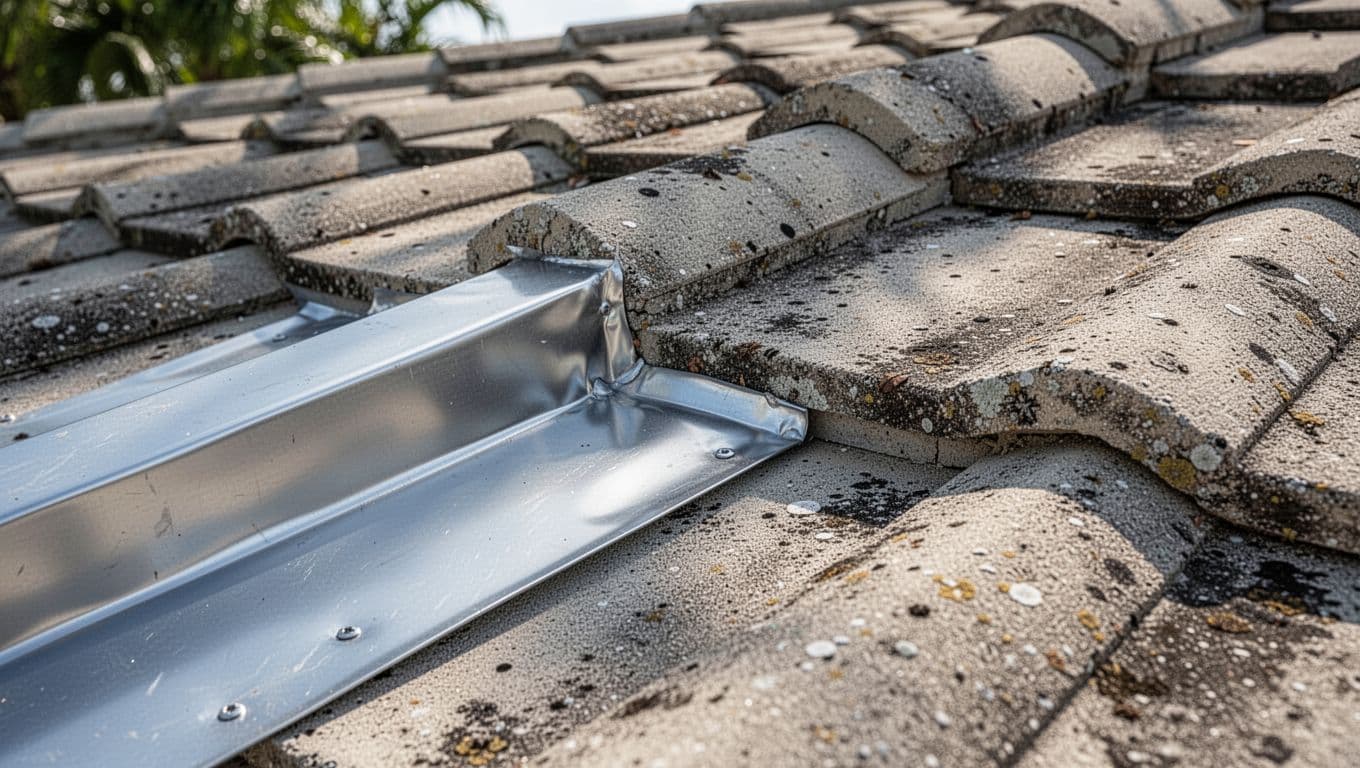
Roof damage often starts where different materials meet. From the ground, examine the flashing around plumbing vents, skylights, chimneys, wall intersections, and roof valleys. Bent metal, gaps, dark stains, or loose sections need a contractor's assessment.
Check the fascia and soffit for peeling paint, rot, soft spots, water stains, or gaps. These areas can show that water has moved behind the roof covering. Look at the drip edge along the roof perimeter as well. Missing or damaged edge metal can leave vulnerable areas exposed to wind and rain.
If your home has gutters, clear leaves and palm fronds from sections you can reach safely. Make sure downspouts discharge water away from the foundation and that extensions haven't separated. Sagging gutters, overflowing marks, and loose brackets need repair before a major storm.
What a licensed roofing contractor should inspect
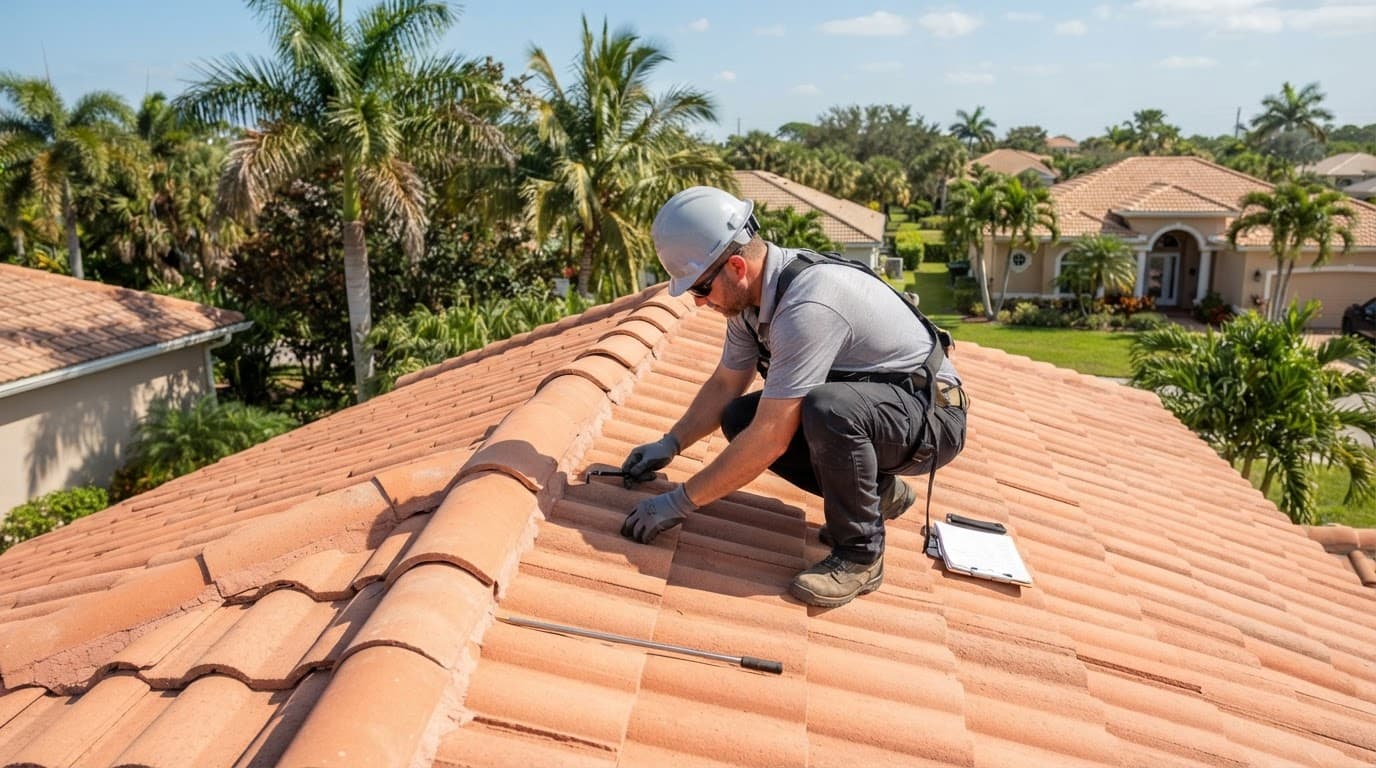
A professional Fort Myers roof inspection goes beyond visible surface damage. The contractor should examine the roof covering, roof edges, flashing, penetrations, drainage, and accessible attic areas. Ask for photographs and a written report that separates current defects from recommended maintenance.
The inspection should also account for your roof material, installation history, past repairs, and exposure to local weather. A home near the Caloosahatchee River, an open lot, or the Gulf may experience different wind and salt exposure than a protected inland property.
Review attachment and structural condition
Roof coverings need more than an intact appearance. A contractor should check whether tiles, shingles, or panels remain properly attached and whether fasteners show corrosion or movement. They should also inspect areas where the roof connects to walls, ridges, hips, valleys, and gable ends.
Inside the attic, the inspection may reveal wet insulation, stained wood, mold-like growth, daylight, damaged sheathing, or signs of past leaks. The contractor can examine ventilation paths and determine whether moisture comes from a roof leak, condensation, or another source.
Roof decking and framing deserve attention after previous leaks or repairs. Soft wood, sagging sheathing, and damaged trusses can affect how the roof handles future weather. Homeowners shouldn't walk through attic spaces without proper support because a ceiling surface won't hold body weight.
A written report should identify each concern by location. "Roof needs repair" isn't enough detail to plan work or compare estimates. Useful notes explain whether the problem involves a tile, flashing detail, fastener, deck section, or drainage component.
Ask about wind mitigation separately
A basic roof inspection and a wind mitigation inspection are related, but they aren't the same service. Wind mitigation reviews construction features that may reduce wind damage, including roof shape, roof-to-wall connections, roof-deck attachment, gable-end bracing, and opening protection.
Ask the contractor which items their inspection includes and whether they provide a separate wind mitigation form. The report should reflect what the inspector actually observed, not what a homeowner expects to receive.
If your property is in Cape Coral, you can review the company's information about roof inspections in Cape Coral when comparing local inspection services.
A contractor should also explain any limits. For example, an inspector may identify a suspected structural issue without opening finished areas or removing roof materials. That finding may require a roofer, engineer, or another qualified professional.
Safe homeowner tasks before the contractor arrives
You can handle several preparation steps without getting on the roof. Stop and call a professional when a task involves roof access, electrical lines, steep ladders, suspected structural damage, or storm-damaged materials.
- Clear accessible debris. Remove leaves and small branches from the ground, low exterior areas, and gutters you can reach without stretching or climbing onto the roof. Hire a qualified tree service for large limbs or trees near power lines.
- Inspect the attic from a safe position. Use a flashlight and look for stains, wet insulation, daylight, or damaged wood. Stay on the flooring or joists designed for foot traffic. Don't step on ceiling drywall.
- Check interior ceilings and walls. Look beneath roof valleys, vents, skylights, and exterior wall intersections. New discoloration, bubbling paint, musty odors, or damp drywall should go on your inspection notes.
- Secure loose outdoor items. Patio furniture, planters, umbrellas, ladders, and construction materials can become projectiles during tropical-storm-force winds. Store or secure them before a storm watch becomes urgent.
- Keep roof access clear. Move vehicles and stored items away from the area where a contractor will inspect. Clear a safe path to the attic access point and note where previous repairs took place.
Don't replace tiles, tighten roof fasteners, walk on shingles, or apply sealant unless a qualified contractor gives you specific instructions. A repair that looks minor can damage the surrounding system.
Document the roof before hurricane season
Take clear, dated photographs of each roof slope from the yard. Include the roof edges, visible flashing, gutters, exterior walls, and any existing stains. Keep the original files instead of relying only on compressed social media or messaging copies.
Gather your roof permit records, installation invoice, product warranty, repair receipts, and prior inspection reports. These documents help a contractor understand the roof's history and can make future maintenance easier to organize.
A written Fort Myers roof inspection report can also document the roof's pre-season condition for your records. Photos and inspection notes may help establish what existed before a storm, but they don't guarantee insurance coverage, payment, or claim approval. Your policy, deductibles, exclusions, reporting deadlines, and insurer's investigation still control the claim process.
After a storm, take new photographs only when conditions are safe. Don't move dangerous debris, climb onto the roof, or make permanent repairs before documenting damage if your insurer requests an inspection. Temporary steps to prevent additional damage may be appropriate, but follow your policy instructions and keep receipts.
When to schedule your Fort Myers roof inspection
Schedule the inspection several weeks before June 1 if possible. Local roofing contractors often have full calendars when a storm approaches, so waiting until a named storm enters the Gulf can limit your choices.
Arrange an inspection sooner if your roof has visible damage, a history of leaks, missing materials, extensive corrosion, or an uncertain installation date. Homes undergoing remodeling or preparing for sale may also benefit from an up-to-date condition report.
When you call, provide the roof material, approximate age, known leaks, recent repairs, and any areas you can't safely inspect. Ask whether the service includes attic access, photographs, flashing, drainage, and a written report.
A dependable contractor should identify urgent repairs separately from routine maintenance. Ask for an explanation of the repair method, materials, permits if required, and whether the recommendation involves a localized repair or broader roof work. You should also verify the contractor's current Florida license, insurance, and written agreement before work begins.
A pre-season inspection can't predict every storm outcome. It can give you a clear starting point and reduce the chance that an old defect goes unnoticed.
Conclusion
A Fort Myers roof inspection should cover more than missing shingles or broken tiles. Check the roofline from the ground, look for drainage and flashing concerns, inspect the attic safely, and hire a licensed contractor for roof access, attachment details, and structural questions.
Documenting the roof before hurricane season gives you useful records for maintenance and possible insurance discussions. When the first storm warning arrives, a roof with known conditions is easier to protect than one you haven't checked.