Why Does a Gunite Pool Lose Water Faster in Hot Weather?
Explore Our Services
Contact Us Today!
(239) 322-9295
Hot weather can increase gunite pool water loss because warm pool water evaporates faster, especially when the air is dry or windy. Direct sunlight can warm the water too, while swimming and water features may add to the loss.
That doesn't mean every falling waterline is normal. In Southwest Florida, a bucket test can help you distinguish evaporation from a possible leak before you plan a repair.
Why summer weather increases evaporation
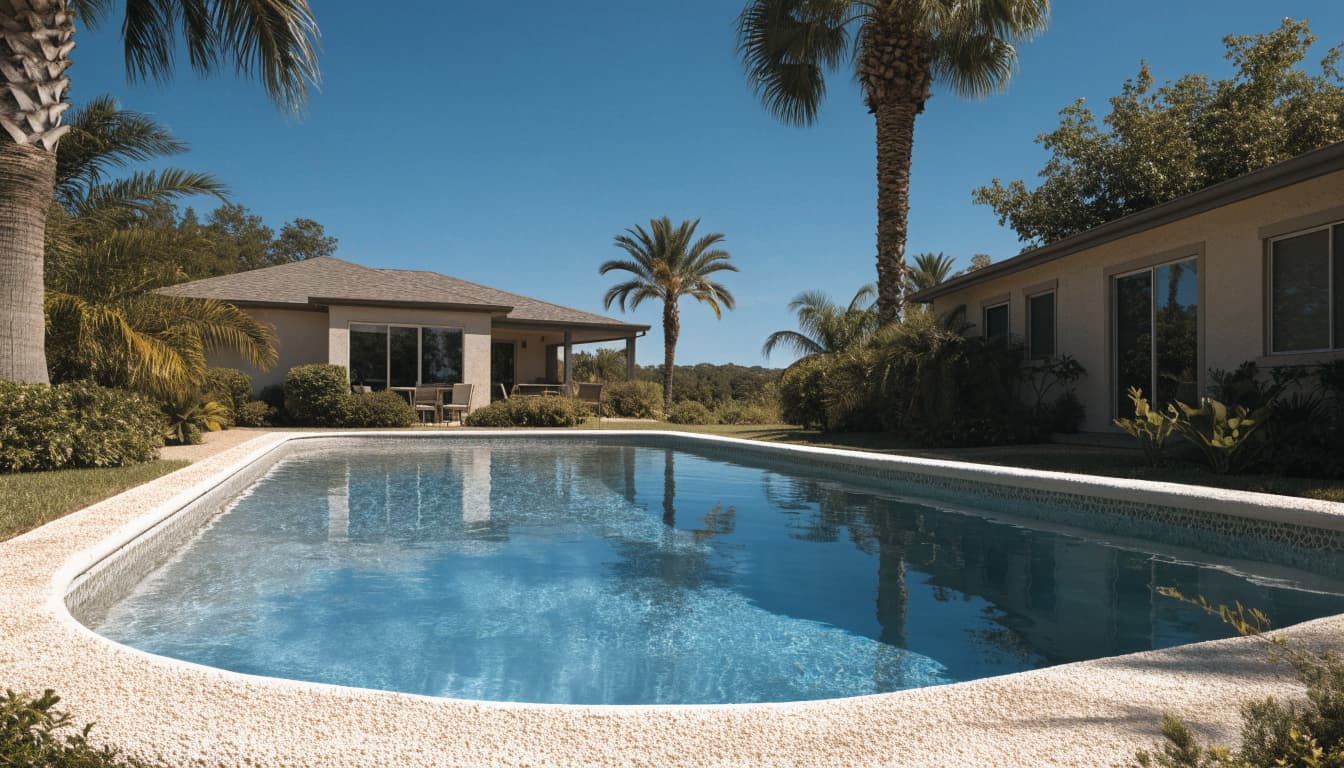
Evaporation happens when water at the pool's surface turns into water vapor and enters the air. The rate changes with the weather, so your pool won't lose the same amount every day.
Heat and direct sunlight
Sunlight transfers energy to the water, raising its temperature. Warmer water generally evaporates faster because more water molecules can escape into the air. A pool with little afternoon shade may therefore need more frequent top-offs during sunny weather.
Gunite forms the structural shell, but the water surface is where evaporation occurs. A gunite pool doesn't necessarily evaporate faster than a pool made with another material.
Humidity and wind
Dry air can accept more water vapor than humid air at the same temperature, which encourages evaporation. Southwest Florida is often humid, but humidity still changes with the weather.
Wind also matters. It carries away the moist air that collects above the water, allowing more evaporation to occur. A screened enclosure can reduce some wind exposure, but it won't stop evaporation altogether.
What else can lower the waterline?
Before assuming the pool has a leak, consider how you use it. Swimming and splashing move water onto the deck, while fountains, spillovers, and other features expose more water to the air. Filter cleaning can also send water out of the system.
Rain can make the pattern harder to read. A storm may replace some lost water and hide a leak, while an automatic fill device can keep the pool at a steady level even when water is escaping.
For a useful comparison, note recent weather and pool activity alongside the water level. Frequent top-offs deserve attention, but they don't identify the source on their own.
How to test gunite pool water loss with a bucket
A bucket test compares the change in the pool's water level with the change in a container exposed to similar weather. It's a screening tool, not a way to locate a leak.
- Place a weighted bucket securely on a pool step. Keep its rim above the pool waterline so pool water can't flow into it.
- Fill the bucket with pool water until the water inside is approximately level with the surrounding pool water.
- Mark the water level inside the bucket and the pool level on the outside. Record the start time.
- Turn off the automatic fill, if you have one. Avoid swimming, splashing, cleaning, and running water features during the comparison.
- At the end of the same measured period, mark both levels again. Compare how far each level dropped, rather than comparing the final waterlines alone.
If both levels fall by about the same amount, evaporation is a likely explanation. If the pool level falls more than the bucket level, a leak becomes more likely. Repeat the comparison under similar conditions to see whether the difference persists.
Rain, changes in circulation, or a disturbed bucket can make the result less useful. Keep the pool water high enough for the circulation system to operate safely, and don't run a pump dry.
A bucket test can suggest excess water loss, but it can't tell you whether the source is a pipe, fitting, equipment component, or the pool itself.
Signs that call for a closer inspection
A pool can have a leak while its equipment appears to run normally. Look for patterns rather than treating any single symptom as proof.
Changes around the shell and deck
Pay attention to cracks that widen, return after repair, or appear near a fitting. Loose tile, separation around a skimmer, or a waterline crack paired with persistent water loss also deserves an inspection.
Damp soil, erosion, sinking pavers, or a gap near the deck may be useful clues. However, irrigation, rain, and drainage can also leave the area wet. Our guide to pool shell and deck movement covers related signs to watch.
Plumbing and equipment clues
Look for water escaping from a visible fitting or equipment connection while the pump operates. Loss that increases when the pump runs may point toward a return line or equipment issue.
Air bubbles at the returns or trouble maintaining pump prime may suggest a suction-side issue. Neither symptom identifies a buried leak by itself. If the pump isn't moving water, turn it off and arrange service rather than allowing it to run dry.
How a professional finds the source
A pool professional can inspect the shell, fittings, equipment pad, and surrounding area, then use targeted tests to narrow the cause. For example, dye testing can help evaluate a suspected opening around a skimmer, crack, or fitting under controlled conditions.
Pressure testing an isolated plumbing line can show whether that line holds pressure. If it doesn't, additional locating methods can help narrow the repair area before anyone opens the deck.
A falling water level that stops near a particular elevation can also guide an inspection, although it doesn't confirm the location on its own. Our pool leak testing guide explains how these observations fit into a broader diagnosis.
Reduce avoidable water loss
A pool cover can reduce evaporation when the pool isn't in use. Turning off fountains and spillovers when you don't need them also limits water exposure to the air.
Keep an eye on the waterline and your refill habits through changes in weather. If loss continues after a bucket comparison, or you see cracking or wet soil, arrange an inspection rather than patching a suspected opening before testing.
Start with the water-loss pattern
Heat, sun, wind, and lower humidity can all increase evaporation. A useful next step is to compare the pool's water loss with a bucket under the same conditions.
If the pool consistently loses more, look for tested evidence before choosing a repair. The source could be in the plumbing, equipment, fittings, or pool structure, and each calls for a different response.