Port Charlotte Gunite Pool Leak Detection Before Demolition
Explore Our Services
Contact Us Today!
(239) 322-9295
A shrinking pool waterline can make a full demolition proposal feel inevitable. Yet water loss alone doesn't prove that a Port Charlotte gunite shell has failed. Gunite pool leak detection can separate a leaking pipe, fitting, equipment pad, or shell from ordinary evaporation and splash-out.
Before you approve jackhammers or authorize pool removal, get the source tested and documented. A controlled inspection may save the shell, limit deck damage, and turn an expensive demolition into a focused repair or renovation. The first step is understanding what visible symptoms can and cannot tell you.
Why Testing Comes Before Pool Demolition
A gunite pool can lose water through several areas. The shell, skimmer, main drain, return lines, light niches, water features, autofill, filter system, and pump equipment can all contribute to water loss.
Because many pool lines run beneath concrete decks or landscaping, a wet area doesn't identify the failed component. Likewise, a crack in the finish doesn't automatically mean the structural shell needs removal.
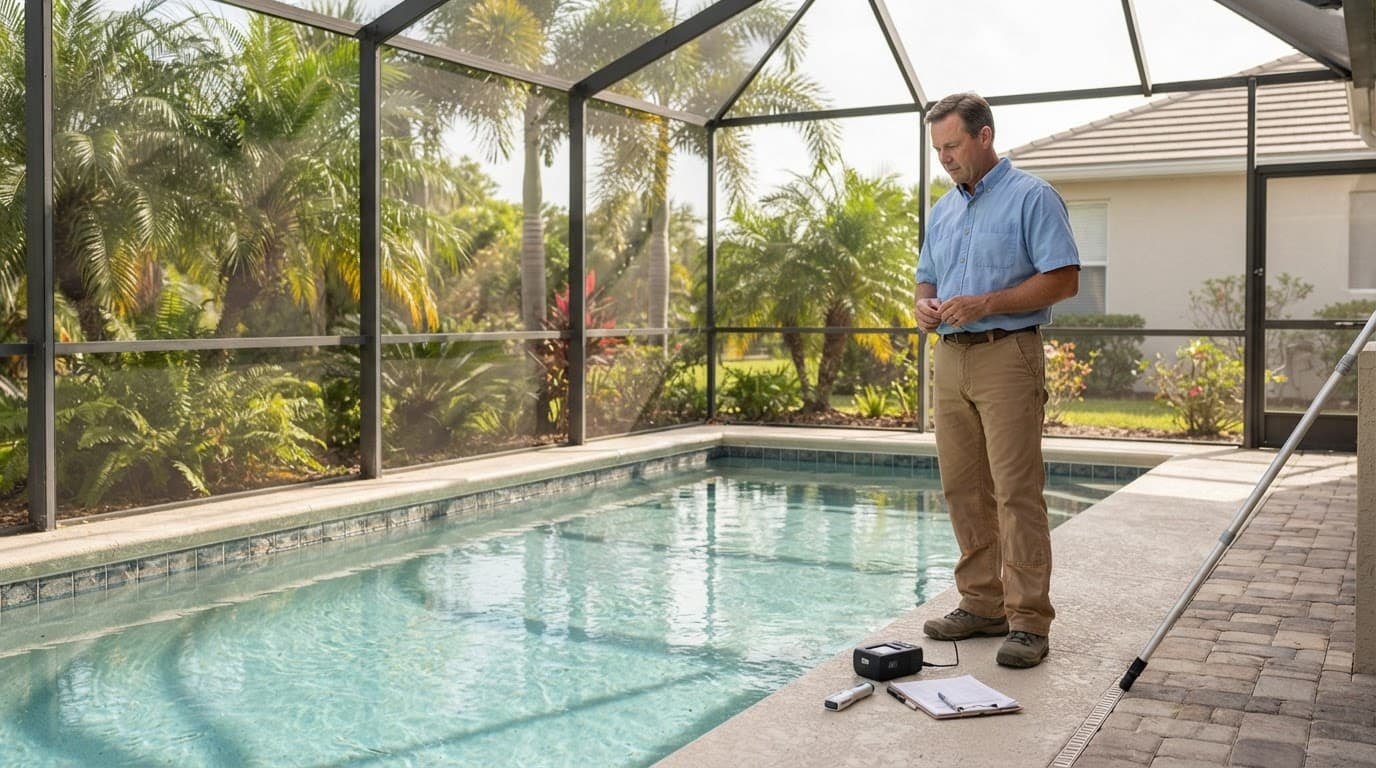
A visible crack doesn't tell the whole story
Pool finishes can crack, discolor, or separate without creating a major structural problem. Deck cracks can also look connected to the pool when the actual leak comes from a buried return line.
A leak around a skimmer or light niche may need localized access. A damaged equipment seal may release water only when the pump operates. Each condition calls for a different repair plan.
Demolition can remove useful evidence
Once crews break concrete, remove tile, drain the pool, or destroy plumbing access points, the original condition becomes harder to document. You may also create additional work involving deck replacement, soil restoration, landscaping, drainage, and permits.
The inspection fee is a small project cost compared with removing an entire pool that could have been repaired. A written test report gives you a stronger basis for comparing repair, renovation, and demolition proposals.
Pool Symptoms Are Clues, Not Confirmed Findings
Homeowners often notice the same signs before different types of pool failures. Use the symptom as a reason to test, not as proof of a specific cause.
| Pool symptom | Possible causes | What helps confirm it |
|---|---|---|
| Water level keeps dropping | Evaporation, splash-out, autofill trouble, shell or plumbing leak | Controlled water-loss test |
| Pump loses prime or shows air | Low water, lid seal, suction-side issue, clogged equipment | Equipment and suction-line inspection |
| Wet soil near the deck | Pool plumbing, irrigation, drainage, or rainwater | Line isolation and pressure testing |
| Crack near the waterline | Finish, deck, beam, or structural shell | Crack inspection, dye testing, and structural review |
| Water stops at one level | Leak near that elevation | Repeatable observation and targeted testing |
A pool with a leak can still run normally. Another pool may lose water because of hot weather, wind, or heavy splash-out around a busy patio.
Use a bucket test as a screening step
A bucket test can help compare pool water loss with evaporation. Place a weighted container on a pool step, fill it with pool water, and mark the water level inside the container and in the pool. After a measured period with similar conditions, compare the two levels.
If the pool drops more than the container, a leak becomes more likely. However, this test won't locate the leak or separate plumbing loss from a shell problem. It also becomes less useful after rain, heavy swimming, cleaning, or changes in circulation.
Look for repeatable evidence
A confirmed finding should come from a repeatable test or a directly observed failure. Examples include pressure loss in an isolated plumbing line, dye movement into a suspected opening, or water escaping from a cracked fitting while the circulation system operates.
A visual inspection can identify areas that need testing. It cannot confirm an underground plumbing leak by itself.
What Professional Gunite Pool Leak Detection Checks
Professional gunite pool leak detection usually follows a process of elimination. The technician evaluates the pool, equipment, plumbing, and surrounding conditions instead of relying on one clue.
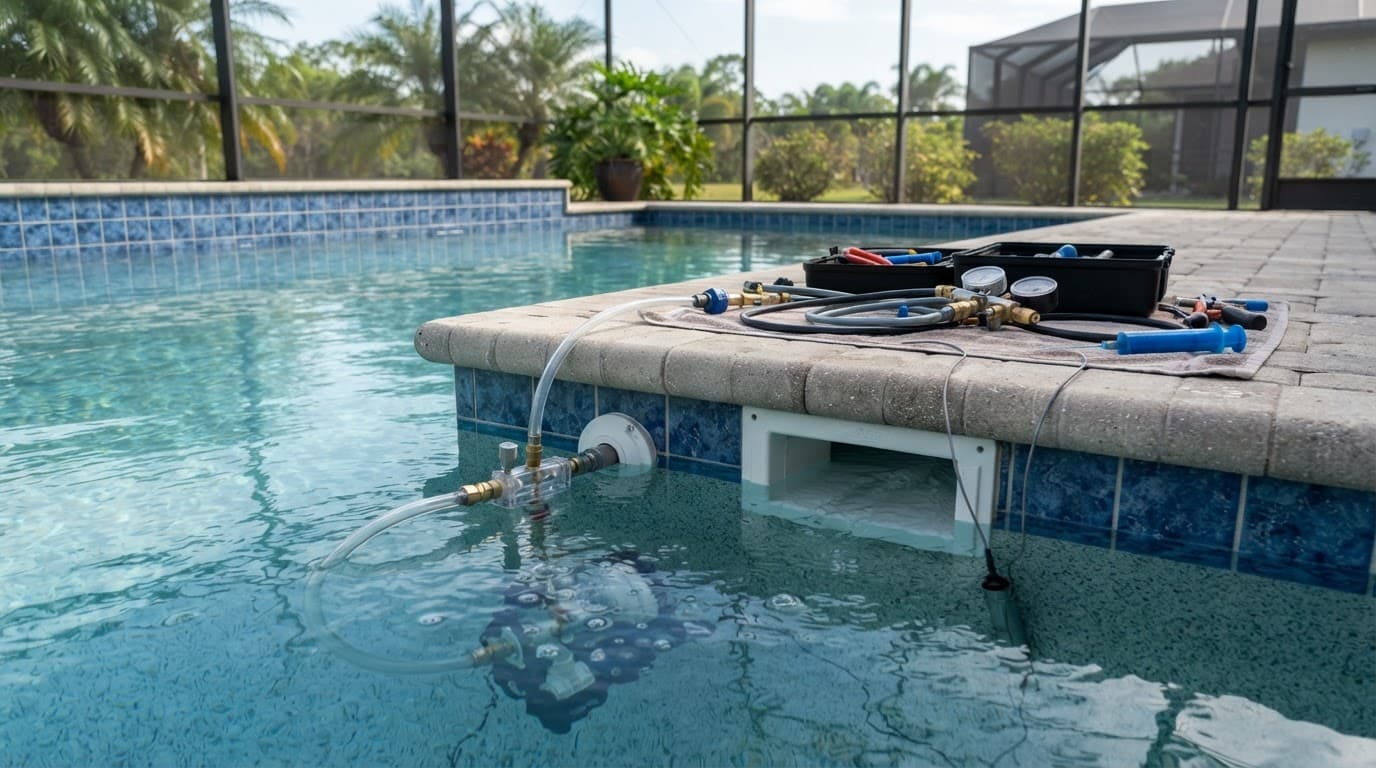
The inspection separates the pool, lines, and equipment
The first step is often a review of the water level, circulation system, equipment pad, visible fittings, tile line, deck, and surrounding soil. The technician may compare water loss with the pump running and stopped.
That comparison can point toward different areas. Water loss that increases while the pump runs may suggest a return-side or equipment leak. Air entering the system may point toward a suction-side problem. These clues still require testing before anyone opens the deck.
Technicians may isolate plumbing branches with valves and plugs. They can then test individual lines instead of treating the entire pool system as one unit.
Testing can locate the repair area
Pressure testing can show whether an isolated line holds pressure. When a line loses pressure, acoustic equipment or other locating methods may help identify where the buried pipe has failed.
Dye testing can help evaluate suspected cracks, drains, skimmers, and fittings under controlled conditions. A technician may also inspect light niches, return fittings, hydrostatic relief areas, and the skimmer throat.
The final report should separate observed conditions , tested failures , and suspected causes . That distinction helps you avoid paying for demolition based on an unverified assumption.
Port Charlotte Conditions That Can Complicate a Leak Test
Southwest Florida weather can make pool water loss seem worse than it is. Port Charlotte homeowners deal with strong sun, heat, wind, humid conditions, heavy rain, and seasonal storms. A screened enclosure reduces some debris but doesn't eliminate evaporation or wind-driven loss.
Evaporation and rain can confuse the numbers
A pool may lose measurable water through evaporation, especially during hot, dry, windy periods. Swimmers, pool cleaners, fountains, spillovers, and splash-out add more loss.
Heavy rain can hide a leak because the pool appears to hold its level. An automatic filler can also keep the waterline stable while a leak continues. For that reason, a professional may ask about recent weather, equipment schedules, fill-valve activity, and how often the pool needs water.
Record the water level and add notes about pump use before the appointment. Those details give the technician a better starting point.
Groundwater matters when draining a pool
An empty concrete pool can face upward pressure from groundwater. That risk depends on site conditions, drainage, pool construction, and the current water table. Port Charlotte properties with drainage concerns or high groundwater conditions deserve extra care.
Don't drain a gunite pool before testing unless a qualified pool professional instructs you to do so. Draining can also remove clues about where water moves through the shell.
If demolition becomes necessary, ask how the contractor will handle drainage, backfill, compaction, deck removal, and final grading. Pool removal is a site project, not only a concrete-breaking job.
How to Prepare for a Port Charlotte Pool Inspection
A few details can make the appointment more useful. Start with the pool's history, including its age, past repairs, resurfacing work, plumbing changes, storm damage, and periods when water loss became noticeable.
Gather useful information before the visit
Take dated photos of the waterline, wet areas, cracks, equipment pad, and any staining. Keep a short record of when you add water and whether the pump was running at the time.
Also gather recent pool service notes, repair invoices, equipment information, and renovation plans. If you're considering a new patio, outdoor kitchen, enclosure, or home addition, share that plan before anyone cuts the deck.
Use this inspection checklist
- Mark the current pool water level and record the date.
- Note whether water loss changes when the pump is on or off.
- Check for wet soil, algae trails, staining, or eroded areas near the deck.
- Photograph visible cracks in the finish, tile, coping, deck, and raised bond beam.
- Inspect the equipment pad for drips, damp concrete, cracked valves, or water around the pump.
- Record autofill activity and recent rain or storm conditions.
- Ask whether each plumbing line will be isolated and tested.
- Request written results that identify confirmed failures separately from suspected areas.
Don't patch a suspected crack immediately before the inspection. A quick repair may hide the path that testing needs to trace.
Ask what the report will support
A useful report should help answer practical questions. Is the leak in the shell, a fitting, an equipment component, or an underground line? Does the testing show one repair area or several? Will the proposed repair require removing tile, deck concrete, interior finish, or landscaping?
Ask whether the pool can remain in service while you plan the work. Also ask whether a structural engineer, pool specialist, or licensed contractor should review the shell before a repair decision is made.
Choosing Repair, Renovation, or Demolition
The right choice depends on confirmed conditions, the pool's age, the shell's condition, and your long-term plans for the property.
When targeted repair may be enough
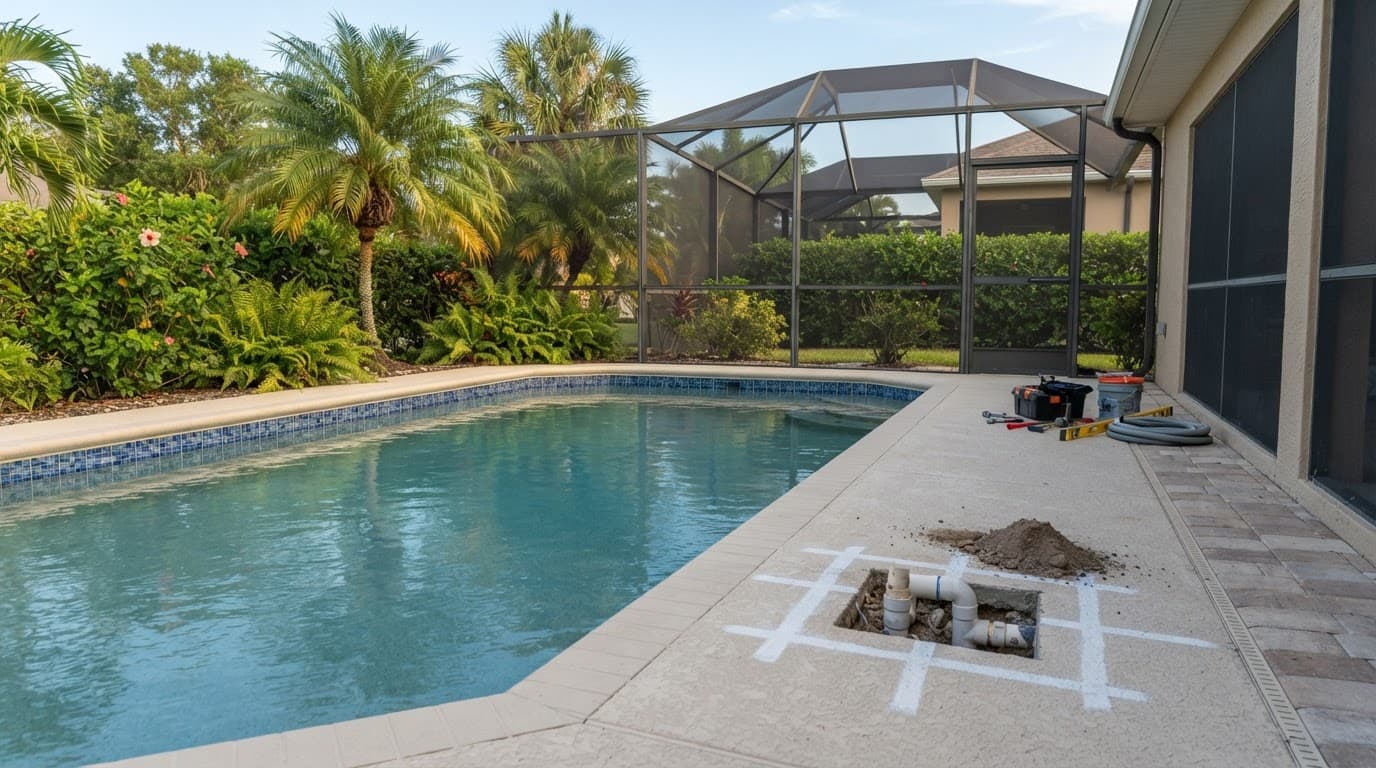
A localized plumbing leak may require access to one section of deck or a limited excavation area. A failed pump seal, filter connection, valve, skimmer component, or return fitting may need equipment or fitting replacement instead of shell removal.
If testing finds a sound shell with an aging finish, a renovation may combine leak repair with resurfacing, new tile, updated coping, energy-efficient equipment, lighting, or a redesigned deck. This can improve the pool without discarding the entire structure.
When demolition deserves consideration
Demolition may make sense when testing and structural review show widespread shell failure, major movement, repeated structural leaks, or repair work that would cost nearly as much as a properly planned replacement. It may also fit a property plan that removes the pool for new construction, expanded outdoor living space, drainage work, or yard regrading.
Even then, get a clear scope. The proposal should state whether it includes interior finish removal, shell breaking, concrete hauling, backfill, compaction, deck restoration, permits, inspections, and final grading.
For Port Charlotte homeowners, Cutting Edge Homes & Renovations can help evaluate the pool and discuss repair, renovation, or removal before demolition begins. The family-owned, licensed, and insured contractor serves homeowners across Southwest Florida and can help coordinate the inspection, construction scope, and required project approvals.
Conclusion
A falling waterline is a reason to investigate, not a reason to remove a pool immediately. Gunite pool leak detection can identify whether the problem involves evaporation, equipment, plumbing, fittings, or the shell itself.
Get repeatable test results, request written findings, and compare the repair scope with the full cost of demolition. For a Port Charlotte pool evaluation before major work begins, contact Cutting Edge Homes & Renovations and schedule an on-site consultation.