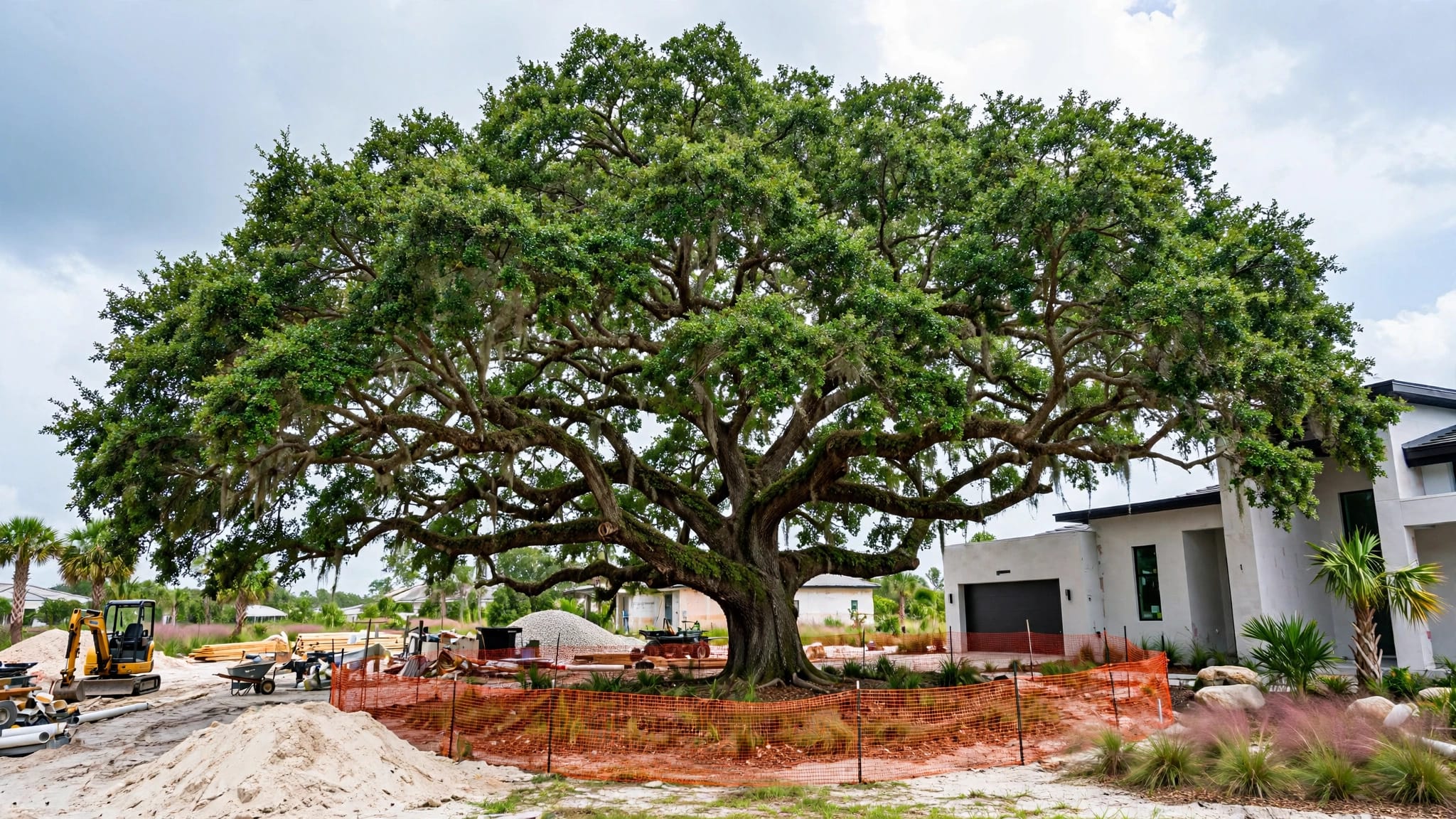
Gunite Pool Expansion Joints for Cape Coral Shell Movement
Explore Our Services
Contact Us Today!
(239) 322-9295
A gunite pool shell and its surrounding deck don't always move at the same rate. In Cape Coral, shifting moisture levels, sandy soils, and site conditions can place stress at the places where different materials meet.
Well-planned gunite pool expansion joints give independently moving elements room to move without transferring that stress into the deck, coping, or pool edge. Their location and details should be part of the original design or a qualified renovation plan, not an afterthought once damage appears.
Where Gunite Pool Expansion Joints Belong
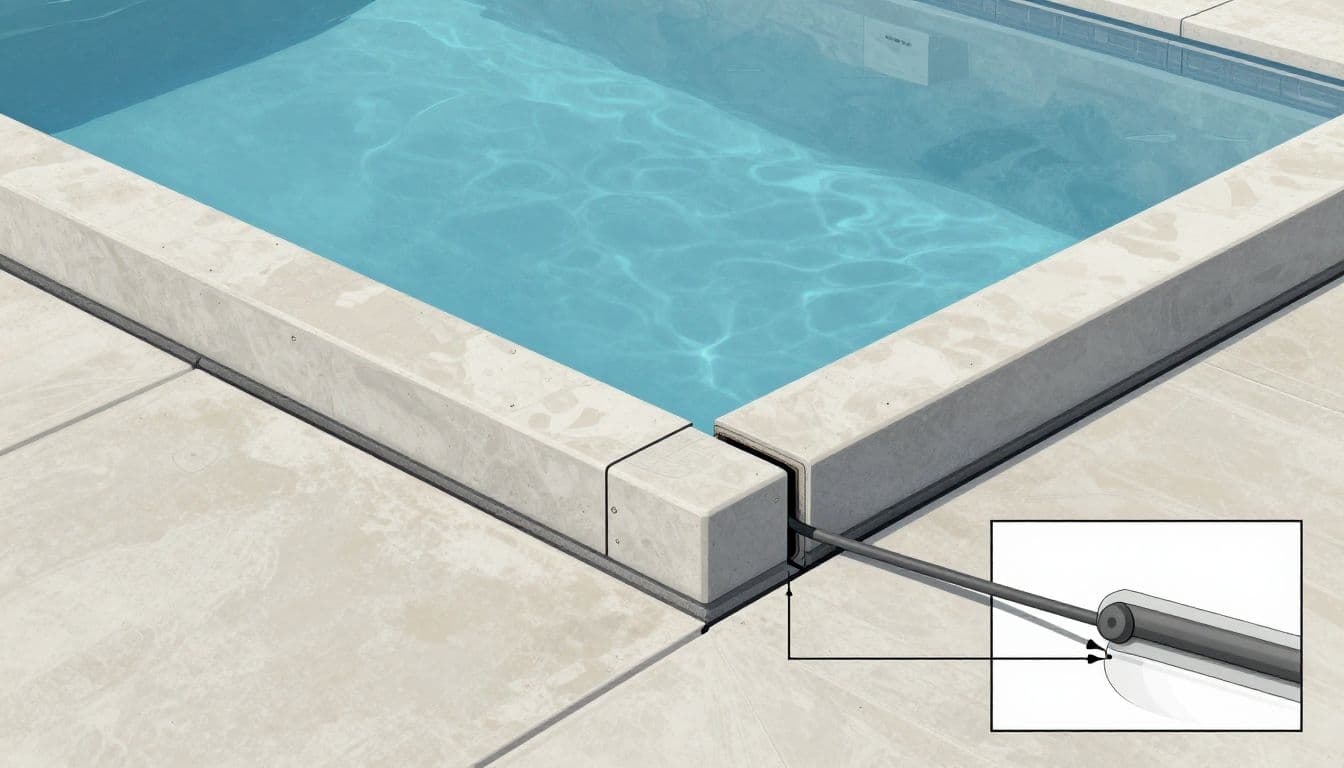
A flexible movement joint usually belongs between the pool structure and an adjacent deck or hardscape that can move separately. It creates a planned separation at the perimeter instead of locking the concrete deck to the pool's bond beam or coping.
The pool shell itself needs continuous structural support. A flexible joint is not normally a line cut through the pool floor, wall, or bond beam to make a shell "flex." That approach can create a structural and waterproofing problem rather than solve one.
Separate the deck from the pool structure
A deck slab can expand, contract, settle, or lift differently than a heavily reinforced gunite shell. Coping, pavers, screen-enclosure footings, outdoor kitchens, and patio slabs can add more points where movement needs careful planning.
The joint location should allow the deck system to move without pushing against the pool edge. Its sealant must remain flexible and protect the opening from debris and water intrusion.
There is no universal joint dimension
Joint width, depth, sealant type, and backing material depend on the pool layout and the products in use. A narrow straight-line pool beside a simple concrete deck presents different demands than a freeform pool tied into a raised spa, travertine patio, lanai footings, and an outdoor kitchen.
Manufacturer instructions also matter. Sealants, coping systems, pavers, and deck coatings each have limits for movement and joint geometry. A builder should coordinate those details before the deck pour or renovation work begins.
A flexible perimeter joint protects the interface between separate elements. It does not repair a cracked, settling, or poorly supported pool shell.
Why Cape Coral Sites Need a Movement Review
Cape Coral lots can look similar from the street while behaving differently below grade. Soil bearing conditions, fill history, drainage, proximity to canals, water-table changes, and nearby structures all affect how a pool area performs over time.
A 2023 geoscience study documented measurable ground deformation in northern Cape Coral associated with groundwater pumping. That finding doesn't predict movement at every home, yet it reinforces a practical point: local ground conditions are not uniform.
Soil moisture and groundwater can change support
Seasonal rain can saturate soil around the pool. During drier periods, moisture conditions can change again. Poor drainage near a deck, leaking plumbing, or erosion below pavers can make the difference between a stable surface and a moving one.
For that reason, a builder should review the site before deciding where a deck ends, where coping begins, and how water will drain away from the structure. A joint alone cannot overcome unsuitable support below a slab.
Pool features add separate movement paths
Raised walls, spillover spas, sun shelves, planters, screen enclosures, and outdoor kitchens all add connections near the pool. Each feature brings its own footing, material, load, and possible movement pattern.
A thoughtful design identifies where structural elements connect and where they should remain separated. That work is especially important during Cape Coral inground pool construction, when access to the shell, reinforcing steel, plumbing, and subgrade is still available.
Know the Difference Between Joints and Damage
Pool owners often call every line in concrete an expansion joint. However, several different conditions can appear around a gunite pool, and each calls for a different response.
Flexible movement joints
A flexible movement joint is a planned gap between independently moving materials. Contractors commonly fill it with an approved flexible sealant over a backing material or bond-breaker system. Its purpose is to absorb expected movement while keeping out water and debris.
The sealant can age, shrink, tear, or lose adhesion. Replacing failed sealant may be routine maintenance, but only after someone confirms that the underlying separation is stable.
Saw-cut control joints
A saw-cut control joint is a planned groove in a concrete deck slab. It encourages shrinkage cracking to occur in a selected, less visible line as the slab cures.
Control joints are not flexible perimeter joints. They manage cracking within the deck itself, while a movement joint separates the deck from another structure. A saw cut also doesn't belong in place of a designed separation around the pool.
Cracks and cold joints
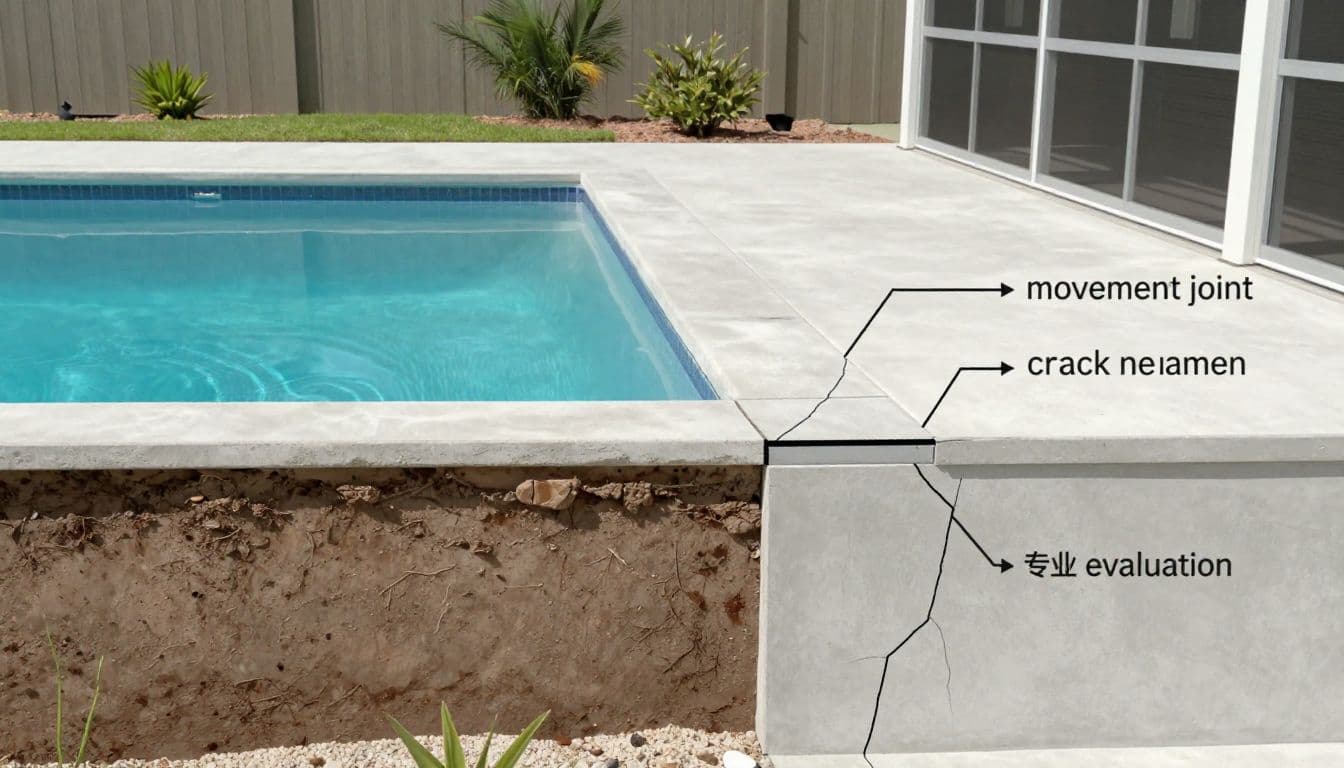
A crack is an unintended fracture. Hairline surface cracking in a deck may be cosmetic, but widening cracks, offset slab sections, repeated cracks, or cracks near the coping deserve closer attention.
A cold joint forms when fresh concrete or shotcrete meets material that has already begun to set or hardened. It is a construction interface, not a flexible joint. The construction team must evaluate and prepare such interfaces correctly, especially where water-tightness and structural continuity matter.
What Determines Expansion-Joint Placement
There is no one-size-fits-all layout for gunite pool expansion joints. The right plan begins with the pool design and continues through the surrounding hardscape.
Start with the entire pool and patio plan
A contractor should consider the shell shape, bond beam, coping profile, deck material, deck thickness, drainage layout, and loads from nearby features. A paver deck has different movement details than poured concrete, travertine, or a coated slab.
The plan should also account for where the deck meets the home, screen enclosure, retaining features, and existing patio slabs. Joining new work rigidly to older concrete without reviewing its condition can pass existing movement into the new construction.
Match materials to their installation requirements
Coping manufacturers, paver suppliers, sealant manufacturers, and deck-coating systems may require certain joint layouts or compatible materials. Those requirements matter as much as the visual finish.
Florida pool and slab requirements treat joints as designed construction features, not random cuts added after the concrete cures. Pool construction, structural repairs, and substantial deck modifications can also involve permit review and inspections. Local requirements can change, so confirm the current City of Cape Coral and applicable Florida requirements before work begins.
Bring in engineering when the shell may be moving
A pool contractor can assess many deck and coping conditions. However, suspected shell settlement, soil loss, major separation, recurring leakage, or structural cracking may call for a structural engineer.
An engineer can evaluate whether movement involves the shell, the deck, the subgrade, plumbing, or several systems at once. That diagnosis should come before repairs are specified.
Warning Signs That Need Professional Attention
A failed sealant joint and structural movement can look similar at first glance. The pattern, location, and progression of the condition matter more than a single snapshot.
Watch for changes that keep returning
Call a qualified pool professional when you see any of the following:
- A deck-to-coping gap that opens, closes, or repeatedly loses sealant.
- Cracks that widen, reappear after repair, or run into the coping or pool structure.
- Uneven deck sections, loose pavers, or a noticeable drop near the pool edge.
- Persistent water loss, damp soil, erosion, or voids around the deck.
- Tile, coping, or plaster separation that follows a consistent crack line.
- Plumbing problems that appear with new cracking or settlement.
A professional may recommend leak detection, deck evaluation, soil review, or engineering based on the symptoms. Avoid filling a crack with sealant and assuming the problem is finished. Surface material can hide movement while the condition below continues.
Planning a Pool Renovation Around Existing Joints
Renovation work creates an opportunity to inspect the pool edge before new finishes cover it. Coping replacement, deck removal, resurfacing, and paver installation can expose clues about prior movement and drainage problems.
Evaluate before choosing a finish
A stable deck with minor cosmetic cracking may qualify for repair and a new surface. A deck with extensive settlement, recurring separation, poor drainage, or weak support may need removal or more extensive correction first.
That distinction matters when considering pool deck crack repair in Cape Coral. A decorative overlay cannot stabilize a slab that continues to settle or move against the pool.
Coordinate the repair sequence
The contractor should first identify active leaks, loose coping, failed sealant, drainage problems, and unstable deck areas. Next comes the repair scope, including whether the existing joint layout still fits the rebuilt deck and coping system.
New sealant belongs near the end of the process, after structural and substrate concerns have been addressed. If the pool shell has damage or inadequate support, the team must address that issue separately. Expansion joints cannot restore structural capacity to a compromised shell.
A Practical Pre-Construction Checklist
Before approving a new pool, deck replacement, or major renovation, review these points with the contractor:
- Confirm where the pool shell, coping, deck, lanai, and outdoor features meet.
- Ask which surfaces will remain structurally separate and where flexible joints are planned.
- Review the selected coping, paver, concrete, and sealant manufacturer requirements.
- Discuss drainage, soil support, existing cracks, and any history of leaks or repairs.
- Verify permit needs, inspection steps, and whether engineered plans are required.
- Request a structural engineer's opinion when settlement, shell cracks, or recurring separation is present.
Clear answers early in the project cost less than correcting a rigid connection after the deck is finished.
Final Thoughts on Pool Shell Movement
Properly placed gunite pool expansion joints allow adjacent materials to move without forcing that movement into the pool shell. Their size and location depend on the complete project, including site conditions, materials, design details, manufacturer requirements, and applicable rules.
Cape Coral's changing soil and groundwater conditions make careful planning especially important. When cracks, leakage, settlement, or deck separation appear, start with a qualified evaluation rather than treating a flexible joint as a structural repair.