Pool Deck Resurfacing Cape Coral: Fix Cracked Concrete
Explore Our Services
Contact Us Today!
(239) 322-9295
Cracks around a Cape Coral pool can start as small lines, then become trip hazards, leak paths, or signs of slab movement. The right fix depends on what caused the damage, not only on how the surface looks.
If you're comparing pool deck resurfacing Cape Coral contractors, ask for an assessment before choosing a color or texture. A stable slab may need crack repair and a new finish, while settled or moving concrete may require replacement. The first step is identifying which problem you have.
How to Tell What Kind of Pool Deck Crack You Have
Cape Coral pool decks face intense sun, heavy rain, humidity, salt exposure, soil movement, and regular contact with chlorine or saltwater. Concrete can develop surface cracking even when the underlying slab remains stable. However, some patterns need a closer inspection.
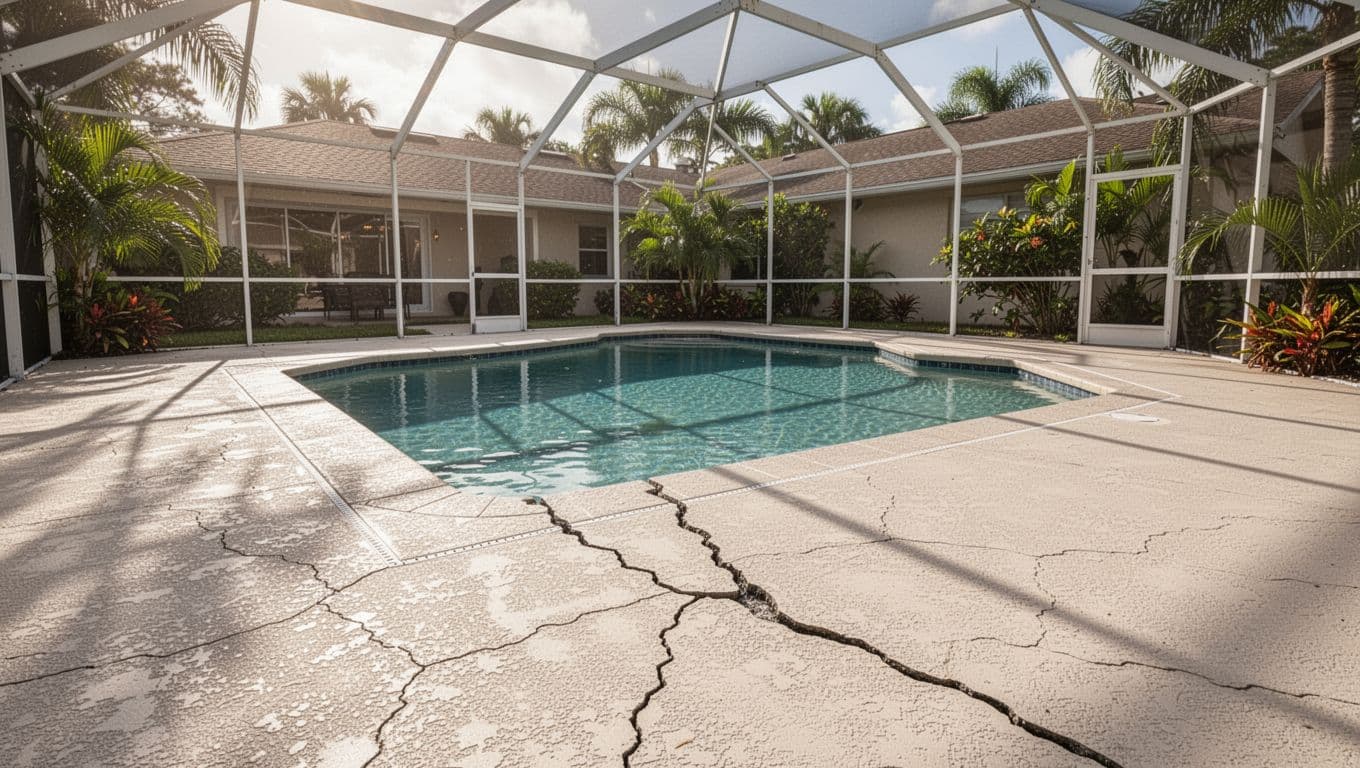
Cosmetic cracks in an otherwise stable slab
Hairline cracks often appear as thin lines near the surface. They may result from normal concrete shrinkage, curing conditions, temperature changes, or minor stress. A crack is more likely to be cosmetic when:
- The concrete on both sides remains level.
- The crack hasn't spread noticeably.
- The surrounding surface feels solid.
- There are no hollow, loose, or crumbling areas.
- Water doesn't collect along the crack or move beneath the slab.
A contractor may clean, fill, and blend isolated cracks before applying a compatible overlay or coating. The repair should match the planned finish, because a patch can remain visible under a thin decorative surface.
Movement-related or structural warning signs
Wider cracks, uneven slab sections, and repeated cracking patterns may point to settlement, poor soil support, tree roots, drainage problems, or movement near the pool shell. Look more closely when you see:
- One side of the crack sits higher than the other.
- The crack widens quickly or reopens after repair.
- Concrete has settled beside the pool coping or house.
- Several cracks run in the same direction.
- The slab sounds hollow or has loose sections.
- Water drains toward the house, pool equipment, or foundation.
- The pool deck has separated from the coping or an expansion joint.
A deck may not be part of the home's structural frame, but movement still affects safety and durability. Resurfacing over an unstable slab can hide the problem for a short time while allowing the crack to return.
A new surface cannot correct a soil or drainage problem underneath the concrete.
Repair, Resurface, or Replace the Deck?
The best pool deck resurfacing Cape Coral plan depends on the slab's condition, the extent of the cracking, and the finish you want. A reputable contractor should explain why a proposed solution fits the actual damage.
When crack repair is enough
Repair may make sense when the cracks are limited, the slab is level, and the concrete remains firmly bonded. The work can include cleaning the crack, opening it slightly when needed, filling it with a suitable repair material, and sealing the area.
This approach costs less than covering or removing the entire deck. It also preserves the existing drainage and elevations. Still, a repaired crack may remain visible, especially when the surrounding concrete has faded or weathered.
Repair alone isn't a good choice when the slab continues to move. The contractor should check nearby areas instead of treating only the most obvious line.
When resurfacing is the right fit
Resurfacing works best when the concrete is structurally sound but looks worn, stained, rough, or dated. The contractor repairs suitable cracks, removes weak material, prepares the surface, and applies a bonded overlay or coating.
Resurfacing can change the deck's color and texture without removing a sound slab. It also provides an opportunity to improve wet traction and reduce the visual impact of old discoloration. However, the new material still depends on the existing concrete. Active cracks, poor bonding, and standing water can cause premature failure.
A quality pool deck resurfacing Cape Coral estimate should identify crack repairs, surface preparation, coping details, drain work, and sealing. A price that only lists the coating may leave out the work that determines whether it lasts.
When full replacement is necessary
Replacement may be needed when the slab has major settlement, widespread movement, severe spalling, deep deterioration, or drainage defects that a thin overlay can't correct. Removal also makes sense when the original concrete has poor support or when the deck layout needs to change.
Replacement gives the contractor a chance to evaluate the base, correct grades, install control and isolation joints, and pour new concrete. It creates more construction noise, debris, and cost, but it may be the safer long-term choice when the existing slab has lost stability.
If replacement is part of a larger backyard project, review the Cape Coral inground pool builder service before finalizing the deck layout. Pool coping, screen enclosure posts, equipment access, and drainage all need to work together.
Pool Deck Resurfacing Cape Coral Options Compared
Finish selection affects comfort, traction, appearance, cleaning, and future maintenance. Ask to see product samples in direct sun and beside the pool, because colors can look different when wet.
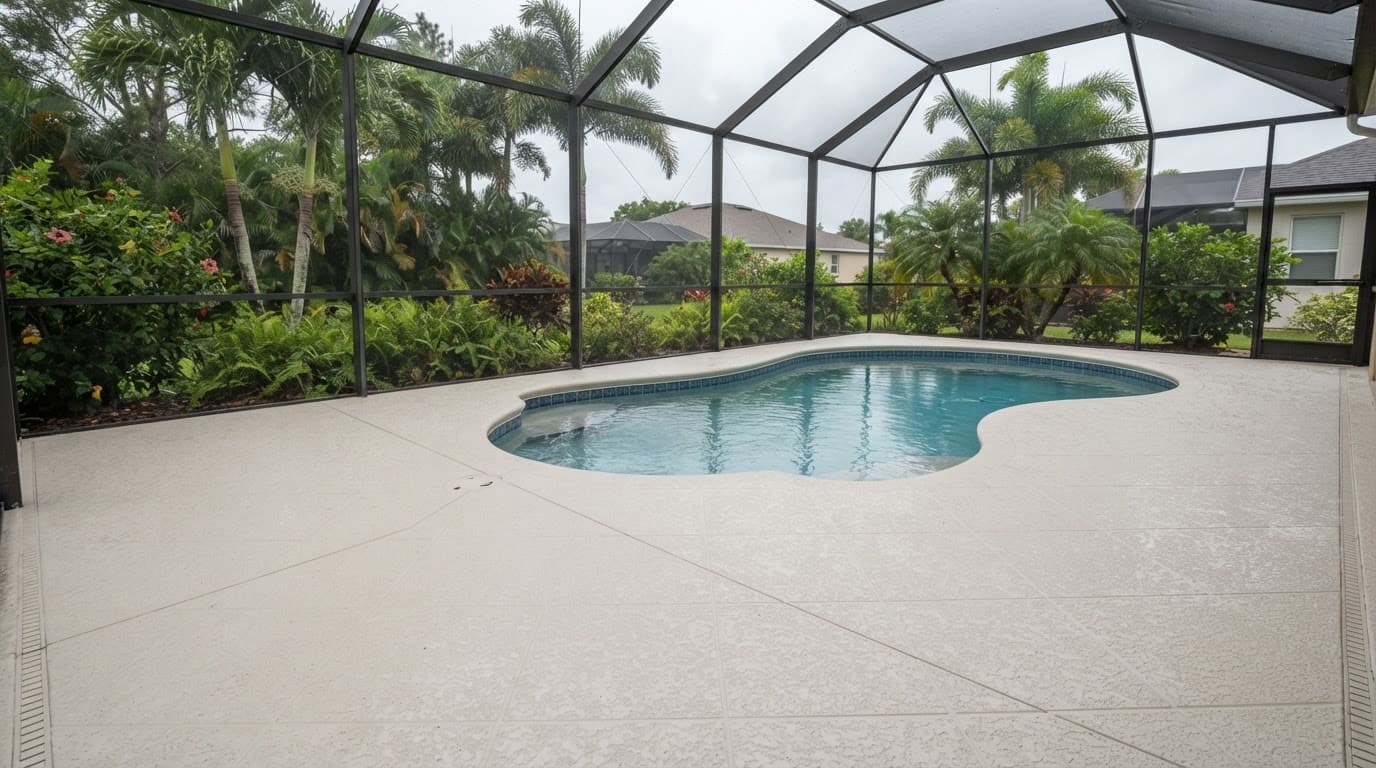
Acrylic texture or cool-deck coating
A light-colored acrylic texture is a common choice for pool areas. The finish can feel more comfortable than dark concrete under strong Florida sun, while the texture helps provide traction when the surface is wet.
Acrylic systems need proper preparation and a compatible sealer. Pool chemicals, salt deposits, UV exposure, standing water, and frequent cleaning can wear the finish over time. Plan for routine washing and follow the product's maintenance instructions.
Many contractors use a planning range of roughly five to ten years for this type of finish, but surface preparation and exposure make a major difference. Treat that range as an estimate, not a warranty.
Decorative or stamped concrete overlay
A cement-based decorative overlay can add score lines, patterns, or a look that resembles stone or tile. It offers more design choices than a plain coating, but texture and sealer selection matter around a pool.
Deep patterns can collect dirt, leaves, and mineral residue. A glossy sealer may also become slippery when wet if the system lacks the right aggregate or texture. Ask how the contractor will create traction without making the surface uncomfortable for bare feet.
A stamped overlay may also have a planning life of about five to ten years before significant refinishing, depending on the product and maintenance. The underlying concrete must remain stable.
Pavers or new concrete
Pavers are an alternative to bonded resurfacing, especially when the existing slab needs removal or the deck requires grade changes. Individual units can be reset or replaced, but the base and edge restraint must remain sound. Joint sand and weeds also require attention.
A new concrete deck offers a fresh base and more control over slopes, joints, and layout. It may receive a broom texture, decorative finish, or coating after curing. Neither pavers nor new concrete eliminates maintenance, and both can develop problems when water moves beneath the surface.
| Option | Heat and traction | Maintenance | Rough service expectation |
|---|---|---|---|
| Acrylic texture | Light colors can feel cooler; texture supports wet traction | Wash and reseal as specified | Often about 5 to 10 years |
| Decorative overlay | Comfort depends on color and texture | Sealer and patterned areas need care | Often about 5 to 10 years |
| Pavers | Color and surface texture affect comfort and grip | Joint sand, cleaning, and occasional resetting | Often longer than coatings with a sound base |
| New concrete | Finish controls heat and slip resistance | Cleaning, joint care, and possible refinishing | Often 10 or more years before major refinishing |
These ranges vary by material, installation, drainage, sun exposure, chemical contact, and upkeep. A contractor should identify the actual product and provide its care requirements in writing.
Cape Coral Conditions That Affect the Result
A successful resurfacing job involves more than spreading material over concrete. The deck must handle water, heat, movement, and the details around the pool.
Drainage and pool-edge details
Heavy rain can expose a poor slope quickly. The finished deck should move water toward the intended drainage path instead of directing it against the house, beneath the pool equipment, or into low spots beside the pool.
Resurfacing usually adds only a thin layer, so it can't correct every grading problem. A contractor should check drains, screen enclosure posts, coping, expansion joints, door thresholds, and transitions to walkways. Blocking a drain or covering a joint can create new problems.
Pool coping also needs careful treatment. A rigid connection between the deck and coping may crack when the pool structure and surrounding concrete move at different rates. Ask how the contractor plans to preserve or replace the joint.
Heat, humidity, salt, and chemicals
Dark finishes absorb more heat in direct sun. Lighter colors may improve bare-foot comfort, although the actual result depends on the material, shade, and air temperature. Texture helps with traction, but excessive roughness can irritate feet and make cleaning harder.
Humidity and rain slow drying and increase the importance of moisture control during installation. Salt air and saltwater systems can leave deposits, while chlorine and cleaning chemicals may affect sealers. The contractor should identify products rated for exterior pool-deck use and explain how to remove residue without damaging the finish.
Regular care usually includes rinsing the deck, removing leaves, cleaning spills, and addressing algae or mildew before they spread. Keep furniture pads and planters from trapping moisture against the surface.
Questions to Ask Before Hiring a Contractor
Get clear answers before signing a proposal. The following questions can reveal whether the contractor has evaluated the actual deck:
- What caused the cracks, and how did you check for settlement or movement?
- Which areas need repair, and which areas need removal?
- Will resurfacing hide an active crack, or will you treat its cause first?
- How will you test for loose concrete, moisture, weak bonding, or hollow sections?
- What preparation is included in the price?
- How will you protect coping, drains, screen posts, door thresholds, and pool equipment?
- What slope and drainage changes are possible with this project?
- Which product system will you install, and is it intended for pool decks?
- How will the finish handle wet feet, salt deposits, pool chemicals, and strong sun?
- What cleaning and resealing schedule does the manufacturer recommend?
- What service life should I expect under normal Cape Coral exposure?
- What does the written warranty cover, and what conditions exclude coverage?
- Does the project require permits or inspections?
- Is the estimate itemized for repairs, demolition, disposal, materials, sealing, and cleanup?
Ask for a written scope that describes the existing condition and the finished result. Compare preparation and drainage work, not only the final price.
Get a Professional Pool Deck Assessment
Cracked concrete doesn't automatically call for a complete replacement. Stable, limited cracking may respond well to repair and resurfacing, while uneven slabs, active movement, and drainage failures need a different plan.
Before choosing a finish, schedule an on-site evaluation with Cutting Edge Homes & Renovations or another qualified local contractor. Ask for a clear recommendation, an itemized estimate, and product-specific maintenance information.
The right pool deck resurfacing Cape Coral project starts beneath the color and texture. When the slab, drainage, joints, and finish all receive proper attention, your pool area has a better chance of staying comfortable and usable through Southwest Florida's demanding weather.
Conclusion
A cracked pool deck needs diagnosis before decoration. Cosmetic cracks may need targeted repair, while movement-related damage can require replacement and corrections to the base or drainage.
Choose a finish that fits your priorities for heat, traction, cleaning, appearance, and maintenance. A careful assessment and detailed scope will help you avoid paying for a new surface that cannot solve the problem underneath.