Gunite Pool Hurricane Preparation Checklist for Southwest Florida
Explore Our Services
Contact Us Today!
(239) 322-9295
A hurricane can turn a pool deck into a debris field before the rain stops. If you own a concrete pool in Southwest Florida, water level and electrical safety deserve as much attention as loose furniture.
For homeowners in Fort Myers, Cape Coral, and nearby communities, gunite pool hurricane preparation starts with one rule: don't drain the pool unless a qualified pool professional advises it. High groundwater can push against an emptied shell and create a risk of lifting. Start with the steps you can take safely, then leave site-specific decisions to the right professionals.
Why gunite pool hurricane preparation starts with the shell
Gunite forms a reinforced concrete pool shell, but its strength doesn't make it immune to groundwater pressure. Heavy rain and storm surge can raise the water table around a pool. Water inside the shell helps counter pressure from outside it, which is why emptying a pool before a storm can cause serious damage.
Southwest Florida lots vary. A canal-front property, an inland lot with poor drainage, and a home near the Gulf may face different conditions. Even neighboring pools can have different elevations, drains, and structural plans.
For a new pool, ask how the builder will account for groundwater and drainage before construction begins. Those details belong in the site-specific planning for new inground gunite pool construction, not in a last-minute storm adjustment.
Your safety comes first. Follow evacuation orders and updates from local emergency authorities. Pool preparation is never a reason to stay at a property that officials have told you to leave.
Set a safe water level before the storm
Keep the pool full unless your professional says otherwise
The Florida Swimming Pool Association advises homeowners to keep their pools full before a hurricane. Some Florida pool-service guidance discusses lowering a concrete pool a few inches in certain circumstances. That difference matters because groundwater, drainage, and pool design aren't identical across properties.
Don't treat a suggested number of inches as a universal instruction. Never drain a gunite pool unless a qualified pool professional has assessed your conditions and advised it. Don't assume opening a drain or running a pump longer is a harmless way to create room for rain.
If you're concerned about overflow, contact your pool professional while there is still time to discuss your pool's water level and drainage route.
Check where overflow will go
Look at deck drains, yard drains, and nearby swales before the weather arrives. Clear leaves and loose debris from accessible surface grates without opening electrical equipment or entering an unsafe area.
Also note where water tends to collect after an ordinary summer storm. Pool overflow shouldn't be directed toward your home's foundation or a neighbor's property. If drainage is already a problem, ask a licensed pool professional or qualified contractor to evaluate it rather than improvising a new outlet.
Clear the deck and protect the pool barrier
Store loose items somewhere secure
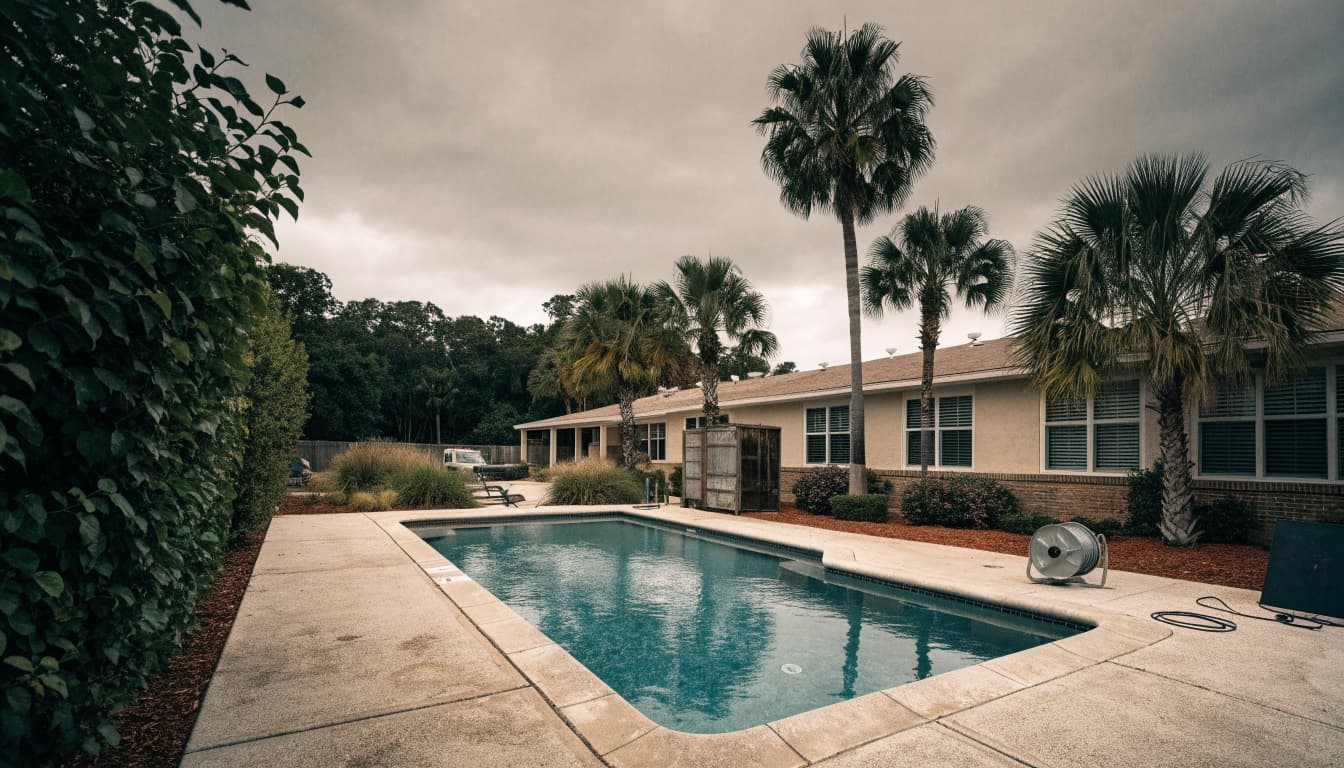
Bring in furniture cushions, umbrellas, toys, cleaning poles, vacuum hoses, and other removable accessories. Check the area beyond the coping, too. Planters, grills, and small outdoor decorations can become wind-driven hazards.
Store pool chemicals in their original containers according to their labels, in a secure, dry location away from children and floodwater. Keep incompatible products separate. Don't put furniture or equipment into the pool as a storm-storage shortcut; retrieving damaged items later can create another hazard.
Check gates, screens, and covers
Walk the pool enclosure while conditions are calm. Confirm that gates close and latch, and remove objects that could blow against the barrier. If a screen panel or gate is already loose, arrange a repair before the storm if time and conditions allow.
A pool cover needs its own instructions. Don't install or weigh down a cover based on a generic hurricane tip. Follow the cover manufacturer's storm guidance and ask your pool professional if you're unsure. After the storm, treat a damaged gate or enclosure as an immediate safety issue, even if the pool water looks clear.
Shut down and protect pool equipment
Identify the right controls ahead of time
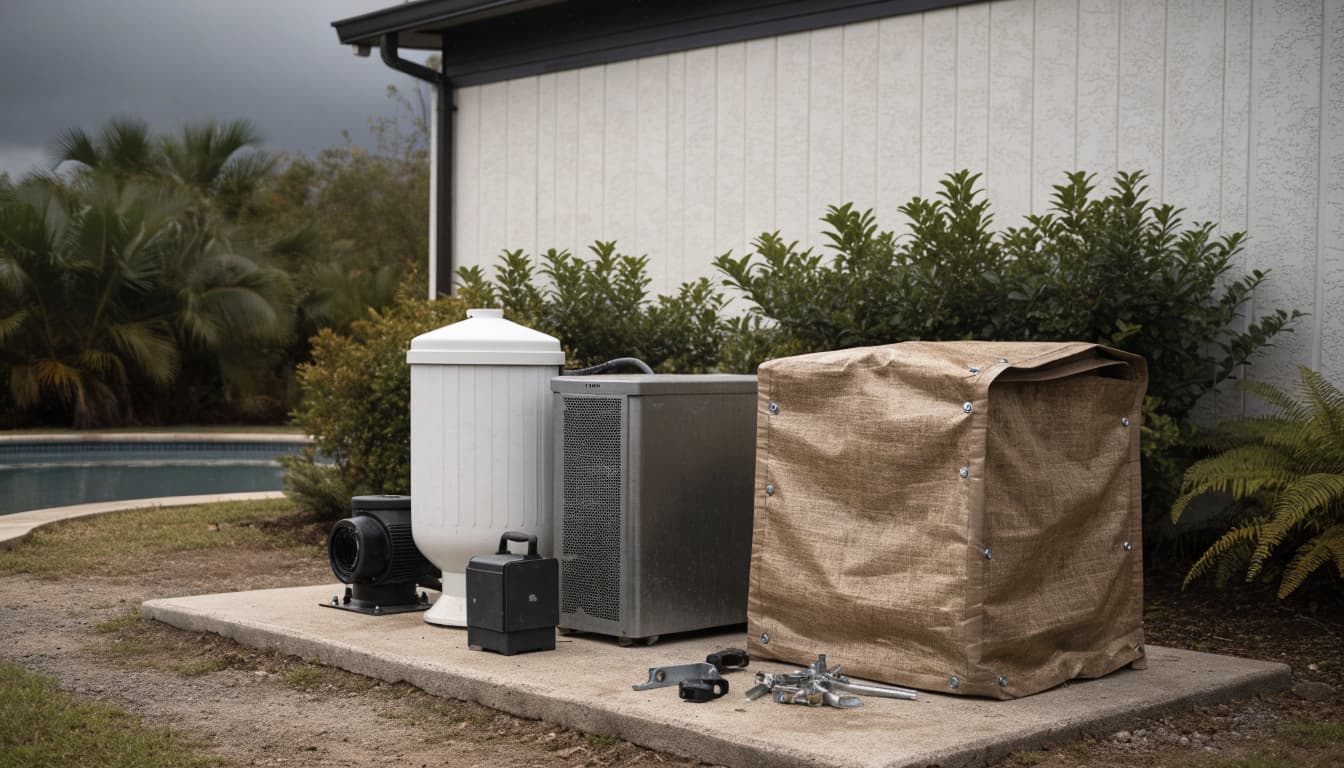
Locate the breakers or disconnects for the pool pump, heater, lights, and other equipment before severe weather reaches your area. The Florida Swimming Pool Association recommends powering down pool equipment before a hurricane.
Follow your equipment instructions and your pool professional's advice on the proper shutdown sequence. If a heater uses gas, ask its installer or service professional how to shut off its gas supply safely. Don't handle electrical controls while standing in water, and don't open a panel to figure out which circuit is which during the storm.
Take clear photos of the equipment pad and its normal settings beforehand. They'll help a service professional identify components if labels or records are lost.
Separate removable items from installed systems
You can safely bring in loose tools and accessories. Fixed pumps, filters, heaters, automation panels, and electrical connections need more care. Manufacturer instructions and the installation details determine whether a cover is appropriate and how it should be secured.
A loose tarp can trap moisture or blow into equipment. Likewise, disconnecting plumbing or moving a heavy component without guidance can create leaks or damage. If you're uncertain about a cover, anchoring, or shutdown step, consult a licensed pool professional before making changes.
A pump that stayed in place during the storm may still be unsafe to restart if floodwater reached its motor or electrical controls.
Prepare water quality without guessing at chemical doses
Remove visible leaves and debris while the pool is operating normally. Clean the skimmer basket and follow your usual maintenance routine. The Florida Swimming Pool Association also recommends super-chlorinating before a hurricane, but the correct treatment depends on your pool's current test results and the product you use.
If you don't normally handle that treatment, ask your pool-service professional to do it. Never mix pool chemicals, and don't add an estimated dose because rain is forecast. Follow product labels and keep chemicals stored safely before you leave.
Record a recent water test if you have one. It gives your service professional a useful comparison after the storm. Then stop pool work when conditions deteriorate. No chemical treatment makes stormwater, fallen wires, or damaged equipment safe.
After the storm, inspect before restarting
Wait until the property is safe to enter
Follow local reentry guidance and stay out of standing water near electrical equipment. Watch for downed lines, broken glass, unstable trees, and damaged enclosures. If floodwater reached the pump, motor, controls, lights, or other electrical components, leave the system off and have a qualified professional inspect it.
Don't test a flooded pump by briefly turning it on. Moisture may remain inside components even after the equipment pad looks dry. If the pool has overflowed and the ground is saturated, wait for standing water around the pool to recede before discussing any water-level adjustment with your pool professional.
Photograph damage before cleanup
From a safe location, photograph the waterline, equipment pad, deck, screens, and any visible cracks or displaced coping. Keep repair estimates and service records together for a possible insurance claim.
Look for new cracks, hollow or lifted deck areas, tile loss, and unusual water loss. A surface stain and a structural problem need different repairs. If damage extends beyond the finish, request an assessment before choosing pool resurfacing and upgrades. Don't lower the water to inspect a suspected shell problem on your own.
Clean and test before anyone swims
Remove debris without forcing it through the system
Use a net to lift out accessible leaves and branches when the deck is safe. Avoid reaching into cloudy water where sharp objects may be hidden. Don't brush heavy debris toward the main drain or start a potentially flooded pump to vacuum the pool.
Storm surge or floodwater calls for extra caution. Saltwater, mud, and debris can affect both the pool and its equipment. A licensed pool professional can determine how to clean and restore the system once electrical and structural concerns are addressed.
Test, treat, and verify
Rain and debris can change water chemistry. Test the water before making corrections, then follow your service professional's treatment plan. A full post-storm assessment may include chlorine, pH, alkalinity, calcium hardness, and stabilizer, along with an equipment inspection.
Don't swim during or immediately after a storm. Wait until the enclosure is secure, debris is removed, the equipment is safe to operate, and the water has been tested and treated. Clear-looking water alone doesn't establish that the pool is safe.
Key takeaways for Southwest Florida homeowners
- Keep water in the pool. A qualified pool professional should advise any draining or site-specific level change.
- Bring loose deck items inside, but follow manufacturer and professional guidance for installed equipment.
- Shut down equipment safely before the storm. Leave anything exposed to floodwater off until a qualified professional inspects it.
- Afterward, check the barrier and equipment, clear debris, and test the water before anyone swims.
Frequently asked questions
Should I lower my gunite pool before a hurricane?
Don't make a water-level change based on a general checklist. The Florida Swimming Pool Association recommends keeping pools full, while some service guidance describes small adjustments under certain conditions. High groundwater creates a shell-lifting risk if a pool is emptied. Ask a qualified pool professional who understands your property before lowering it.
Can I run the pump right after the power returns?
Only after the area and equipment are safe. If floodwater touched electrical components, leave the system off until a qualified professional inspects it. Restored household power doesn't prove the pool pump, controls, or wiring are ready to operate.
Should I cover the pool or put patio furniture in it?
Don't put furniture in the water. Store removable items in a secure location instead. For a cover, follow its manufacturer's storm instructions and check with your pool professional; covers and their anchoring systems differ.
What if I find a crack after the storm?
Photograph it without draining the pool. Keep people away from damaged deck or coping, and arrange a professional assessment. The repair depends on whether the issue involves the finish, plumbing, surrounding deck, or shell.
Conclusion
That clear pool deck is only one part of hurricane readiness. Keeping the shell supported and handling equipment safely are the decisions that deserve the most care in Southwest Florida.
Secure what you can remove, follow local emergency instructions, and leave uncertain water-level or equipment decisions to qualified professionals. After the storm, inspection and testing must come before swimming.