Can You Build a Custom Home on Wetlands in Naples?
Explore Our Services
Contact Us Today!
(239) 322-9295
Yes, you may be able to build a custom home on a Naples lot with wetlands. The answer depends on where the wetlands are, how much usable upland remains, and which approvals your project needs.
A wetland on the property doesn't automatically rule out construction. But the location of the buildable area can affect everything from your driveway to the size of your lanai.
Before you commit to a lot or a floor plan, start with the property's actual conditions.
How Wetlands Affect the Buildable Area
A parcel can have enough acreage for a home on paper but lack a practical place to build. Wetlands may occupy the center of the lot, sit along the road frontage, or leave a narrow strip of upland behind them.
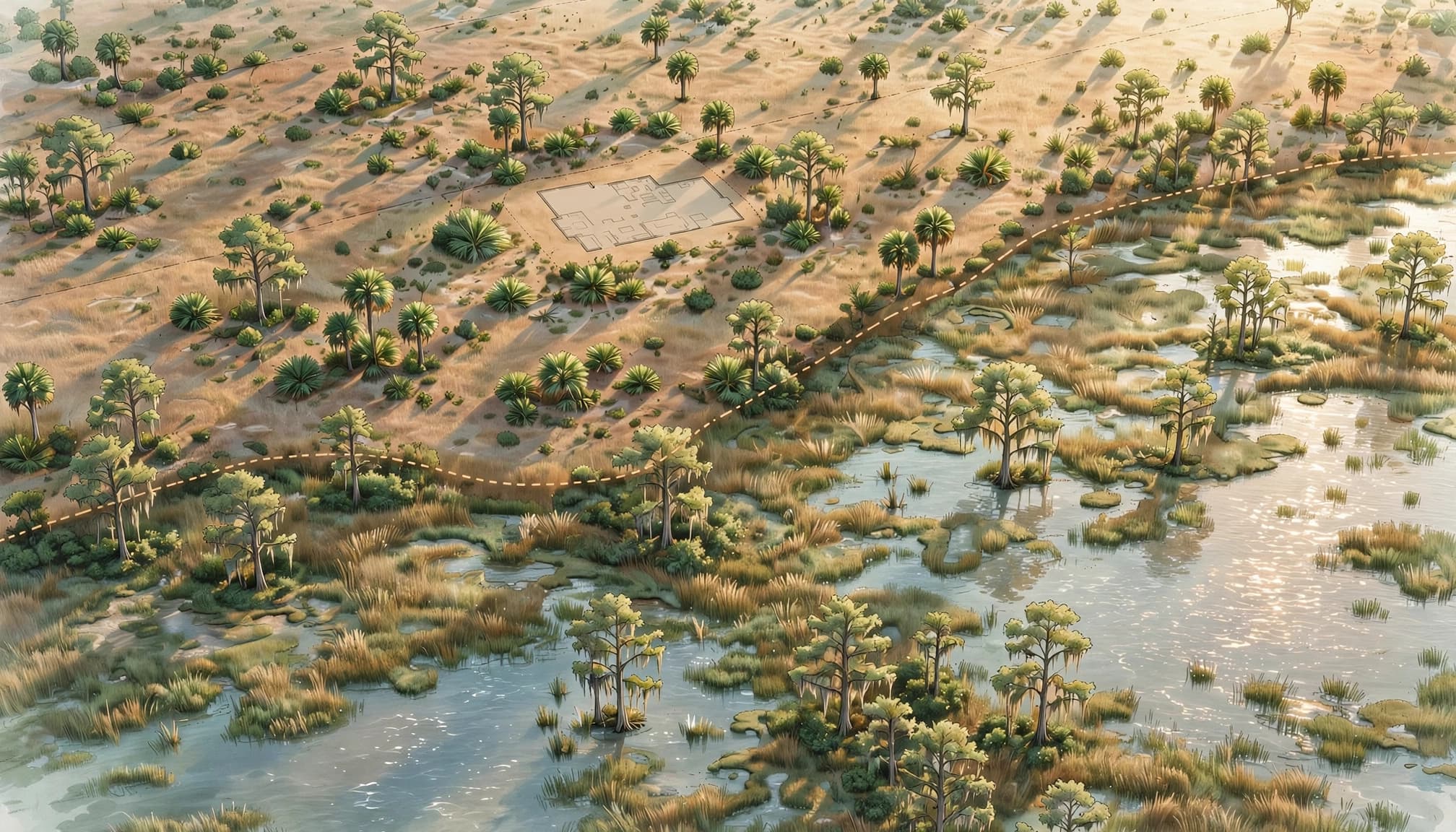
The house footprint is only part of the calculation. Your site plan also needs room for a driveway, utility connections, drainage, construction access, and any outdoor features you want. Zoning setbacks and easements may further reduce the available space.
For example, a home may fit on upland at the back of a lot, while the only practical driveway crosses a wetland. That crossing can trigger environmental review even if the house itself stays outside the wetland.
The goal is to establish a workable footprint for the whole project , including temporary construction activity.
How Wetlands Are Identified and Delineated
A wetland map is a useful starting point, but it doesn't establish the precise boundary for your lot. A property that looks dry during a visit may still have wetland soils and vegetation.
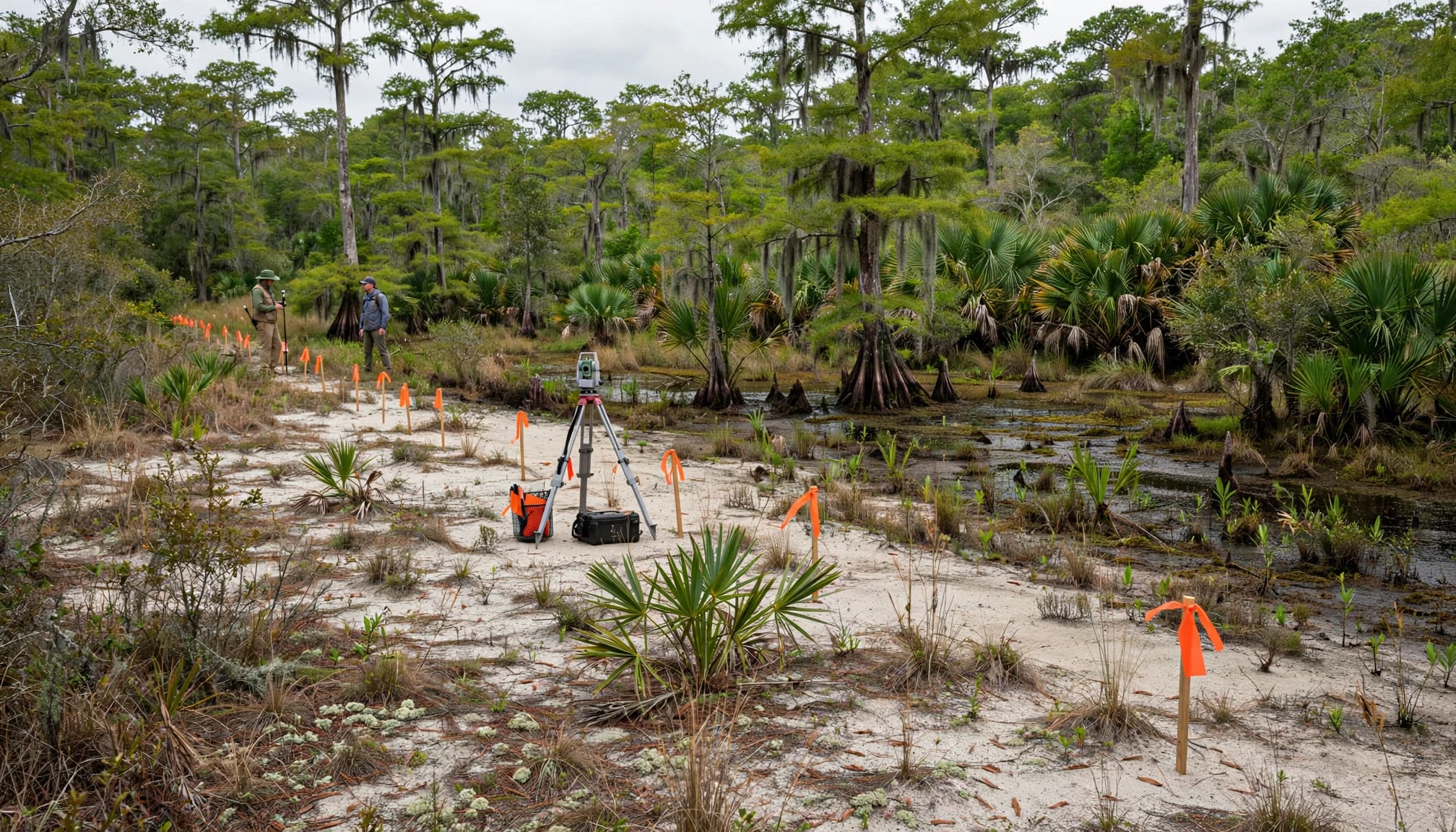
Fieldwork Locates the Wetland Edge
An environmental consultant evaluates conditions such as soils, vegetation, and evidence of water to identify wetland areas. The consultant can mark the apparent boundary in the field, and a surveyor can incorporate those points into a site survey.
That survey gives your designer a better basis for placing the house and other improvements. It also helps the team estimate how much wetland a proposed driveway, fill area, or utility route might affect.
Agency Determinations Address Jurisdiction
A field delineation and an agency jurisdictional determination answer different questions. The delineation identifies the wetland boundary; an agency determination addresses regulatory jurisdiction for the parcel.
For federal review, an approved jurisdictional determination identifies whether waters of the United States are present or maps their limits. State and federal jurisdiction aren't always identical, so the project may need separate consideration under each program.
Which Agencies Review a Naples Wetland Lot?
Building on wetlands in Naples can involve local, state, and federal review. Each authority looks at a different part of the project, and one approval doesn't automatically replace the others.
City or County Review
A Naples mailing address doesn't necessarily place a property inside the City of Naples. A lot within city limits follows the city's process, while a property in unincorporated Collier County falls under county rules.
Local review can include zoning, site development, floodplain requirements, and the building permit. The City of Naples also has an environmental permitting process for certain regulated construction, including work along shorelines.
State Environmental Review
The South Florida Water Management District (SFWMD) administers Environmental Resource Permits, often called ERPs. An ERP may be required for work affecting wetlands or other surface waters, or for activities involving surface-water management.
The district's ERP guidance describes possible permit and mitigation requirements. The scope of proposed clearing, grading, fill, and drainage all matter to that review.
Federal Review
The U.S. Army Corps of Engineers' Jacksonville District handles federal regulatory requests in Florida. Discharging dredged or fill material into waters subject to Section 404 may require a Corps permit.
A state ERP doesn't eliminate the possibility of federal review. Likewise, an environmental approval doesn't replace the local building permit needed for the home.
Setbacks, Buffers, and Site Design
A wetland boundary isn't necessarily the edge of the space where every improvement can go. Depending on the property and approval, a protected buffer or other condition may limit work near the wetland.
Zoning setbacks are different: They generally regulate how close structures can be to property lines. Easements can also reserve space for utilities or drainage. These restrictions can overlap, leaving less usable land than a simple acreage figure suggests.
Fit the Home to the Upland
Start with the surveyed upland and the applicable restrictions, then place the house. A narrower footprint, a different garage orientation, or a smaller lanai may allow the project to avoid wetland impacts.
Consider your pool at the same time. A backyard that looks generous on a listing can become much smaller once the wetland edge, setbacks, and drainage features appear on the plan.
Account for Construction Access
Your design also needs a route for equipment, deliveries, and utility installation. Moving the house away from a wetland doesn't solve the problem if construction traffic or material storage would disturb it.
A practical plan identifies protected areas before clearing begins and keeps staging within the approved work area. Where access is tight, our guidance on custom home construction access covers logistics that also matter on constrained Naples lots.
When Wetland Mitigation May Be Needed
If a project proposes wetland impacts, the permitting process may require mitigation. Mitigation addresses the environmental effects of approved impacts; it doesn't give an owner permission to fill a wetland without authorization.
SFWMD identifies several possible approaches, including restoration, enhancement, creation, or preservation. Depending on the project, an applicant may also use off-site mitigation or purchase credits from an appropriate mitigation bank. Some approvals can require monitoring.
The available option and its cost depend on the location, type, and extent of the proposed impact. A larger impact can also mean a more demanding application and more changes to the site plan.
Avoidance often deserves the first look. If a smaller driveway or revised home layout keeps construction on upland, it may reduce impacts that would otherwise need review and mitigation. That design choice should be evaluated before the floor plan becomes difficult to change.
What Do Wetland Reviews and Permits Cost?
Agency fees are only one part of the budget. You'll also need to account for the people preparing the survey, environmental assessment, engineering, and permit applications.
SFWMD's published permitting fee schedule provides concrete starting points:
| SFWMD review | Published agency fee |
|---|---|
| Informal wetland determination for an area under 1 acre | $250 |
| Formal wetland determination for a property of 10 acres or less | $500 |
| Individual or conceptual ERP for a qualifying project under 10 acres, with wetland impact under 1 acre and fewer than 10 boat slips | $3,500 |
These figures are application fees, not total project costs. An informal determination and a formal determination are different services, so the lower fee shouldn't be treated as a substitute for the review your project needs.
Other expenses can include mitigation credits, additional surveying, revised plans, fill, drainage improvements, and construction access. Their cost depends on the parcel and the approved design. We recommend carrying those items as separate site-development allowances rather than assuming they're included in the home's base price.
How Wetlands Can Affect Your Timeline
A lot with wetlands can take longer to move through preconstruction because the design depends on fieldwork and agency review. The sequence matters: A permit application built around an inaccurate boundary may need revisions, and a revised footprint can change engineering and pricing.
Start with the survey and environmental assessment. Then have the design team use that information to prepare the proposed layout and identify the likely approvals. Agency questions or requested changes can add time before permits are issued.
There isn't one dependable approval timeline for every Naples lot. The schedule depends on the property's conditions, the work proposed, application completeness, and the reviews involved. Allow time in your purchase contract and construction schedule for the actual permit path rather than planning around a fixed closing or clearing date.
Wetlands, Flood Zones, and Drainage Are Different
These issues often appear together in Southwest Florida, but they answer different questions.
A wetland assessment identifies regulated environmental conditions and potential impacts. A flood-zone determination addresses mapped flood hazards and related construction requirements. Drainage planning addresses how water moves across and away from the site.
A property can have wetlands and also be in a flood hazard area. Flood requirements may affect the home's elevation and foundation, while the wetland review affects where filling or disturbance can occur. Grading to meet an elevation requirement doesn't automatically authorize wetland fill.
Drainage needs attention even on upland. Roof runoff, driveway placement, and finished grades must work with existing swales and neighboring properties. For Gulf-front parcels, Naples coastal construction restrictions may add another separate layer of review.
Due Diligence Before You Buy
Before purchasing, gather the existing survey, elevation information, environmental reports, drainage plans, easements, and any prior permit records. These documents can reveal constraints that aren't obvious during a walk around the lot.
Then involve an environmental consultant, surveyor, and design team early enough to evaluate the home you want. A useful preliminary plan should show the wetland boundary, anticipated restrictions, driveway, utilities, and outdoor features together.
A real estate attorney can help structure a purchase contract with enough time for environmental and design due diligence. Depending on the agreement, a buyer may negotiate a right to extend the review period, renegotiate, or terminate if the property won't support the intended project.
Our guide to lot contract due diligence covers related questions about site records and contract timing. Although it focuses on Fort Myers, the planning principles are useful for a Naples-area purchase.
Plan the Home Around the Site
You can build on some Naples lots that contain wetlands, but the usable area and approval path depend on the property. A reliable plan starts with the wetland boundary , then accounts for access, drainage, and the full home design.
At Cutting Edge Homes & Renovations, we build custom homes for Southwest Florida homeowners. If you're considering a lot, bring your survey and available site information to a consultation so we can discuss the home you have in mind.