Gunite Pool Waterproofing in Fort Myers Before Tile
Explore Our Services
Contact Us Today!
(239) 322-9295
Tile can make a new pool look finished, but it cannot correct a poorly prepared shell. For homeowners planning gunite pool waterproofing in Fort Myers, the important decision comes before tile, coping, plaster, or pebble finishes are installed.
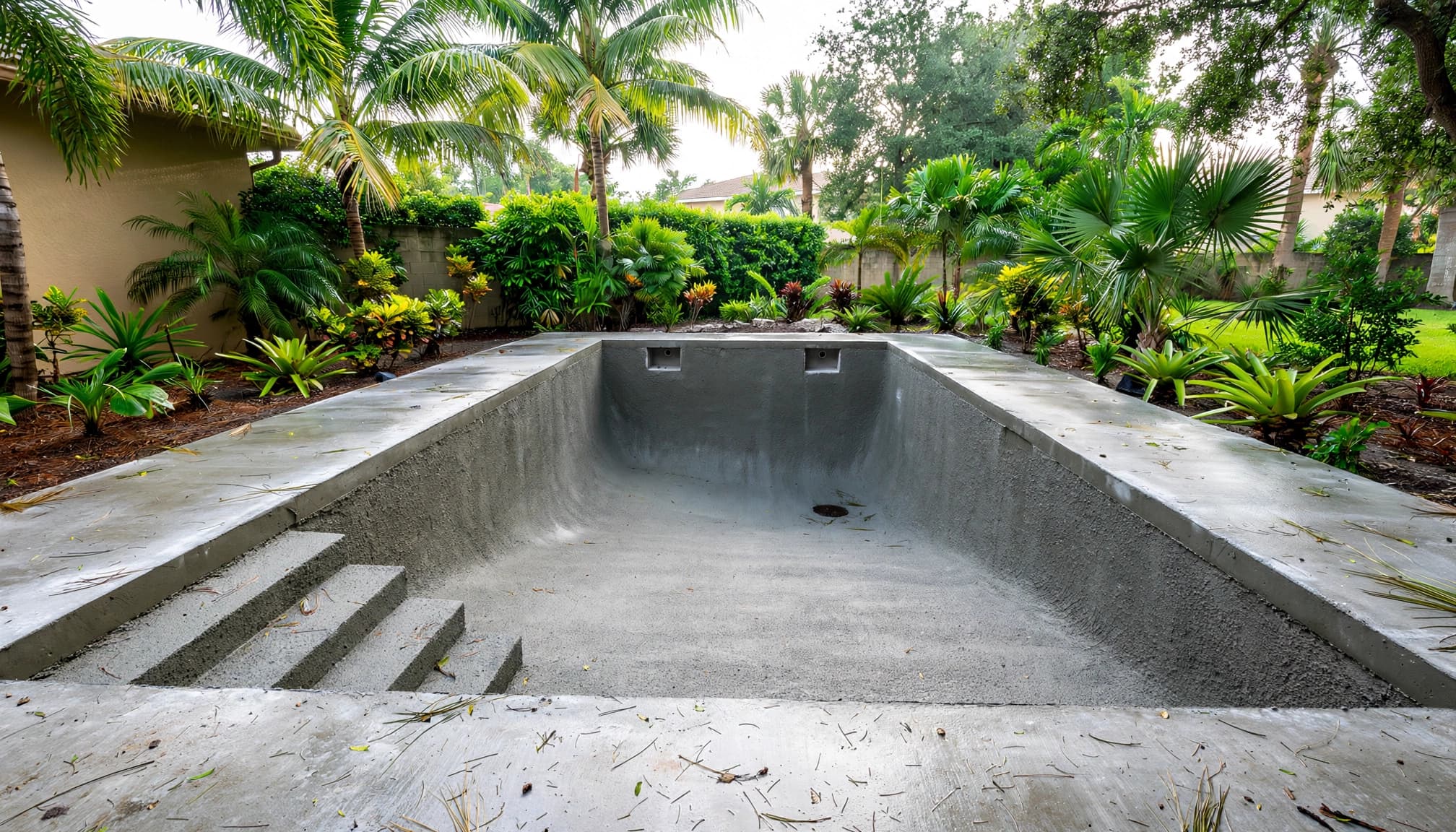
A gunite shell is a structural concrete pool formed by spraying a cement, sand, and water mixture over reinforcing steel. The shell must cure, dry or reach the moisture condition required by the selected system, and pass the necessary inspections before the finish crew begins. The following steps help you understand what to confirm with your contractor.
Why Gunite Pool Waterproofing Comes Before Tile
Tile installation and waterproofing are related, but they are different construction stages. Waterproofing concerns the shell and the system selected to manage water movement through prepared surfaces. Tile is a finish material installed over an approved substrate with compatible setting materials and grout.
A new pool construction project may include excavation, structural steel, plumbing, electrical work, gunite application, tile, coping, decking, equipment installation, and startup. You can review the full sequence in this overview of new pool construction in Fort Myers.
The shell is not the finished interior
The gunite creates the pool's structure, while plaster, pebble, tile, and other materials create the surface you see and touch. Each finish has its own requirements for bonding, moisture, surface texture, curing, and preparation.
Some projects use cementitious or crystalline waterproofing treatments in selected locations. Other designs rely on a sound concrete shell, proper curing, careful preparation, and the requirements of the final finish system. There is no single method that fits every pool.
Waterproofing also cannot compensate for poor concrete placement, inadequate reinforcement, weak consolidation, or structural movement. Cracks, cold joints, penetrations, and hollow areas need evaluation before any finish covers them.
Tile should follow an approved substrate
Tile installers need a stable, clean, properly prepared surface. If the shell still has curing issues, active moisture problems, loose material, construction debris, or unresolved cracks, tile work may conceal conditions that should have been corrected first.
Ask your contractor to identify the exact point when the shell is ready for waterproofing or finish preparation. The answer should follow the selected product's technical instructions, the project specifications, and any direction from the engineer or building authority.
Surface Preparation and Moisture Control
Fort Myers weather can affect the schedule between shell placement and finish installation. Rain, high humidity, standing water, and wet soil do not automatically mean a pool cannot move forward, but they require a documented response from the builder.
A surface can appear dry while retaining moisture in pores, joints, or repair areas. Conversely, some cement-based systems require a damp substrate rather than a fully dry one. The correct condition depends on the product and finish system.
Inspect corners, penetrations, and joints
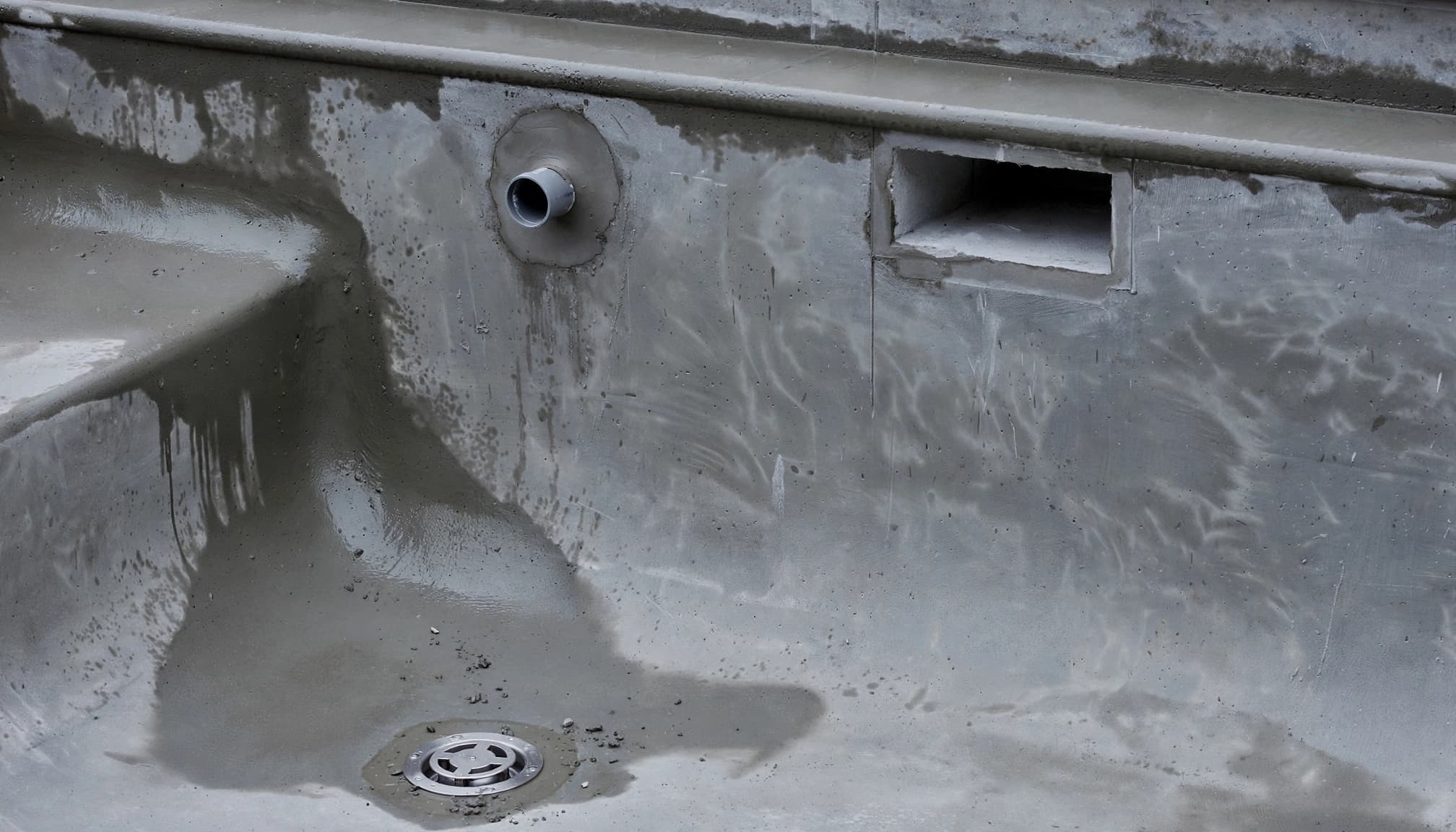
Before waterproofing or tile, the crew should review the pool floor, walls, steps, benches, spa areas, bond beam, drains, returns, lights, and other penetrations. Changes in direction deserve close attention because corners and transitions can collect debris or expose surface irregularities.
The contractor should also address rebound, loose concrete, honeycombing, voids, hollow areas, and visible cracks. Plumbing penetrations need compatible detailing rather than a quick surface patch. Cold joints and construction joints should be evaluated according to the structural and waterproofing plans.
The pool's final appearance depends on this work, but the concern is more than appearance. A finish crew can smooth or coat a prepared surface. It cannot reliably correct a structural problem hidden beneath the finish.
Allow curing and follow the system requirements
Exposed shotcrete surfaces commonly need at least seven days of curing, with wet curing often preferred. Some cementitious finish systems call for a longer moisture-curing plan. The right schedule depends on the concrete mix, shell condition, weather, finish material, and manufacturer's instructions.
Homeowners should request the curing plan in writing. It should explain who maintains moisture, how rain is handled, when inspections occur, and what conditions must be met before the next trade begins.
A calendar date alone does not prove that a pool shell is ready for tile. Readiness depends on curing, surface condition, moisture, and the requirements of the selected system.
Fort Myers Soil, Rain, and Groundwater Considerations
Southwest Florida properties can have sandy soils, limestone, shallow groundwater, drainage swales, canals, utility easements, and community restrictions. These conditions affect the project before waterproofing begins.
A pool shell must be designed for the individual lot, including the home's location, finished elevations, setbacks, drainage paths, and surrounding improvements. The contractor may need a temporary dewatering plan if groundwater enters the excavation. That water must be managed without undermining nearby soil, damaging neighboring property, or interrupting approved drainage.
Hydrostatic pressure also deserves a clear explanation. Groundwater beneath or around an empty pool can place upward or lateral pressure on the structure. Drains, hydrostatic relief details, groundwater management, and structural design address different parts of that risk. A waterproofing coating alone should not be presented as a solution to poor site drainage or water pressure.
Permit requirements vary by jurisdiction. A property inside Fort Myers city limits follows the city's process, while an unincorporated address follows Lee County requirements. In-ground pools require permitting, inspections, safety features, and approved plans. The City of Fort Myers may also review drainage impacts when a project adds substantial impervious surface.
Ask your builder to confirm the current requirements for your address before finalizing the pool layout. The same review should cover easements, setbacks, drainage, access, and any deed restrictions.
Waterproofing Questions to Ask Before Tile
Clear questions can prevent confusion when several subcontractors handle the shell, waterproofing, tile, coping, and interior finish. A reputable Fort Myers pool contractor should explain the sequence in plain language and identify who owns each step.
Which waterproofing or finish system is specified?
Ask for the product name, technical data, approved uses, substrate requirements, application limits, and compatibility information. If the project uses a targeted cementitious or crystalline treatment, ask where it will be installed and why those locations need it.
The contractor should also explain whether the selected interior finish relies on a separate waterproofing layer, a prepared concrete shell, or a combination of systems. Avoid accepting a vague promise that the pool will be "sealed" without a written scope.
What happens if the shell has cracks or hollow areas?
Find out who inspects the shell and how the crew documents repairs. The answer should address cracks, honeycombing, voids, cold joints, penetrations, and areas that sound hollow during inspection.
Ask whether repairs require approval from the engineer, waterproofing manufacturer, or finish manufacturer. Repairs should use materials and methods compatible with the surrounding concrete and planned finish. Covering a questionable area with tile does not resolve the underlying condition.
What must happen before tile is installed?
Your contractor should state the required curing period, surface profile, cleaning method, moisture condition, inspection points, and weather limits. Ask who verifies that the substrate meets those requirements and whether the verification is recorded.
Also confirm the order of work around tile, coping, plaster, pebble, decking, drains, and equipment. Rain or high humidity may change the schedule, especially when the substrate or setting materials need controlled conditions. The manufacturer's written instructions should control the final decision.
Key Takeaways for Fort Myers Homeowners
- Waterproofing and tile installation are separate stages with different requirements.
- A strong pool depends on engineering, reinforcing steel, concrete placement, consolidation, curing, and site conditions.
- Seven days is a common minimum curing reference for exposed shotcrete, but the project may require longer.
- Rain, humidity, wet soil, and groundwater can affect preparation and scheduling.
- Hydrostatic pressure requires site and structural planning. Waterproofing alone cannot correct poor drainage.
- Cracks, cold joints, penetrations, voids, and hollow areas should be evaluated before finishes cover them.
- Ask for the selected system, preparation plan, curing instructions, inspection records, and tile-readiness criteria in writing.
- Confirm whether Fort Myers or Lee County handles the permit, and follow the approved plans and local inspection sequence.
FAQ About Gunite Pool Waterproofing Before Tile
Is waterproofing always a separate coating in a gunite pool?
No. The proper approach depends on the pool design, concrete condition, selected interior finish, and manufacturer requirements. Some projects use a cementitious or crystalline treatment in targeted areas. Others rely on a properly designed and cured shell with compatible finish preparation.
Your contractor should identify the system in the written scope. Ask how it works with the planned tile, plaster, pebble, drains, penetrations, and repair materials.
How long should a new gunite shell cure before tile?
There is no universal tile date for every pool. A seven-day wet-curing reference is common for exposed shotcrete surfaces, while some cementitious finishes require more moisture curing.
The project-specific schedule should account for the concrete mix, weather, shell condition, and finish manufacturer's instructions. Rain may help maintain moisture during curing, but it does not automatically make the shell ready for tile. The contractor still needs to confirm surface condition and any moisture limits.
Can waterproofing stop leaks caused by groundwater?
Waterproofing may be part of a complete water-management system, but it cannot replace proper drainage, dewatering, structural design, or hydrostatic-pressure details. Groundwater conditions should be addressed during excavation and design.
Ask whether the project includes groundwater observations, a temporary dewatering plan, drainage provisions, and any required structural details. Those measures protect the construction process and the finished pool in different ways.
Should tile be installed immediately after waterproofing?
Only when the waterproofing manufacturer and tile system allow it. The surface may need a defined cure, dry time, inspection, or preparation step before tile-setting materials are applied.
Your builder should provide the sequence in writing. That plan should account for rain, humidity, surface moisture, repairs, and access for inspections.
Conclusion
Gunite pool waterproofing in Fort Myers should be treated as part of a connected construction system, not as a last-minute coating before tile. The shell needs proper reinforcement, placement, curing, inspection, and preparation before the selected waterproofing or finish system begins.
Ask for clear answers about groundwater, drainage, curing, surface repairs, product compatibility, and tile readiness. When those details follow the approved plans and manufacturer's instructions, your new pool has a better foundation for its finished interior.