Water Heater Recirculation Planning for Fort Myers New Homes
Explore Our Services
Contact Us Today!
(239) 322-9295
Waiting several minutes for hot water can waste water and make a new home feel poorly planned. Water heater recirculation can shorten that wait, but the system needs to match the home's layout, plumbing design, controls, and daily routines.
For Fort Myers homeowners, the best time to decide is before plumbing rough-in. The builder, plumber, electrician, water-heater installer, and insulation contractor should agree on the design before pipes disappear under the slab or behind finished walls.
Key Takeaways
- Plan the recirculation route before plumbing rough-in and concrete work.
- Map the farthest fixtures, expected wait times, utility-room location, and pipe paths.
- A dedicated return line usually gives the clearest layout and control options.
- Florida's code uses the term "demand recirculation water system" for systems that return heated water through the cold-water line.
- Demand systems must limit water entering the cold-water piping to 104°F .
- Applicable hot-water and recirculation piping generally needs at least R-3 insulation under the Florida Energy Conservation Code.
- Confirm the permit and inspection path based on whether the property is inside the City of Fort Myers or unincorporated Lee County.
Plan Water Heater Recirculation Before Plumbing Rough-In
Recirculation is much easier to install when the floor plan and utility spaces are still flexible. Adding a return line after framing, drywall, or tile work can create rerouting, access, and repair problems.
Map the fixtures that matter most
Start with the distance between the water heater and each hot-water fixture. The kitchen sink, primary bathroom, guest bathroom, laundry room, outdoor shower, and wet bar may all have different priorities.
A distant primary bathroom may benefit from faster hot water, while a nearby powder-room sink may not need a dedicated return path. Your plumber can review the fixture locations and identify where long runs, slab penetrations, or multiple branches could affect performance.
The route also depends on the home shape. A long single-story floor plan, split-bedroom layout, or large garage can place fixtures far from the utility room. During early planning, compare the water-heater location with the shortest practical route to the main fixture groups.
Coordinate all trades
A pump needs power, access, shutoff valves, and service clearance. The electrician should know whether the equipment requires a dedicated circuit or connects with other mechanical equipment. The plumber must coordinate the return line with drains, vents, HVAC ducts, structural members, and other utilities.
This is also the stage to discuss insulation. In Fort Myers, piping may pass through garages, attics, exterior walls, or unconditioned chases. Those locations can increase heat loss if the pipe insulation plan is incomplete.
How the Whole-Home Layout Affects the Return Loop
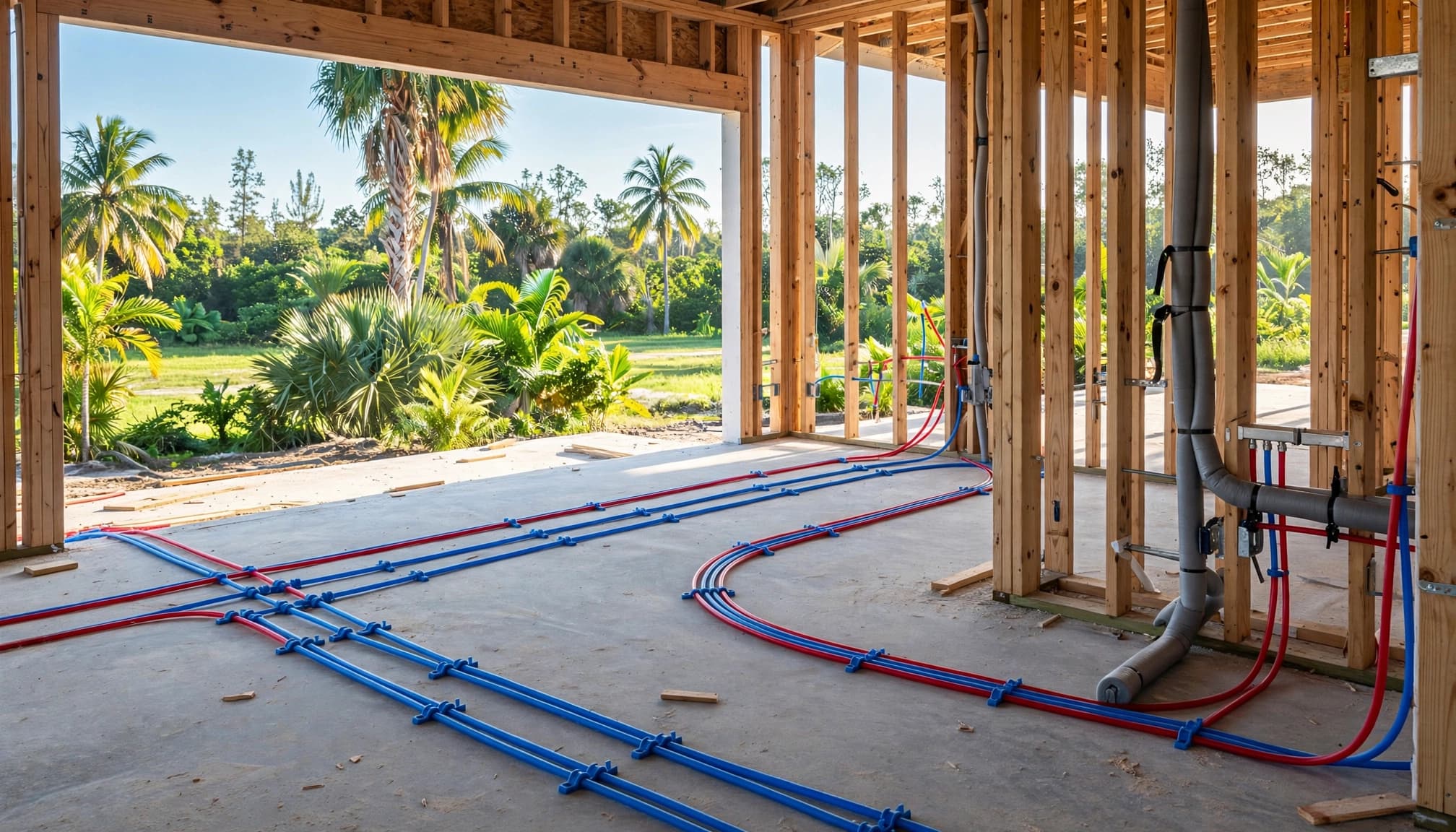
A recirculation system moves hot water toward the fixture groups so less cooled water must run down the drain before the tap reaches the desired temperature. The loop must still be sized and routed for the actual home.
Dedicated return lines
A dedicated return line runs from the far end of the hot-water distribution system back toward the water heater. This approach gives the plumber a clear path for circulating water and makes the pump, check valve, isolation valves, and service points easier to identify.
A dedicated loop may be practical when the primary bathroom and kitchen sit far from the utility room. However, the return route should avoid unnecessary length and sharp detours. Every additional section of pipe can add heat loss, installation work, and future maintenance points.
Your plumbing plan should show the supply route, return route, pipe sizes, insulation, pump location, and valve locations. Keep those details with the final construction documents.
Fixture priority and zoning
One loop may serve the entire home, but zoning can make sense in a larger floor plan. For example, the primary suite might need faster service than a rarely used guest bathroom.
Zoning adds valves, controls, and design decisions. It should only be used when the layout or household routine justifies the added complexity. A simple, well-insulated loop often works better than an overbuilt system with several poorly coordinated branches.
For budgeting context, compare the loop design with the broader new construction plumbing rough-in costs before the plumbing contract is finalized.
Florida Code Requirements for Recirculation Systems
The Florida Building Code regulates how a recirculation system is installed. It does not mean every new single-family home must have one. The requirements apply when the system is included in the design.
Demand recirculation and the 104°F limit
The Florida Plumbing Code uses the term demand recirculation water system for a system that moves water from a heated supply pipe back toward the heater through a cold-water supply pipe.
The controls must begin circulation through user action, user presence, or flow sensing. The system must also limit water entering the cold-water piping to 104°F (40°C) . This requirement matters because the cold-water line is intended to remain a cold supply path for fixtures and equipment.
A timer may help schedule operation, but it should not be treated as the only answer to the demand-control requirement. Have the plumber identify the control method on the equipment schedule or plumbing detail.
Insulation and heat loss
The 2023 Florida Energy Conservation Code, 8th edition, includes minimum insulation requirements for applicable residential hot-water piping. The code identifies R-3 insulation for several conditions, including larger piping, piping outside conditioned space, piping under a slab, buried piping, and supply and return piping in many recirculation systems.
Good insulation reduces heat loss while water waits in the loop. It also helps control the energy penalty that can come with keeping hot water moving continuously. The insulation plan should cover accessible piping and address joints, valves, and areas where other trades could compress or interrupt the insulation.
Choose Controls That Fit Your Household
The pump should operate when hot-water demand justifies it. Continuous circulation may provide fast service, but it can also add heat loss, pump runtime, and unnecessary energy use.
User-activated controls
A push button, wall control, or other user-activated device can start circulation before someone uses a distant fixture. This approach works well when the household has predictable routines but doesn't need hot water moving all day.
The control may be placed near a primary bathroom, kitchen, or bedroom hallway. It should be easy to understand and located where the homeowner can reach it without entering the utility space.
Presence and flow sensing
Presence sensing can start circulation when someone approaches a fixture area. Flow sensing can respond to water use or a related demand signal. These options may reduce unnecessary runtime, but the plumber must select compatible equipment and install it according to the manufacturer's instructions.
A temperature sensor can help control when the loop has reached its target condition. It does not replace the need to select a compliant activation method.
| Control approach | Best fit | Planning concern |
|---|---|---|
| User activation | Homes with predictable use at distant fixtures | Place controls where occupants will use them |
| Presence sensing | Hands-free operation near selected rooms | Confirm sensor range and compatibility |
| Flow sensing | Systems tied to fixture demand | Coordinate sensor placement with the plumbing design |
| Scheduled operation | Predictable occupancy patterns | Do not rely on a timer alone for demand-system compliance |
The right control is the one that balances comfort with reasonable runtime. Your builder should provide access to the pump and controls for future service.
Coordinate the Mixing Valve and Return Connection
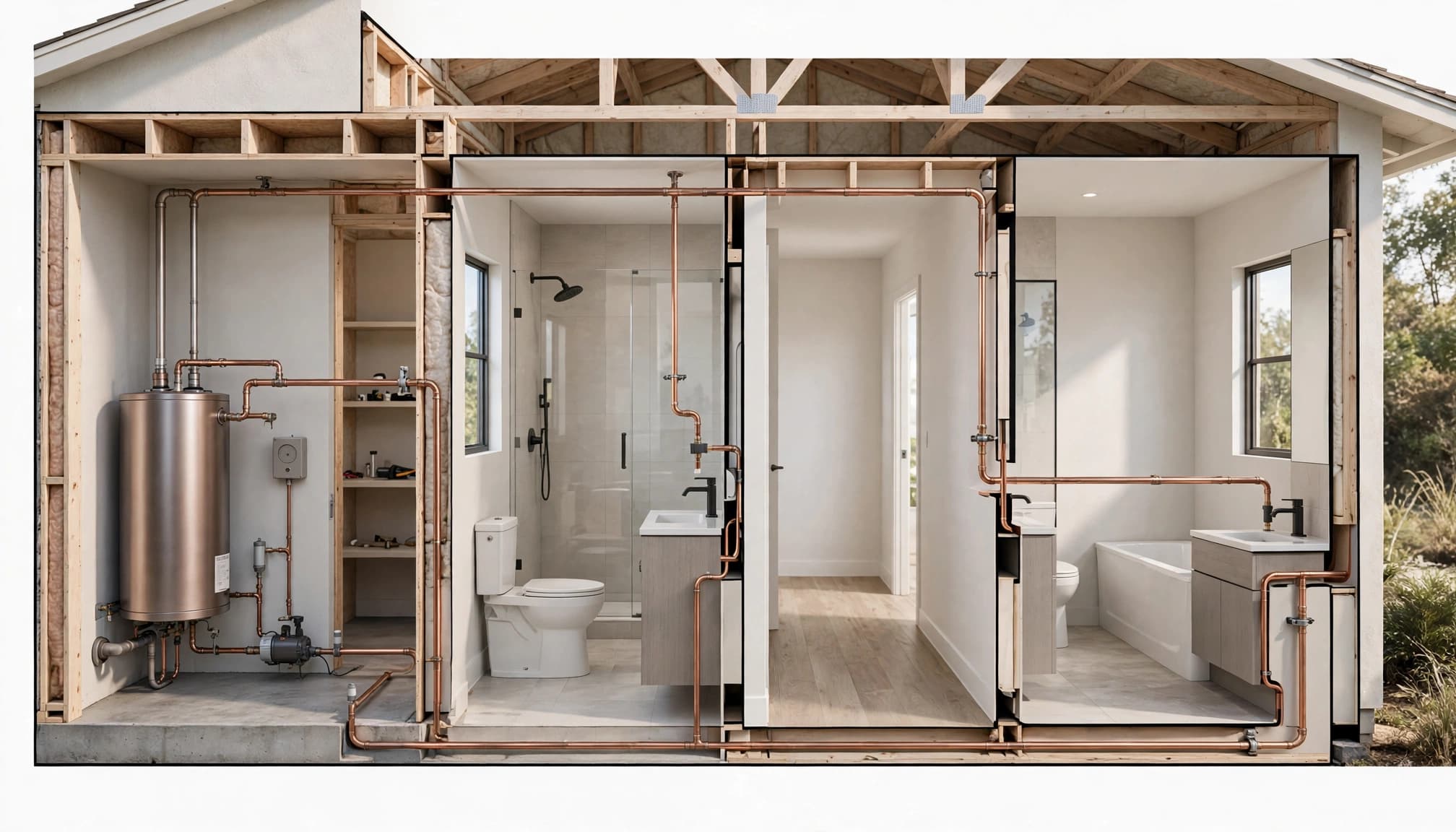
A thermostatic mixing valve may be part of the domestic hot-water design, especially when the home uses stored water at a higher temperature and delivers tempered water to fixtures.
Route the return correctly
When a thermostatic mixing valve is used with a hot-water recirculating pump, Florida plumbing provisions address how the hot or tempered return connects. The return line must be routed to the water heater's cold-water inlet pipe and to the cold-water inlet or hot-water-return connection of the mixing valve, as applicable to the equipment arrangement.
This is not a detail to leave for the plumber to resolve after installation begins. The water heater, mixing valve, pump, check valve, and return connection need to work as one system.
Show components on the plan
Ask for a plumbing detail that identifies:
- The water heater type and location.
- The dedicated return line or approved alternate arrangement.
- The pump, check valve, isolation valves, and temperature controls.
- The thermostatic mixing valve, if included.
- Pipe insulation requirements.
- Electrical access and service clearance.
- The control method and expected operating sequence.
Manufacturers may have different connection requirements. The final installation should follow the approved design and the equipment instructions, not a generic diagram.
Fort Myers Permitting and Construction Coordination
Permit questions depend on the property's reviewing authority and the exact plumbing design. A home inside Fort Myers city limits follows the city's process, while an unincorporated Lee County property follows county procedures.
Confirm the reviewing jurisdiction
Ask the contractor which authority will review the plans before the permit package is submitted. The plumbing loop may appear on the building plans, plumbing permit documents, water-heater detail, riser diagram, or equipment schedule.
The responsible contractor should also confirm which trade permits and inspections apply. Requirements can change, and the correct review path depends on the property and scope of work. Review current Southwest Florida new home permit fees with the builder rather than treating an early allowance as a final cost.
Protect the rough-in schedule
Plumbing inspections may occur before concrete placement or before walls close. A design change after those milestones can affect several trades at once.
Your builder should include the loop in the preconstruction meeting, confirm the rough-in sequence, and keep the approved plumbing detail available at the job site. Coordinate the inspection schedule with framing, insulation, drywall, cabinets, and water-heater installation. A current Fort Myers new home permit timeline can help with broad scheduling, but your project team must confirm its own review and inspection dates.
Maintenance After Move-In
Recirculation equipment needs basic care. The pump, check valve, temperature sensor, mixing valve, and isolation valves should remain accessible rather than buried behind permanent finishes.
Check the system periodically
Watch for changes in hot-water wait time, unusual pump noise, temperature swings, or signs of leakage near valves and connections. Confirm that insulation remains in place where it is visible, especially in the garage or utility room.
If the pump stops working, the home may still receive hot water, but the wait time can increase. Have the installer identify the pump model, control method, shutoff valves, and service procedure before closing out the project.
Review settings seasonally
Household schedules change. Guests, vacations, and seasonal occupancy can make a previous operating schedule inefficient. Review the control settings after move-in and adjust them according to actual use.
Never bypass a temperature limit or modify the return connections without a licensed plumber. Changes can affect scald protection, cold-water temperatures, equipment operation, and code compliance.
Frequently Asked Questions
Is water heater recirculation required in every Fort Myers new home?
No. Florida code regulates recirculation systems when they are installed, but the retrieved statewide provisions do not require every new single-family home to include one.
Does a recirculation loop eliminate water waste?
It can reduce the amount of cooled water that runs down the drain while occupants wait for hot water. The result depends on the home's layout, pipe insulation, control settings, fixture use, and system design. Continuous circulation can also increase heat loss, so the pump should not run without a clear reason.
Should the return pipe go under the slab?
That depends on the floor plan, water-heater location, approved plumbing design, and site conditions. If the return passes under a slab, the builder and plumber should coordinate pipe protection, insulation requirements, penetrations, and inspection timing before the concrete pour.
Can a timer control the entire system?
A timer can schedule operation, but it may not meet the control requirements for a Florida demand recirculation water system by itself. Have the plumber verify whether user activation, presence sensing, or flow sensing is required for the selected arrangement.
Conclusion
A comfortable hot-water system starts with a coordinated floor plan, not a pump added at the end of construction. Map the fixture distances, select the water-heater and mixing-valve arrangement, plan insulation, and choose controls before rough-in.
For a Fort Myers new home, the strongest design is one that gives you reasonable wait times without constant circulation or difficult future service. Include the loop in the approved plumbing documents, confirm the local permit path, and have the builder coordinate every trade before the walls and slab close.