Roof Flashing Replacement in Fort Myers: Repair or Replace?
Explore Our Services
Contact Us Today!
(239) 322-9295
A small roof leak can come from a failed sealant joint, a damaged flashing section, or water traveling beneath several roofing layers. Knowing when roof flashing replacement makes more sense than a localized repair can help Fort Myers homeowners avoid repeated leaks and unnecessary work.
Southwest Florida roofs face intense sun, heavy rain, salt air, and hurricane-season wind. The right decision depends on the flashing itself, the surrounding roofing materials, the installation details, and what an on-site inspection reveals.
Why Roof Flashing Fails Faster in Fort Myers
Flashing directs water away from roof joints, walls, valleys, chimneys, vents, skylights, and other openings. When it fails, water can enter areas that are difficult to see until stains, mold, swollen drywall, or wood deterioration appear indoors.
Salt air, ultraviolet light, and storm exposure
Homes near coastal areas such as Punta Rassa and McGregor may experience more corrosion because of salt carried through the air. Inland properties still face long periods of heat, humidity, ultraviolet exposure, and heavy rainfall.
Hurricane season typically runs from June through November. Wind-driven rain can push water beneath loose metal, cracked sealant, lifted tiles, or damaged shingles. Wind can also bend flashing or loosen fasteners without causing obvious damage from the ground.
A Fort Myers wind mitigation inspection can document roof features related to wind resistance, but it doesn't replace a detailed leak investigation.
Common failure points
Flashing may use aluminum, galvanized steel, copper, or stainless steel, depending on the roof design and installation. Each material must work with the adjacent roofing products and sealants. Incompatible metals can increase corrosion, while poor fastening can allow movement during storms.
Common problems include:
- Rust or pitting that creates openings in the metal
- Cracked, missing, or hardened sealant
- Loose, bent, or lifted flashing
- Failed pipe boots around plumbing penetrations
- Leaks at valleys, roof-to-wall joints, chimneys, and vents
- Flashing installed without adequate overlap or drainage
When a Localized Flashing Repair Makes Sense
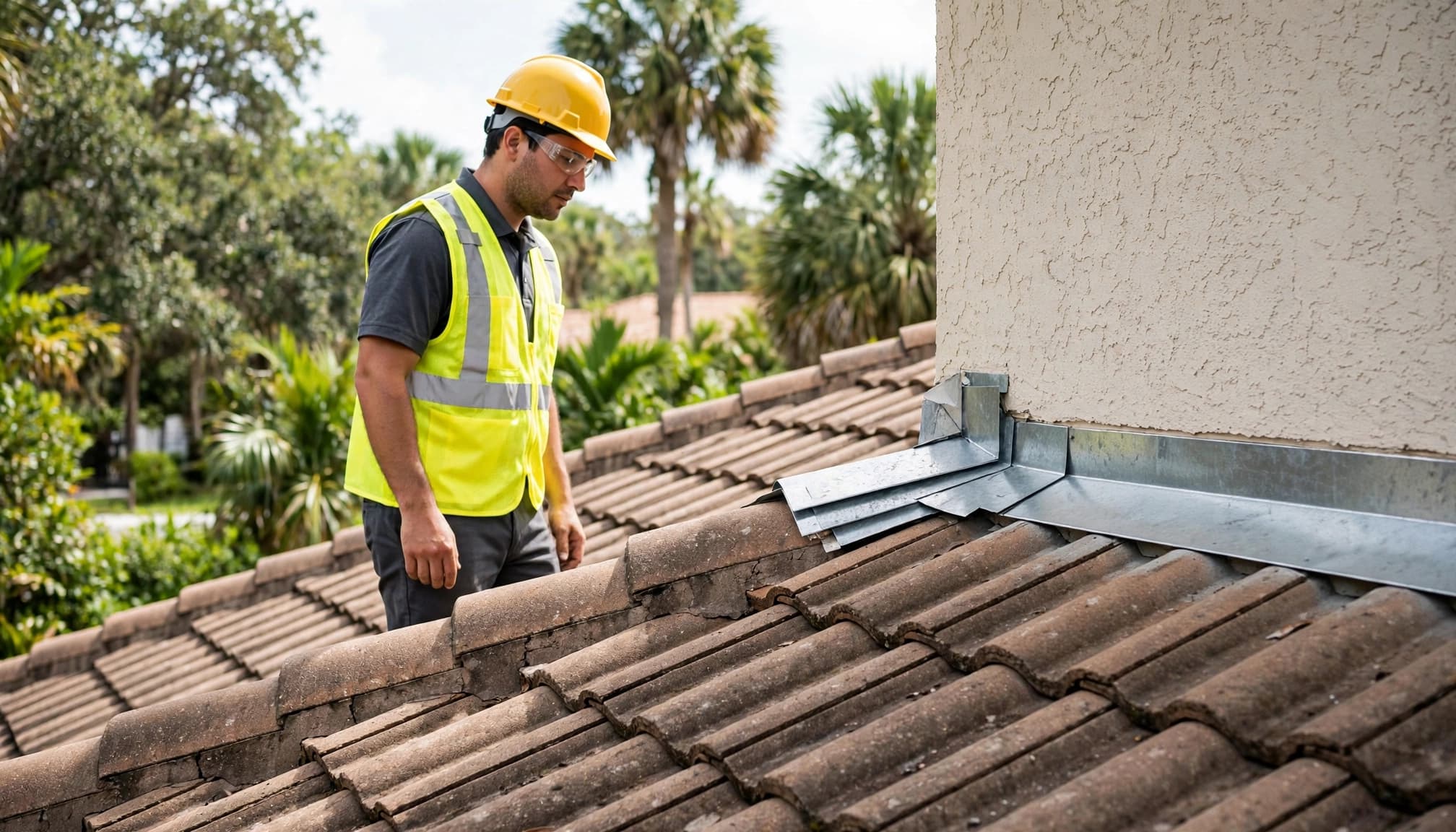
Repair is often appropriate when the defect is limited and the surrounding roof remains in good condition. However, a repair should address the water-shedding detail, not only the visible gap.
The damage is isolated
A localized repair may work when one section has failed sealant, a loose fastener, or minor bending, while the rest of the flashing remains solid and properly placed. The nearby shingles, tiles, underlayment, decking, and wall materials should also be free of signs of ongoing water intrusion.
For example, a contractor may remove failed sealant, reset a small loose section, replace compatible fasteners, or repair a limited area around a vent. The repair should leave water with a clear path away from the penetration or joint.
A repair is less likely to last if the metal is already thin, brittle, heavily corroded, or surrounded by deteriorated roofing.
The leak has a clear source
A professional inspection should trace the leak rather than assume the lowest ceiling stain identifies the entry point. Water can travel along decking, underlayment, rafters, or wall assemblies before appearing indoors.
The inspection should examine the flashing, fasteners, sealant, roof covering, underlayment, decking, attic area, and interior damage. The contractor should also check whether an earlier repair covered a larger installation problem.
Homeowners can review Fort Myers roof repair services when comparing inspection and repair options. A written scope should state what will be repaired, which materials will be used, and whether adjacent roofing must be removed.
When Roof Flashing Replacement Is the Better Choice
Replacement becomes more appropriate when the flashing has lost its physical integrity or when the water intrusion involves several connected components. This may mean replacing one section, a complete flashing assembly, or flashing installed during a larger roof project.
Corrosion, repeated leaks, and failed sealant
Surface discoloration alone doesn't prove that flashing needs replacement. Deep rust, pinholes, separated seams, and metal that bends or flakes under light pressure are more serious signs.
Repeated leaks after previous caulking often indicate that sealant is covering a damaged or improperly installed detail. Sealant isn't a substitute for sound metal, correct overlaps, proper counterflashing, and drainage.
Replacement is also worth considering when rubber components, such as pipe boots, have cracked from age and sun exposure. Replacing only the sealant around a deteriorated boot usually leaves the main failure in place.
Storm damage or poor installation
A tropical storm may bend step flashing, lift counterflashing, crack mortar around a chimney, or shift tiles over a roof-to-wall intersection. If multiple sections moved during the same event, replacing affected flashing may provide a more reliable repair than resetting isolated pieces.
Improper installation is another reason to replace rather than repeatedly patch. Problems may include short overlaps, exposed fasteners, missing kick-out flashing, poor transitions, blocked drainage paths, or metal that doesn't extend far enough beneath the roofing.
Adjacent roof deterioration also matters. If shingles are brittle, tiles are cracked, the underlayment is failing, or the decking has absorbed water, new flashing may not solve the full problem.
Evaluate Flashing With the Entire Roofing System
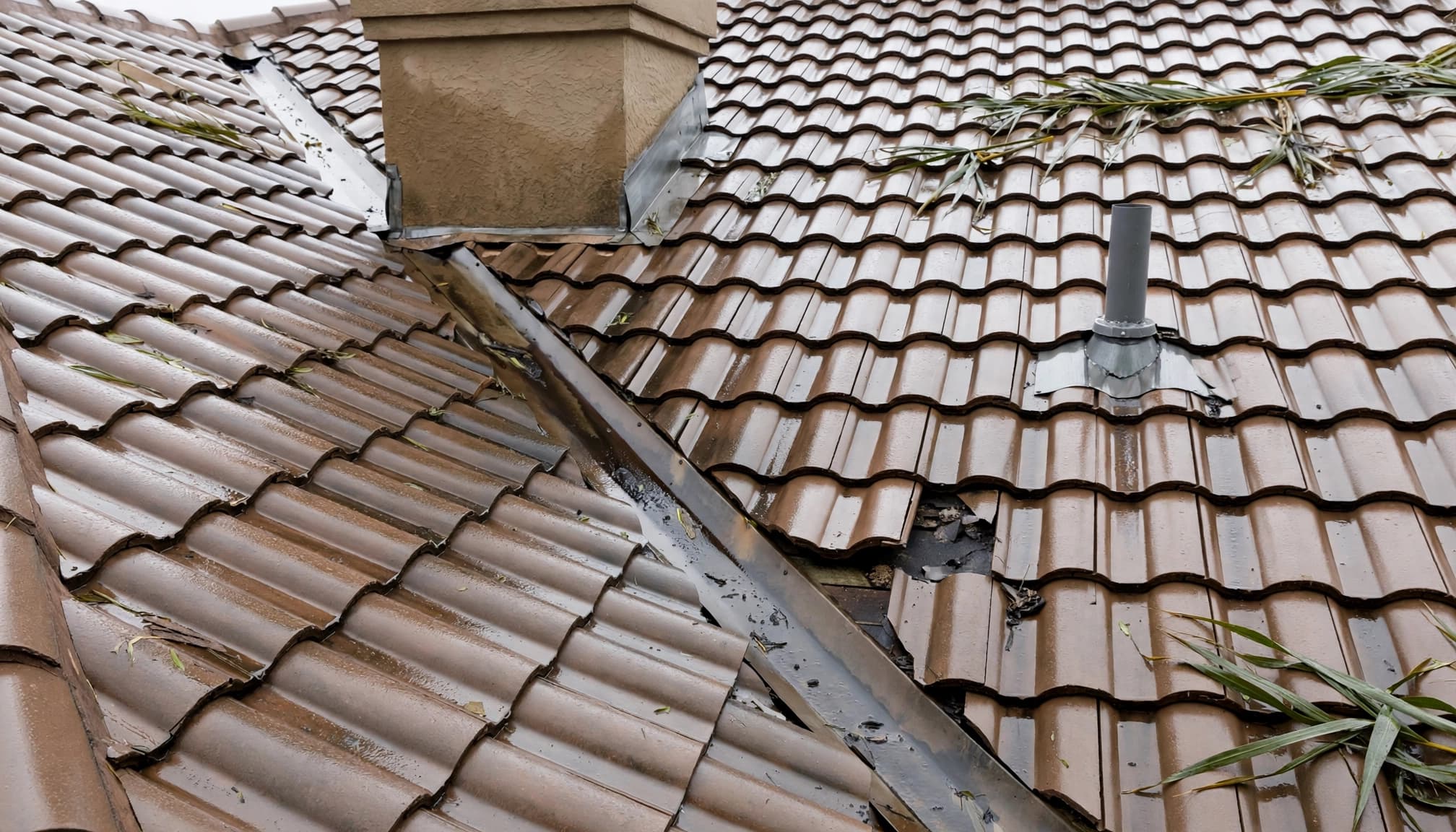
Flashing doesn't work alone. It depends on the roof covering, underlayment, slope, drainage, wall cladding, penetrations, and fasteners working together.
A roof-to-wall leak may require temporary removal of shingles or tiles to inspect the step flashing below. A valley problem may involve underlayment, valley metal, adjacent roof planes, or poor water flow. A chimney leak may involve both base flashing and counterflashing.
The roof's age and condition should guide the decision. Installing new flashing into a roof with widespread deterioration may provide limited value if the surrounding materials will soon fail. Conversely, replacing an entire roof because of one damaged flashing section may be unnecessary when the rest of the system is sound.
A 4-point inspection can evaluate the roof alongside electrical, plumbing, and HVAC systems, especially in older homes. It isn't a substitute for every specialized roofing inspection, but it can provide useful information when planning broader maintenance or insurance documentation.
A flashing decision should follow the water path and the condition of the connected roof components, not the appearance of one piece of metal.
Florida Code and Installation Details Matter
Florida requirements can affect how flashing is repaired or replaced, particularly when work involves reroofing, structural changes, tile systems, or permitted construction. The applicable rules depend on the project scope, permit circumstances, product approvals, and current code requirements.
Current requirements and manufacturer instructions
The Florida Building Code 9th Edition, 2026, identifies flashing as part of moisture control at roof interruptions, terminations, wall-to-roof intersections, edges, gutters, slope changes, openings, and penetrations.
For tile roofs, the 2026 update points to manufacturer instructions or the FRSA/TRI Florida High Wind Concrete and Clay Roof Tile Installation Manual, Seventh Edition, when the wind-design criteria apply. The details should match the approved roofing system rather than rely on a generic patch.
Florida residential roofing guidance also addresses corrosion-resistant materials, fastening, laps, and sealed penetrations. One referenced approach calls for flanges fastened at six-inch centers, laps of at least four inches, and sealed nail penetrations on horizontal flanges.
Valleys, penetrations, and inspections
Valley flashing must provide enough coverage and drainage capacity for concentrated runoff. A Florida residential-code reference describes at least eight inches of extension on each side of the valley centerline, a splash-diverter rib at the flow line, and four-inch end laps for the applicable detail.
The 2026 code changes also revise a hip-and-ridge flashing exception for steep-slope roof coverings that are not metal. That doesn't mean every existing roof automatically requires a new configuration. A qualified professional should confirm which rules apply to the permitted work.
Florida inspection guidance commonly calls for visible underlayment and flashing, along with product approval and fastener information, during roof or reroof inspections. Ask whether the proposed work includes documentation and required inspections.
Homeowners planning a full roof project can review Fort Myers roof installation options to compare installation scope, roofing materials, underlayment, ventilation, and flashing details.
Questions to Ask Before Approving the Work
A clear scope helps you distinguish a real repair from a temporary patch. Before approving the job, ask the contractor:
Questions about the problem
- Where is the suspected entry point, and what evidence supports that conclusion?
- Is the damage limited to flashing, or are the roof covering, underlayment, decking, or wall materials affected?
- Has the attic and interior area been checked for hidden moisture?
- Are there signs of repeated leakage, storm movement, corrosion, or failed sealant?
- Will any shingles, tiles, stucco, siding, or masonry need to be removed?
Questions about the solution
- Does the work involve repair, partial replacement, or a complete flashing assembly?
- Which metal, fasteners, sealants, and replacement components will be used?
- How will the new flashing connect to the existing roof and wall system?
- Will the work follow manufacturer instructions and applicable Florida requirements?
- What inspections, permits, photographs, or product approvals are required?
Never climb onto a roof to inspect flashing yourself when the surface is wet, steep, damaged, or difficult to access. Hidden water damage and unstable roofing create safety risks that aren't obvious from the ground.
If a storm has opened the roof, temporary protection may be necessary before permanent work begins. Emergency roof tarping in Fort Myers can help limit additional rain exposure while the roof receives a full inspection.
Key Takeaways
- Repair is usually reasonable for one isolated defect when the surrounding flashing and roofing remain sound.
- Replacement is more suitable for deep corrosion, repeated leaks, storm damage, failed pipe boots, bent metal, or poor original installation.
- Cracked sealant may be a symptom of a larger flashing problem rather than the entire repair.
- Roof-to-wall joints, valleys, chimneys, vents, and penetrations need careful inspection because water can travel beneath visible surfaces.
- The 2026 Florida Building Code and roofing manufacturer instructions may affect permitted replacement work.
- An on-site evaluation should include the connected roofing system, not only the flashing that looks damaged.
FAQ About Roof Flashing Replacement in Fort Myers
Can missing sealant be repaired without replacing the flashing?
Sometimes. If the metal is sound, correctly positioned, and free of corrosion or movement, a contractor may remove failed sealant and reseal the joint with a compatible product. If the sealant failed because the metal is loose, short, corroded, or poorly lapped, replacement is usually more dependable.
Does a roof leak always mean the flashing must be replaced?
No. A leak may come from damaged shingles or tiles, underlayment, roof decking, a pipe boot, or another penetration. The visible stain doesn't identify the source by itself. A roofing professional should inspect the complete water-shedding system before recommending work.
Should flashing be replaced during a full roof replacement?
Often, flashing should be evaluated while the roof covering is removed. Existing metal may be reusable if it remains sound and compatible, but concealed damage, corrosion, or poor installation can justify replacement. The contractor should identify which flashing is included in the roofing proposal.
How soon should storm-damaged flashing be checked?
As soon as it's safe to inspect the property. Wind-driven rain can worsen damage during the next storm. Avoid climbing onto the roof, document visible conditions from the ground, and arrange temporary protection if water is entering the home.
Choose the Repair That Solves the Water Problem
The right choice depends on the condition of the flashing and everything connected to it. A small, isolated defect may need a focused repair, while corrosion, recurring leaks, storm damage, or deteriorated surrounding roofing can justify roof flashing replacement .
For Fort Myers homeowners, the safest decision starts with an on-site inspection, a written scope, and installation details that account for Florida weather and the permitted roofing system. Fixing the actual water path is more useful than repeatedly sealing the symptom.