Gunite vs Fiberglass Pools for Fort Myers Backyards
Explore Our Services
Contact Us Today!
(239) 322-9295
A pool shell is only one part of a successful backyard project. The surrounding soil, groundwater, access, drainage, enclosure, and finish choices can affect the result just as much as the material itself.
When Fort Myers homeowners compare gunite vs fiberglass pools , they're choosing between design freedom and factory-built efficiency. Gunite allows a more customized shape, while fiberglass can simplify the installation and provide a smooth, low-porosity surface.
Your lot should guide the decision. Before choosing a shell, compare how each pool type fits your property, maintenance habits, design plans, and long-term budget.
Gunite vs Fiberglass Pools: What You're Actually Comparing
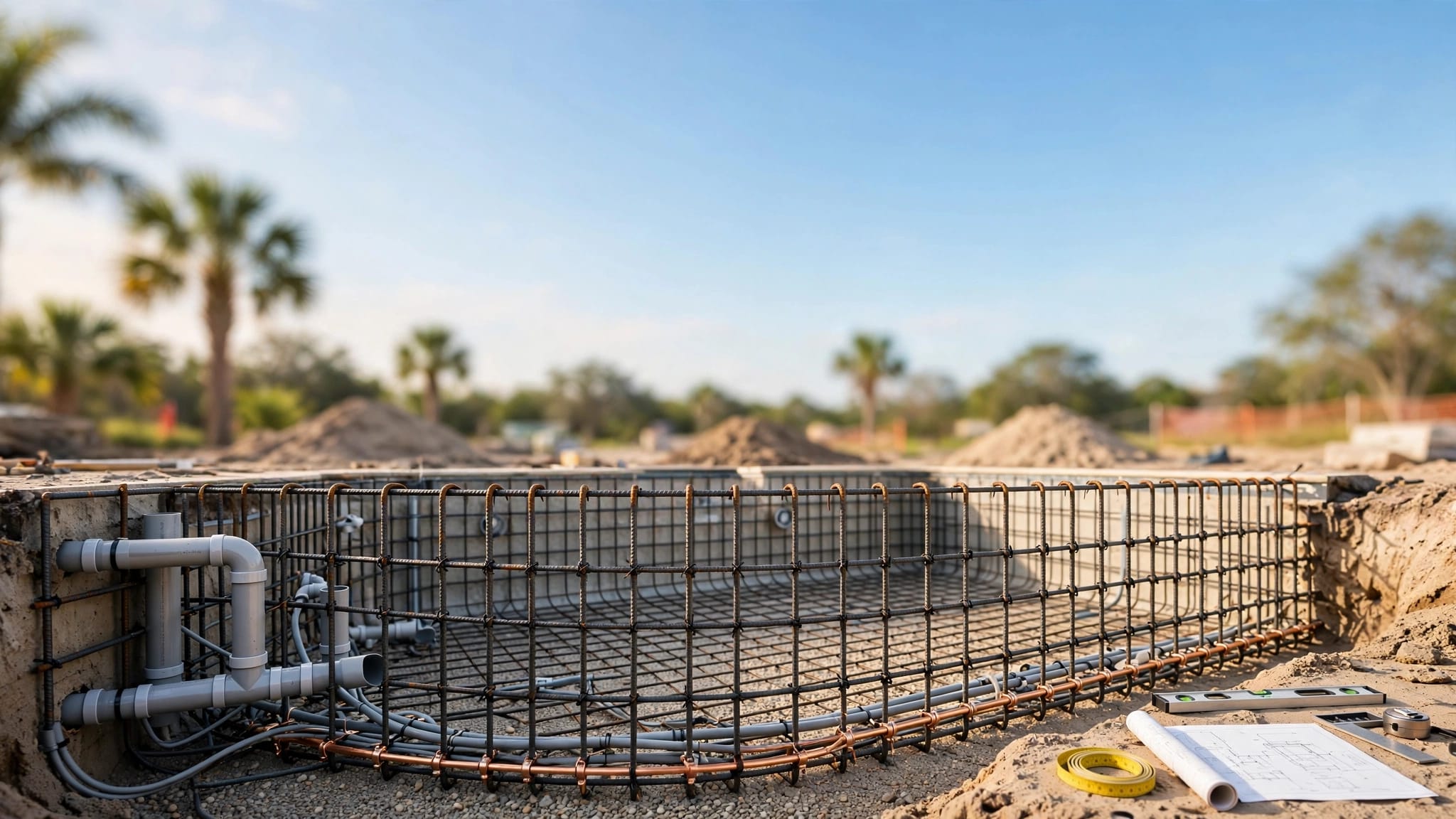
Gunite pools are built on the property. Crews excavate the pool area, install a reinforced steel framework, place plumbing, and spray a cement-based mixture to form the pool shell. The builder then adds the selected interior finish, such as plaster, quartz, pebble, or tile.
This construction method gives you broad control over the pool's dimensions. You can plan custom depths, curved walls, tanning ledges, benches, attached spas, swim lanes, and other built-in features. The design still needs to work with the lot, engineering requirements, equipment, and budget, but you aren't limited to one manufacturer's mold.
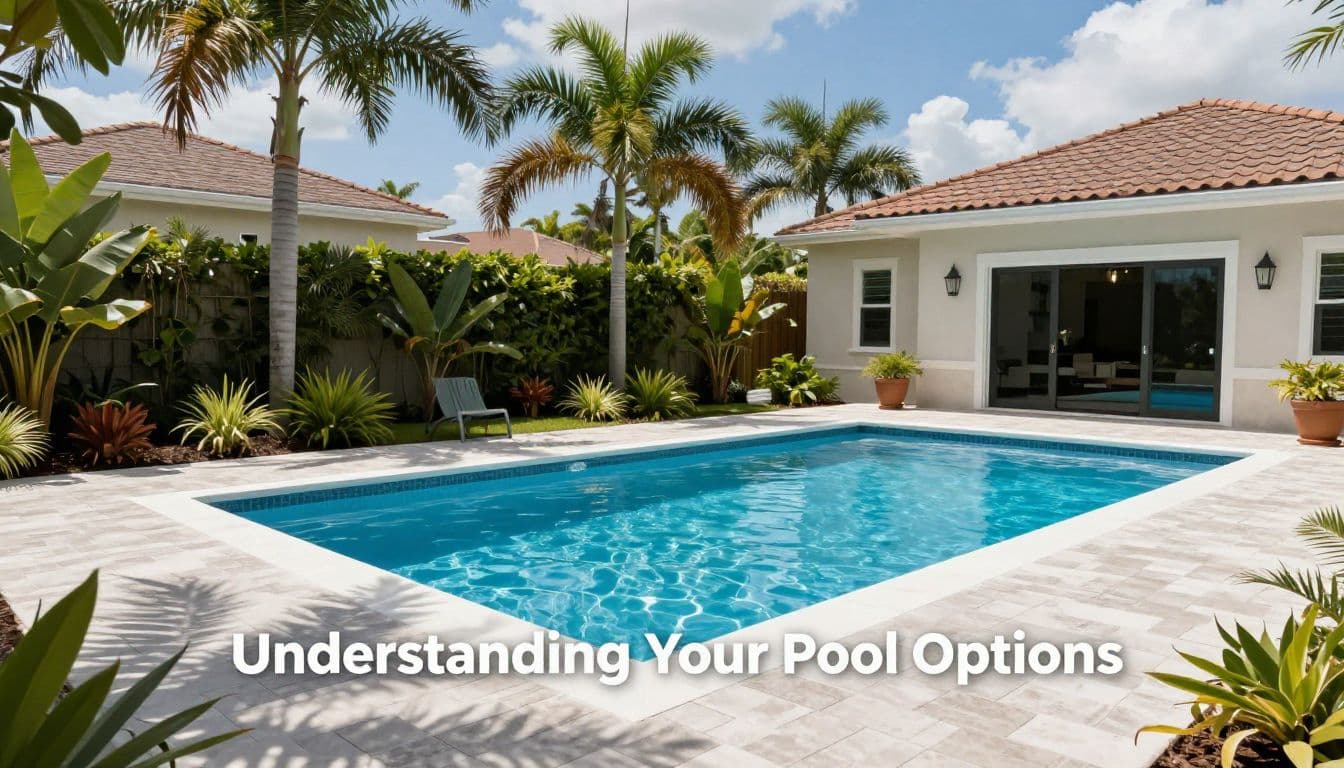
Fiberglass pools arrive as factory-molded shells. A crane or specialized delivery equipment may be needed, depending on the shell size and property access. After excavation and site preparation, the shell is placed, connected to plumbing, backfilled, and finished with decking and surrounding features.
Fiberglass manufacturers offer many established shapes and sizes. You can still choose steps, benches, tanning ledges, and attached spas from available designs. However, changing the shell's dimensions or creating a completely custom outline isn't as flexible as it is with gunite.
The most useful way to compare gunite vs fiberglass pools is to look beyond the initial installation. The better choice depends on how you want to use the pool and how your Fort Myers property can support it.
Why Fort Myers Lots Need a Closer Look
Southwest Florida properties can have conditions that affect excavation and pool installation. A high water table, sandy soil, limited side-yard access, nearby structures, and drainage concerns all deserve attention before construction begins.
Groundwater, drainage, and access
Water around an excavation can affect construction planning for either pool type. Your builder may need a plan for managing groundwater during excavation and installation. The finished pool also needs proper drainage around the deck and equipment area.
Fiberglass shells require special attention when groundwater levels change. Water pressure outside an empty or partially empty shell can create serious stress, so the installation plan should address hydrostatic pressure and drainage. Gunite pools also need proper structural design, reinforcement, shell construction, and site drainage.
Neither material automatically solves a difficult lot. A contractor should review property access, proposed pool dimensions, utility locations, elevations, and the location of the pump and filtration equipment before finalizing the design.
Access can also influence the installation process. A narrow driveway or side yard may affect how a fiberglass shell reaches the backyard. Gunite projects require room for excavation equipment, steel, plumbing materials, concrete-related work, and finish installation.
Salt, sun, and daily maintenance
Fort Myers pools face intense sun, warm weather, airborne salt near coastal areas, and frequent use. Both pool types need balanced water chemistry and regular cleaning. A saltwater system can work with either material when the pool surface, equipment, and design are properly specified.
Fiberglass has a smooth gelcoat surface with fewer areas for algae and debris to cling to. That can make routine brushing and cleaning easier. Still, fiberglass isn't maintenance-free. You'll need to monitor sanitizer, pH, alkalinity, calcium, and other water conditions.
Gunite requires more attention to its interior finish. Water chemistry affects the finish over time, and the surface you choose changes the pool's feel, appearance, cleaning needs, and future maintenance planning. A gunite pool may also require resurfacing later in its service life, depending on the finish and how well the water stays balanced.
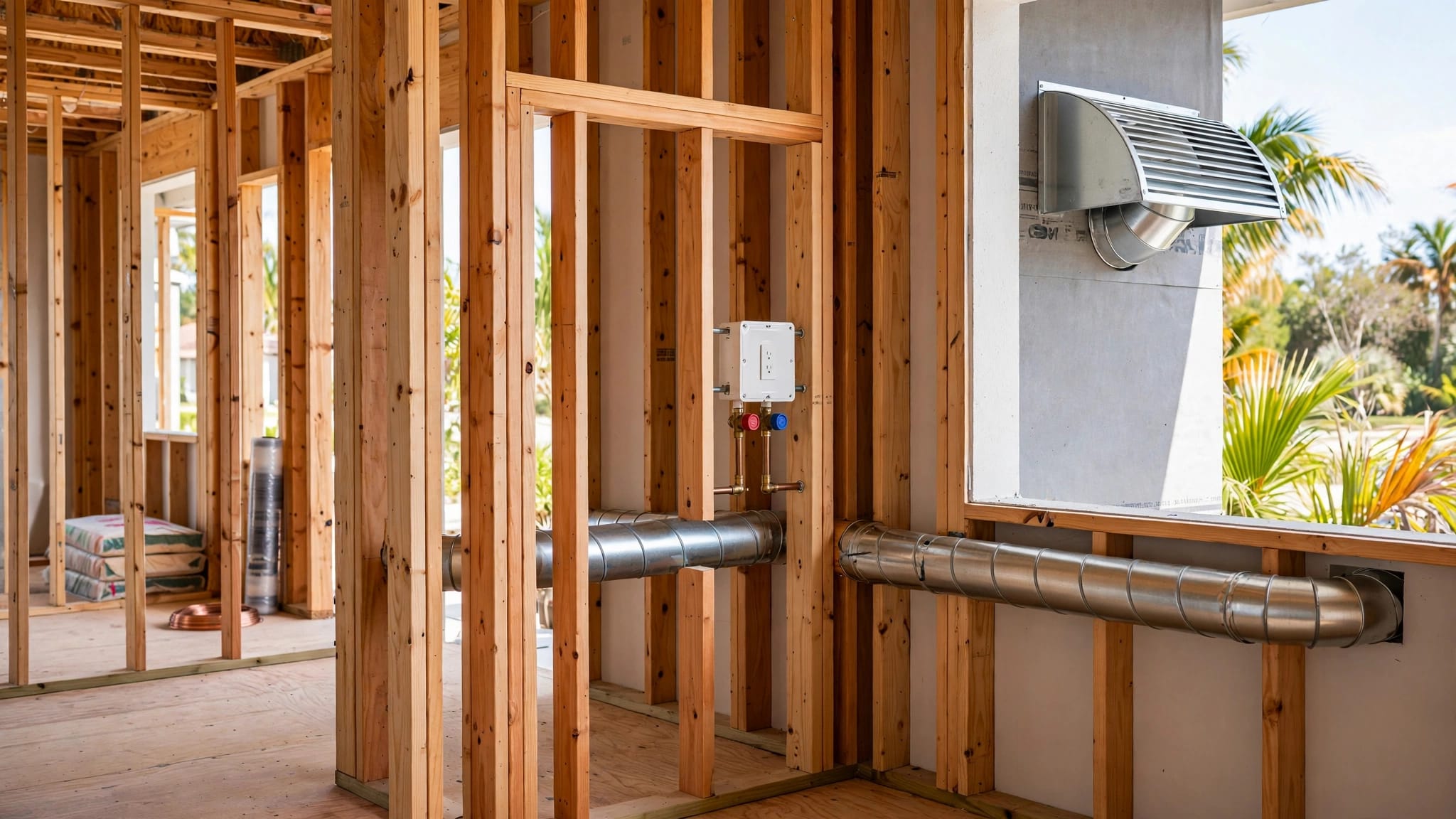
Coastal weather affects more than the pool shell. Drainage, deck design, equipment placement, electrical work, and enclosure construction all need to be planned together.
Side-by-Side Comparison for a Coastal Backyard
This table gives you a practical starting point for comparing the two pool types.
| Factor | Gunite pool | Fiberglass pool |
|---|---|---|
| Shape and size | Highly customizable, subject to site and engineering limits | Limited to manufacturer-made shapes and sizes |
| Interior surface | Plaster, quartz, pebble, tile, and other finish options | Factory-applied gelcoat |
| Built-in features | Flexible design for custom benches, ledges, spas, and depths | Features depend on the selected shell model |
| Installation process | Built on site through several construction stages | Factory shell is delivered and set into the excavation |
| Property access | Needs access for excavation and construction materials | Needs access for shell delivery and setting equipment |
| Routine care | Water balance protects the interior finish | Water balance protects the gelcoat and equipment |
| Future resurfacing | Interior finish may need renewal later | Gelcoat doesn't use the same plaster resurfacing process |
| Best design fit | Custom layouts, unusual lots, large features | Established shapes and a faster shell-based process |
| Coastal performance | Depends on engineering, drainage, materials, and construction | Depends on engineering, drainage, installation, and backfill |
| Budget comparison | Varies with size, finish, features, and site work | Varies with shell, delivery, access, features, and site work |
The table shows why there isn't a universal winner. Fiberglass may suit a homeowner who likes an available shape and wants a smooth, factory-made surface. Gunite may suit someone who has a detailed vision or needs a pool designed around an unusual lot.
Which option gives you more design control?
Gunite has the clear advantage when the pool must fit a specific footprint. It can work well for a narrow backyard, a complex patio layout, or a design that includes several integrated features.
Fiberglass can still create an attractive backyard, especially when a standard rectangular, freeform, or kidney-shaped pool fits the property. Choosing the right shell size matters because the surrounding deck, screen enclosure, landscaping, and furniture all depend on its final location.
Budget Beyond the Pool Shell
Comparing a gunite pool price with a fiberglass shell price can produce a misleading result if the proposals don't include the same work. A complete budget may include excavation, soil or groundwater management, plumbing, electrical work, pumps, filters, heaters, interior finishes, decking, screen enclosures, safety barriers, landscaping, and site restoration.
For a local reference point, review current Southwest Florida pool costs, then ask each contractor to identify what the estimate includes. Prices can vary substantially based on pool size, access, finishes, attached features, deck area, and backyard conditions.
A fiberglass shell may reduce some on-site construction steps, but delivery and placement can create access requirements. A gunite pool may require more construction stages, yet it can provide design choices that prevent costly compromises in a complex backyard.
Ask for an itemized proposal instead of a single total. The estimate should identify allowances, excluded work, equipment brands or specifications, finish selections, site preparation, decking, enclosure work, and the process for handling changes.
Also confirm who coordinates the different parts of the project. The pool, patio, lanai, drainage, electrical connections, irrigation, and landscaping should fit together. A local inground pool builder can help coordinate those details, but you should still review the scope before signing.
A Practical Decision Framework for Your Home
Use these questions to narrow the choice before meeting with builders:
- Does your design need a custom shape or depth?
If you want a specific layout, oversized tanning ledge, unusual depth transition, or integrated spa, gunite usually offers more freedom. - Can the property accommodate shell delivery?
Measure side-yard width, driveway clearance, overhead obstacles, gates, walls, and nearby structures. A fiberglass pool depends on getting the shell safely to the excavation area. - How much surface maintenance are you comfortable with?
Fiberglass may appeal to homeowners who prefer a smooth gelcoat surface. Gunite offers more finish choices, but the selected surface needs consistent water chemistry and long-term care. - What does the complete project budget include?
Compare finished backyard costs, not shell prices alone. Include decking, screen enclosure work, drainage, equipment, lighting, water features, landscaping, and required safety measures. - How will the pool fit your long-term plans?
Decide whether you may add an attached spa, outdoor kitchen, fire feature, larger deck, or other backyard improvements. Plan these items before excavation when possible. - What does the site assessment show?
Ask the builder how the design addresses groundwater, drainage, soil conditions, access, elevations, and equipment placement. These answers matter more than a general claim that one material works better in coastal areas.
For many Fort Myers homeowners, fiberglass is a good fit when the lot accepts a standard design and the installation plan is straightforward. Gunite is often the stronger fit when the backyard needs a custom layout or the pool is part of a larger architectural design.
Storm preparation deserves separate attention. Neither pool type makes a property storm-proof. Ask about drainage, equipment protection, electrical safety, deck construction, screen enclosure requirements, and the steps for securing the backyard before severe weather.
Conclusion: Choose for the Lot, Not the Label
The gunite vs fiberglass pools decision comes down to the balance between custom design, installation logistics, surface care, and total project scope . Gunite gives you more control over shape and features. Fiberglass offers a factory-made surface and a set of proven designs.
For a Fort Myers backyard, start with the property itself. Review access, groundwater, drainage, enclosure plans, equipment placement, and the full itemized budget before choosing a shell.
The right pool is the one that fits both your vision and the conditions beneath your backyard.