Standing Seam Metal Roof in Estero: Pros and Cons
Explore Our Services
Contact Us Today!
(239) 322-9295
A standing seam metal roof can suit an Estero home with its clean appearance, concealed fasteners, and strong resistance to heavy rain. However, the word "metal" doesn't tell you enough about the roof's expected performance.
Material, gauge, coating, roof design, installation quality, local requirements, and HOA rules all affect the decision. The right choice depends on the complete roofing system, not the panel material alone. Start with how standing seam roofing works in Southwest Florida conditions.
How a Standing Seam Metal Roof Is Built for Estero
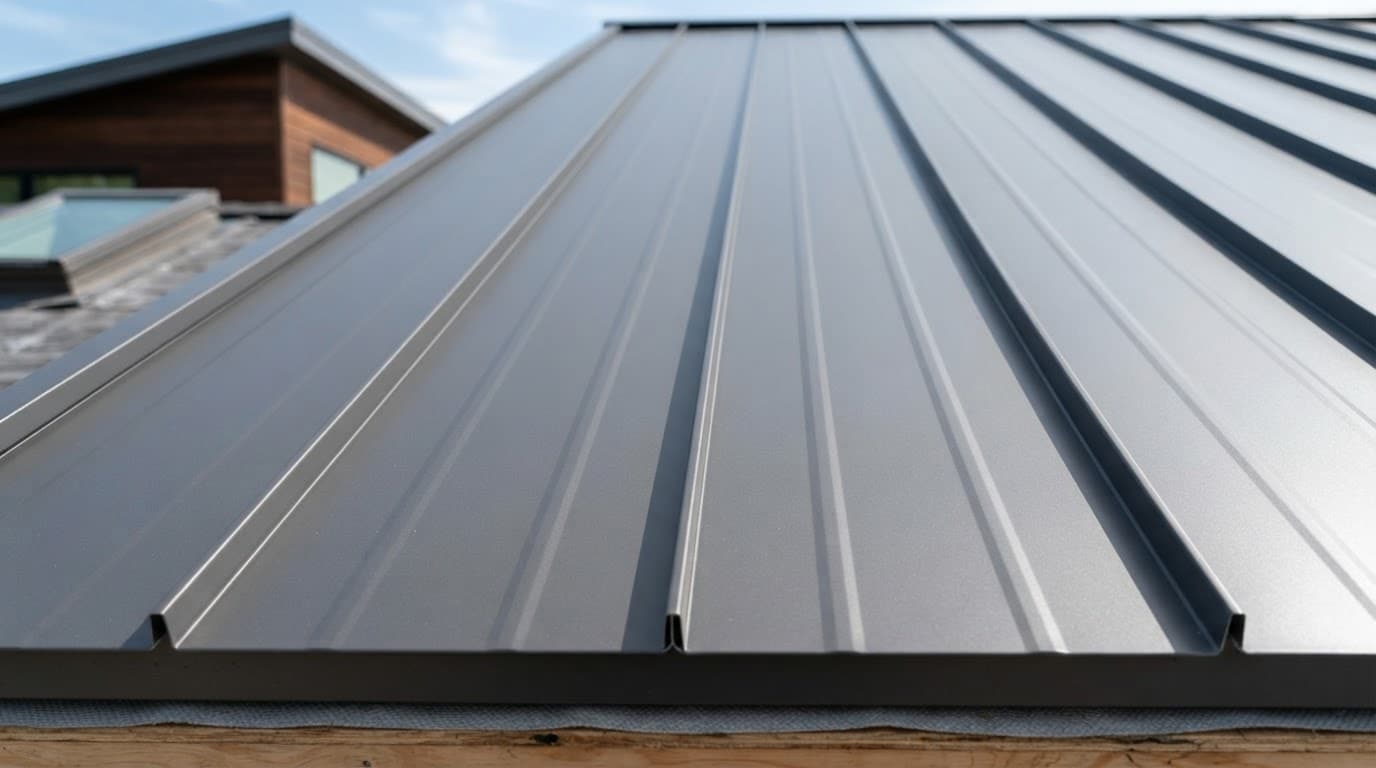
Standing seam panels are long metal sections with raised vertical seams. Those seams connect adjacent panels while keeping the main fasteners hidden beneath the surface. Clips hold the panels to the roof structure and allow controlled movement as the metal heats and cools.
That design differs from exposed-fastener metal roofing, which uses screws through the panel face. Concealed fasteners reduce the number of screw heads exposed to rain, sun, and salt air. However, trims, flashings, gutters, and roof penetrations can still include exposed fasteners.
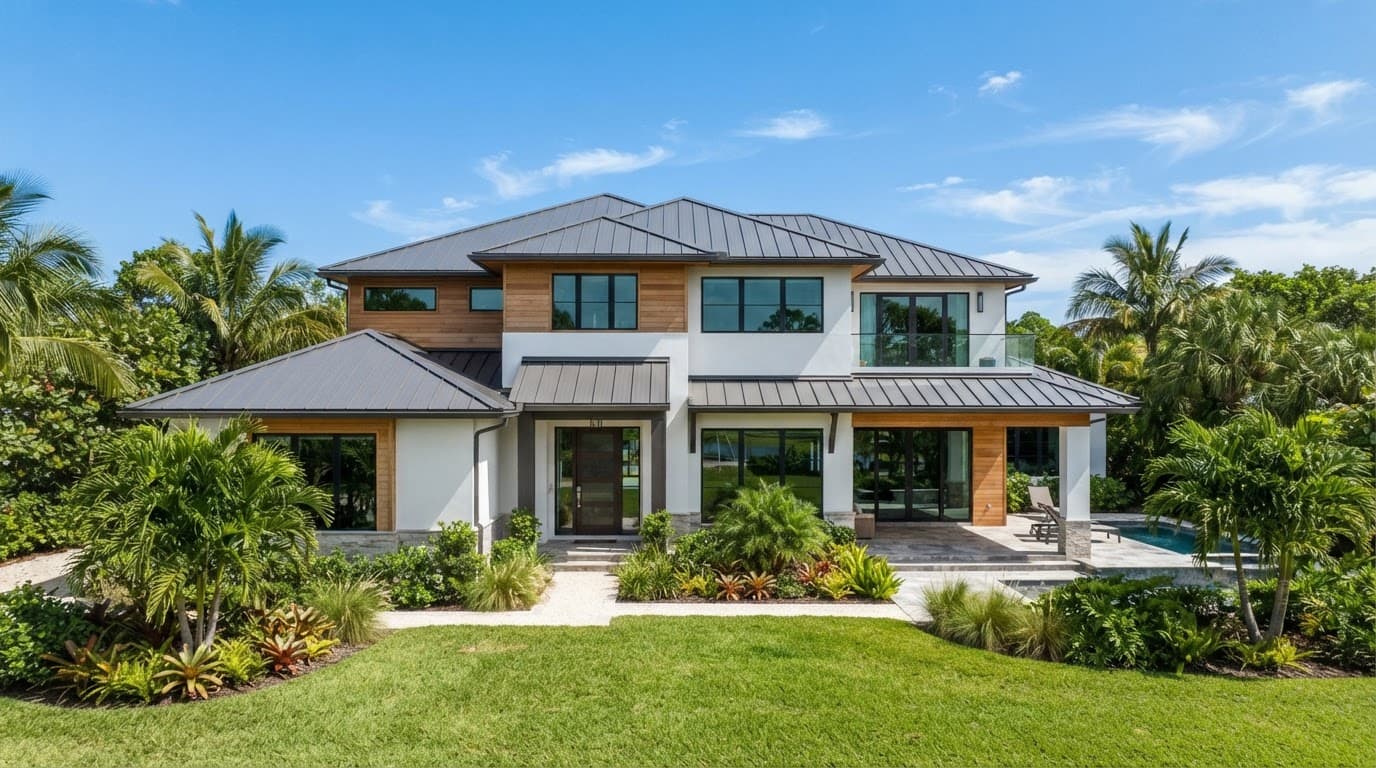
Steel and aluminum are common choices for residential projects. Aluminum doesn't rust like steel, but it can still experience surface damage or corrosion in the wrong conditions. Steel depends heavily on its metallic coating, paint system, cut-edge treatment, and fastener compatibility. Copper and zinc are also available, although their appearance and price make them less common for typical Florida homes.
Gauge matters, but it isn't the only measure of quality. Panel profile, seam height, clip spacing, roof-deck support, and fastening schedules affect how the assembly handles wind. A heavier panel can still perform poorly if the roof edge, valleys, or penetrations receive weak detailing.
Installation Details Affect Wind and Water Performance
Estero homes must meet the current Florida Building Code and applicable local permitting requirements. Wind design depends on factors such as the building's location, height, roof shape, corner zones, and exposure. The correct product approval or engineering documentation must match the actual installation.
Ask for documentation covering the complete assembly. That may include the panel profile, clips, fasteners, underlayment, edge metal, substrate, and design pressure. A product approval for one configuration doesn't automatically cover a different clip spacing or roof detail.
Roof geometry also affects cost and performance. A simple gable roof usually requires fewer seams, valleys, transitions, and penetrations than a complex roof with multiple hips, dormers, skylights, and vents. Solar panels, satellite equipment, pool equipment, and future additions need attachment details that won't compromise the roofing system.
Standing Seam Metal Roof Pros for Florida Homes
A properly selected and installed system offers several practical benefits in Estero's climate.
- Concealed fasteners reduce exposed failure points. The main screws sit beneath the seams, so weather reaches fewer fastener heads. Trims and accessories still need careful inspection.
- Metal handles heat and rain well when the system is designed correctly. Reflective finishes can reduce solar absorption, while the roof's insulation and ventilation control the home's actual indoor comfort.
- The roof can outlast many lower-cost roofing materials. Service life depends on the material, coating, maintenance, installation, and weather exposure. A standing seam roof isn't automatically a lifetime roof.
- The surface sheds rain efficiently. Raised seams and long panels create fewer horizontal joints than many other roofing systems. The roof still needs correct slope, flashing, closures, and drainage.
- Metal is often lighter than concrete tile. That can help with structural planning, especially during new construction. The engineer and building team still need to confirm the roof structure for the selected system.
- The appearance works with modern and coastal home designs. A standing seam roof can provide a clean, low-profile finish in colors that complement stucco, painted siding, stone, or wood accents.
Maintenance can also be easier than with some materials. Homeowners still need to clear leaves from valleys and gutters, inspect sealants and flashing, and address scratches or storm damage before corrosion spreads.
If you're comparing materials for a new home, review this metal roofing compared to shingles in Florida before focusing on a specific panel brand.
Standing Seam Metal Roof Cons to Consider
The same features that make standing seam attractive can create practical drawbacks.
The initial price is usually higher. Fabrication requires specialized equipment, accurate measurements, and more detailed installation than many basic roofing systems. Complex roof shapes can increase labor and material waste.
Qualified installation matters more than the label on the panel. Poorly spaced clips, loose trims, incorrect seams, and weak penetration details can lead to leaks or wind problems. Repairs may also require a contractor who understands the original panel profile and fastening system.
Metal can dent or scratch. Hail, falling branches, dropped tools, and careless maintenance can damage the finish. A dented panel isn't always a structural emergency, but replacement can be difficult if the exact profile or color is no longer available.
Thermal movement needs room. Long panels expand and contract with temperature changes. The clip system, seams, end laps, flashing, and penetrations must allow that movement. Rigid attachments in the wrong locations can create stress or leaks.
Coastal exposure requires material discipline. Salt air can attack poorly protected steel, cut edges, fasteners, and incompatible metals. Copper, aluminum, galvanized steel, stainless steel, and other materials shouldn't be combined casually because galvanic corrosion can occur when dissimilar metals contact each other in moisture.
Noise and condensation depend on the assembly. Rain on metal can sound louder when the roof lacks insulation or a proper ceiling assembly. Condensation can develop when warm, humid air meets a cooler roof surface. Insulation, ventilation, and moisture control should be part of the design.
HOA rules may also limit color, reflectivity, panel style, or visible roof changes. Confirm those requirements before ordering materials. A beautiful roof that violates neighborhood rules can create an avoidable dispute.
Concealed fasteners improve the panel design, but they don't compensate for poor flashing, weak roof edges, or incorrect wind fastening.
What Does Standing Seam Roofing Cost in Southwest Florida?
No responsible estimate should rely on the roof's living-area square footage alone. Contractors price the actual roof area, slope, access, tear-off, deck repairs, flashing, permits, underlayment, penetrations, and installation details.
For a planning reference, a current Southwest Florida new-construction guide lists these approximate installed ranges:
| Roofing material | Low installed price | Typical installed price | High installed price |
|---|---|---|---|
| Asphalt shingles | $6.00 per sq. ft. | $8.50 per sq. ft. | $11.00 per sq. ft. |
| Screw-down metal | $7.00 per sq. ft. | $10.50 per sq. ft. | $14.00 per sq. ft. |
| Standing seam metal | $11.00 per sq. ft. | $16.50 per sq. ft. | $22.50 per sq. ft. |
| Concrete tile | $7.00 per sq. ft. | $13.00 per sq. ft. | $19.00 per sq. ft. |
The same guide's 2,000-square-foot example places standing seam roofing between roughly $22,000 and $45,000. That example is a planning range, not a quote, and roof area can be much larger than the home's conditioned floor area. You can review the full 2026 roofing costs for new construction when building an early budget.
Compare estimates by scope, not by price alone. Each proposal should identify the panel material, gauge, coating, underlayment, clips, fasteners, flashing, tear-off, deck repairs, permits, engineering, workmanship warranty, and manufacturer warranty. A low bid that leaves out edge metal or penetration work isn't a true comparison.
Is Standing Seam Right for Your Estero Home?
Standing seam often makes sense during new construction or a complete roof replacement. The builder can coordinate the roof structure, insulation, ventilation, gutters, solar attachments, and exterior design before problems arise. It can also fit homeowners who plan to stay in the property for many years and prefer a longer-term roofing system.
The choice deserves more caution when the budget is tight, the HOA has strict appearance rules, or the roof has many complex transitions. An existing home may also need deck repairs, structural changes, or removal of another roof material before installation begins.
Before signing, ask the roofing contractor:
- Which metal and coating are included, and why do they fit the coastal environment?
- What gauge, panel profile, clip spacing, and wind design pressure apply to the roof?
- Does the documentation cover the exact assembly being installed?
- How will the contractor detail valleys, roof edges, skylights, vents, solar equipment, and gutters?
- What happens if a panel is damaged several years later?
- Which costs are allowances, and which items are fixed in the contract?
The answers should be clear and written into the proposal. A roof inspection or independent review can also help when you're replacing an existing roof or comparing competing scopes.
Conclusion
A standing seam metal roof can be a strong fit for an Estero home, especially when wind design, coastal exposure, drainage, and installation details receive careful attention. Its clean appearance and concealed fasteners are real benefits, but the higher cost, repair needs, HOA limits, and material choices deserve equal consideration.
The best decision comes from comparing complete roof assemblies rather than broad labels. Review the specifications, approvals, warranty terms, and total scope before choosing the roof that will protect your home through years of Florida sun and storms.