
How to Choose Starter Shingles for a Southwest Florida Roof
Explore Our Services
Contact Us Today!
(239) 322-9295
A roof can have quality field shingles and still fail at the edges if the starter course is wrong. For Southwest Florida homeowners, starter shingles help secure the first shingle row, seal vulnerable roof edges, and reduce the chance of wind-driven rain entering beneath the covering.
They aren't leftover pieces or an optional finishing detail. The right product must match the field shingles, roof design, drip edge, underlayment, ventilation plan, and current code requirements. Here's how to evaluate the complete installation before approving a roof replacement, repair, or new construction project.
How starter shingles protect Southwest Florida roof edges
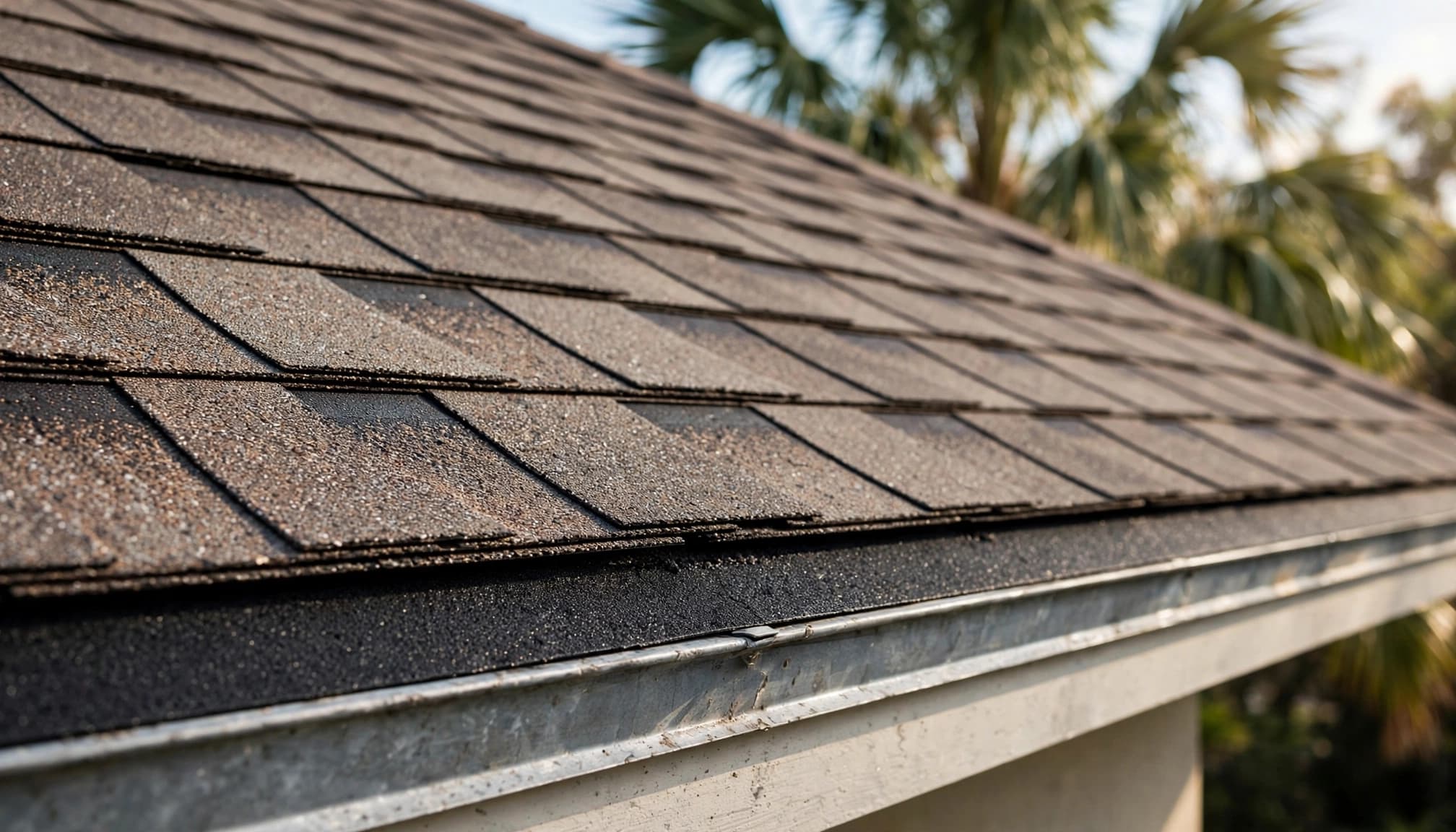
Starter shingles sit beneath the first course of field shingles along the eaves and rakes. Their sealant strip helps bond the first visible row to the roof. That connection matters because the roof perimeter receives more wind pressure than the middle of the roof.
Eaves, rakes, and wind-driven rain
The eave is the lower horizontal edge of the roof. The rake is the sloped edge along a gable. Both need a properly aligned starter course, but the installation details can differ at each location.
A starter strip should extend the correct distance beyond the drip edge. Building America guidance commonly places the starter overhang between 1/4 inch and 3/4 inch. The first course also needs proper nail placement, because nails set too low or too close to an edge can weaken the shingle.
Southwest Florida roofs face intense sun, heavy rainfall, humidity, and tropical-storm winds. Wind-driven rain can find small gaps at eaves, rakes, valleys, vents, and roof-to-wall transitions. Starter shingles help protect one of the roof's first exposed seams.
Starter strips versus field shingles
Field shingles cover the main roof area. Starter shingles are designed for the perimeter and usually include a factory-applied adhesive strip in a location that bonds with the first field-shingle course.
Cutting a field shingle into strips may appear less expensive, but those pieces may not have the correct adhesive placement, dimensions, or manufacturer approval for use as starters. A licensed roofing professional should follow the selected shingle system's instructions rather than treating the materials as interchangeable.
For homeowners comparing shingle roofing in Fort Myers, the starter course deserves the same attention as the visible architectural shingles.
Compare starter shingles by the complete system
The right starter product isn't chosen by color alone. It must work with the specific field shingle, roof slope, edge detail, nail pattern, and warranty conditions.
Check sealant placement and orientation
Starter shingles can have different designs. Some are individual strips, while others come in rolls or peel-and-stick formats. The granule surface, adhesive strip, and roof-facing side must be positioned according to the manufacturer's instructions.
For one peel-and-stick starter design, the granulated surface faces upward and the sealant dots sit closest to the roof edge. Other systems may use different instructions. Installers shouldn't assume that every starter roll has the same orientation.
Ask to see the product packaging or installation instructions before work begins. The documents should identify:
- The compatible field-shingle products.
- The required placement at eaves and rakes.
- The nail location and spacing.
- The minimum overlap at corners and transitions.
- Whether the product is approved for the roof slope and climate.
Follow the prescribed overlap and nail pattern
Manufacturer instructions control the details. One commonly published starter system calls for strips measuring approximately 6 1/2 inches by 38 inches, with nails placed 10 to 12 inches apart. It also calls for the rake starter to overlap the eave starter by at least 3 inches.
Those dimensions aren't universal. They illustrate why a contractor should use the instructions for the actual product being installed. Nail placement can affect wind performance, sealant contact, and warranty eligibility.
A contractor should also confirm whether the field shingles require four nails per shingle or another fastening pattern. A high wind rating applies to the tested assembly, not to a package of shingles sitting by itself.
Coordinate starter shingles with drip edge and underlayment
A starter course can't compensate for incorrect sequencing beneath it. The roof edge must be planned as a complete assembly that includes the roof deck, underlayment, drip edge, starter shingles, and field shingles.
Confirm the roof-edge sequence
The Florida Building Code, 9th Edition, adopted for 2026, addresses drip edge at eaves and gable edges on roof slopes of 2:12 or greater. The code analysis places the drip edge over the underlayment in the typical roof-edge sequence.
The exact arrangement can change when self-adhering underlayment, flashing, or other approved materials are part of the design. For example, certain self-adhering underlayments may be installed over a primed drip-edge flange.
This detail should appear in the permitted plans or installation scope. A homeowner shouldn't approve a change based only on what looks tidy from the driveway. Water management depends on how each layer directs moisture toward the exterior.
Pay attention to low-slope areas
Roof sections between 2:12 and 4:12 require additional care. A 2023 Florida residential-code reference describes two underlayment layers for this slope range, including an eave strip, overlapping sheet courses, offset end laps, and corrosion-resistant fasteners.
The current adopted requirements for a particular property depend on the permit date, jurisdiction, roof design, and applicable amendments. Low-slope porch roofs, additions, and transitions may need a different assembly from the main roof.
Your contractor should explain how the starter course connects with the underlayment and drip edge at each slope change. A single roof may contain several edge conditions, especially after a room addition or whole-home remodel.
Match the roof system to Southwest Florida weather
Heat and rain affect shingles over time, while tropical storms test fastening, edge treatment, flashing, and roof-to-wall connections. Choosing a starter product is only one part of preparing a home for those conditions.
Evaluate wind uplift by property
Wind requirements depend on more than the city name. Design speed, exposure category, roof height, building shape, opening protection, and the property's location can affect the permitted roof assembly.
A home near open water or a broad exposed area may face different wind exposure than a home surrounded by neighboring structures. Miami-Dade high-wind requirements also shouldn't be treated as automatic Lee County or Fort Myers requirements.
Ask your roofing professional to confirm the wind design in the permitted plans. A Fort Myers wind mitigation inspection can also help document roof and structural features after installation, although an inspection doesn't replace proper design or code compliance.
Consider sun, rain, and coastal exposure
Southwest Florida's ultraviolet exposure can age roofing materials. Heavy rain tests drainage, while salt air may affect exposed metal components near coastal communities.
Look for a roof system with compatible starter shingles, field shingles, flashing, underlayment, ventilation components, and ridge details. The materials should come from established manufacturers, but installation quality remains just as important as the product selection.
No starter shingle makes a roof hurricane-proof. Performance depends on the complete assembly and how closely the installer follows approved instructions.
Include ventilation and penetration details
Starter shingles protect the perimeter, but water intrusion often begins at another transition. Valleys, plumbing vents, skylights, chimneys, roof-to-wall areas, and mechanical penetrations all deserve a documented installation plan.
Balance intake and exhaust ventilation
Adequate ventilation helps manage heat and moisture in the attic. A commonly referenced Florida roofing ratio is 1 square foot of net free ventilation area for every 150 square feet of attic floor area. That ratio may be reduced to 1:300 when the design includes balanced intake and exhaust ventilation.
These figures aren't a substitute for checking the current code and local requirements. The roof design should show how soffit intake, ridge exhaust, gable vents, or other approved components work together.
Blocked soffit vents or too little intake air can limit the performance of an otherwise well-designed exhaust system. Ask the contractor to identify the ventilation method before shingles cover the roof.
Inspect the vulnerable transitions
Wind-driven rain can enter through small gaps around penetrations and roof-to-wall connections. Flashing, sealants, valley treatment, and step flashing need to match the roofing system.
Starter shingles won't repair a flashing problem. They are one layer in a roof assembly that must keep water moving over, rather than beneath, the underlayment and edge materials.
For replacement work, the scope should state whether the contractor will inspect the roof deck, replace damaged sheathing, update flashing, and correct ventilation. These details are especially important when an older roof has several previous repairs.
Ask for installation and code documentation
A trustworthy roofing proposal should explain more than the shingle color and total price. It should identify the starter product, field shingles, underlayment, drip edge, flashing, ventilation, fastening method, and permit responsibilities.
Request these project details
Before signing, ask for written confirmation of:
- The exact starter product and compatible field-shingle system.
- The manufacturer's installation instructions for eaves, rakes, overlaps, and nails.
- The roof slope and underlayment assembly.
- The drip-edge location and installation sequence.
- The wind design or approved product information for the property.
- The ventilation plan and required inspections.
- The contractor's license, insurance, and permit process.
A professional roof installation in Fort Myers should include coordination between the installer, plans, inspections, and manufacturer requirements. That process matters for new construction, full replacement, and major storm repairs.
Verify the finished roof
After installation, inspect the roof edges from the ground for straight starter lines, consistent overhang, secure metal edging, and missing or lifted shingles. A ground inspection can't verify every nail or underlayment lap, so it shouldn't replace a professional review.
A Fort Myers roof inspection can assess visible workmanship, roof condition, flashing, drainage, and storm damage. Keep the product documentation, permit records, inspection results, and photographs with your home records.
Key Takeaways for Southwest Florida Homeowners
- Starter shingles are a required roof component in many asphalt shingle systems, not leftover field-shingle pieces.
- The starter course protects eaves and rakes, where wind uplift and wind-driven rain can create problems.
- Product orientation, sealant placement, overlap, and nail spacing must follow the selected manufacturer's instructions.
- Drip edge, underlayment, flashing, ventilation, and field shingles must work as one assembly.
- Wind performance depends on the property's design conditions and permitted plans, not a generic hurricane label.
- The Florida Building Code and local requirements should be verified for the current project.
- A licensed, qualified roofing professional should install and document the work.
Frequently asked questions about starter shingles
Are starter shingles required on every asphalt shingle roof?
Many asphalt shingle systems require a dedicated starter course at the eaves and rakes. The exact product and placement depend on the field shingles, roof design, manufacturer instructions, and applicable code. A contractor should not assume that cut field shingles are an approved substitute.
Can starter shingles prevent hurricane damage?
No roofing component can guarantee that a home will avoid storm damage. Proper starter shingles can support edge performance when installed as part of a correctly designed assembly. Wind design, fastening, flashing, underlayment, roof shape, and site exposure also affect results.
Should starter shingles go over or under the drip edge?
The answer depends on the approved roof-edge sequence. Florida code requirements, underlayment type, manufacturer instructions, and the permitted plans control the detail. Have the installer show you how the drip edge, underlayment, starter course, and first field-shingle row connect.
Do starter shingles need to match the field shingles?
They need to be compatible with the field-shingle system, but they don't always have the same visible appearance. Compatibility matters more than color because the starter's adhesive, dimensions, and fastening requirements support the first course.
Choose the roof edge as carefully as the visible shingles
Starter shingles are small, but they influence how the first shingle course seals and holds at the roof perimeter. In Southwest Florida, that edge must work with the underlayment, drip edge, ventilation, flashing, fastening, and approved wind design.
Choose a licensed, qualified roofing professional who can verify the materials and installation against the current plans, code requirements, and manufacturer instructions. A careful roof edge is one practical step toward a more dependable roof system.