How to Spot Wind Damage on a Fort Myers Shingle Roof
Explore Our Services
Contact Us Today!
(239) 322-9295
After a hurricane-season squall or severe thunderstorm, roof damage may be easy to miss from the driveway. Knowing the common wind damage roof signs can help you spot problems before a small opening leads to interior water damage.
Fort Myers homeowners should check for missing shingles, lifted edges, exposed underlayment, damaged flashing, and fresh granules in gutters. You can inspect from the ground or attic, but never climb onto a roof after a storm. Start with the visible clues below, then contact a licensed roofing professional for a full assessment.
Why Fort Myers Shingle Roofs Can Suffer Wind Damage
Wind does more than blow debris across a roof. Strong gusts can push beneath shingle edges and create upward pressure, especially along the eaves, rakes, ridges, and roof perimeter. Once a shingle loosens, later gusts may lift nearby shingles as well.
Hurricanes and tropical storms bring sustained winds and sudden gusts. Severe thunderstorms can also create short periods of forceful wind, even when the storm doesn't produce hurricane conditions. A roof doesn't need to lose large sections of shingles before it needs attention.
Roof age, previous repairs, installation quality, and exposure all affect how shingles respond. Heat and humidity can also make roofing materials brittle over time. These factors don't prove why a particular shingle failed, but they can affect the roof's condition before a storm arrives.
Wind damage often appears first at vulnerable transition points. Check areas around vents, pipe boots, skylights, chimneys, valleys, and roof edges. These locations have more seams, flashing, or exposed edges than the middle of a roof slope.
Fort Myers homes near open lots, canals, or coastal areas may experience more direct wind exposure than homes surrounded by dense landscaping. That doesn't mean every roof in an exposed area has damage. It does mean a careful post-storm inspection is sensible.
Wind Damage Roof Signs to Check After a Fort Myers Storm
Look at the roof from several points in the yard. A single angle may hide lifted shingles or damage on the opposite slope. Binoculars can help you view details without climbing.
Missing, lifted, or creased shingles
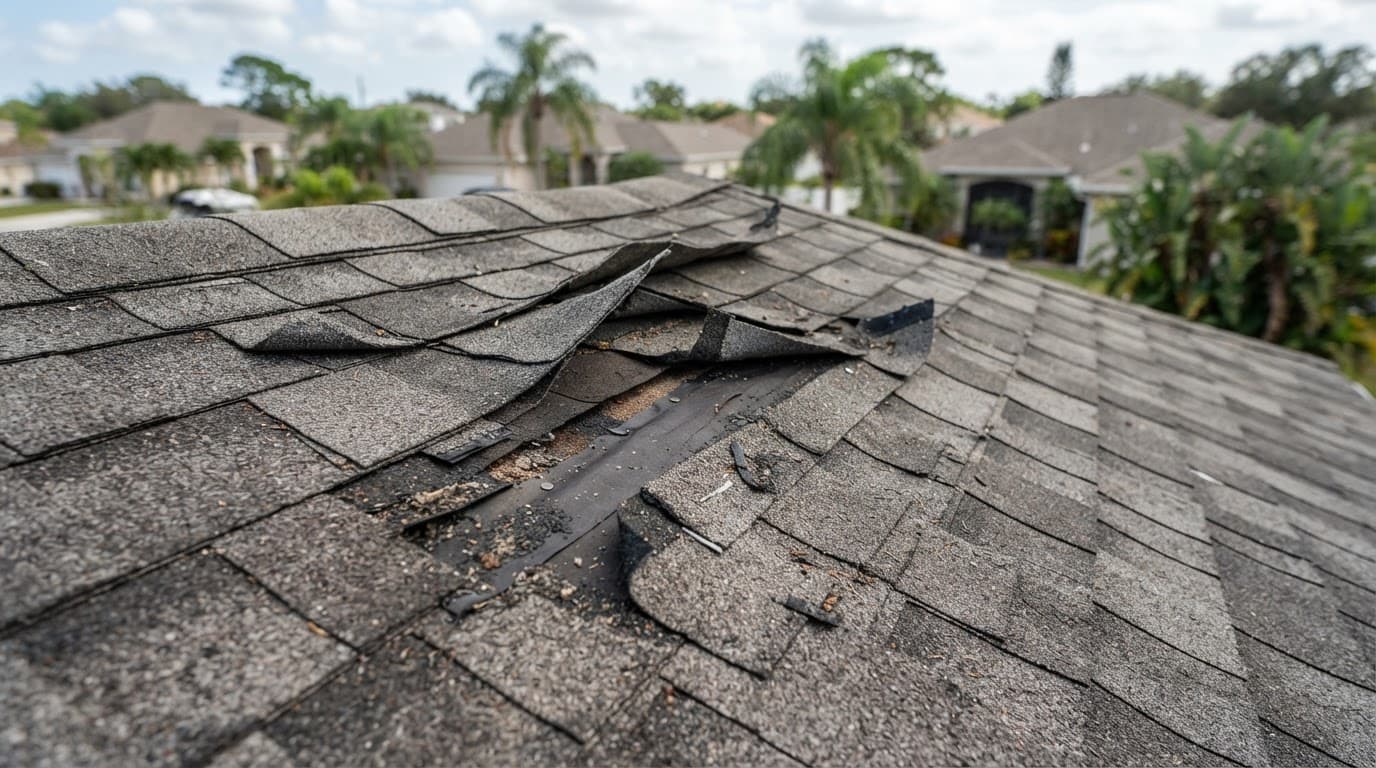
Missing shingles are the clearest sign of a possible wind-related problem. Check for dark rectangular areas where a shingle used to cover the roof deck. You may also see exposed underlayment, nail lines, or the edges of neighboring shingles.
Lifted shingles can look intact from the ground. Look for corners that don't lie flat, uneven rows, or tabs that appear raised. A shingle with a sharp horizontal crease may have folded during wind movement. Creases can weaken the shingle even when it remains attached.
Pay close attention to the roof perimeter. Wind often affects the first visible row along the eaves and rakes, as well as the ridge cap. If several shingles appear raised in one area, photograph the location and arrange a professional inspection.
Granules in gutters and bare shingle patches
Asphalt shingles contain protective granules. Some loose granules are normal, especially after installation or routine aging. A sudden increase after a storm deserves attention.
Check gutters, downspout outlets, and the ground near roof drainage points. Large amounts of fresh granules, along with bare or rough-looking spots on shingles, may indicate surface damage. However, granule loss can have several causes, including age, foot traffic, and weather exposure.
Damaged flashing, vents, and roof edges
Wind can move or loosen metal flashing around roof penetrations. Look for flashing that appears bent, separated, or out of place. Vents may have cracked covers or shifted bases. Pipe boots can also show splits or gaps that need repair.
The fascia, soffit, and gutters can provide additional clues. Loose gutters, pulled-out fasteners, bent fascia, or missing soffit panels may indicate that wind affected the roof edge. These components can also have separate maintenance problems, so their appearance doesn't establish the source of damage by itself.
Debris impact and punctures
Branches, palm fronds, and airborne objects can puncture or scrape shingles. Search for cracked surfaces, holes, exposed fiberglass mat, or dark impact marks. A damaged area beneath a tree may need attention even if every shingle remains in place.
A wind damage roof problem can involve both lifted shingles and impact damage. A roofing professional can document each area and determine whether the visible condition calls for repair or a broader evaluation.
How to Inspect Safely From the Ground or Attic
Your first inspection should stay within safe areas. Never walk on a roof after a storm, especially when shingles are wet, debris covers the surface, or wind has affected the decking. Damaged roofing can give way without warning.
Stay on the ground or in the attic only. A wet or compromised shingle roof can hide weak decking, exposed fasteners, and fall hazards.
From the ground, use binoculars and inspect each roof slope. Look for changes in shingle alignment, missing sections, loose ridge caps, and damaged metal. Take photos from a distance, then capture closer views with a phone zoom. Include the entire roof slope in some images so the location is clear.
You can also check the attic if the space is dry and safe to enter. Use a flashlight and walk only on permanent flooring or framing, never on ceiling drywall. Look for daylight through the roof deck, damp insulation, water stains, rusted fasteners, or fresh moisture after rainfall.
Attic findings need careful interpretation. A stain may be old, and moisture may come from flashing, ventilation, plumbing, or another opening. Don't assume the first visible stain identifies the exact exterior problem.
Contact a licensed roofing professional for a full assessment. A professional can safely access the roof, inspect shingle attachment and flashing, and identify damage that isn't visible from the yard or attic.
How to Tell Wind Damage From Normal Roof Wear
Not every curled shingle or gutter granule indicates storm damage. Florida roofs face intense sunlight, heavy rain, humidity, and repeated temperature changes. Those conditions can produce general wear over time.
Wind-related concerns often appear as isolated or grouped changes, such as lifted tabs, missing shingles, creases, or disturbed ridge caps. Age-related wear is more likely to appear across broad areas, with widespread brittleness, surface loss, cracking, or curling. These are useful observations, not final conclusions.
The timing also matters. If the roof looked different after a known storm, record the storm date and the areas that changed. Compare current photos with older property photos when available. A before-and-after comparison can help a roofer understand the sequence of events.
Other roof problems can look similar. Poor drainage may leave staining near valleys. Plumbing vents can cause attic moisture. Tree contact may create a puncture without lifting surrounding shingles. A roof inspection should consider the entire assembly, including the decking, underlayment, flashing, ventilation, and drainage.
Avoid making a definitive wind damage roof determination from one photograph. The cause, extent, and repair needs require an on-site review.
What to Do When You Find Possible Roof Damage
Start by documenting what you can see safely. Record the date, recent weather, roof slope, and approximate location of each concern. Take wide photos and close-ups from the ground. If you find attic moisture, photograph the affected area without touching wet insulation or exposed electrical components.
Next, limit additional interior damage. Place a container under an active drip and move furniture or stored items away from the area. Don't climb onto the roof to place a tarp or make a temporary repair. A qualified professional can determine whether temporary protection is safe.
Then arrange a roof inspection with a licensed roofing contractor. Ask for a written assessment that identifies:
- The affected roof slopes and specific materials.
- Missing, lifted, creased, punctured, or displaced shingles.
- Related damage around flashing, vents, gutters, soffits, or fascia.
- Whether the roof appears repairable or needs further evaluation.
- Photos that match the recommended work.
A clear report helps you compare repair recommendations and keep the roof's condition documented. It also prevents a vague description such as "storm damage" from replacing a detailed explanation of what the contractor found.
A roof damage inspection and a wind mitigation inspection have different purposes. The first focuses on current roof condition. The second reviews wind-resistance features such as roof shape, roof-to-wall connections, opening protection, and secondary water barriers. Homeowners who want a separate review can learn about wind mitigation inspections in Cape Coral, which may be useful for understanding a home's wind-resistance features in Southwest Florida.
If you plan to repair or replace roofing, ask who will perform the work, whether permits apply, how the scope is documented, and which materials the estimate includes. Keep communication in writing, especially when multiple roof areas need attention.
Conclusion
Wind damage on a Fort Myers shingle roof may appear as a missing tab, a lifted edge, fresh granules, damaged flashing, or moisture in the attic. Those signs deserve attention, but they don't prove the cause or show the full extent of the problem.
Inspect from the ground or attic only, document what you see, and contact a licensed roofing professional for a complete assessment. After the next hurricane-season storm or severe thunderstorm, a few safe observations can help you catch roof trouble before it spreads indoors.