Fort Myers Mold Inspection Before Demolition
Explore Our Services
Contact Us Today!
(239) 322-9295
Demolition can turn a small, hidden moisture problem into a home-wide cleanup. A Fort Myers mold inspection before remodeling helps identify damp materials, locate the water source, and determine how workers should contain affected areas.
Florida's heat, humidity, heavy rain, roof leaks, plumbing failures, and air-conditioning condensation can all support mold growth behind walls or under flooring. Before your renovation crew starts removing drywall, cabinets, ceilings, or insulation, let inspection findings guide the work sequence.
Why Fort Myers Mold Inspection Belongs Before Remodel Demolition
Mold often grows where you can't see it. It may be behind baseboards, inside wall cavities, beneath cabinets, around plumbing penetrations, under flooring, or near roof and window leaks. A room can look clean while moisture remains trapped behind finished surfaces.
Demolition changes that situation quickly. Cutting drywall, pulling insulation, breaking tile, or removing wet cabinetry can release settled spores and contaminated dust into the air. Workers can then carry particles into nearby rooms on shoes, tools, clothing, and debris.
A pre-demolition inspection gives your project team information before materials are disturbed. It can show whether the concern is limited to one area or connected to a broader moisture problem.
Fort Myers homes face several common moisture sources:
- Roof damage or flashing failures can wet ceilings and attic materials.
- Plumbing leaks may affect cabinets, walls, and flooring.
- Air-conditioning drain problems can create moisture near air handlers or supply ducts.
- Poor bathroom ventilation can leave condensation on walls and ceilings.
- Storm-driven rain can enter through windows, doors, and damaged exterior finishes.
A mold inspection doesn't replace a repair plan. Instead, it helps the homeowner, contractor, and remediation professional make decisions based on observed conditions.
Demolition should follow the inspection and containment plan, not reveal the problem by accident.
What a Pre-Demolition Mold Inspection Should Include
A useful Fort Myers mold inspection should go beyond a quick visual look at one room. The inspector should review areas connected to the proposed work and investigate signs of current or past moisture.
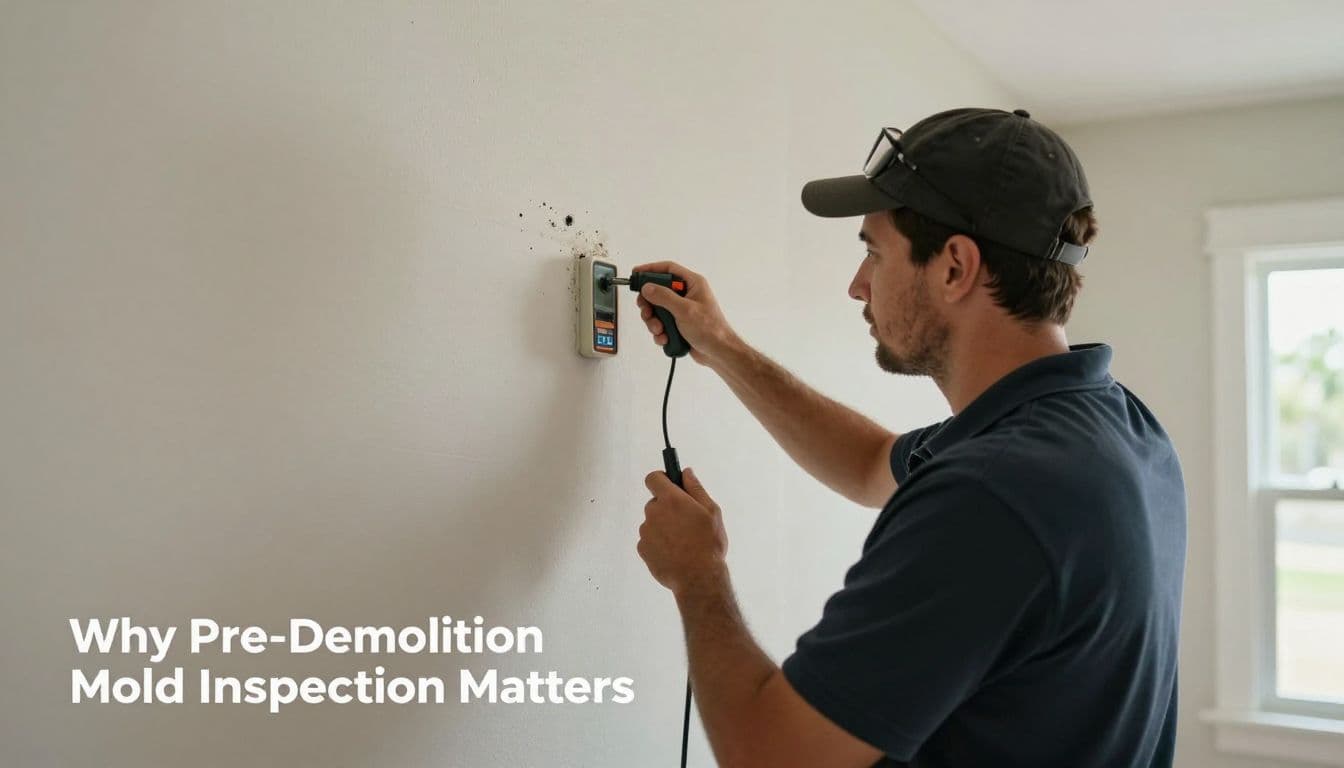
The process often includes a visual inspection of walls, ceilings, floors, cabinets, closets, bathrooms, kitchens, attics, garages, and accessible utility spaces. The inspector may use a moisture meter to compare suspect areas with dry materials nearby. Infrared equipment can help identify temperature differences, but it doesn't prove that mold exists by itself.
The inspector should also ask about the home's history. Previous leaks, roof repairs, flooding, insurance claims, musty odors, recurring condensation, and past mold treatment can change the inspection strategy.
Sampling may help in certain situations, especially when the extent of growth is unclear or a property manager needs documentation. However, a laboratory result can't replace a moisture investigation. An air sample can miss mold hidden inside a wall, while a positive result doesn't explain where the moisture started.
The written report should identify:
- The location of visible or suspected mold growth.
- Moisture readings and areas with elevated moisture.
- Materials that may need removal or additional evaluation.
- Likely moisture sources that require repair.
- Recommended containment boundaries.
- Areas that should remain isolated during demolition.
- Whether additional testing or post-remediation verification is appropriate.
Ask for photographs and a clear floor plan when possible. A report that only says "mold was found" gives a contractor too little information to plan safe demolition.
Prepare Your Home Before the Inspector Arrives
Your preparation affects the quality of the inspection and the safety of the renovation. Don't cut into walls, remove trim, scrub suspicious surfaces, or throw away damaged materials before the inspection. Those actions can spread spores and destroy evidence about the original moisture pattern.
Complete these steps before the appointment:
- Write down when you first noticed odors, staining, peeling paint, or condensation.
- Gather records for roof repairs, plumbing leaks, flooding, HVAC service, and prior remediation.
- Make every planned demolition area accessible, including closets, cabinets, attic openings, and utility spaces.
- Tell the inspector about rooms that become humid or develop odors after rain.
- Keep children, pets, and sensitive occupants away from the work area during inspection and demolition planning.
Your contractor should know about suspected mold before providing a demolition schedule. If the crew has already ordered dumpsters or arranged labor, the project may need a short pause while the inspection findings are reviewed.
Also confirm how the inspection fits with permits and the construction schedule. Permit requirements vary by jurisdiction and project scope. Homeowners working in nearby Cape Coral can review this guide to home remodeling permits in Cape Coral while confirming requirements with the local building department.
Let the Findings Set Containment and Demolition Sequence
The inspection report should guide what happens next. If the report identifies suspected mold in a wall scheduled for removal, ordinary open-room demolition may be unsafe. The affected area may need containment before workers disturb the material.
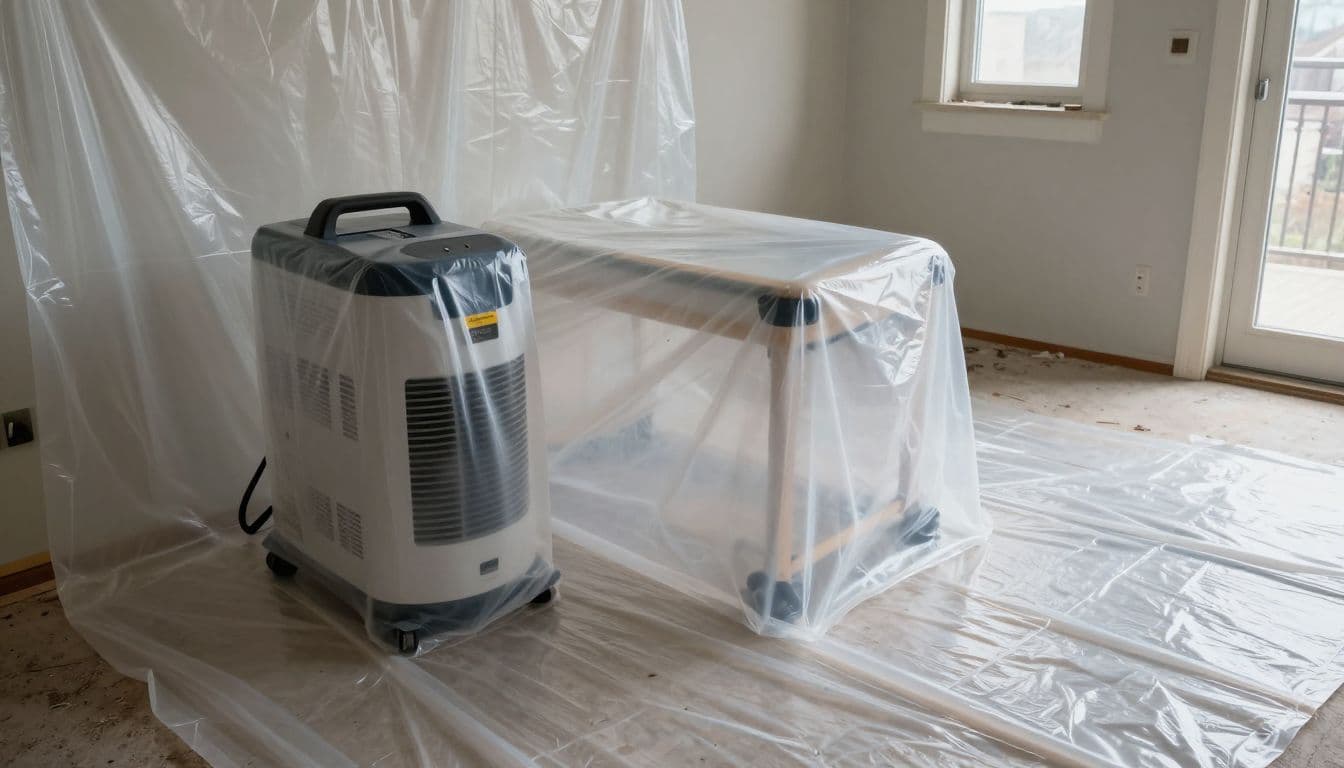
Containment can include taped plastic barriers, sealed doors or openings, controlled entry, and protection for nearby surfaces. A HEPA air scrubber may help filter airborne particles, while negative air pressure can keep contaminated air from moving into clean areas. The right controls depend on the size, location, and condition of the affected materials.
The work sequence often follows this general order:
- Inspect the property and document moisture conditions.
- Identify and repair the water source.
- Define the affected area and containment requirements.
- Remove contaminated materials under controlled conditions.
- Clean remaining surfaces and manage debris safely.
- Confirm that materials are dry and the area is ready for renovation.
- Continue with ordinary demolition and reconstruction.
The exact order can change. For example, a damaged wall may need limited opening to confirm the extent of growth. That opening should happen under the appropriate controls, not as casual exploratory work by a remodeling crew.
Keep HVAC equipment and ductwork in the discussion. If contaminated dust enters a return-air path, the system may distribute particles through other rooms. The assessment and remediation plan should state whether the system needs protection, cleaning, or temporary shutdown.
Coordinate the Inspector, Remediator, and Remodeling Contractor
Each professional has a different role. The inspector or mold assessor evaluates conditions and documents findings. A remediation professional develops or carries out the controlled removal and cleaning work. The remodeling contractor handles reconstruction after the area meets the project's requirements.
Florida homeowners should ask whether the professionals hold the licenses required for the services they provide. They should also ask how assessment and remediation responsibilities are separated when Florida rules require that separation.
Don't accept a vague instruction such as "remove the moldy drywall." The contractor needs to know how far containment extends, where workers can enter, how debris leaves the house, and what happens if demolition reveals additional damage.
Before work begins, request a written scope that addresses:
- The rooms and materials included.
- The source of moisture and who will repair it.
- Barriers, air filtration, and worker protection.
- Debris packaging and removal.
- Cleaning methods and drying requirements.
- Any post-remediation inspection or clearance process.
- The point at which the remodeling crew can return.
A Fort Myers mold inspection may affect your budget, but early information is easier to price than an uncontrolled discovery after walls are open. Ask for separate pricing for inspection, testing, remediation, reconstruction, and moisture repairs. That breakdown makes change orders easier to review.
When Should Demolition Be Delayed?
Delay demolition when the property has active leaks, wet building materials, strong unexplained odors, visible growth in the planned work area, or a report that recommends further evaluation. Demolition also deserves a pause when no one has decided how to protect occupants, workers, HVAC equipment, and unaffected rooms.
The project may continue in a clean, unrelated area if the assessment supports that approach. For example, work in a dry exterior area might proceed while a bathroom wall receives separate evaluation. Your contractor and the assessment professional should agree on the boundaries in writing.
A second Fort Myers mold inspection may be appropriate after remediation, especially when hidden cavities were opened or the original affected area was larger than expected. Post-remediation verification can document whether the area is dry, visibly clean, and ready for the next phase.
FAQ About Mold Inspection Before Demolition
Is a mold inspection required before every remodel?
No. A routine cosmetic update in a dry, well-maintained area may not need a mold inspection. However, inspection is a sensible step before demolition involving water damage, musty odors, staining, recurring leaks, older moisture-damaged materials, or rooms with poor ventilation.
Should I test the air before opening a wall?
Air testing isn't always the first step. A visual inspection and moisture investigation may provide more useful information when the concern is localized. Testing can be considered when the extent of contamination is uncertain or when documentation is needed for a property, tenant, insurance claim, or remediation plan.
Can my remodeling contractor remove moldy drywall?
A contractor may remove damaged materials as part of a properly planned project, but suspected mold shouldn't be treated like ordinary debris. The work may require containment, protective equipment, controlled disposal, and coordination with a licensed mold professional. Ask who is responsible before demolition starts.
How long should I wait before rebuilding?
Rebuilding should wait until the moisture source is corrected, affected materials are removed or cleaned, and the area is dry. If the project includes post-remediation verification, use that documentation and the written scope to decide when reconstruction can begin.
Conclusion
A Fort Myers mold inspection gives your remodeling team a safer starting point. It identifies hidden moisture, limits unnecessary demolition, and helps determine where containment and specialized removal belong in the schedule.
Before the first wall comes down, document the problem, investigate the water source, review the report with every contractor, and put the demolition sequence in writing. Careful planning keeps a contained moisture issue from spreading through the home.