
Kitchen Trash Pullouts for Fort Myers Remodels
Explore Our Services
Contact Us Today!
(239) 322-9295
A trash can in the wrong spot can make a beautiful new kitchen feel awkward every day. Well-planned kitchen trash pullouts keep waste contained, clear floor space, and place disposal near the work you do most.
For Fort Myers homeowners, this detail deserves attention early in the remodel. Cabinet choices, sink placement, plumbing, and appliance clearances can all limit where a pullout fits.
A practical plan starts with your household's habits, then turns those habits into cabinet dimensions and hardware choices.
Start With How Your Household Handles Waste
A pullout cabinet works best when it supports your normal cooking routine. Notice where you trim vegetables, unload groceries, scrape plates, and sort recyclables. Those steps should guide the location more than a showroom photo.
Track the busiest prep zone
Most homeowners prefer the trash pullout beside or close to the main sink. That spot makes cleanup easy because food scraps, packaging, and wet waste all collect near one work area.
However, a kitchen with a large island may need a pullout there instead. If the island is your primary prep surface, walking around it with dripping scraps gets old fast. In a two-cook kitchen, one bin near the sink and another near the island can reduce traffic jams.
Decide whether recycling belongs in the same cabinet
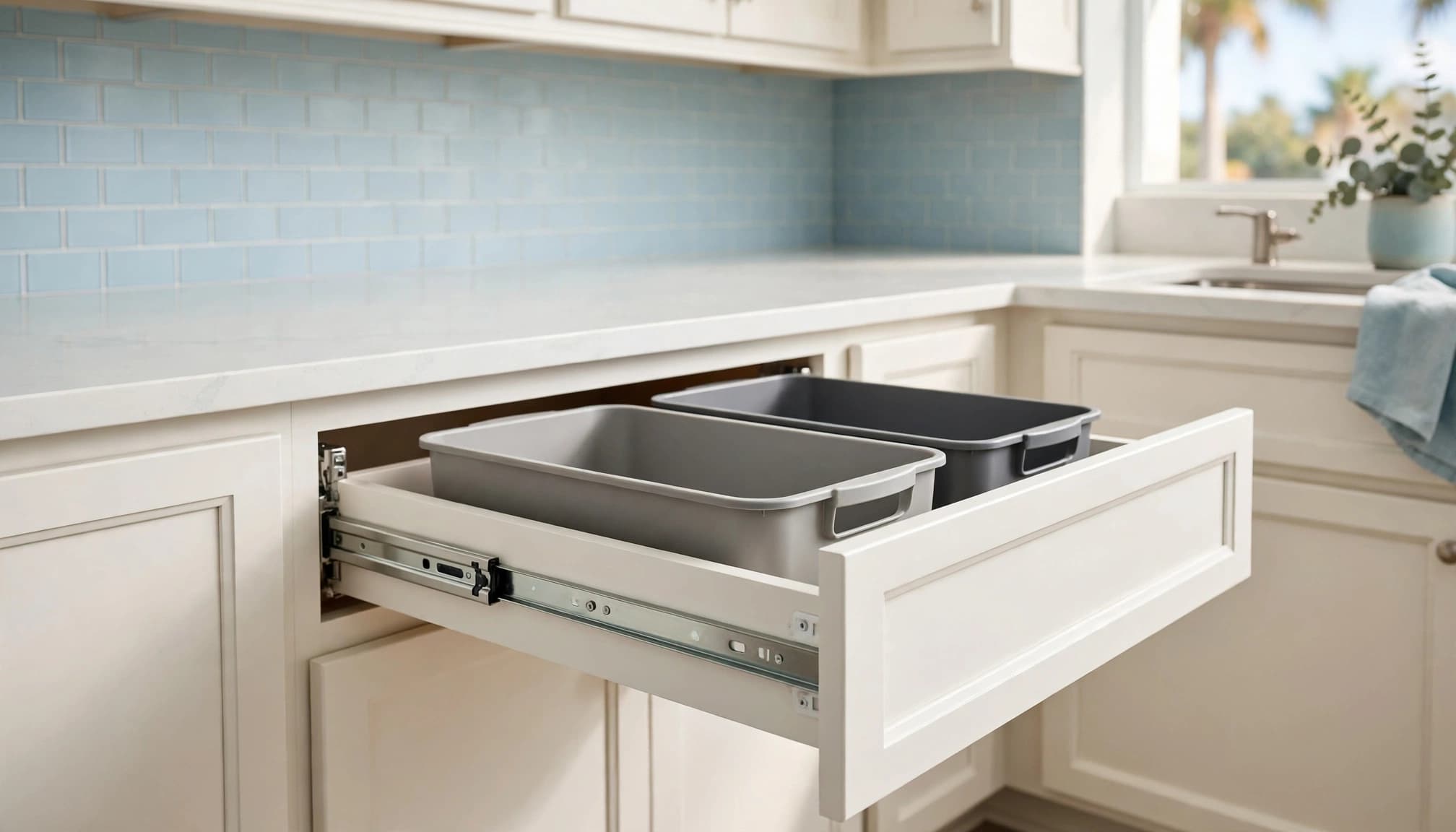
A double-bin unit usually suits homes that separate trash and recycling. One container holds household waste, while the other takes cans, cardboard, and clean plastic containers. Families who cook often may want a larger trash bin and a smaller recycling bin.
If composting is part of your routine, reserve counter space for a small, lidded caddy or add a third narrow container only when the cabinet has enough room. Overfilling a crowded pullout makes it harder to remove bins and clean the cabinet.
A trash pullout should open into clear standing space. A well-sized unit still feels inconvenient when an open dishwasher or island stool blocks it.
Where Kitchen Trash Pullouts Work Best
The best location balances cooking flow with cabinet construction. During Fort Myers kitchen remodeling, that decision should happen before final cabinet drawings go to production.
Beside the sink cabinet
A base cabinet immediately beside the sink is a familiar choice because it keeps dish cleanup in one compact zone. It also puts the bins within reach when you rinse produce or scrape plates.
Yet the sink cabinet itself often has limited space. Water lines, drain pipes, a garbage disposal, and water-filtration equipment compete for room. A neighboring cabinet usually gives the installer more freedom and keeps the pullout easier to service later.
In an island or peninsula
An island pullout works well when people gather there for meals and conversation. It keeps a freestanding can out of sight and lets someone discard scraps without crossing the cooking zone.
Place it on the working side of the island, not the seating side, when possible. A bin opening toward stools can conflict with knees, chairs, and foot traffic. In a narrower kitchen, that clearance matters even more.
Avoid corners and tight appliance zones
Corner base cabinets are rarely a practical home for waste bins. Their interior shape wastes usable space, and the drawer may interfere with nearby doors.
Likewise, don't place a pullout where its open door will meet a refrigerator handle, range door, or dishwasher. A layout can look fine on paper yet become frustrating when several doors open at once.
Choose a Cabinet Width and Bin Layout
Cabinet width determines your bin capacity, slide hardware, and daily convenience. The cabinet's outside width is only part of the story. The usable interior opening is smaller because of side panels, face frames, drawer boxes, and mounting hardware.
Match the cabinet to the bins, not the other way around
A narrow base cabinet may fit a single bin, while a wider cabinet can hold two containers. Many double-bin pullouts fit within cabinet widths around 18 to 24 inches, but product requirements vary. A 15-inch cabinet might accommodate a compact single-bin unit, although some systems need more interior width.
Check the selected pullout manufacturer's cut sheet before ordering cabinets. It will list minimum opening width, depth, and height. This small step avoids an expensive surprise when a favorite insert arrives and cannot clear the cabinet frame.
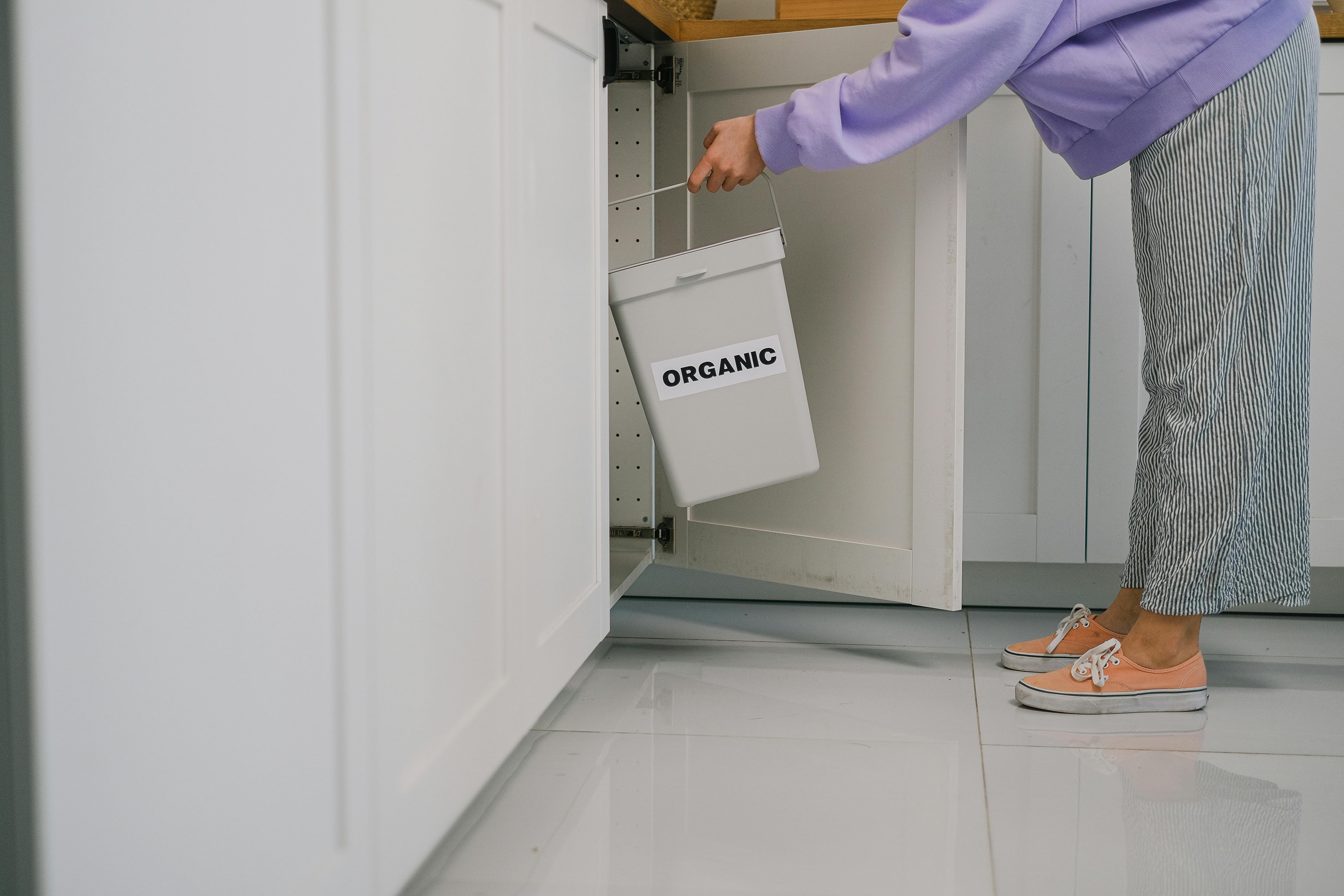
Photo by SHVETS production
Pick bin capacity based on pickup schedules
Trash containers are often described in quarts rather than gallons. A 35-quart bin is common in residential pullout systems, while some larger units hold 50 quarts or more. The right size depends on household size, cooking frequency, and waste pickup days.
A smaller bin encourages frequent emptying, which can help control odors in Southwest Florida's heat. On the other hand, a busy household may dislike taking trash out every day. Choose a capacity that fits your routine, then confirm the cabinet can support it.
Kitchen trash pullouts don't need to be oversized to work well. They need enough volume, a clear path to the bin, and containers you can lift out without bumping countertops or nearby doors.
Verify Measurements and Existing Conditions
Never select a pullout solely by the cabinet label on a plan. A "24-inch base cabinet" does not promise a 24-inch clear opening. Face-frame cabinets, frameless boxes, and custom cabinet construction all affect the usable space.
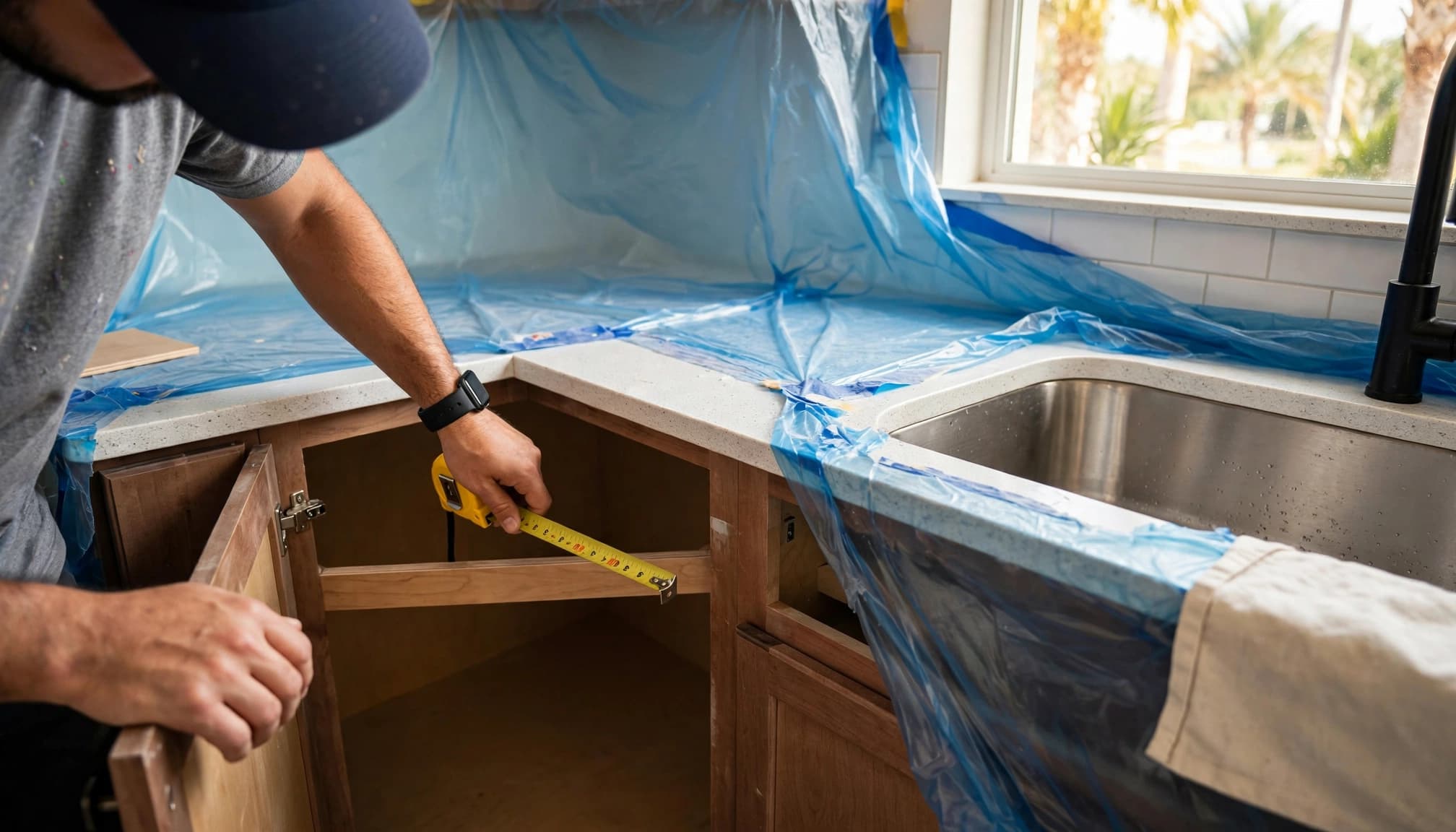
Measure the interior after the cabinet style is chosen
Your remodeling professional should confirm the inside width, depth, height, and door opening before ordering a pullout. Measurements should account for hinges, drawer fronts, door-mounted racks, and slide brackets.
Depth needs attention when the cabinet sits near plumbing or an exterior wall. A pullout that appears shallow enough may still hit a pipe or leave too little room for the slide mechanism.
Coordinate plumbing, electrical, and local requirements
A trash cabinet next to the sink may share space with supply lines, drains, shutoff valves, disposal wiring, or an outlet. If the remodel moves a sink, adds an island, or changes electrical circuits, those conditions need review before cabinet installation.
Applicable local requirements can affect the broader kitchen scope, particularly when plumbing and electrical work changes. Cabinet dimensions, plumbing, electrical conditions, and applicable local requirements should be verified with the remodeling professional before finalizing cabinetry and hardware.
This coordination protects access to shutoff valves and prevents a finished cabinet from hiding a connection that needs future service.
Specify Hardware That Holds Up to Daily Use
The bins are simple. The slide system does the hard work. Every opening and closing transfers weight to the cabinet sides, bottom, or face frame, especially when the containers are full.
Look for full-extension, soft-close slides
Full-extension slides bring the bins completely out of the cabinet. You can see the rear container and remove it without reaching into a dark cabinet. Soft-close hardware prevents the cabinet from slamming when someone pushes a full load inward.
Pay attention to the hardware's stated weight rating. The frame, bins, and waste all count toward that load. A lightly built system may feel loose after repeated use, while a sturdier pullout opens smoothly under normal household weight.
Choose finishes and materials with moisture in mind
Fort Myers kitchens face humidity, and the sink area adds splashes and occasional leaks. Powder-coated steel, quality plastic bins, and corrosion-resistant fasteners are sensible choices. Wood components need a durable finish and should stay away from direct plumbing risk.
Door-mounted systems attach the cabinet door to the sliding frame, so the door opens with the bins. They offer a clean look and easy access. Independent pullouts sit behind a separate cabinet door, which can be useful when matching an existing cabinet configuration.
Ask to see the exact model, not only a catalog image. Open it fully, check the bin handles, and test whether the motion feels comfortable. Small differences in slide quality become obvious after a few weeks of use.
Avoid Mistakes That Lead to Regret
The most common problems with kitchen trash pullouts begin before installation. Homeowners often choose the bins late, after the cabinet plan is set. Others focus on a cabinet's exterior size and overlook obstructions inside.
Avoid these issues during the design review:
- Don't locate the pullout beside a dishwasher unless both can open without blocking each other.
- Don't bury plumbing shutoffs or disposal connections behind a fixed trash frame.
- Don't buy a generic insert without comparing its required opening to your selected cabinets.
- Don't forget the extra room needed to lift a full bin out of the frame.
- Don't choose weak slides for a large household or a heavy recycling container.
A pullout also needs a cleaning plan. Removable plastic bins are easier to rinse, and a washable liner can protect the cabinet bottom. Wipe spills promptly, especially around the sink, because moisture trapped beneath the frame can damage wood finishes.
If your remodel includes custom cabinetry, ask for the pullout to appear on the final cabinet schedule. That keeps the cabinet maker, installer, and homeowner aligned on the opening, hardware, and door style.
A Small Cabinet Choice With Daily Value
A good trash pullout makes cleanup less visible and less disruptive. The strongest plans place it near the main work zone, provide enough room for your household's waste, and protect access to plumbing and appliances.
Start the conversation before cabinet orders are released. With verified measurements and dependable hardware, kitchen trash pullouts become one of the simplest parts of a Fort Myers kitchen remodel to appreciate every day.