Low-Slope Roof Coating Options for Estero Homes
Explore Our Services
Contact Us Today!
(239) 322-9295
Florida's intense sun and sudden rain can expose weaknesses on a low-slope roof quickly. A low-slope roof coating may protect a sound roof surface, but it can't repair structural damage, wet insulation, or a failing membrane.
Estero homeowners need to match the coating to the existing roof, drainage pattern, and storm exposure. The right choice starts with an inspection, followed by thorough preparation and a manufacturer-approved system.
Why Low-Slope Roofs Need the Right Coating
Low-slope roofs have less pitch than traditional shingle roofs. They depend on drains, scuppers, gutters, and carefully sealed seams to move water away. When those drainage points clog or the roof settles, water can remain on the surface after a storm.
Estero's climate adds several concerns. Ultraviolet exposure can age the roof surface, while humidity encourages algae and mildew on dirty areas. Afternoon thunderstorms can deliver heavy rain in a short time. Tropical storms may also send wind-driven water toward flashing, wall joints, vents, and other penetrations.
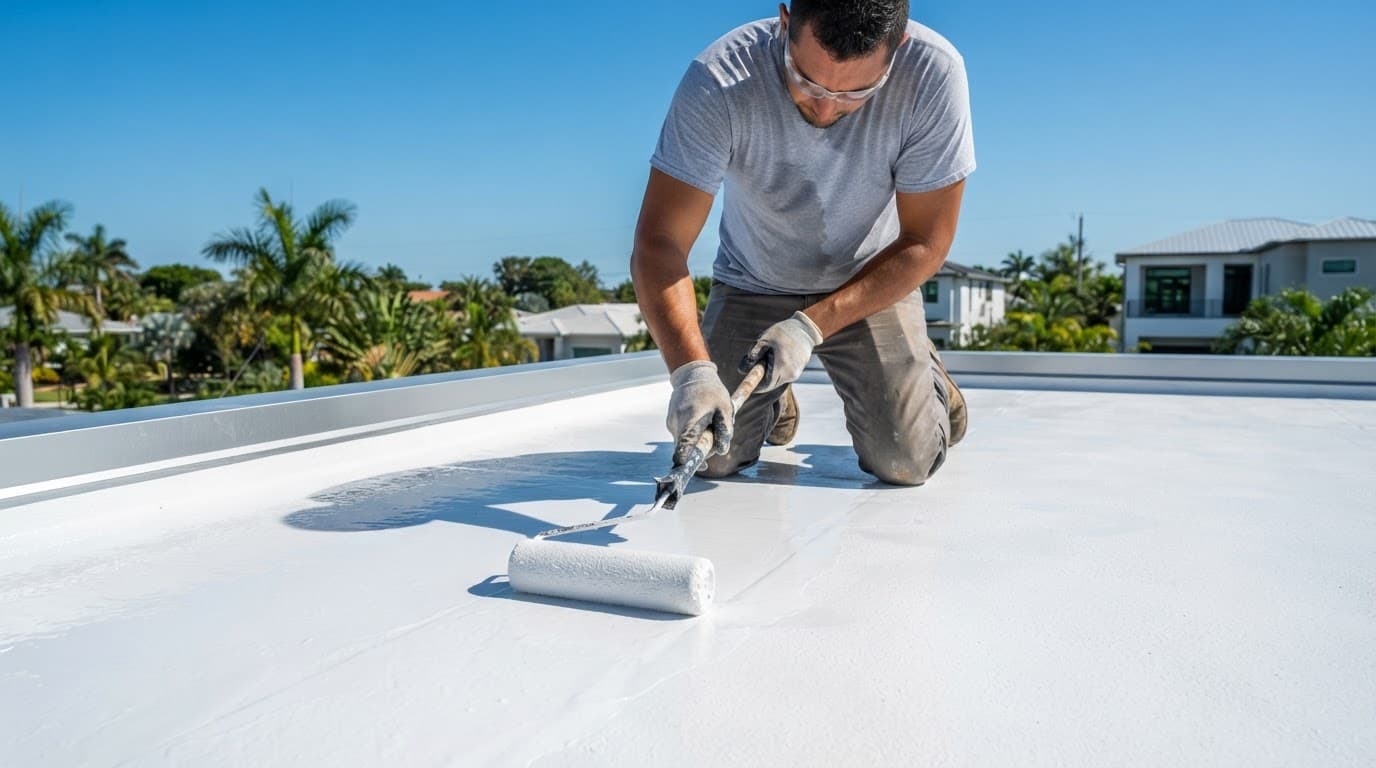
A roof coating creates a continuous protective layer over an existing roof assembly. Depending on the product, it may reflect sunlight, seal small surface imperfections, protect the membrane from weather, and extend the useful life of a roof that remains structurally sound.
However, the coating cannot correct movement in the roof deck or replace damaged insulation. It also won't fix an undersized drain, failed flashing, open seam, or widespread membrane breakdown.
A coating follows the roof beneath it. If the roof holds water or has weak seams, those problems remain under the new surface.
The existing roof material matters as well. Modified bitumen, built-up roofing, metal, concrete, and single-ply membranes each have different cleaning, priming, and adhesion requirements. A product that works on one surface may peel, blister, or react poorly on another.
Low-Slope Roof Coating Options for Estero Homes
The most common residential choices include acrylic, silicone, polyurethane, and asphalt-based products. Each has a different balance of reflectivity, water resistance, durability, maintenance needs, and substrate compatibility.
This comparison provides a starting point, but the final system should come from the roof inspection and the coating manufacturer's written specifications.
| Coating type | Main strengths | Main limitations | Common fit |
|---|---|---|---|
| Acrylic or elastomeric | Reflective, water-based, widely used | Performs poorly with prolonged ponding | Sound roofs with good drainage |
| Silicone | Strong water resistance and ponding tolerance | Can attract dirt and become slippery | Compatible roofs with recurring surface water |
| Polyurethane | Good abrasion and impact resistance | Often needs primer and careful application | Areas with foot traffic or physical wear |
| Asphalt-based | Compatible with some asphalt roofing systems | Usually darker and less reflective | Certain built-up or modified bitumen roofs |
Acrylic and elastomeric coatings
Acrylic coatings are often white and water-based. Their reflective surface can reduce heat absorption at the roof, which suits Florida's hot climate. They also come in elastomeric formulations that can accommodate limited movement in the roof surface.
These coatings need a roof that drains well. Standing water can soften or weaken some acrylic systems over time. They also require clean, dry conditions during application and curing. A contractor should check the product's weather requirements before scheduling work during Estero's rainy season.
Acrylic can make sense when the existing roof has minor surface aging, stable seams, and no ongoing leaks caused by deeper failures. The contractor still needs to repair penetrations and detail flashing before applying the coating.
Silicone roof coatings
Silicone coatings form a water-resistant surface and usually handle occasional ponding better than acrylic. That feature makes silicone worth considering when the roof's design leaves shallow water in isolated areas after heavy rain.
Silicone isn't a drainage repair. If water sits across broad areas, the contractor should first investigate the slope, blocked drains, damaged insulation, or roof settlement. Adding silicone without correcting those conditions can hide a developing problem.
The surface may also collect dirt, and some silicone roofs become slippery when wet. Homeowners should ask how the finished roof will handle service access for air-conditioning equipment or other rooftop systems.
Polyurethane coatings
Polyurethane systems offer strong resistance to abrasion and impact. They can work well where maintenance workers need regular access or where the roof faces more physical wear. Some systems use a polyurethane base coat with a separate protective topcoat.
Application requires careful control of moisture, surface preparation, and product compatibility. A primer may be necessary, especially when the existing roof has a difficult or aged surface.
Polyurethane isn't automatically the best option for a Florida home. Its value depends on the roof's condition, expected foot traffic, and the manufacturer's approved assembly. A written specification should identify each layer and the required dry-film thickness.
Asphalt-based roof coatings
Asphalt-based coatings are designed for certain asphalt roofing assemblies, including some built-up and modified bitumen roofs. They can help protect compatible surfaces and seal minor weathering when the underlying roof remains sound.
Many asphalt coatings are dark, so they absorb more heat than white reflective products. Some also have strong odors during installation. Compatibility is especially important because an asphalt product may not adhere properly to a single-ply membrane, metal surface, or previous coating.
A contractor should never apply an asphalt coating based only on the roof's appearance. The existing membrane, surface condition, and product data sheet must all match.
Inspection and Preparation Come Before the Coating
A professional roof inspection should happen before anyone discusses color, product, or application date. The inspection needs to identify leaks, soft areas, membrane splits, open seams, loose flashing, damaged edge metal, blocked drains, and signs of wet insulation.
The inspector should also examine the roof deck and structural condition. Sagging, movement, rot, or widespread damage calls for repair or replacement instead of a coating project. Major storm damage may require an insurance claim and a more extensive roofing scope.
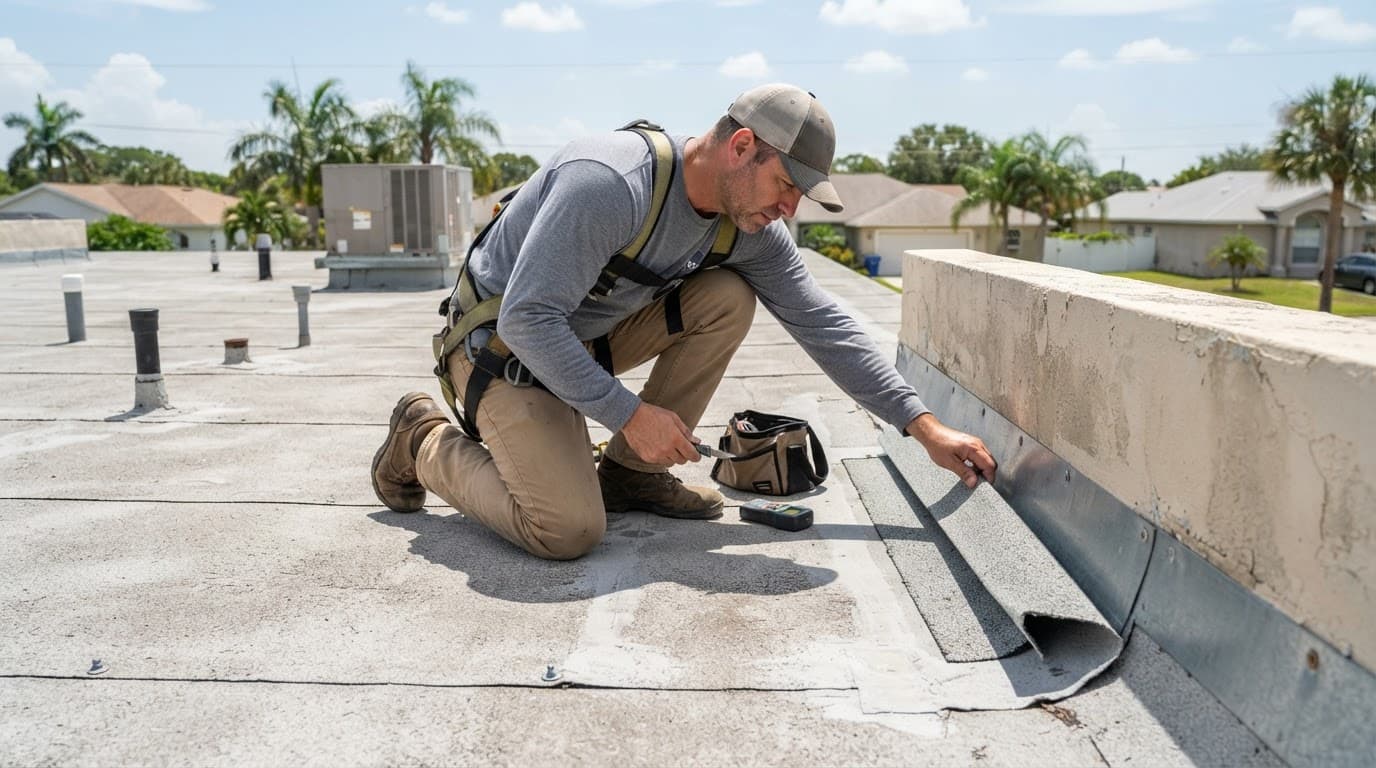
Surface preparation usually includes cleaning, removing loose material, repairing seams, sealing penetrations, and treating areas that need primer. The method must suit the roof. Aggressive cleaning can damage an older membrane, while insufficient cleaning can leave dirt that prevents adhesion.
Moisture also needs attention. Coating over wet insulation or trapped moisture can lock the problem into the roof system. A contractor may use moisture testing or other inspection methods when the roof history and visible conditions raise concern.
The finished coating also depends on details around vents, pipes, skylights, parapet walls, drains, and roof edges. These areas often fail before the open field of the roof. They need compatible sealants, reinforcing fabric, flashing repairs, or other details required by the system.
A Homeowner-Focused Recommendation for Estero Properties
Start with the roof's condition, not with a preferred coating brand. Ask the contractor to provide a written evaluation that separates repairs, preparation, coating materials, and any areas that need replacement.
For many Estero homes, the decision follows this pattern:
- A sound modified bitumen or built-up roof with good drainage may suit an acrylic system when reflectivity and regular maintenance are priorities.
- A compatible roof with limited ponding may suit silicone, but only after the contractor confirms that the water problem doesn't point to a deeper drainage issue.
- A roof with regular service traffic or greater abrasion exposure may benefit from a polyurethane system with the required primer and topcoat.
- A roof with wet insulation, structural damage, widespread membrane failure, or serious storm damage usually needs repair or replacement instead.
Ask for the product name, coverage rate, primer requirements, specified thickness, expected maintenance, and warranty conditions. The warranty may depend on correct preparation, application thickness, approved details, weather conditions, and periodic inspections.
The estimate should also state whether the price includes repairs to seams, flashing, drains, and penetrations. A low initial price can change quickly when preparation appears as a separate allowance. Itemized pricing gives you a clearer basis for comparing proposals.
Drainage deserves special attention during the estimate. Coating a roof without correcting blocked drains or poor water flow can shorten the service life of the entire project. The contractor should explain where water currently moves and whether the proposed work changes any roof drainage details.
Florida Requirements, Wind Concerns, and Maintenance
Roof coating work may involve local permits and must comply with applicable Florida Building Code requirements. Product documentation, roof assembly details, installation methods, and local requirements can affect whether a proposed system is acceptable.
Ask the contractor how the selected coating system fits the existing roof assembly. A coating product alone doesn't create hurricane-rated roof attachments or improve roof-to-wall connections. Homeowners who are reviewing storm protection can also learn about a wind mitigation roof evaluation before assuming a coating addresses wind risk.
Maintenance still matters after installation. Keep drains and scuppers clear, inspect the roof after severe storms, and arrange periodic checks for new cracks, blisters, open flashing, or areas that hold water. Limit foot traffic and use the access details recommended by the roofing contractor.
If another contractor needs to work on the roof, tell them which coating system was installed. Unapproved sealants, fasteners, or repairs can affect adhesion and warranty coverage.
Conclusion
The right low-slope roof coating can protect a healthy roof surface and reduce heat exposure, but it can't turn a damaged roof into a reliable one. Estero homeowners should first confirm the condition of the membrane, insulation, deck, flashing, and drainage system.
Acrylic, silicone, polyurethane, and asphalt-based coatings each fit different roof conditions. Choose the system that matches the existing assembly, follows manufacturer requirements, meets applicable Florida standards, and includes honest preparation and repair details.