Metal Roof Fastener Corrosion Near Saltwater in Naples
Explore Our Services
Contact Us Today!
(239) 322-9295
A metal roof can look sound from the driveway while small areas around its fasteners need attention. For Naples homeowners near saltwater, metal roof fastener corrosion deserves a closer look because a deteriorating connection can affect more than the screw itself.
A rust-colored streak doesn't prove the roof is leaking, and salt exposure alone doesn't identify the cause. The useful first step is to find where the staining starts, then have the roof system assessed before choosing a repair.
Key Takeaways
- Rust-colored stains are a reason to investigate, but staining alone doesn't show how much of a fastener or panel has deteriorated.
- A replacement fastener must suit the roof panel, nearby metals, and existing roof system . A generic match by size isn't enough.
- Loose attachments, damaged seals, and signs of water inside the home call for a qualified roofing professional, not a quick surface treatment.
- If corrosion appears in several areas, ask for an assessment of the broader roof rather than treating each visible spot separately.
Why coastal exposure raises concern
Naples roofs face more than an occasional splash of seawater. Coastal exposure is part of the setting, while heavy rain, intense sun, and strong winds also affect Southwest Florida roofing systems. The condition of the roof's finish, fasteners, and adjacent details matters alongside its location.
Exposure varies across a property
Two homes in Naples may have different roof conditions even if both are near saltwater. Roof shape, surrounding buildings, tree cover, drainage, and previous repairs all affect what an inspector finds. One slope may show staining while another appears unchanged.
That variation matters when evaluating metal roof fastener corrosion. A roofer should examine the affected area and comparable areas elsewhere on the roof. Otherwise, an isolated stain could receive too much attention while a repeated installation issue goes unnoticed.
Corrosion doesn't identify its own cause
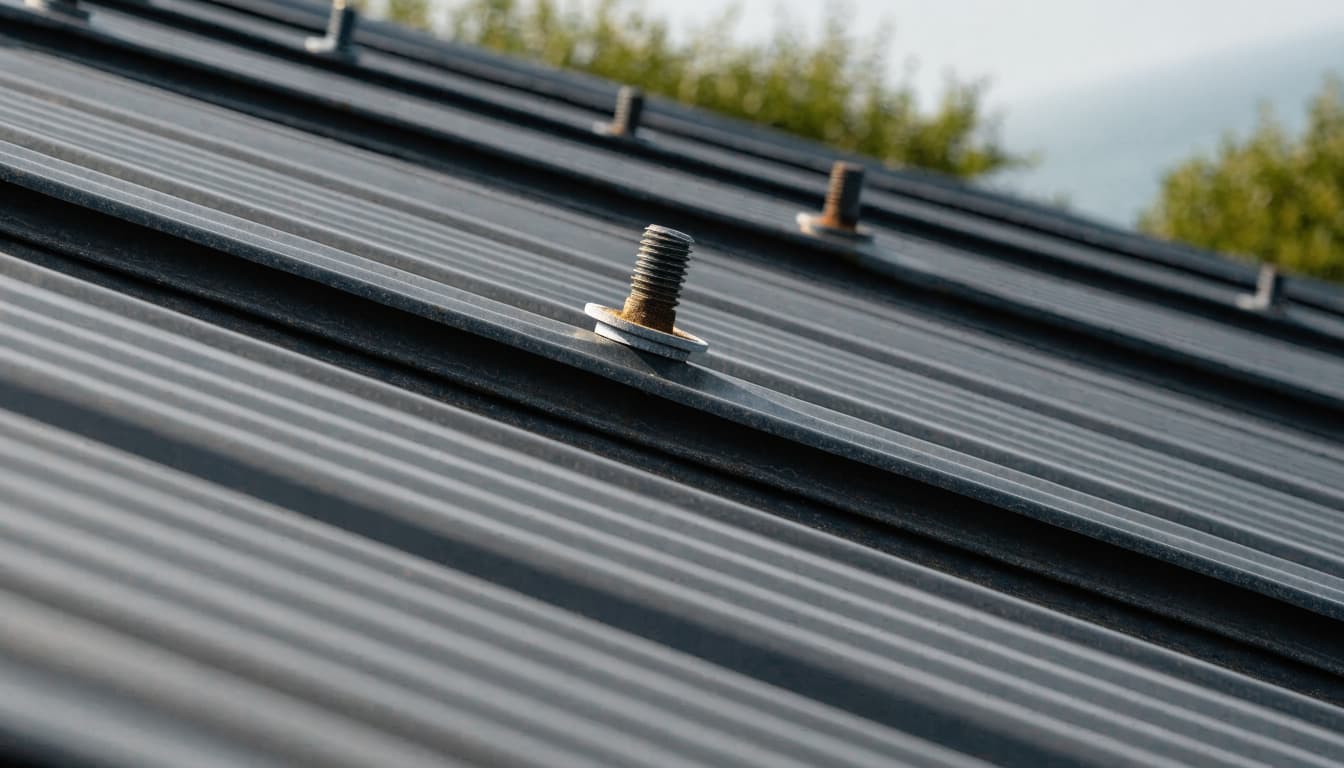
Discoloration may begin at a fastener head, a cut edge, a scratch, or a nearby metal component. Water can also carry staining away from its starting point. As a result, the darkest spot isn't always the best place to look for the source.
A proper assessment checks the fastener and the material around it. It also considers prior repairs and whether different metals meet at the affected detail. Those observations help separate a surface concern from a connection that may need repair.
The roof design changes what you can see
Metal roofs don't all expose their primary fasteners in the same way. Knowing which system you have helps you describe a problem accurately and avoid assuming that every visible screw performs the same job.
Exposed-fastener roofs
On an exposed-fastener roof, screws are visible across the panels. Their heads and sealing components are easier to observe from an appropriate inspection position, so staining around individual attachment points may stand out.
Still, appearance has limits. A fastener can look discolored without an obvious leak. Conversely, a connection may need attention even when the roof looks tidy from below. The roofer needs to assess the fastener, its seal, the panel surface, and how securely that area is attached.
Standing-seam roofs and nearby details
Standing-seam systems generally conceal the fasteners that attach the panels. That doesn't mean every roof detail is free of visible attachments. Trim, flashing, penetrations, and other components may have fasteners that need inspection.
For these roofs, a stain near a seam doesn't automatically mean the concealed attachment has failed. A qualified roofer can trace the mark, identify the detail involved, and check whether it affects the roof's ability to keep water out.
Warning signs worth documenting
The clearest signs are changes you can compare over time. Photos taken safely from the ground, a window, or another suitable vantage point can help a roofer locate the concern. Include a wider photo showing its position on the roof.
Changes on the roof surface
Look for stains that start around fastener heads or extend down a panel, especially when similar marks appear in more than one area. Visible deterioration around a fastening point also deserves attention. So do damaged-looking seals, lifted trim, and areas that no longer sit as expected.
After a storm, note any new staining or displaced components. Don't climb onto a wet or damaged metal roof to check them. Roof surfaces can be slippery, and stepping in the wrong place may worsen an existing problem.
Clues inside the house
A ceiling mark, damp insulation, or water around a roof penetration calls for prompt assessment. However, the interior stain may sit some distance from the exterior entry point. Water can travel before it becomes visible indoors.
A residential roof inspection can examine the roof's materials, structure, potential leaks, and weather-related damage together. Tell the inspector when you first saw the mark and whether it changes during heavy rain.
A stain tells you where to start looking, not which fastener to replace.
Why fastener compatibility matters
When a corroded screw comes out, the repair still depends on what goes back in. The correct choice has to fit the panel, surrounding components, and roof system. A fastener that looks similar on a store shelf may not be suitable for the connection.
Check the panel and adjacent metals
A metal roof includes more than its broad panel surfaces. Flashings, trim, attachments, and replacement parts can introduce other metals at the same detail. The roofer should identify what's present before selecting a compatible fastener or related component.
This matters on older roofs with a patchwork of repairs. If a previous repair used a part that doesn't suit the panel or adjacent metals, repeating that choice may leave the underlying concern in place. The roof system's manufacturer guidance can help resolve uncertain material combinations.
Match the whole connection
Material compatibility is only one part of the decision. The installer must also consider the existing opening, the supporting material below it, and the roof detail's original design. Where a seal is part of that connection, its condition matters too.
For a new home or roof replacement, ask how the specified panels, fasteners, trim, and other metal details work together. Cutting Edge Homes & Renovations describes its residential roof installation in Southwest Florida as work planned for local rain, sun, and wind while following applicable requirements and manufacturer specifications. Those questions belong in the planning stage, not only after stains appear.
Prevention starts with a consistent roof system
There's no single surface treatment that substitutes for suitable components and sound installation. In Naples, prevention means paying attention to the small details that connect and seal the roof, then responding when their condition changes.
During construction or replacement
Ask the contractor to identify the roof system and document the components selected for it. If the home is near saltwater, raise that exposure when discussing the panel, fasteners, flashing, and other metal details. Request the manufacturer's applicable guidance rather than relying on a broad claim that a material is "coastal."
Keep the roof documents after installation. They give a future roofer a better starting point than appearance alone, especially if a repair becomes necessary years later.
While you own the home
Watch for new stains, displaced trim, and signs of water inside. Also keep a record of roof work, including repairs around vents or other penetrations. A later stain near that area may be easier to diagnose when the roofer knows what changed.
Avoid treating rust-colored marks with an unverified coating or replacing visible screws yourself. That may cover a useful clue or introduce a component that doesn't suit the roof. When the condition is uncertain, an assessment is the safer next step.
What a sound repair assessment should cover
A repair begins with the extent of the problem. One affected attachment may call for a different scope than repeated staining across several roof sections. The roofer should explain that difference before work begins.
Finding the affected area
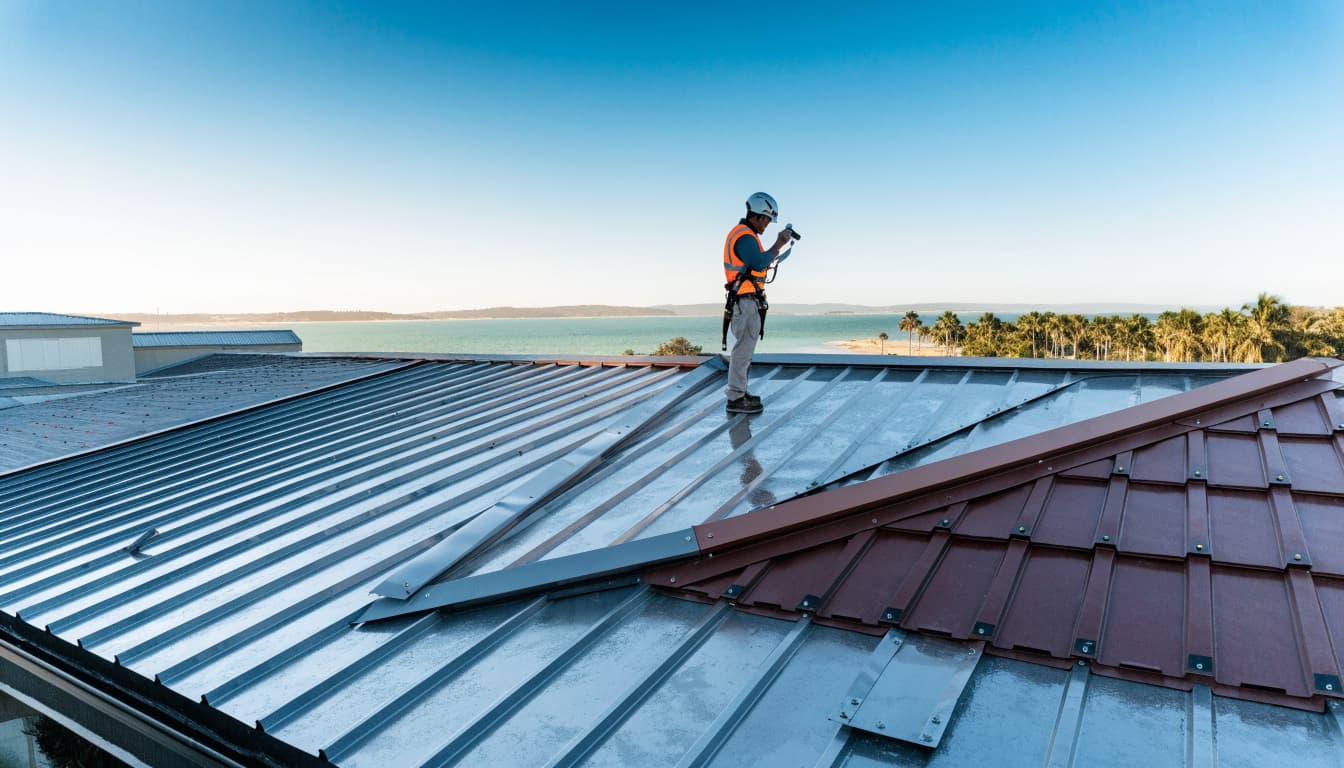
Ask the professional to identify where staining originates and whether the fastener, seal, panel, or nearby flashing has deteriorated. They should also check for water entry and look at similar details elsewhere on the roof.
If metal roof fastener corrosion appears widespread, a spot repair may leave other weak connections untouched. If the issue is localized, replacing an entire roof may be unnecessary. The condition of the roof, not the stain's color alone, should guide the recommendation.
Agreeing on the repair scope
A written scope should describe the affected roof area, the components that need attention, and how replacements will be checked for compatibility. Ask what the roofer found beneath or around a deteriorated fastener, since a damaged connection may involve more than the visible head.
Costs depend on access, the number of affected areas, and what the inspection reveals. For professional roof repair in Southwest Florida, the priority is to find the source of the problem before recommending the work. If rain is entering the home, tell the contractor right away so they can assess the need for temporary protection.
Frequently Asked Questions
Does a rust-colored stain mean my metal roof is leaking?
No. A stain is evidence that something needs inspection, but it doesn't establish an active leak. Check for interior moisture and have a qualified roofer trace the mark to its source. Waiting for a ceiling stain can allow an exterior concern to worsen.
Can I replace a corroded roof screw with one from a hardware store?
Don't choose a replacement by appearance or size alone. The part must suit the panel, nearby metals, and the existing connection. A roofing professional can check the roof system and manufacturer guidance before selecting repair components.
Is fastener staining on a Naples roof always caused by saltwater?
No. Saltwater exposure is an important consideration near the coast, but staining alone cannot establish its cause. Damaged surfaces, prior repairs, nearby metal components, and the condition of the connection also need review.
A closer look protects the whole roof
A small stain can have a simple explanation, or it can point to a connection that needs repair. The distinction takes an inspection , especially when saltwater exposure and older roof work are part of the picture.
For a Naples metal roof, focus on the source of the staining and the compatibility of any replacement parts. Addressing both gives a repair a sounder starting point than treating the visible mark alone.