Fort Myers Kitchen Remodel: Microwave Placement First
Explore Our Services
Contact Us Today!
(239) 322-9295
A beautiful cabinet plan can become awkward the moment you try to fit a microwave into it. In a Fort Myers kitchen remodel, microwave placement affects cabinet sizes, counter space, electrical work, ventilation, and how safely you can handle hot food.
You don't need to settle every finish before choosing a location. You do need to decide what type of microwave you want and where it belongs before anyone finalizes the cabinets. That decision starts with how you use the kitchen.
Why microwave placement comes before cabinet design
Cabinets are built around openings, storage needs, and appliance locations. If the microwave moves after the drawings are approved, the change can reach beyond one cabinet. A revised opening may affect neighboring drawers, finished side panels, outlets, backsplash work, or a range hood.
The same sequencing matters across the room. Kitchen layout planning before cabinet installation considers the refrigerator, sink, and range before cabinet widths are fixed. The microwave belongs in that conversation, especially if several people use the kitchen at once.
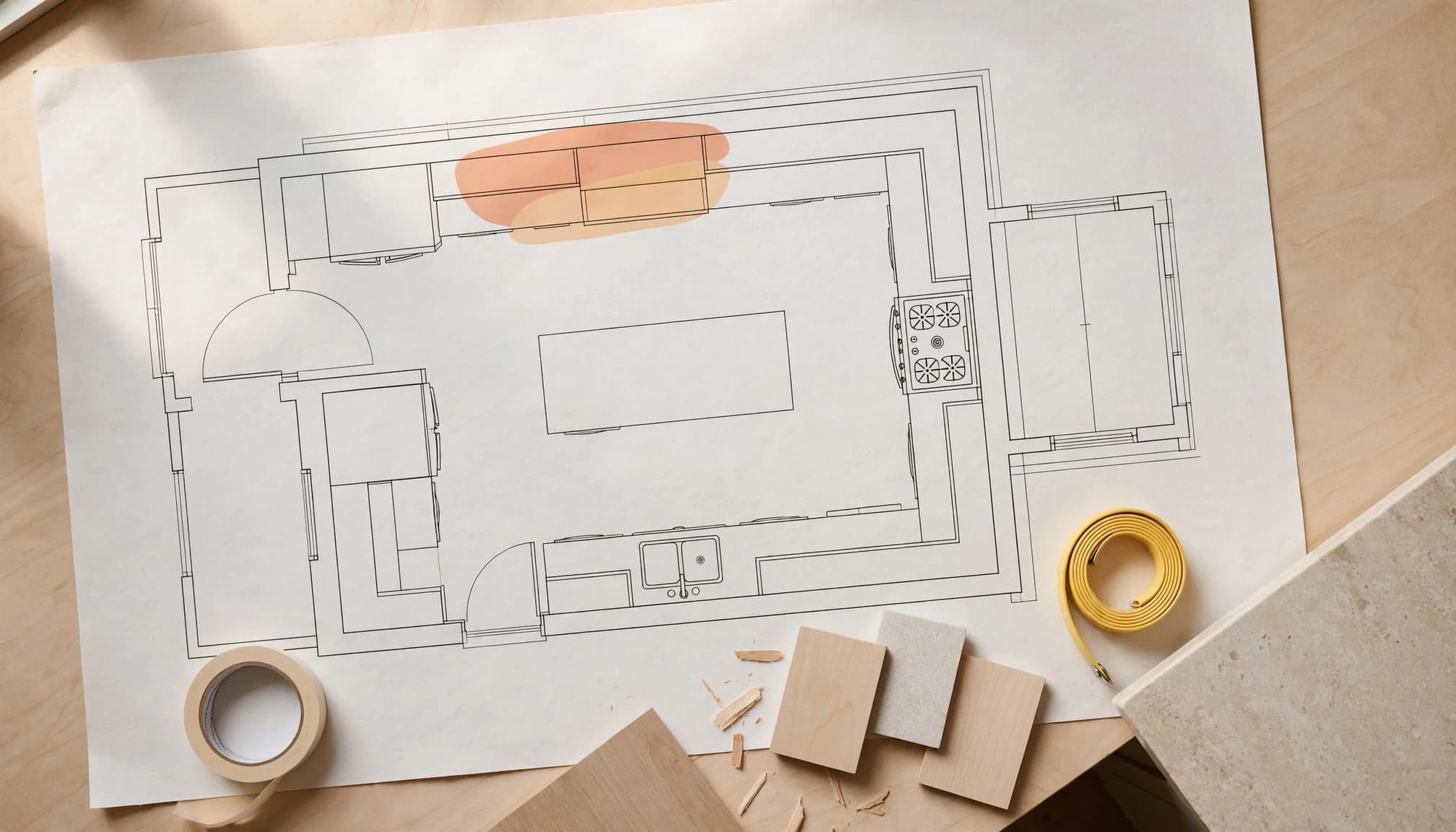
In a larger remodel, the decision can also shape an appliance wall, pantry addition, or new island. Cutting Edge Homes & Renovations includes appliance layout planning alongside cabinetry, counters, lighting, and storage in its Fort Myers kitchen remodeling services. Planning those pieces together gives each one a workable place.
Compare common microwave locations
No location works for every household. Start with the space you're willing to give up, then consider how people will reach the appliance and where hot dishes will land.
Over-the-range
An over-the-range microwave frees counter space and puts two functions in one location. It can suit a kitchen with limited room for a separate hood or appliance cabinet.
However, it places the microwave above the cooktop. Check whether everyone who uses it can reach it comfortably and move a hot bowl to a nearby counter. This choice also makes the microwave part of the cooking ventilation plan. Confirm the selected unit's installation instructions and ventilation arrangement with the installer before sizing the upper cabinets.
Built-in cabinet or microwave drawer
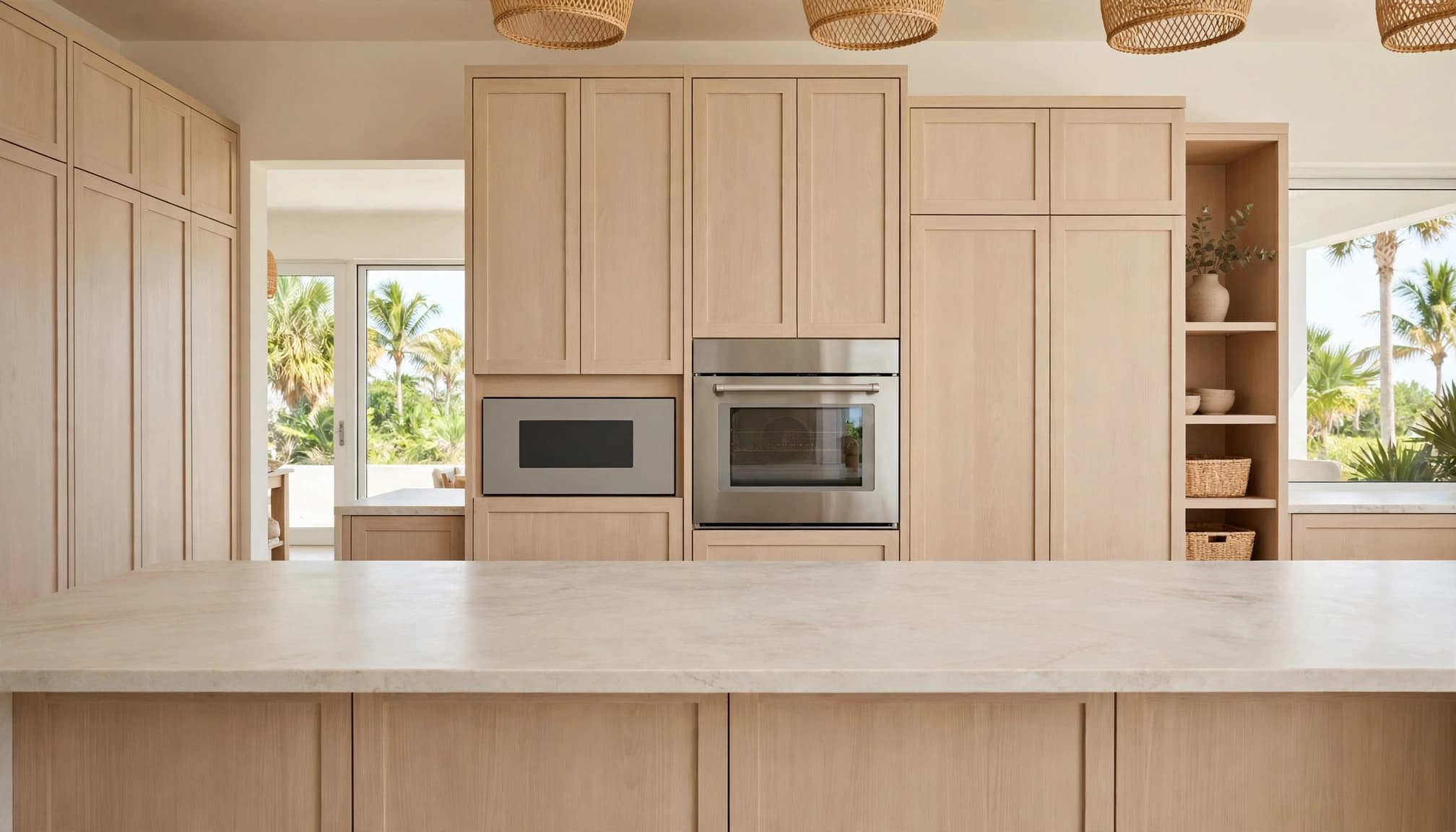
A built-in unit can sit in a tall cabinet or another manufacturer-approved location. A microwave drawer may work within a lower cabinet run or island. Both approaches can preserve open counters and give the appliance a deliberate place in the design.
They also commit cabinet space to a particular configuration. The cabinet maker needs the exact appliance model and its installation requirements, including any approved trim kit. Don't assume a standard countertop microwave can go inside an enclosed cabinet. Check the manufacturer's instructions before drawing the opening.
Countertop or open shelf
A countertop microwave is flexible. You can replace it without rebuilding a dedicated cabinet, although it takes up work surface. An open shelf may recover that space, provided the appliance is suitable for the proposed location and has the support and clearances its manufacturer requires.
Look beyond where the unit fits. Its door needs room to open, and the user needs a safe place to set down heated food. A shelf that looks tidy on a drawing may feel awkward once the appliance and surrounding cabinets are in place.
Check the exact model before approving cabinet dimensions
"Built-in microwave" isn't enough information for a cabinet order. Give the designer, cabinet supplier, electrician, and installer the same selected model information. If you're still comparing appliances, hold the final opening until you've chosen one.
Match the opening to the installation instructions
The appliance's outside dimensions aren't necessarily its required cabinet opening. Installation instructions may also address surrounding materials, air movement, support, and access. A trim kit, where required, has its own compatibility and fit requirements.
Have the cabinet maker and installer review the current instructions for the exact model. They should confirm the opening and any required clearances before cabinets are fabricated. A generic microwave shape on a design plan can't answer those questions.
Allow for the door and future service
A microwave can fit its opening and still be difficult to use. Check how far the door projects, whether it conflicts with another appliance, and whether a nearby cabinet handle gets in the way.
Also ask how the unit will come out for repair or replacement. A finished cabinet should allow the access required by the appliance instructions. If you may replace the microwave later, understand that another model might need a different opening or trim kit.
Settle electrical and ventilation needs early
Moving the microwave may change work behind the finished cabinets. Bring the electrician and installer into the plan before cabinet installation closes off access.
Locate the electrical connection for the chosen unit
A countertop unit, an over-the-range model, and a built-in appliance may have different connection and circuit requirements. The electrician should check the manufacturer's instructions, the home's existing electrical setup, and the proposed outlet or connection location.
This matters in older kitchens where the new layout shifts appliances to another wall. Avoid placing an outlet based only on where it looks convenient in a rendering. The installer must be able to connect the unit as its instructions require, and any electrical work must meet applicable requirements.
Treat cooking ventilation as a separate decision
If the microwave will sit above the range, discuss how cooking air will be handled. The chosen model and the kitchen's existing or proposed vent path determine what installation options are available.
A recirculating setup and an exterior-vented setup aren't interchangeable details on a cabinet sketch. Duct routing, surrounding cabinetry, and the appliance instructions need to agree. If you'd prefer a separate range hood, reserve its space before committing to an over-the-range microwave. Have the installer verify the final ventilation plan rather than assuming the previous kitchen setup will work unchanged.
Design around the people using the kitchen
A microwave's daily use matters as much as its appearance. Watch where family members stand to heat food and where they put it afterward. Then compare those movements with the range, refrigerator, sink, and main walkway.
Keep a practical landing spot
Hot dishes need nearby counter space. If reaching the microwave requires crossing the cooking area or carrying a full bowl around an island, reconsider the location.
This is especially useful to check in an open-concept remodel. A microwave near the room's edge may keep casual users away from active cooking. However, that location still needs a comfortable route and a convenient place to set food down. Test the plan with cabinet and appliance doors shown open.
Protect storage without crowding the room
A built-in unit uses cabinet volume that could otherwise hold pantry items or drawers. Meanwhile, a countertop model uses surface area that might be more valuable for food preparation. Ask which space your household can spare.
An open shelf has its own tradeoff: it leaves the appliance visible and may require more routine cleaning around it. If you're already weighing open shelving against cabinets, include the microwave in that storage discussion. The best-looking appliance wall won't help if everyday items have nowhere sensible to go.
A microwave location is only workable when the appliance fits, its door opens, and someone can safely set down a hot dish.
Confirm scope, permits, and pricing before work starts
Microwave placement can affect more than the cabinet quote. A move may require electrical changes, alterations to ventilation, or repairs to finished surfaces. Ask the contractor to identify that work in the proposal rather than leaving it under a broad appliance allowance.
Permit requirements depend on the property's jurisdiction and the actual work proposed. The City of Fort Myers, unincorporated Lee County, and Fort Myers Beach don't share one permitting process. Review Fort Myers kitchen permit considerations, then confirm the applicable requirements with your installer or local building department. Don't assume that replacing a microwave and relocating its electrical or venting work have the same review requirements.
When comparing bids, look for the selected appliance, cabinet modification, electrical work, ventilation work, and finish repairs. Comparing kitchen remodeling bids is easier when each proposal describes the same materials and scope. An inexpensive cabinet allowance can be misleading if the appliance opening or finished panels are missing.
Make the decision before cabinet orders
You can keep the planning process straightforward. First, choose the location that fits your household's reach, counter-space, and storage needs. Next, select the appliance model and give its installation instructions to the project team.
Before approving the cabinet drawings, ask the designer and installer to check the opening, door swing, required clearances, support, electrical connection, and ventilation. Confirm the landing area with appliance doors shown open. Then review any resulting cabinet, electrical, and finish work in the proposal.
If the exact model isn't selected yet, say so before the cabinet order. A preliminary drawing can show your preferred location, but the final dimensions need the real appliance specifications. That distinction can prevent a late change from spreading into the countertop, backsplash, and installation schedule.
Key takeaways
- Decide where the microwave goes before finalizing cabinets, because its location can affect storage, electrical work, and ventilation.
- Compare over-the-range, built-in, and countertop or shelf options against your household's reach and counter-space needs.
- Use the exact model's instructions to confirm fit and installation requirements. Check applicable code and permit questions with the installer or local building department.
Frequently asked questions
Can I put a countertop microwave inside a cabinet?
Only if the appliance manufacturer's instructions permit the proposed installation. An enclosed opening may not provide the conditions a particular countertop model requires. Ask the installer to review the exact model before designing a cabinet around it.
Is an over-the-range microwave the best space-saving choice?
It saves counter and cabinet space, but it also puts the appliance above the cooktop and ties the decision to cooking ventilation. Compare its reach and venting arrangement with a separate hood and a microwave elsewhere.
When should I choose the microwave for my remodel?
Choose the model before final cabinet dimensions and electrical locations are approved. You can explore layouts earlier, but the cabinet maker and installer need the selected unit's instructions to confirm the finished plan.
Conclusion
A microwave can look like a small detail on a kitchen drawing. Once cabinets are ordered, its location becomes much harder to change.
Choose the location around how your household cooks, then verify the appliance-specific fit and installation requirements with the people doing the work. That's how a Fort Myers kitchen remodel gets cabinets that look right and work well every day.