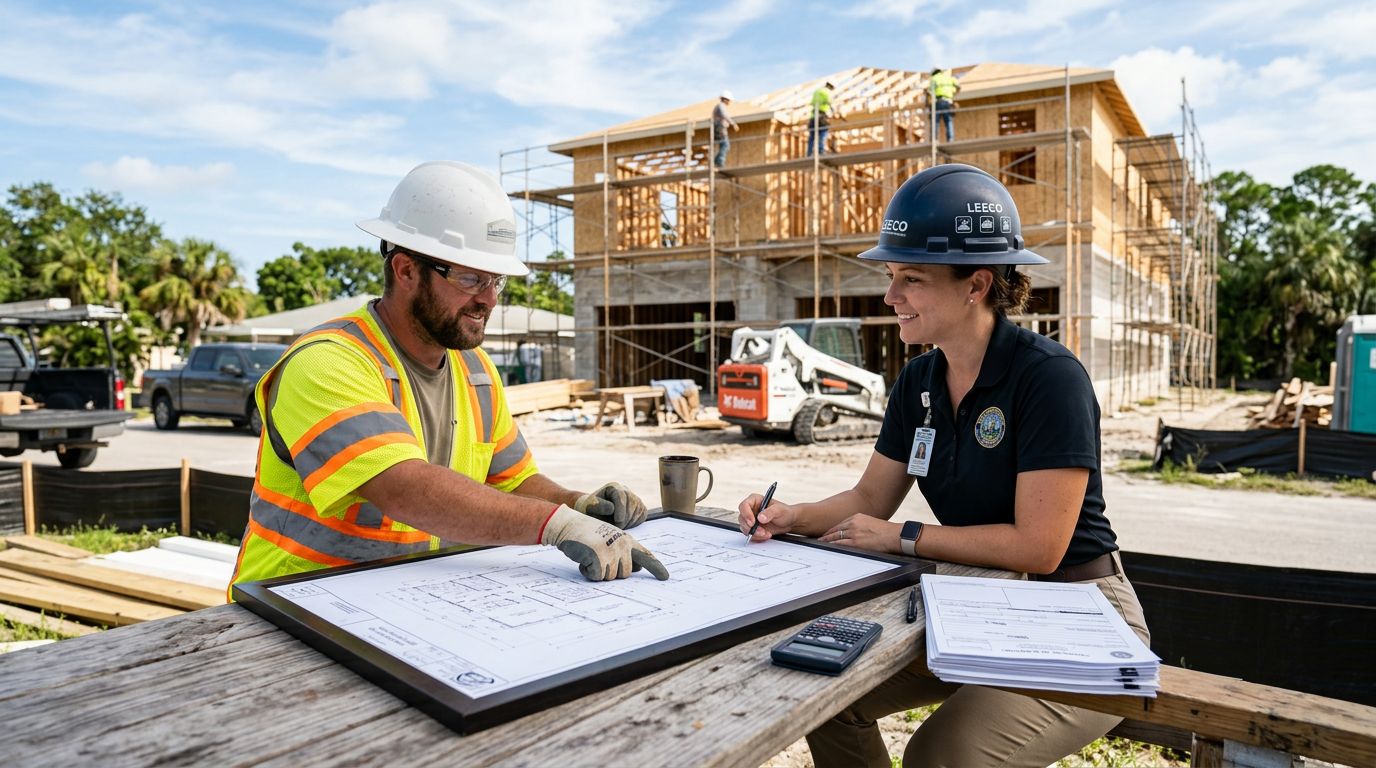



Building a new home in Southwest Florida is exciting, until paperwork trips you up. One form matters more than most because it affects inspections, payments, and lien risk: the florida notice of commencement .
If you're an owner-builder, hiring a general contractor, or financing a custom build, you need to know when to record it, what it does, and what it doesn't do. A Notice of Commencement (often called an NOC) won't stop every problem, but it can keep a payment dispute from turning into a title headache later.
Below is a clear, 2026-friendly guide you can use before your first shovel hits sand.
What a Florida Notice of Commencement is (and why it matters for homeowners)
Think of the Notice of Commencement as your project's "official start card." Florida lien law uses it to tie your job to a public record, with the owner, contractor, lender, and property details in one place. Subcontractors and suppliers rely on that record to send required notices, and you rely on it to help manage lien deadlines.
Florida law requires an NOC for most permitted improvements over the small-project threshold, and it must be recorded before construction starts. The controlling statute is Florida Statutes §713.13, which lays out the required form and timing. For the statutory language and core requirements, see Florida Statutes §713.13 (Notice of commencement).
A correct NOC also helps keep your project organized because it typically includes:
- Owner name and address (and "fee owner" if different)
- Jobsite address and legal description
- General contractor name and address
- Lender information (if any)
- Permit number (when issued)
- Expiration date
- Notarized signature
Gotcha: recording the NOC isn't enough. Florida law also requires you to post a certified copy (or a notarized statement plus a copy) at the jobsite. Missing posting can cause delays when inspectors ask for it.
When to file it, where to record it, and common SWFL timing traps (2026)
In 2026, the safest rule is simple: record the florida notice of commencement after you're ready to start , and before the first work begins. Many owners record it once the permit is issued and the start date is real, not wishful.
Two timing rules catch people:
- The 90-day rule : If construction doesn't start within 90 days after recording, the NOC can become ineffective, and you may need to record a new one.
- The 1-year limit : An NOC generally expires 1 year after recording, even if your build runs long. If it expires mid-project, talk with your contractor and clerk about recording a new NOC so your records match reality.
Recording happens in the county where the property sits, usually with the Clerk of Court or Official Records department. Local steps vary by county, so confirm the current process (in-person, mail, and eRecording options) before you assume it's "just online."
For local guidance in Lee County, review the clerk's page on Notice of Commencement FAQs in Lee County. If you're recording in Collier, the clerk's site provides recording resources, including Collier County recording forms and information.
One more practical tip: if you have a construction loan, your lender often cares about document order. Recordings can affect priority, so coordinate with your lender and title company early.
How the Notice of Commencement reduces lien risk (and what you still must do)
A florida notice of commencement helps, but it's not magic. It doesn't prevent liens by itself. What it does is set clear project data and start lien-related clocks, which helps limit surprises when you manage payments correctly.
Here's the part most new-home owners miss: you can still "double pay" if you pay your contractor, but the contractor doesn't pay a sub or supplier. Florida lien law gives those unpaid parties a path to your property.
So pair the NOC with disciplined payment habits:
- Collect Notices to Owner (NTOs) : Many subs and suppliers must send an NTO within 45 days of first furnishing labor or materials. Save every one. Then require releases from those parties before you approve later payments.
- Tie pay apps to lien releases : For progress payments, ask for conditional releases (effective when funds clear). After the check clears, swap to unconditional releases for the same period.
- Track who's really on your job : Keep a running list of subs and suppliers, not just your builder's "usual team." Material yards and truss suppliers can have lien rights too.
Owners often find this easier with a cost-plus home builder because invoices and vendor lists stay visible. When a builder also uses transparent pricing (itemized costs, clear fees, and clean documentation), you can match each pay app to real bills and the right releases. If you're comparing builder models in Cape Coral and nearby areas, see this overview of a Cape Coral new home builder.
Compliance checklist and a sample timeline for a typical new-construction project
Use this as a simple baseline. Your municipality, lender, and contract may add steps.
A quick sample timeline helps you see where the NOC fits.
| Project phase | Typical timing | What you should do |
|---|---|---|
| Pre-construction | Weeks 1 to 8 | Finalize contract, confirm permit plan, set payment rules for releases |
| Permit issued | Week 9 (varies) | Prepare NOC with correct owner, contractor, lender info |
| Before first work | 1 to 7 days before start | Record NOC with county, then post a copy at the jobsite |
| Construction in progress | Months 1 to 10 | Collect NTOs, track subs, get conditional releases with each pay app |
| Near completion | Final 2 to 4 weeks | Collect final releases, confirm no open balances, verify final affidavit timing |
| Final payment and closeout | Last week | Pay only after all required final releases and closeout docs arrive |
The goal is simple: every dollar you pay should be matched to proof that the right people got paid.
Owner compliance checklist (print this):
- Confirm the NOC fields match the permit and contract (names, addresses, legal description).
- Record the NOC in the correct county, then keep the recording reference number.
- Post the NOC at the jobsite where inspectors can see it.
- Maintain a folder for NTOs, pay apps, releases, and change orders.
- Require conditional releases with each progress payment, then unconditional releases after funds clear.
- Before final payment, request the contractor's final affidavit and final releases from anyone who sent an NTO.
- If the project pauses for a long time, re-check NOC effectiveness and expiration with the clerk.
For a broader planning view that pairs well with this checklist, use the Southwest Florida home building guide.
Conclusion (and a quick legal disclaimer)
The florida notice of commencement is one of the easiest steps to get right early, and one of the hardest problems to fix late. Record it on time, post it on site, and treat it as the start of a disciplined payment and release system. When you do, you reduce lien risk and protect your future resale and title.
This article is general information , not legal advice. For guidance on your exact project, talk with a Florida construction attorney and confirm recording requirements with your local clerk's office.