


If you're building a new home in Southwest Florida, your biggest risk might be invisible. The ground can look flat and dry, yet still hide soft layers, high groundwater, or old organic material that shifts after you pour a slab.
That's why soil testing matters. A geotechnical report turns guesswork into design numbers your engineer can use, like bearing capacity, groundwater depth, and fill recommendations.
Below is a practical 2026 guide for SWFL homeowners: when a geotech report is required (or just smart), what's inside it, and what you'll typically pay.
For broader planning beyond soils, see the Ultimate Guide to Building New Homes in Southwest Florida.
What soil testing actually tells you (and why SWFL is tricky)
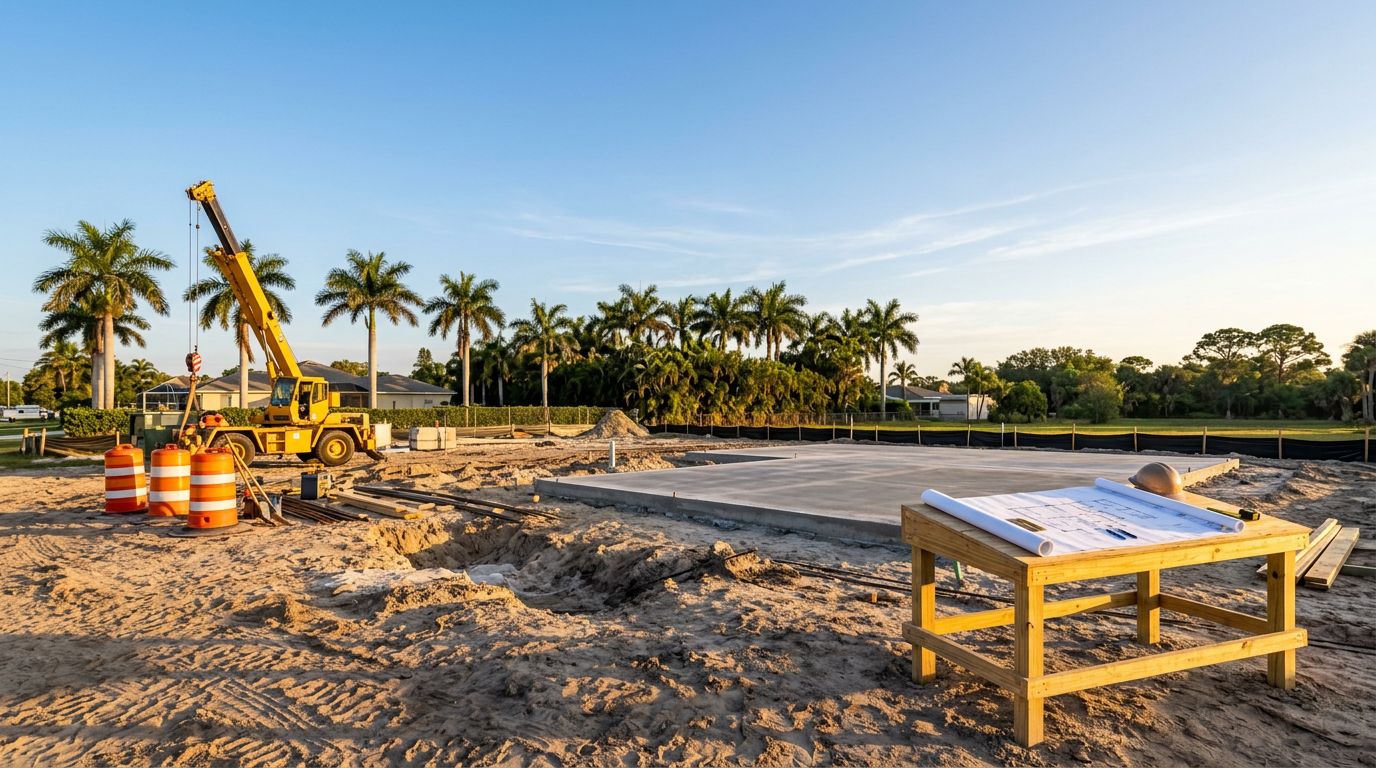
A residential geotech scope usually starts with field work. A technician or engineer comes to the lot, drills borings (small-diameter holes), and logs what they hit at each depth. They may also run quick field tests that estimate strength, then send samples to a lab.
In Southwest Florida, this matters because many lots sit near canals, former wetlands, or areas with shallow water tables. Even in established neighborhoods, two lots can behave differently. One may have clean sand, another may have muck or loose fill.
A typical report for a new home answers questions like:
- What soils are present by depth (sand, organics, limestone, fill)?
- How deep is groundwater at the time of drilling?
- What's the allowable bearing capacity for foundation design?
- Is there a settlement risk that calls for thicker slabs, deeper footings, or soil improvement?
- Do you need undercut and replacement, compaction targets, or special fill?
A common mistake is assuming a neighbor's report applies to your lot. In SWFL, a short distance can mean a different water table or soil layer, so most engineers want site-specific data.
Think of the report like a medical chart for your lot. You might feel fine without it, but you don't want surprises after the "surgery" starts.
When you need a geotech report for a new home permit in 2026
Some homeowners only hear about soil reports when permit review stalls. Others order one early because they want fewer change orders. In reality, the trigger is usually a mix of local permitting expectations, your engineer's standards, and site risk.
In 2026, extra scrutiny is common on coastal and flood-prone sites, especially after recent storm seasons pushed many building departments to watch elevation, drainage, and foundation details more closely. Your local building department can tell you what must be submitted, but your design professional may still require it to stamp the foundation plans.
Here's a concise "When you need it" decision tree you can use before you spend money:
Decision tree (quick check)
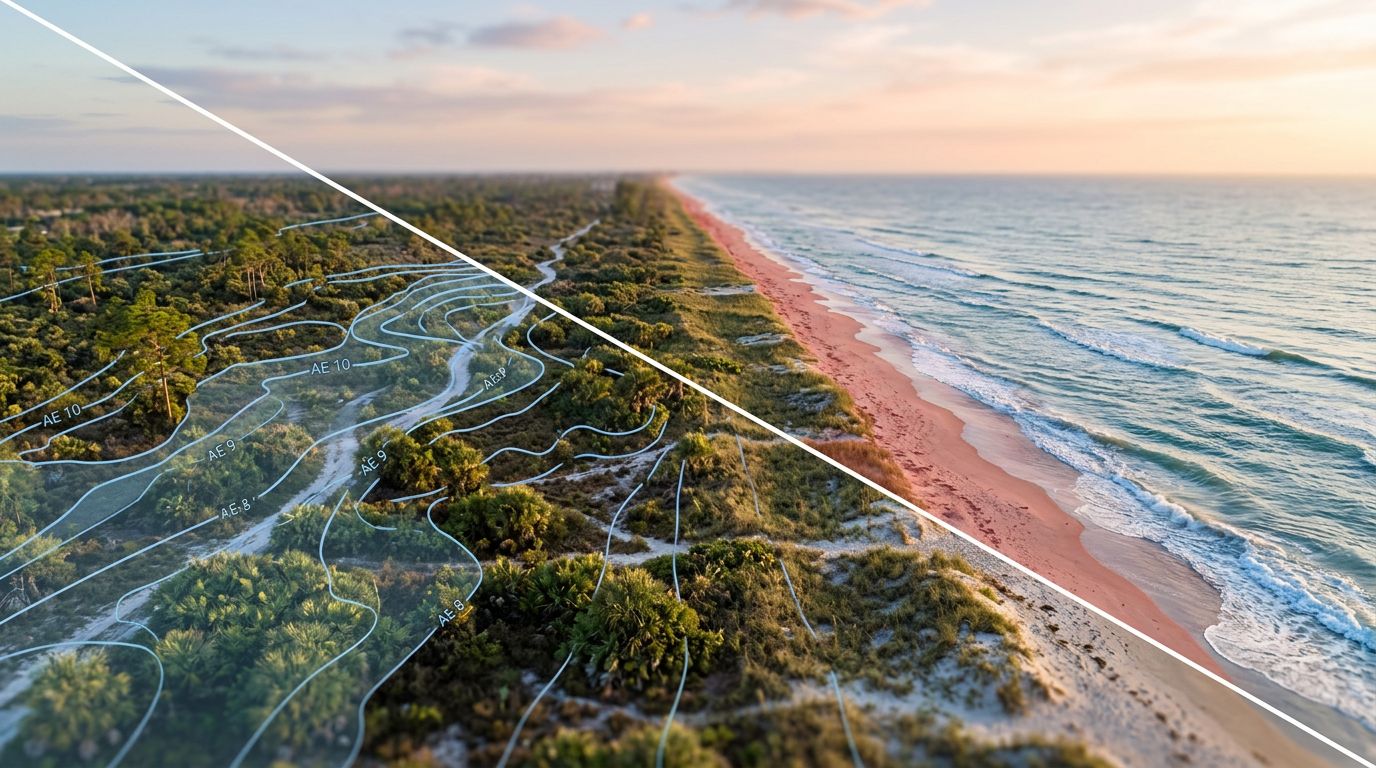
- Are you building in a FEMA Special Flood Hazard Area (often AE or VE)?
- Yes: Plan on geotech being requested by your engineer, and sometimes by permitting, because foundation and elevation details get reviewed closely.
- No: Go to the next question.
- Is the lot near the coast, a bay, a canal, or mapped coastal high-hazard areas (often V zones)?
- Yes: Get a geotech early, because groundwater and erosion-sensitive soils can change foundation details.
- No: Go to the next question.
- Does the site have any red flags (recent fill, standing water, heavy vegetation, history of muck, prior settling)?
- Yes: Get a geotech, it's cheaper than redesigns and slab repairs.
- No: Go to the next question.
- Is your engineer asking for one to provide design values?
- Yes: You need it, even if the building department doesn't explicitly demand it.
- No: You may still choose to do one as a risk-control step.
Flood rules are their own layer. FEMA flood maps, Base Flood Elevation, local freeboard rules, and foundation type (especially in V zones) can affect both design and cost.
Don't rely on a map screenshot from a listing. Confirm flood zone and elevation needs with your designer and the local floodplain staff before final foundation choices.
One last note on terminology: many homeowners search " geotechnical report florida " because they want a statewide rule. Florida codes set the framework, but local enforcement and engineer requirements drive what you'll actually submit.
What a geotechnical report costs in Southwest Florida (typical 2026 ranges)
Prices vary by access, how many borings are needed, lot size, and how quickly you need it. Still, most SWFL single-family reports land in a predictable band.
For many new homes, a typical 2026 estimate is $1,500 to $5,000 . That range usually covers field work, lab work, engineering analysis, and a signed and sealed report. Complex sites, larger custom homes, or waterfront lots can run higher.
Here's a simple cost breakdown to help you compare quotes. These are typical estimates that vary by site and scope:
| Cost item | Typical 2026 range (SWFL) | What can push it higher |
|---|---|---|
| Mobilization and site visit | $200 to $700 | Gated access, travel distance, tight scheduling |
| Drilling and borings (often 2 to 4) | $800 to $2,200 | Extra borings, deeper borings, difficult access |
| Lab testing (moisture, gradation, strength) | $350 to $1,200 | More samples, specialized tests |
| Engineering analysis and recommendations | $400 to $1,300 | Complex foundation options, unusual soils |
| Sealed report and deliverables | $150 to $600 | Expedited turnaround, extra copies, addenda |
Takeaway: ask each firm how many borings they included, how deep they'll drill, and whether lab testing is included or billed separately.
Timing and budgeting tips that save headaches
A geotech report can take a few weeks end-to-end, depending on scheduling and lab turnaround. If you wait until permit submittal, the report can become the long pole in the tent.
It also ties directly to budget clarity. When you work with a cost-plus home builder , soil-driven changes (like undercut, fill, compaction testing, or deeper footings) show up as real line items, not vague allowances. Pairing that with transparent pricing makes it easier to see what changed and why.
If you're interviewing builders for SWFL new construction, you can compare approaches here: New Home Builder Serving Southwest Florida and Custom vs Spec Homes in Southwest Florida.
Conclusion (and a quick disclaimer)
Soil testing isn't a glamorous step, but it's one of the most practical ones. In Southwest Florida, a geotech report can protect your foundation design, reduce permit friction, and prevent expensive mid-project changes. Most homeowners should plan for $1,500 to $5,000 in 2026, with higher costs on complex or coastal sites.
Disclaimer: This article shares general education, not engineering or legal advice. Requirements and costs vary by municipality, flood zone, and site conditions, so confirm expectations with your local building department and your licensed design professional before you build.