Planning a Gunite Pool Automation System for a Fort Myers Home
Explore Our Services
Contact Us Today!
(239) 322-9295
A pool should fit your daily routine, not add a long list of switches, timers, and chemical reminders. A well-planned pool automation system puts circulation, lighting, heating, and water care controls in one organized setup.
For Fort Myers homeowners, the best time to plan automation is before excavation for a new gunite pool, or before demolition begins on a major renovation. Early decisions protect finished decking, simplify utility work, and leave room for equipment that can be serviced later.
Plan the Pool Automation System Before Excavation
Automation works best when it follows the way your household will use the pool. A simple pool may need scheduled circulation, lights, and a heater. A pool with a spa, water features, deck jets, or a sun shelf needs a more detailed control plan.
Start with the features you will use
List the features you want to operate often. For example, a spa needs coordinated pump, heater, and valve settings. Waterfalls and bubblers may need their own pump or scheduled run time. LED lighting benefits from a convenient control location, especially when the lanai is the main gathering area.
Future upgrades deserve a place in the plan, too. If you may add a heater, chiller, salt system, outdoor kitchen, or landscape lighting later, ask the builder to reserve practical routes for utilities and controls now.
Match the plan to the full backyard
Pool placement affects drainage, pavers, screen enclosures, and access to the equipment pad. When the home is still in design, coordinate the pool with the lanai and utility layout instead of treating it as a separate project.
A Fort Myers new pool construction plan can bring the shell, plumbing, electrical work, deck, and outdoor features into the same conversation. That coordination helps prevent expensive changes after concrete and pavers are complete.
How the Gunite Shell Connects to Equipment Decisions
The gunite shell is the permanent structure that holds the water. Automation does not change the shell's engineered design, but shell features determine the plumbing and controls that automation must manage.
Steps, benches, spa walls, tanning ledges, skimmers, returns, main drains, water features, and lights all need to appear on the approved pool plan. Their locations affect pipe routing before gunite application and access for future repairs.
Coordinate plumbing before the shell is applied
A spa spillway, raised feature wall, or multiple water features can require separate plumbing runs and automated valves. Discuss which features should run together and which need independent control. That choice affects the equipment pad, plumbing layout, and controller capacity.
Ask to review the sealed drawings and structural notes before digging. Confirm shell dimensions, steel placement, bond beam details, steps, benches, spa features, and plumbing locations. The approved plan, not a rule of thumb from another pool, guides construction on your lot.
Reserve a serviceable equipment pad
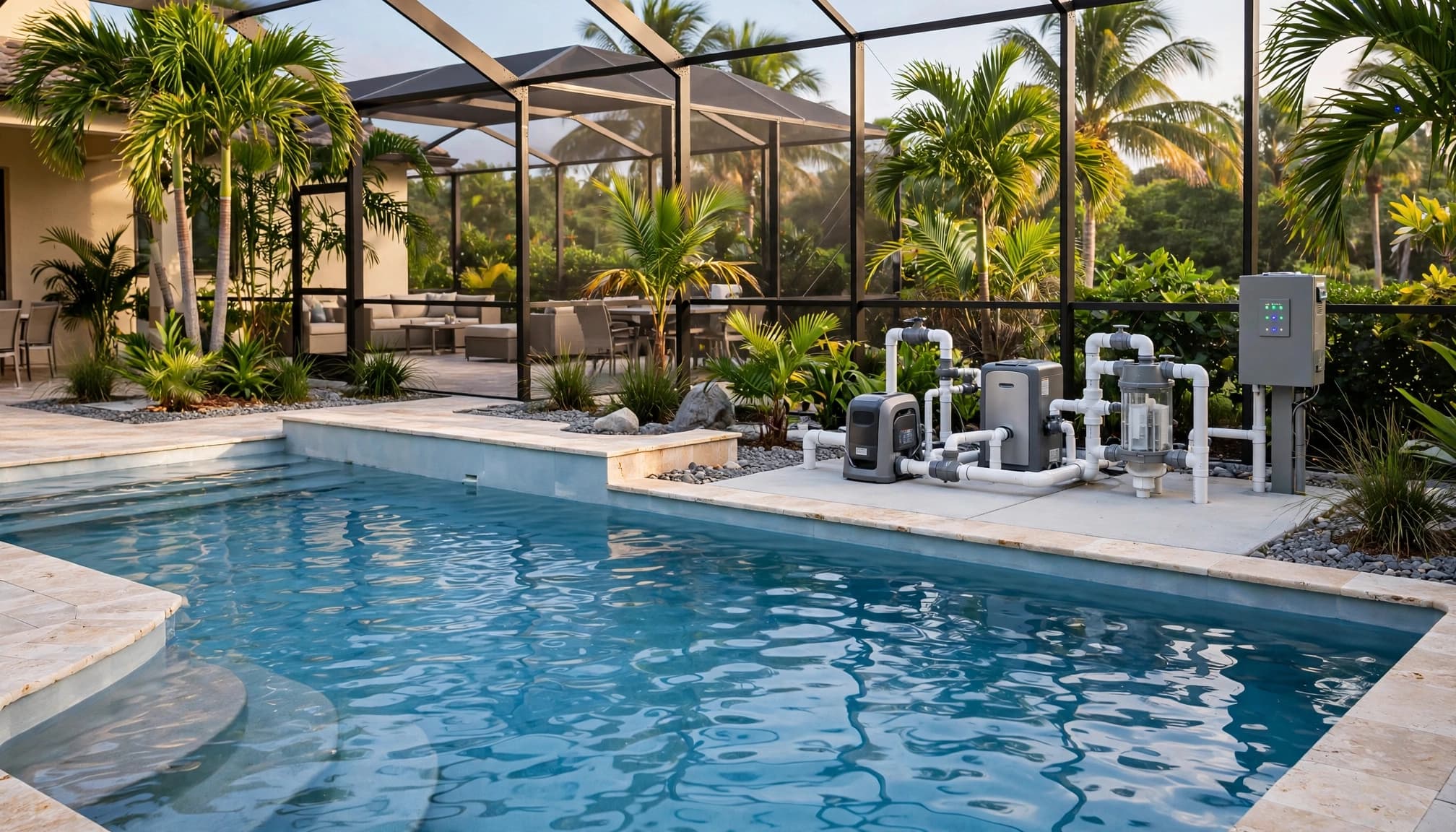
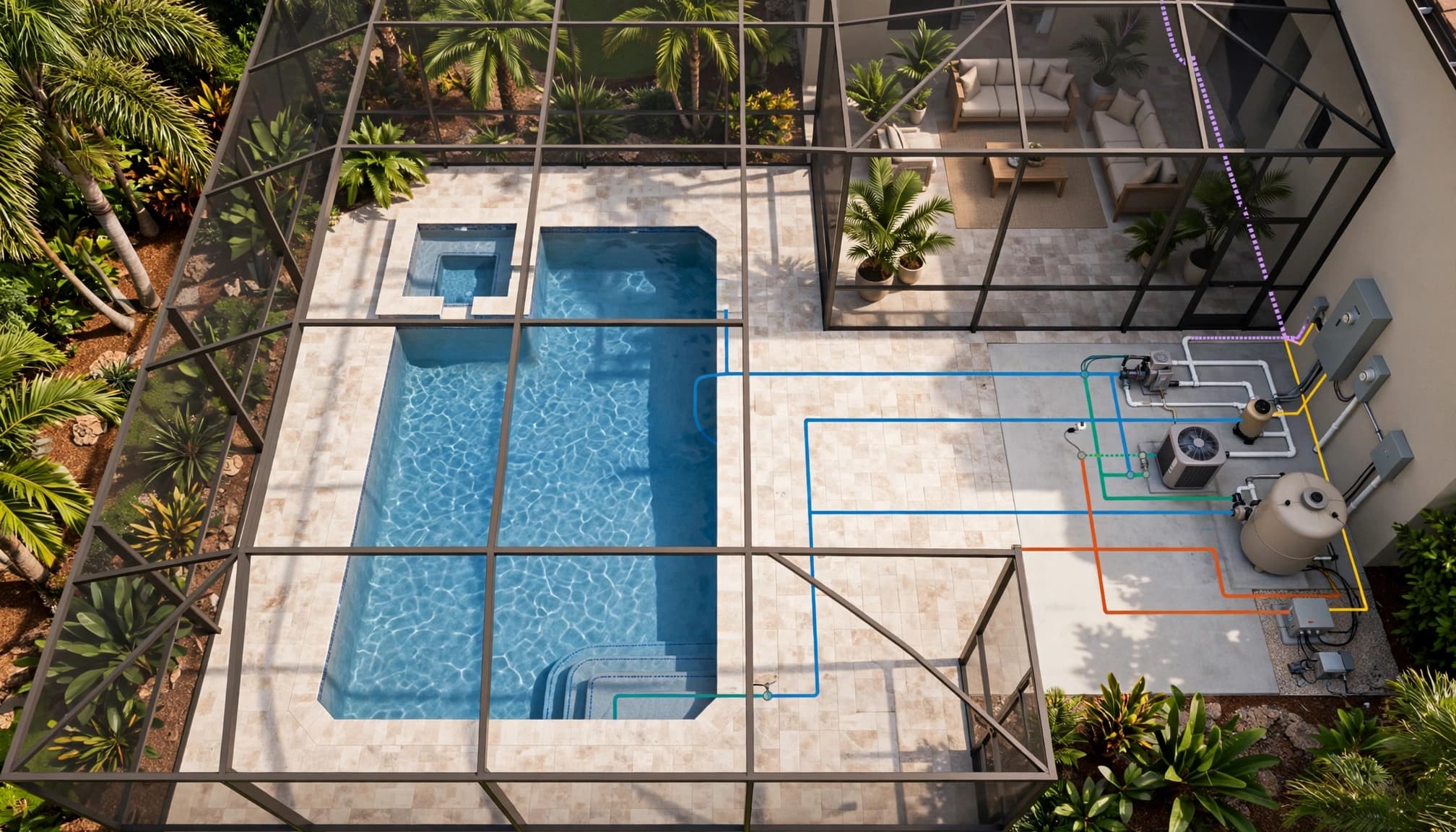
Place equipment where technicians can reach pumps, filters, heaters, valves, and controls without moving furniture or cutting through landscaping. The pad also needs a drainage plan, especially in an area known for heavy summer rain and shallow groundwater.
Keep the equipment area in mind when planning backyard and lanai design. Finished pavers, irrigation, and landscaping can make later trenching disruptive. A licensed pool contractor and electrician should confirm current permit, drainage, electrical, and access requirements.
Choose Equipment Around Actual Pool Use
A good equipment package handles routine work without adding unnecessary complexity. Focus first on dependable circulation, filtration, heating needs, and the water-care approach you prefer.
Use a variable-speed pump for flexible circulation
A variable-speed pump can run at different programmed speeds for tasks such as normal filtration, water-feature operation, cleaning, or spa use. Automation can schedule those modes and avoid relying on a manual timer.
The right pump size and schedule depend on the pool's plumbing, water volume, features, and equipment selection. Ask the contractor to explain the proposed operating modes in plain language. You should know what runs daily, what runs only on demand, and how to operate the pool during service.
Consider heating, salt, and chemical monitoring together
A heater extends comfortable pool use during cooler weather. Fort Myers homeowners may also consider a heater-chiller combination for broader temperature control, although that option costs more than a standard heater. The controller should coordinate circulation with heating equipment according to the selected system's requirements.
A salt system generates chlorine from dissolved salt, but it still needs regular water testing and cell maintenance. pH monitoring can track changes in water balance, while ORP monitoring provides a reading related to sanitizer activity. Neither sensor replaces manual testing, visual checks, or professional service.
Automated dosing and sensor alerts can flag a change early, yet water chemistry still needs hands-on verification.
Remote and Local Controls Both Matter
Phone access is convenient when you want to start a spa, turn on lights, or check an alert before getting home. However, remote control should supplement a simple local operating method.
Keep physical controls accessible
Choose a control location that is protected from direct weather yet easy to reach. A homeowner, pool technician, or electrician should be able to identify basic functions without depending on a phone connection.
Ask whether the proposed pool automation system includes local buttons, a wired control, manual valve operation, or another method for operating basic circulation during troubleshooting. Also ask how the system handles a planned shutdown, a power interruption, and equipment maintenance.
Protect equipment from local weather exposure
Heat, humidity, rain, and salt air can wear on outdoor equipment over time. A neat pad with appropriate clearances, drainage, and weather-conscious placement makes inspection and service easier. Keep vegetation trimmed back so it does not trap moisture around equipment.
Lightning is common in Southwest Florida. A licensed electrician can recommend appropriate electrical protection and grounding or bonding work for the project. No protective device can guarantee that lightning will not damage equipment, so record model information, settings, and service contacts for recovery after a storm.
Build a Backup Plan for Outages and Hurricanes
A controller cannot run when the home has no power. Before finalizing the design, decide which pool functions matter during an outage and which can wait until normal power returns.
Prepare for power interruptions
Some homeowners include pool equipment in a generator plan. That decision requires a licensed electrician to review the home's load calculation, transfer equipment, and the selected pump and heater needs. A portable generator is not an automatic substitute for a properly designed connection.
Keep a printed record of normal valve positions, pump settings, and shutdown steps in a dry location. Confirm whether the selected equipment returns to its prior schedule after power is restored or needs a manual reset.
Expect internet service to drop sometimes
A remote app may be unavailable when home internet or cellular service fails. Local controls and a clear manual operating procedure keep the pool manageable in that situation. Check alerts and remote functions again after the connection returns.
Before a hurricane, follow the equipment manufacturer's shutdown guidance and your contractor's instructions. Secure loose outdoor items, clear drains around the pad, and avoid opening electrical panels in wet conditions. After the storm, inspect the area for flooding, visible damage, or displaced equipment before restarting anything.
Set a Realistic Budget and Renovation Scope
Automation costs depend on the equipment package, pool features, electrical needs, and installation conditions. It is best to compare detailed scopes instead of accepting one broad allowance.
Read grouped upgrade estimates carefully
For 2026 Southwest Florida projects, automation, LED lighting, salt systems, and upgraded pumps together can add roughly $2,000 to $10,000. That range is not the price of automation alone. An attached spa often adds $15,000 to $30,000, while a heater typically runs $3,000 to $8,000.
Review pool automation and feature costs alongside your complete design. Ask for line items that distinguish equipment, electrical work, plumbing changes, controls, lighting, and feature connections.
Treat a renovation as a condition review
An older concrete pool can accept modern controls, but the project should begin with the pool's actual condition. Cracks, hollow areas, plumbing concerns, deck drainage, aging wiring, or failing equipment may need attention before a new controller goes in.
During Fort Myers pool renovations, smartphone management can be part of a larger update that includes resurfacing, tile, coping, lighting, or equipment replacement. Confirm what existing equipment can remain and what must be replaced for the selected setup.
Key Takeaways
- Plan automation while the gunite pool, plumbing, drainage, electrical routes, and deck layout are still on paper.
- Let the pool's real features determine the number of pumps, valves, controls, and operating modes.
- Choose variable-speed circulation, heating, salt chlorination, sensors, and leak detection only when they fit the home's needs.
- Keep local controls and written operating steps available for power or internet outages.
- Automation reduces routine effort, but it does not replace water tests, equipment inspections, cleaning, or maintenance.
- Confirm current requirements with licensed pool and electrical professionals before construction begins.
Frequently Asked Questions
Does every new gunite pool need automation?
No. A basic pool can operate with conventional timers and manual controls. Automation makes more sense when you want scheduled circulation, lighting, heating, a spa, salt chlorination, water features, or remote access in one system.
Can automation detect a pool leak?
Some systems can provide alerts based on flow, water-level, or equipment behavior, depending on the selected equipment. An alert does not diagnose the source of a leak. A qualified professional should inspect plumbing, the shell, fittings, and surrounding deck drainage.
Will a salt system eliminate pool maintenance?
A salt system can automate chlorine generation, but you still need to test the water, clean baskets, inspect the cell, monitor salt levels, and maintain the filter and pump. Rain, heavy use, heat, and debris can change water conditions quickly.
A Better Pool Starts With a Clear Plan
The strongest automation plan is one that fits the pool's design, your daily routine, and Southwest Florida weather. Build the equipment pad, plumbing, electrical work, and control choices into the project early.
A pool automation system can make ownership easier, provided you still give the pool regular testing, inspections, and care.