Kitchen Sink Materials Compared for Cape Coral Remodels
Explore Our Services
Contact Us Today!
(239) 322-9295
The right kitchen sink materials depend on the look you want and how the sink fits your daily routine. Brushed stainless steel, white fireclay, and matte composite granite give you distinct starting points, but basin layout and fit deserve equal attention.
For a Cape Coral remodel, consider the sink alongside cabinetry, countertops, plumbing, and the surrounding work area. Start with the material's visual character, then narrow your choices around the way your household cooks and handles dishes.
Key Takeaways
- Brushed stainless steel offers a metallic finish, white fireclay creates a crisp focal point, and matte composite granite introduces color and texture.
- Choose basin space around your cookware and dishwashing habits, rather than appearance alone.
- Cabinet dimensions, faucet reach, and countertop planning belong in the same conversation as material selection.
- Keep the sink within the larger remodeling budget, with clear priorities for the whole kitchen.
How Kitchen Sink Materials Shape the Look
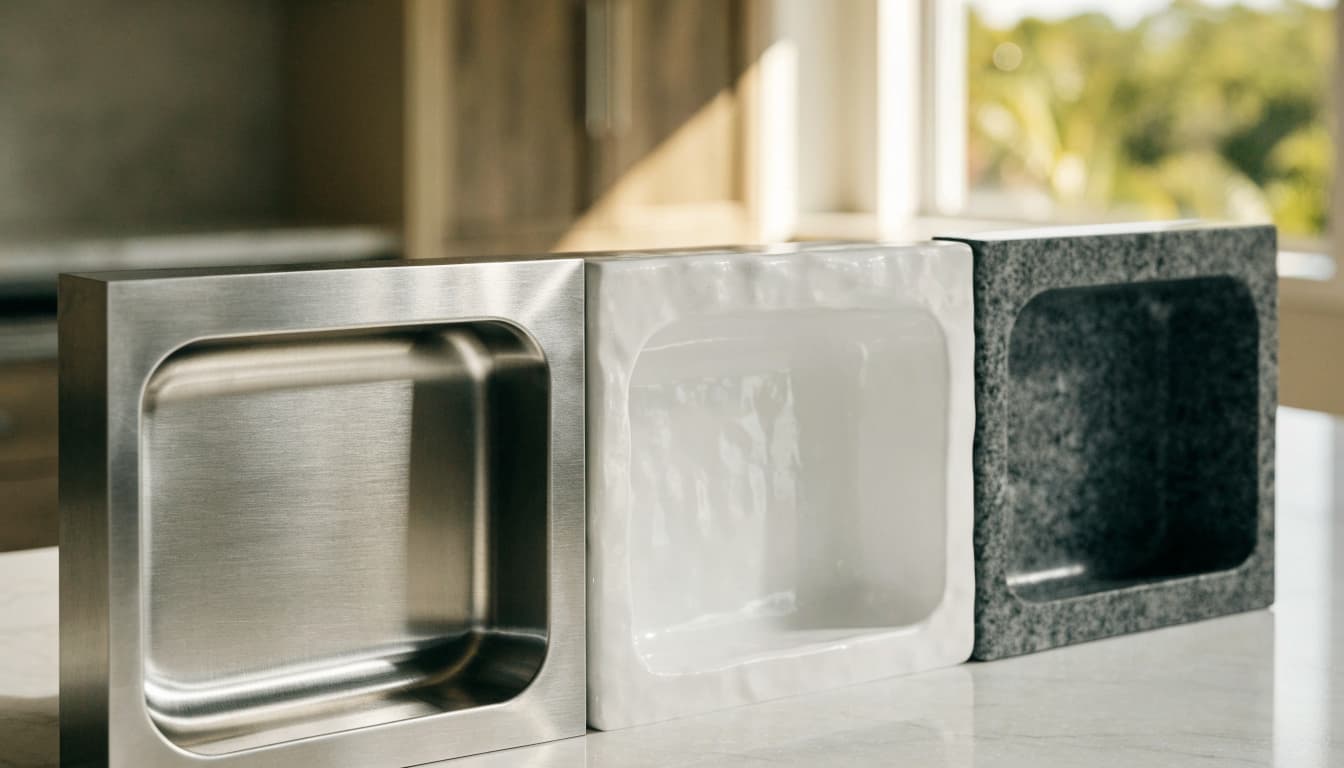
A sink can blend into the work surface or become a prominent design feature. These three materials create different visual effects, even in otherwise similar kitchens.
Brushed stainless steel: a familiar metallic finish
Brushed stainless steel works visually with many cabinet and countertop styles. Its metallic surface can connect the sink area with stainless appliances, although every metal finish doesn't need to match.
In a kitchen with colorful cabinetry or patterned countertops, steel can keep the sink from becoming another competing feature. It also suits homeowners who prefer the sink to read as part of the working kitchen rather than as a decorative centerpiece.
White fireclay: a defined focal point
White fireclay brings a traditional character that suits farmhouse, transitional, and some coastal-inspired interiors. An apron-front shape makes the sink especially visible, while the surrounding cabinetry determines how prominent that feature feels.
Consider the white alongside cabinet paint and countertop samples. A bright sink can look different beside a warm cream cabinet than beside a cool white one. Those relationships matter more than viewing each finish separately.
Matte composite granite: color and texture
Matte composite granite gives homeowners another way to introduce color into the sink area. Depending on the selected finish, it can sit close to the countertop color or create a contrasting basin.
Its visual texture also changes the balance of the room. A dark sink can anchor pale cabinets, while a lighter option keeps the work area more uniform. Consider whether you want that contrast visible across the kitchen.
Match the Sink to Cabinets and Countertops
Material names alone won't tell you how the finished kitchen will look. The surrounding surfaces give each sink its context.
Build a palette before choosing a standout feature
Place the sink finish beside the cabinet color, countertop sample, backsplash, and faucet finish. Together, those selections reveal undertones and contrasts that individual product photos can hide.
For example, white fireclay beside cream cabinetry creates a different effect than the same sink beside blue cabinets. Meanwhile, brushed steel can connect visually with appliances without introducing another large block of color.
If you're also selecting work surfaces, our comparison of quartz and porcelain countertops addresses that separate decision. Keep the countertop and sink choices connected throughout the design process.
Decide where you want attention to land
A kitchen with dramatic countertop veining may benefit visually from a sink that blends into the overall palette. Conversely, a simple countertop can give a contrasting sink more room to stand out.
Consider the view from the living room or dining area, too. In an open layout, you may see the sink throughout the day.
Choose the finish for that wider view, rather than only for its appearance when standing directly above it. Lighting and nearby finishes also influence the overall impression.
Choose the Basin Around Your Kitchen Routine
The material establishes part of the appearance. Bowl arrangement determines how you organize work within the sink.
Leave room for the cookware you use
A single bowl offers uninterrupted space for roasting pans, baking sheets, stockpots, and serving dishes. That open area can also accommodate removable accessories, such as a colander or drying rack.
However, the useful space depends on the basin's actual shape and dimensions. A sink that looks large in a photograph may still feel awkward with your most-used cookware.
Base the choice on the items you handle regularly. For frequent cooks, the ability to position a large pan comfortably may matter more than having separate compartments.
Separate tasks when that suits your habits
A double bowl gives you distinct areas for soaking and rinsing. Some households prefer that separation, especially when washing dishes by hand.
The divider also reduces the uninterrupted width available in each basin. Consider whether separate work areas matter more than open capacity.
Our guide to single-bowl and double-bowl sink options explores that choice in greater detail. Treat bowl arrangement and material as related decisions, with neither one deciding the other automatically.
Plan for Comfortable Reach and Clear Work Space
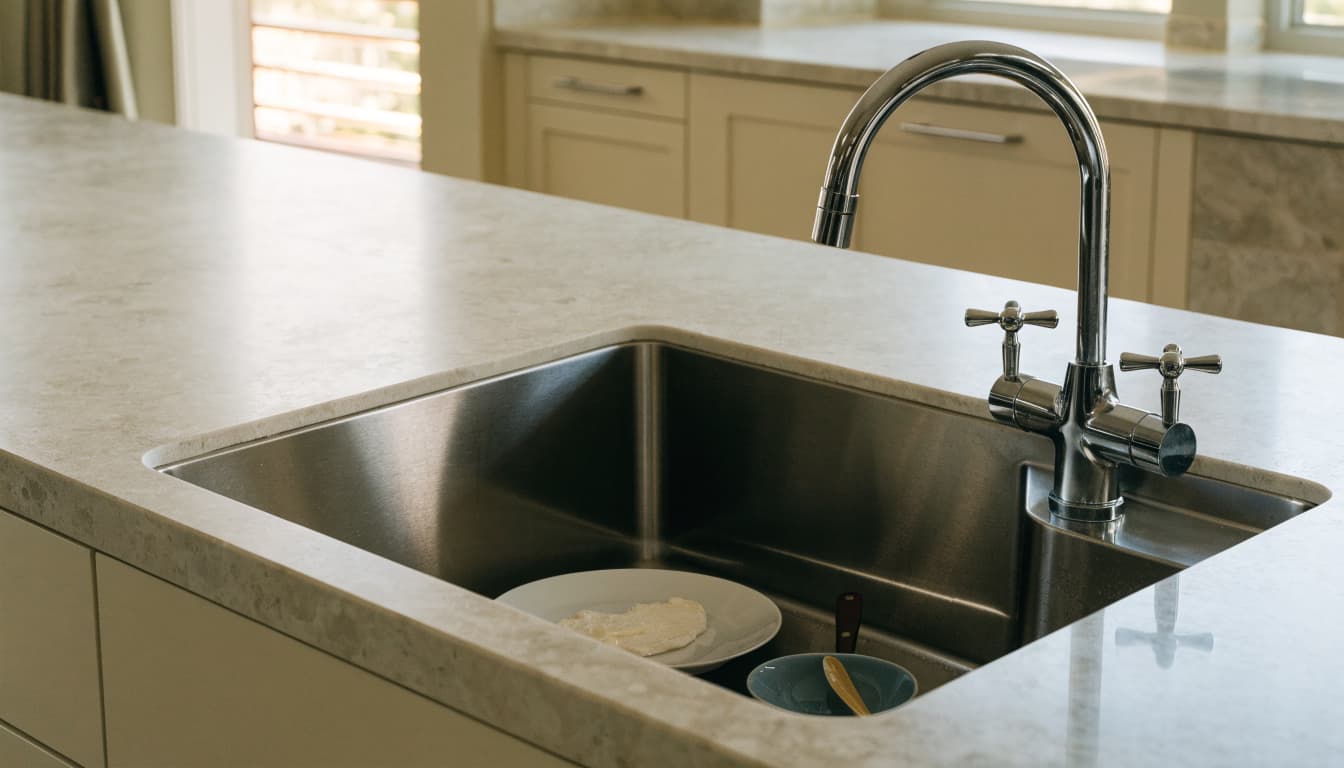
An attractive sink still needs to feel comfortable. Basin depth, faucet position, and nearby counter space all affect everyday use.
Match the work area to the people using it
A deeper basin changes how far you reach toward the bottom. Counter height, your height, and the position of the faucet also influence that movement.
For someone working from a seated position or planning for limited mobility, the entire sink area deserves attention. A shallower basin, reachable controls, and appropriate space below the counter may suit that person better.
Keep comfort in the selection process early. Material and color won't resolve an awkward reach once the kitchen layout is fixed.
Give dishes and food preparation somewhere to go
Think through what happens immediately before and after you use the sink. Produce needs a nearby preparation surface, while dishes need a practical route to the dishwasher or their storage location.
In Cape Coral homes with connected indoor and outdoor living areas, the route to the lanai also belongs in that plan. Household traffic shouldn't repeatedly interrupt the person working at the sink.
Our Southwest Florida kitchen layout ideas connect these decisions with the broader room arrangement. The sink should support the layout rather than dictate every other choice.
Keep the Sink Within the Remodeling Budget
The sink is one selection within a much larger project. Give it a defined place in the budget without letting a preferred finish override your household's main priorities.
Establish what matters before choosing a finish
Start with the kitchen problems you want to solve. Perhaps you need room for oversized pans, better access to the dishwasher, or more usable cabinet storage.
Those needs give you a basis for evaluating kitchen sink materials. A visually striking option deserves consideration, but it should still fit the work area you need.
Write down your nonnegotiable requirements before making decorative selections. That keeps the discussion focused when several appealing options compete for attention.
Keep related selections visible
Record the sink, faucet, drain components, disposal, and any accessories as separate project selections. Also identify changes to the surrounding cabinetry, countertop, and plumbing in the remodeling scope.
This makes the sink decision easier to understand within the overall project. It also prevents accessories or layout changes from becoming disconnected decisions.
A clear selection schedule helps everyone work toward the same kitchen, with fewer unresolved choices competing for attention.
Bring the Sink Into the Design Plan Early
The final sink model belongs in the cabinet drawings and countertop planning. A general description such as "white farmhouse sink" leaves too much unresolved.
Sink size and cabinet size aren't interchangeable. Bowl shape, depth, mounting style, and the cabinet interior all influence how the pieces fit together.
Use an organized selection sequence:
- Define your preferred bowl arrangement and the cookware it needs to accommodate.
- Choose a material and finish that work with the cabinet and countertop palette.
- Include the selected sink model, faucet, disposal, and accessories in the kitchen drawings.
- Coordinate the cabinet, countertop, and plumbing details before fabrication begins.
The drain and disposal also need space within the cabinet. Storage plans should account for those components instead of treating the entire cabinet interior as available shelving.
Our Cape Coral kitchen remodeling services include custom kitchen design, cabinetry, and complete renovations. Bringing these selections together helps keep the finished room consistent with the original plan.
Frequently Asked Questions
Should the sink match the faucet exactly?
An exact visual match isn't necessary. Instead, give the finishes a clear relationship to the rest of the kitchen.
For example, a stainless-steel sink can sit within a palette that includes another faucet finish. Repeat that faucet finish elsewhere if you want a more connected appearance. View the combination beside cabinet hardware and lighting selections before settling on the overall palette.
Does a coastal-style kitchen need a white sink?
A white sink is one option, but coastal-inspired rooms can also include brushed steel or matte composite finishes. Cabinet color, lighting, and the overall palette contribute to that style.
Choose the sink as part of the room rather than treating one material as a requirement. A lighter palette can feel cohesive with several sink finishes when the surrounding details work together.
Choose the Material That Fits the Whole Kitchen
Kitchen sink materials create different visual effects, but the strongest choice also fits your cookware, reach, cabinet plan, and household routine. Keep appearance and practical fit in the same decision.
Choose the basin arrangement first, coordinate the finish with surrounding surfaces, and bring the final model into the design plan early. A sink that belongs in the kitchen will feel intentional every time you use the space.