Pool Coping Replacement in Estero: Choose Before Tile
Explore Our Services
Contact Us Today!
(239) 322-9295
A new tile line can't correct a coping edge that's too high, cracked, or poorly drained. If you're planning pool coping replacement in Estero, Florida, select the new coping before anyone finalizes the waterline tile.
The two materials must meet at the right elevation, joint, and finish. They also need to work with the pool shell, deck, waterproofing system, and drainage plan. The right order prevents awkward tile cuts and expensive changes later.
Why Pool Coping Replacement Comes Before Tile Installation
Pool coping is the finished edge around the pool. It covers and protects the bond beam, creates the transition to the deck, and affects the position of the tile below it.
When homeowners choose tile first, the coping thickness and installation bed can force the tile line higher or lower than planned. That may leave narrow cuts, uneven corners, or a waterline that looks inconsistent around the pool.
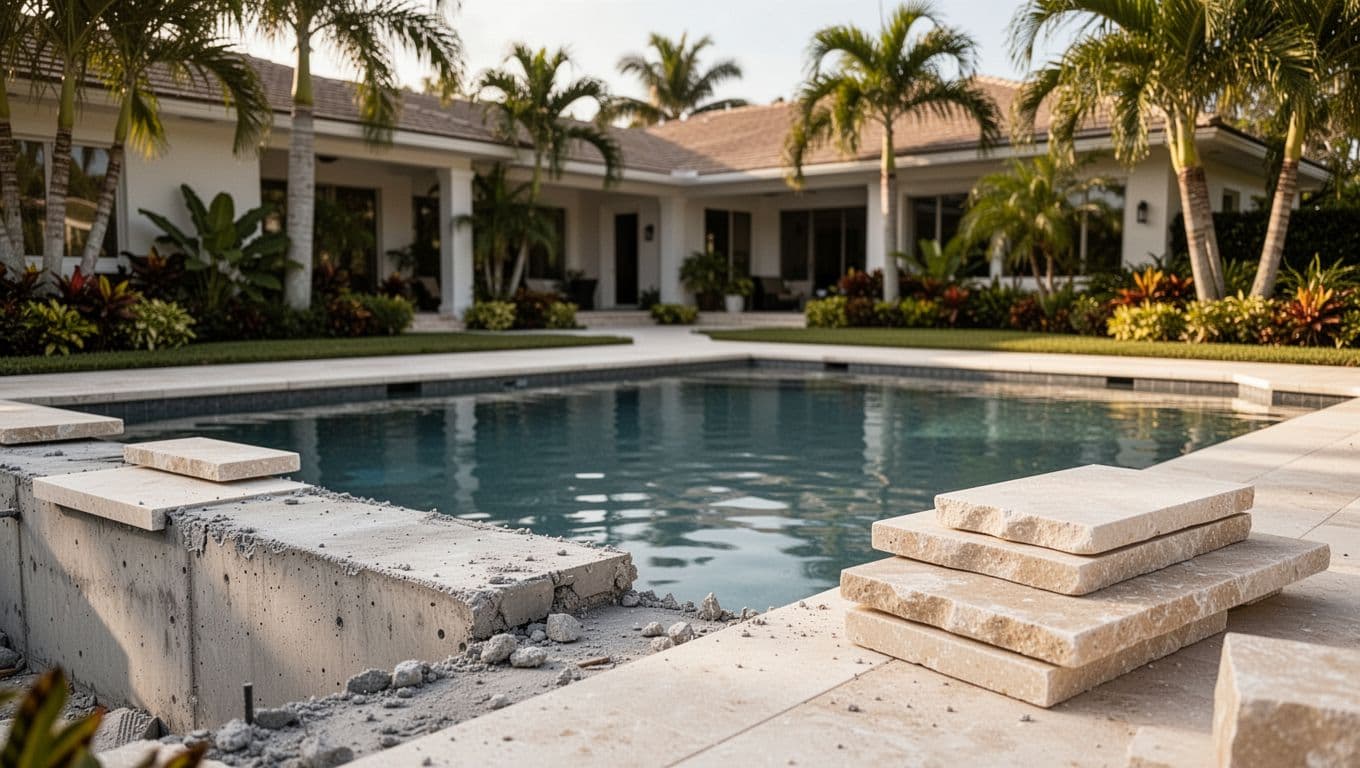
Coping fixes the finished elevation
Every coping option has its own thickness, edge profile, and setting method. A poured concrete edge, a precast unit, and a natural-stone slab won't occupy the same space.
The installer needs to account for the coping material, mortar or adhesive bed, pool beam condition, deck height, and tile layout. These details establish the finished elevation before tile installation begins.
The coping also affects how water leaves the deck. A properly shaped edge can direct runoff away from the pool instead of allowing water to collect beside the tile.
Tile work depends on the pool edge
Tile installation requires a sound, properly prepared surface. Removing old coping can reveal cracks, deteriorated concrete, uneven areas, or previous patchwork along the bond beam.
Those conditions should be addressed before the tile setter creates a layout. Otherwise, the tile may cover an unresolved problem or require removal when the coping work starts.
For a new pool, coping should be selected during the design stage. For a renovation, the existing edge should be opened and inspected before final tile quantities and installation details are approved.
Repair, Resurfacing, or Full Pool Coping Replacement?
These terms describe different scopes of work. Choosing the wrong one can leave the underlying problem in place.
When repair may be enough
A repair can make sense when damage is limited to one or two areas. A contractor may reset a loose coping piece, replace a damaged unit, repair a localized crack, or correct a small section that has shifted.
The surrounding coping must still be stable, properly sloped, and compatible with the planned tile. A single cracked piece can be an isolated issue, but repeated cracks or movement usually require a closer inspection.
Matching the existing material can also be difficult. Older stone, concrete, or brick may have changed color after years of sun and chemical exposure. A repair that uses a noticeably different replacement piece can stand out around the pool.
When resurfacing has limits
Coping resurfacing applies a new finish over an existing surface that remains structurally sound. It can refresh color and texture, but it usually keeps the original edge shape, height, and base material.
Resurfacing won't correct a coping line that has settled, an edge with poor drainage, or widespread spalling. It also may not solve a mismatch between the old coping profile and a new tile design.
A full pool coping replacement is more appropriate when the edge has widespread damage, loose sections, uneven elevations, failing joints, or a material that no longer fits the renovation. Replacement also gives the tile installer a clean opportunity to coordinate the entire perimeter.
Pool Coping Replacement Options for Estero Homes
Estero homeowners have several material choices, but appearance should not be the only consideration. Pool exposure, maintenance preferences, deck material, and the existing pool structure all affect the selection.
| Coping material | Good fit for | Points to confirm |
|---|---|---|
| Precast concrete | Traditional, clean, or custom-shaped pool edges | Edge profile, color consistency, joint layout, and surface finish |
| Natural stone | Organic designs and varied outdoor textures | Stone type, heat performance, sealing needs, thickness, and slip considerations |
| Porcelain coping | Modern designs and coordinated tile systems | Outdoor rating, edge pieces, installation system, and heat exposure |
| Brick or concrete pavers | Homes with matching paver decks | Pool-rated units, corner details, movement joints, and water drainage |
The best choice is the one that fits both the pool and the surrounding outdoor space. Bring deck pavers, tile samples, and coping samples together in daylight before ordering materials.
Precast concrete offers design flexibility
Precast concrete coping is available in different colors, lengths, edge profiles, and textures. It can create a straight, formal perimeter or follow a more complex pool shape with properly made units.
Because the pieces are manufactured, the contractor can plan corners and transitions before installation. However, color variation and batch differences can still occur, so the actual product should be reviewed before the complete order.
Precast coping needs a stable setting surface and well-planned joints. Cracks in the bond beam or movement below the units can affect the finished edge regardless of the coping color.
Natural stone brings texture and variation
Natural stone can complement Florida landscaping, pavers, and large-format patio finishes. Common choices may include limestone, travertine, or other stones approved for the intended pool application.
Stone varies in color, grain, porosity, and surface texture. Samples viewed indoors may look different beside bright pool water and under Estero's strong sun. Ask how the selected stone handles wet conditions, cleaning, sealing, and regular pool chemical exposure.
A natural-stone edge also needs accurate cutting at corners and curves. The installer should confirm slab thickness and the transition to the deck before tile is ordered.

Photo by Jan van der Wolf
Porcelain and paver-style edges suit coordinated designs
Porcelain coping can create a sharp, contemporary line when the coping, waterline tile, and deck use related colors and textures. The installer must use products rated for outdoor pool applications and confirm that matching edge and corner pieces are available.
Brick and concrete pavers can work well when the pool deck already uses a paver system. The coping should still be designed as a pool edge, rather than treated as an ordinary patio border.
Both options require careful attention to heat, bond, joints, and drainage. Product instructions and the installation system should guide the final decision.
How Coping and Tile Must Coordinate
Coping and waterline tile should be selected as one edge assembly. Their relationship affects the appearance of the pool and the way the perimeter handles water and movement.
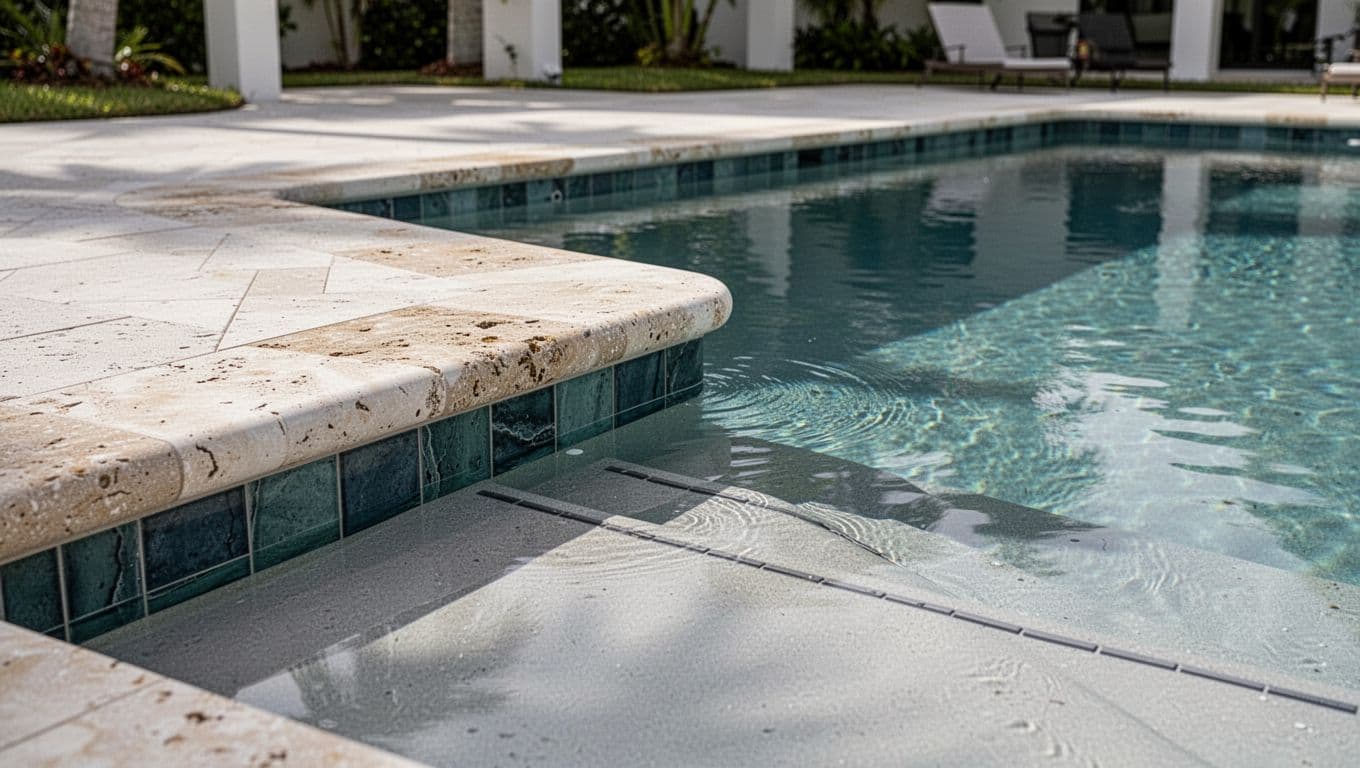
Set the height before the tile grid
The coping establishes the top reference line. Tile layout should account for the coping thickness, mortar bed, pool finish, and the shape of the basin.
A level, consistent edge helps the tile courses appear even around straight runs and curves. If the pool has steps, tanning ledges, or raised sections, the layout should address those changes before installation.
Ask to review a dry layout or marked elevation plan. That simple step can reveal narrow cuts or awkward transitions while the materials can still be changed.
Match color and surface texture in real light
Pool water changes the way tile colors appear. A tile that looks gray indoors may read blue, green, or beige beside the water and coping.
Place samples near the pool at different times of day. Compare them with the deck, house exterior, lanai finishes, and landscaping. A subtle contrast often makes the edge easier to read, while a close match creates a quieter appearance.
Texture matters as well. Highly textured coping beside smooth glass tile creates a different visual and maintenance result than smooth stone beside matte porcelain.
Plan joints and waterproofing together
The joint between coping and deck needs room for movement and a sealant or joint system suited to the materials. A rigid grout line in a movement area can crack as the deck and pool edge respond differently to temperature and moisture.
Waterproofing details near the bond beam and tile should follow the selected product system. The contractor may need to remove loose material, patch the substrate, prepare the surface, and use compatible mortar, grout, and sealants.
Don't approve a tile installation before confirming where the coping joint, deck joint, and waterproofing layers meet.
Protect drainage at the deck edge
Pool decks in Southwest Florida deal with intense rain as well as routine splash-out. The finished deck should move water away from the pool and the home without creating standing water beside the coping.
Coping shape, deck slope, drains, pavers, and nearby lanai surfaces all affect that result. If the replacement changes the edge height, it may also change how water moves across the deck.
The final drainage plan should match the site conditions and approved project documents. A qualified local pool professional can identify conflicts before installation.
A Practical Order for the Work
A clear sequence keeps the coping, tile, and deck work connected:
- Inspect the existing coping, bond beam, deck edge, joints, and drainage conditions.
- Decide whether the scope requires localized repair, resurfacing, or complete coping removal.
- Choose coping samples and confirm thickness, profile, corners, curves, and availability.
- Select waterline tile that fits the coping elevation, color, texture, and installation system.
- Remove damaged material and prepare the bond beam without covering unresolved structural or drainage problems.
- Install the coping, establish the final reference line, and complete the planned movement joints.
- Set the tile, grout, seal, and finish the surrounding deck according to the material requirements.
- Review the completed edge for consistent elevation, clean transitions, drainage, and loose or hollow areas.
For a new home or a larger backyard renovation, keep the pool plans, patio, lanai, grading, and equipment locations coordinated. A change to one finished surface can affect the others.
Estero Factors to Review Before Choosing Materials
Account for sun, rain, and pool chemistry
Estero's outdoor surfaces receive strong sunlight, heavy seasonal rain, and frequent moisture. Pool water and cleaning chemicals add another source of exposure.
Ask how the proposed material performs in wet conditions and whether it needs sealing or special cleaning. If your home is near the coast or uses saltwater chlorination, discuss material and joint compatibility with the installer.
Heat also affects comfort. A light-colored surface may feel different underfoot than a dark surface in direct sun. The product sample should be evaluated at the actual pool, not only in a showroom.
Check the deck, lanai, and project documents
Coping replacement may connect with paver work, screen enclosures, drainage improvements, pool finishes, or a larger home renovation. If the project changes elevations, drainage, or the pool structure, ask a qualified local professional whether additional approvals or inspections apply.
Homeowners planning a new pool can review Southwest Florida pool contractor services before choosing a design team. The contractor should explain the scope, material allowances, installation sequence, and responsibility for coordinating each trade.
Get the final material selection in writing. The agreement should identify the coping product, tile product, edge profile, joint details, substrate preparation, and any work excluded from the proposal.
Conclusion
A successful pool coping replacement starts before the tile order. Coping sets the finished elevation, affects water drainage, and gives the tile installer the reference line needed for a clean perimeter.
Repair or resurfacing may suit a sound edge with limited cosmetic damage, while widespread cracking, movement, poor drainage, or a major design change may call for complete replacement. Review coping and tile together in natural light, then confirm the joint, waterproofing, and drainage details with a qualified Estero pool professional.