
Punta Gorda Roof Replacement Timeline: Tear-Off to Inspection
Explore Our Services
Contact Us Today!
(239) 322-9295
A Punta Gorda roof replacement can take only a few days on the roof, but the full schedule starts well before tear-off and ends after the final inspection. Permits, material delivery, hidden deck damage, afternoon rain, and inspection availability all affect the calendar.
Most homeowners should separate the active installation window from the total project window. A straightforward asphalt shingle job often needs 1 to 3 installation days, while the complete process can take several weeks. The timeline below shows what happens at each stage and what to confirm before the crew arrives.
How long does a Punta Gorda roof replacement take?
Roof replacement has two timelines. The crew may finish the physical installation in several days, while permitting, ordering, scheduling, and final approval take much longer.
| Stage | Typical time | Sample place in schedule |
|---|---|---|
| Inspection, estimate, and contract | Several days | Week 1 |
| Permit review and material ordering | Several days to several weeks | Weeks 1 to 3 |
| Tear-off and deck inspection | About 1 day | Day 1 |
| Deck repairs and dry-in | Same day to 2 days | Days 1 to 2 |
| Roof installation | 1 to 5 days | Days 2 to 5 |
| Cleanup and contractor review | Half a day to 1 day | Day 5 or 6 |
| Final inspection and corrections | 2 to 5 business days, sometimes longer | Days 6 to 10 |
For a straightforward project, a total window of about 4 to 6 weeks is a reasonable planning range. Insurance claims, specialty materials, storm demand, and correction work can extend that schedule to 6 to 10 weeks or longer.
A roofing contractor may provide an on-site installation estimate of "three days," but that doesn't mean the entire project will be complete in three days.
1. Confirm the scope, permit, and materials
Before tear-off begins, the contractor should inspect the roof, measure each section, identify penetrations and flashing, and prepare a written scope of work. That scope should explain the roof covering, underlayment, ventilation, flashing, drip edge, cleanup, warranties, and any allowance for deck repairs.
The permit authority depends on the property's location. A home inside Punta Gorda city limits follows the city's building process. A home in unincorporated Charlotte County follows the county's process. Both jurisdictions publish their own roofing forms and inspection procedures.
Charlotte County generally requires a permit for a full roof replacement. The county's limited exemption for small roof repairs applies to repairs under 100 square feet that don't involve truss or rafter repairs. That exemption doesn't apply to a typical reroof.
The City of Punta Gorda publishes a Roof Permit Application, Re-roofing Affidavit, and Re-Roof Inspection Guidelines. City requirements also apply to roofing work over three squares, or 300 square feet, so verify the current rule for your address before signing a start date.
For unincorporated county properties, Charlotte County says a Notice of Commencement is required for improvements over $5,000 and must be submitted before the first inspection is scheduled. Ask who will handle this filing, the permit, and any required product approval documents.
A pre-replacement inspection can also help document the roof's condition. Homeowners can review these professional roof inspection services when they want a separate assessment before work begins.
2. Tear-off exposes the roof deck
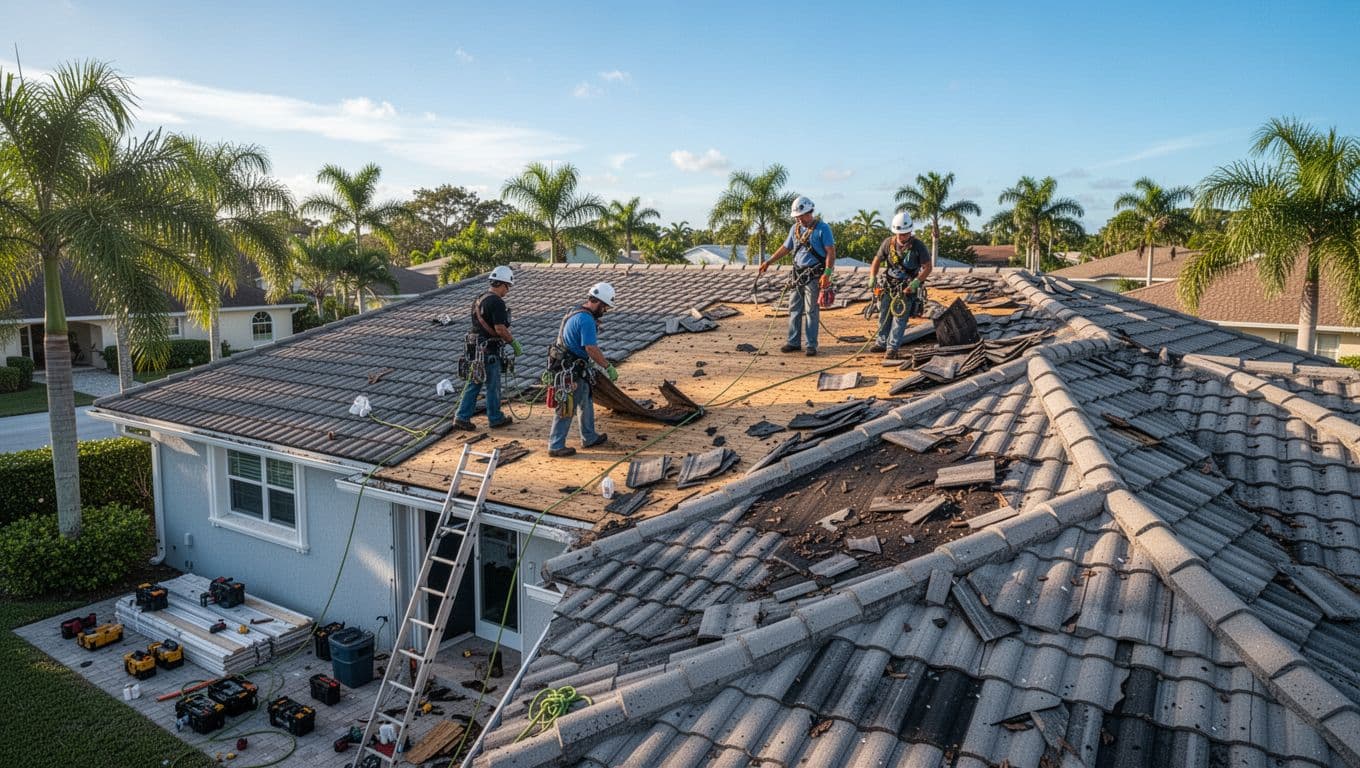
On the first workday, the crew protects walls, windows, landscaping, driveways, and outdoor equipment. Workers then remove the existing shingles, underlayment, fasteners, vents, and damaged flashing. The tear-off creates noise and debris, so keep vehicles away from the work area.
Once the old covering is removed, the contractor can inspect the roof deck. This is one of the most important points in the Punta Gorda roof replacement timeline because hidden damage often stays covered until this stage.
Soft, swollen, delaminated, or rotten decking may need replacement before the new roof goes on. The contractor should photograph or document these findings and explain the added cost before proceeding, unless the contract contains a clearly defined repair allowance.
Damage to trusses or rafters is more serious than replacing a few deck panels. It can change the permit scope, require additional documentation, and add inspection time. Ask the contractor to stop and contact you before performing structural work that wasn't included in the original agreement.
3. Dry-in comes before the roof covering
After the deck passes inspection, the crew installs the water-shedding layers that protect the home while the remaining work continues. This usually includes underlayment, flashing, drip edge, pipe boots, and other details around roof penetrations.
The goal is to dry-in the structure as soon as practical. In Florida, that step matters because a sudden rainstorm can interrupt an exposed roof. The contractor should explain how the crew will protect the home if rain arrives between tear-off and final installation.
The roof covering affects the active installation time:
- Asphalt shingles commonly take 1 to 3 days on a straightforward home.
- Standing-seam metal roofing often takes about 2 to 5 days.
- Concrete tile commonly takes about 3 to 5 days, depending on layout and handling.
Roof size, pitch, valleys, skylights, chimneys, solar equipment, and multiple layers of old roofing can add time. A Punta Gorda roof replacement with a simple footprint may finish faster than a smaller roof with many penetrations and complex flashing.
The chosen system may also require Florida Product Approval or Miami-Dade Notice of Acceptance documentation. Confirm that the contractor has the correct documents for the exact materials, accessories, and installation method before the permit is submitted.
4. Installation, cleanup, and final inspection
During installation, the crew places the new roof covering according to the manufacturer's requirements and the approved permit documents. They also install flashing at walls, valleys, vents, chimneys, and plumbing penetrations. These areas deserve attention because small installation errors can cause leaks even when the field of the roof looks new.
At the end of each workday, ask whether the roof is fully protected against overnight weather. The answer may differ if the crew has completed the dry-in layer but still needs to install shingles, tile, or metal panels.
Cleanup should include loose fasteners, packaging, old roofing, and visible debris around the home. Ask how the contractor checks the driveway, landscaping, attic, gutters, and areas beneath roof edges. A final contractor walkthrough should identify missing sealant, exposed fasteners, damaged screens, or other items before the building official arrives.
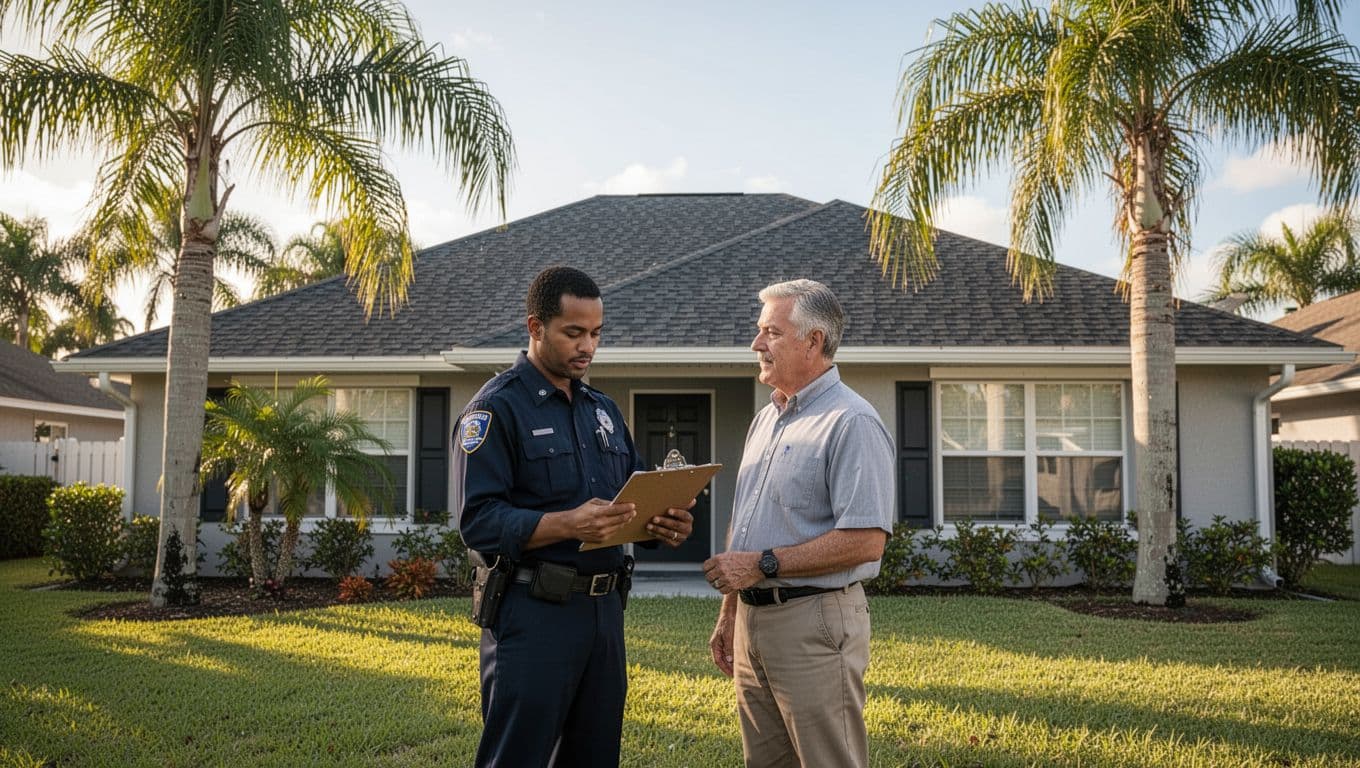
The final inspection confirms that the completed work matches the permit and local requirements. In unincorporated Charlotte County, contractors can use county online services or the Automated Inspection Request System, called AIRS, at 941.833.4086. Punta Gorda uses its own Click2Gov Building Permit system for online permit activity and inspection results.
Inspection requirements vary by project. If the inspector finds a correction, the contractor must complete it and request another inspection. Ask when the final approval will appear in the permit record and when you'll receive closeout documents.
What can delay a roof replacement in Punta Gorda?
Weather is one of the biggest scheduling variables in Southwest Florida. August falls within hurricane season, and heavy rain, tropical moisture, lightning, or a storm threat can delay tear-off, dry-in, installation, and inspection appointments.
A short rain delay may move the crew by a day. Several storm systems can create a longer backlog, especially when many homes need repairs at the same time. Never allow a crew to tear off more roof area than it can safely protect before expected rain.
Other common delays include:
- Permit corrections or missing product approval documents.
- Material backorders or delivery damage.
- Rotten decking discovered after tear-off.
- Structural repairs involving trusses or rafters.
- Limited availability for building inspections.
- Insurance supplements, adjuster reviews, or claim disputes.
- Extra work around solar panels, skylights, chimneys, or unusual roof designs.
Ask how the contractor handles rain days, material delays, and concealed damage. Your contract should explain whether schedule changes are communicated by phone, text, or email and who approves additional work.
What to confirm before the crew arrives
A clear preconstruction conversation prevents many scheduling surprises. Before work begins, confirm these details in writing:
- The exact permit jurisdiction, either the City of Punta Gorda or unincorporated Charlotte County.
- The name of the licensed contractor pulling the permit and scheduling inspections.
- The roofing material, manufacturer, color, underlayment, flashing, ventilation, and product approval documents.
- Whether a Notice of Commencement applies to the project.
- The expected tear-off date, dry-in plan, weather contingency, and estimated installation days.
- The price or allowance for deck replacement, plus the approval process for hidden damage.
- Who protects outdoor items, handles cleanup, and checks for stray nails.
- How the contractor schedules the final inspection and supplies permit closeout records.
Owner-builders should ask about the application process before making plans. Charlotte County's online system allows contractors to apply, upload documents, track permits, and schedule inspections, but owner-builders must submit permit applications in person.
Conclusion
A Punta Gorda roof replacement may involve only a few active workdays, yet the full schedule depends on permits, materials, weather, deck conditions, and final inspection availability. The safest plan builds extra time around Florida's rainy season and hurricane-season disruptions.
Before the first shingle comes off, confirm the permit authority, written scope, dry-in plan, repair approval process, and inspection closeout steps. A clear schedule won't prevent every delay, but it will show where the project stands and who is responsible for the next step.