
Read a Pool Construction Payment Schedule in Fort Myers
Explore Our Services
Contact Us Today!
(239) 322-9295
A payment request can arrive before you're sure what the pool builder has finished. Your pool construction payment schedule should connect each payment to verifiable progress , with clear terms for deposits, changes, and completion.
For Fort Myers homeowners, that also means checking the permit jurisdiction and inspection sequence before work gets covered. Start by reading the schedule alongside the construction agreement, approved plans, and equipment specifications.
Understand the Pool Construction Payment Schedule
Check the total, not just each installment
First, confirm that the deposit, progress payments, and final balance add up to the contract price. If the builder lists percentages, request corresponding dollar amounts.
Then check whether the price includes engineering, permits, electrical work, decking, safety features, equipment, and startup. A draw schedule can look complete while the scope leaves major expenses outside the agreement.
Also distinguish fixed-price work from allowances. Tile, coping, or equipment allowances need a stated budget and a written explanation of how selections above or below that amount affect your price.
Read the payment trigger and deadline together
"Payment due at gunite" leaves room for disagreement. The contract should state whether that means scheduling the crew, completing placement, or satisfying additional agreed conditions.
For each draw, identify the work required, supporting documents, and payment deadline. Ask whether the deadline starts when you receive an invoice or a complete draw package.
The same principles apply to broader Florida construction contract terms. Resolve conflicting language between the payment exhibit and main agreement before signing.
Evaluate the Deposit Before Paying
A deposit can fund design, engineering, permit preparation, mobilization, or material commitments. However, the contractor should explain what yours covers.
Get the amount, refund terms, cancellation conditions, and credit toward the contract balance in writing. Also ask what happens if permitting requires a redesign or the project cannot proceed as proposed.
Florida Statutes Section 489.126 addresses initial payments totaling more than 10% of a residential construction contract. Subject to statutory exceptions, it requires the contractor to apply for necessary permits within 30 days after payment. Work must begin within 90 days after all necessary permits are issued.
Exceptions include just cause or a written agreement extending those periods. The 10% threshold isn't a general deposit cap.
Before accepting a longer timeline, understand why the contractor needs it and how the agreement handles cancellation or delays. A deposit percentage alone doesn't establish whether a proposal is reasonable. Compare the upfront payment with the documented commitments and early work it funds.
Match Progress Payments to Completed Pool Work
For gunite construction, the schedule should distinguish excavation, structural preparation, shell placement, and finishing. Cutting Edge Homes & Renovations' new pool construction services include these phases, along with permitting and startup.
Use these checkpoints when reviewing proposed draws.
| Proposed milestone | Work to verify before the agreed payment |
|---|---|
| Excavation | Layout and excavation match the plans; identified site issues have an agreed response. |
| Steel and rough plumbing | Specified reinforcing steel and rough lines are installed; applicable inspections or tests are documented. |
| Gunite shell | Placement is complete to the approved design; curing responsibilities and required testing are documented. |
| Tile, coping, and decking | The contracted milestone is complete, with applicable inspection records available. |
| Equipment and completion | Specified systems are installed; agreed approvals, startup, and handover tasks are satisfied. |
These are review checkpoints, not a mandatory local draw schedule. Your contract must define the actual triggers.
Verify structural work before it disappears
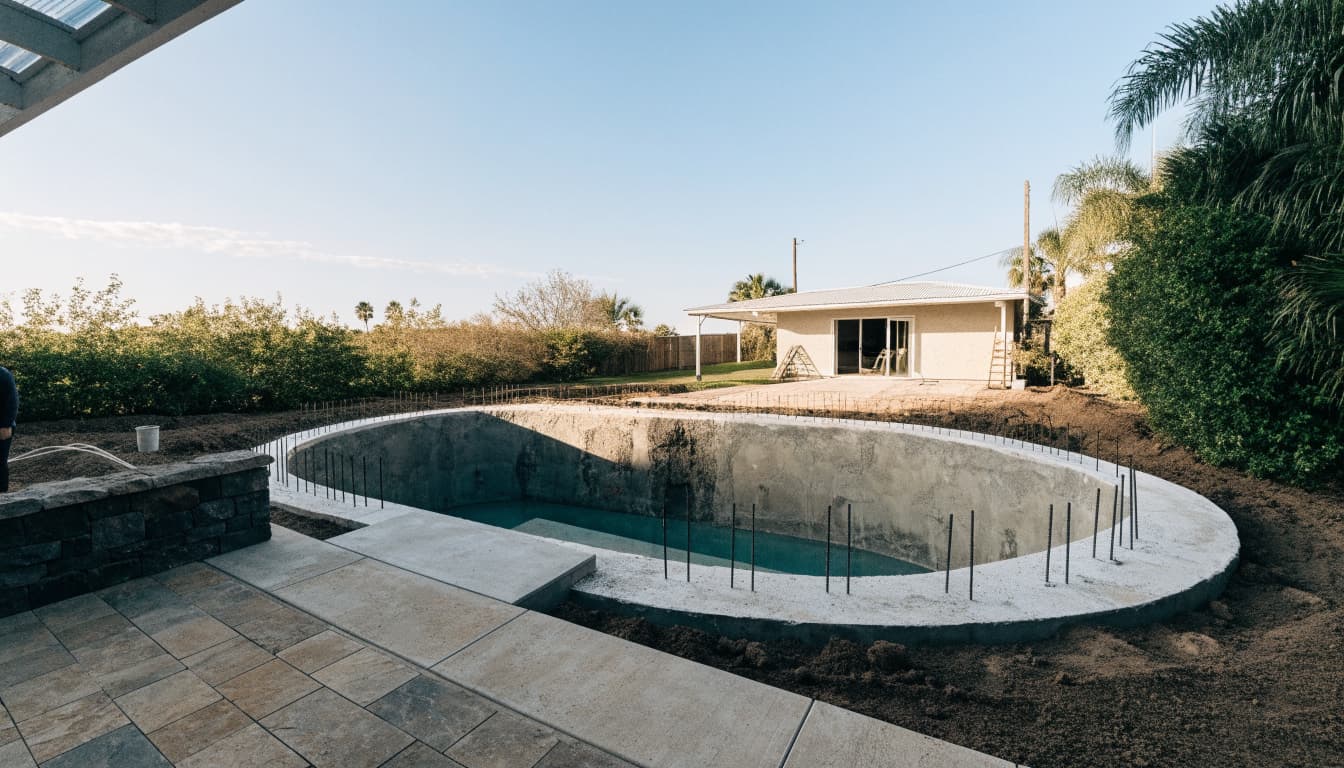
Ask when steel, bonding, and other applicable inspections occur before gunite covers the work. Inspection records matter because finished concrete hides bar placement and connections.
Keep photos, approved structural drawings, and any required test results. Shell thickness and reinforcement should follow the engineered plans for your property, rather than a supposed universal Fort Myers specification.
Separate equipment installation from operation
Delivered equipment doesn't establish that the pool operates correctly. Define whether an equipment draw requires delivery, installation, connections, testing, or startup.
Similarly, completing the shell doesn't complete the pool. Tile, finishes, drainage, safety features, and equipment remain separate obligations unless the contract expressly groups them into one milestone.
Confirm Fort Myers Permits and Inspection Milestones
Identify the correct permitting jurisdiction
A Fort Myers mailing address doesn't settle which building department handles your project. Properties inside city limits follow City of Fort Myers procedures. Unincorporated properties follow Lee County's process.
Ask the contractor to confirm jurisdiction, provide the permit number, and identify who schedules inspections. The City checklist calls for signed and sealed plans for site-built pools. Lee County requires permits for in-ground pools.
Keep the approved plans available for comparison with the work. Also confirm which inspection records will accompany each relevant payment request.

Connect draws to the approved inspection sequence
The City checklist identifies electrical final inspection 305 and pool final inspection 699 after full completion for site-built pools. It also requires final electrical and barrier inspections before filling.
Have the contractor confirm how that sequence affects finishes, filling, startup, and final payment for your permit. Don't assume another jurisdiction follows the identical process.
An inspection appointment isn't a passed inspection. If your contract ties a draw to approval, request the actual result and any correction notice. Keep inspector access clear around equipment and barriers.
For unresolved requirements, contact the appropriate local building official. Inspection approval also doesn't establish that every contractual finish selection or handover task is complete.
Put Material Payments and Change Orders in Writing
Define what you're paying for before installation
Some builders request advance payments for custom materials or equipment. If yours does, ask for product specifications, purchase documentation, and expected delivery dates.
The agreement should address where paid materials will be stored, who owns them, and who bears the risk of loss or damage. It should also explain cancellation charges and remedies for unavailable products.
Distinguish ordered, delivered, and installed in the schedule. Those events carry different risks. A supplier order confirmation alone doesn't establish that the equipment has reached your property or matches the contract.
Price changes before authorizing the work
Require a written change order identifying the revised scope, added or credited price, schedule effect, and payment terms. Both parties should approve it through the process established in the contract.
Southwest Florida site conditions deserve attention here. Ask how the original price handles groundwater, dewatering, soil problems, drainage adjustments, and access limitations. Clarify exclusions before excavation exposes an issue.
Weather delays should follow the contract's scheduling provisions. They don't automatically establish completion of a payment milestone.
If an unexpected condition arises, request supporting information and a priced response. Then update the contract balance and remaining draws so the next invoice reflects approved changes.
Review the Draw Package and Lien Documents
Before paying, compare the invoice with the completed milestone. The package should identify the draw amount, prior payments, approved changes, and remaining balance.
Agree in advance on supporting records. Depending on the milestone, these may include inspection results, progress photos, equipment delivery records, invoices for reimbursable costs, and appropriate lien documentation.
Paying the builder doesn't, by itself, establish that every subcontractor and supplier has been paid.
Florida's construction lien rules make that distinction important. Section 713.06 generally requires covered lienors other than laborers to serve a Notice to Owner before starting or within 45 days after first furnishing work or materials, subject to its other conditions.
Receiving a notice doesn't automatically mean there's a payment dispute. Keep it with the project records and ask how the contractor will document payment to that party.
The statute also addresses partial releases for payments received and the contractor's final-payment affidavit. That affidavit identifies covered, timely-noticing lienors as paid or lists unpaid parties and amounts.
Have a qualified Florida attorney review the project's release and final-payment documents. Don't assume a contractor's receipt resolves every potential lien concern.
Define Retainage and Final Payment Before Construction
Negotiate any holdback in the original agreement
Retainage is an agreed amount withheld from payments until specified conditions are met. It can help address unfinished work, but it needs clear contract language.
Don't assume a particular percentage is mandatory for a residential pool. State the amount or calculation, which draws it affects, and when the contractor earns its release.
Also distinguish retainage from the scheduled final installment. Otherwise, the schedule may count the same money twice or leave the release conditions unclear. Address disputed work through the agreed process rather than inventing new withholding terms after signing.
Define completion beyond a filled pool
Final payment should follow the completion conditions in your agreement. Review them before construction, while both parties can still resolve unclear language.
A practical handover review covers:
- Confirm the contracted work is complete and required inspections have passed.
- Document punch-list corrections and any agreed payment treatment for remaining items.
- Receive equipment manuals, warranty information, startup instruction, and appropriate final-payment documentation.
Confirm permit closeout with the applicable jurisdiction. Also verify the specified pump, filter, heater, lighting, and controls, if included, and receive an operating demonstration.
If minor items remain, document responsibility, deadlines, and any agreed holdback. Don't rely on a verbal promise after releasing the full balance.
Make Every Payment Trigger Clear
A reliable pool construction payment schedule lets you identify what's complete, what records support payment, and what remains. Written milestones are especially useful when inspections, weather, or site conditions affect progress.
Review unclear triggers with your contractor before signing or paying. For project-specific legal questions, consult a qualified attorney; for permit requirements, contact the local building official. This is practical guidance, not legal advice.
Your strongest protection is clear written terms that connect payments to the pool you agreed to build.