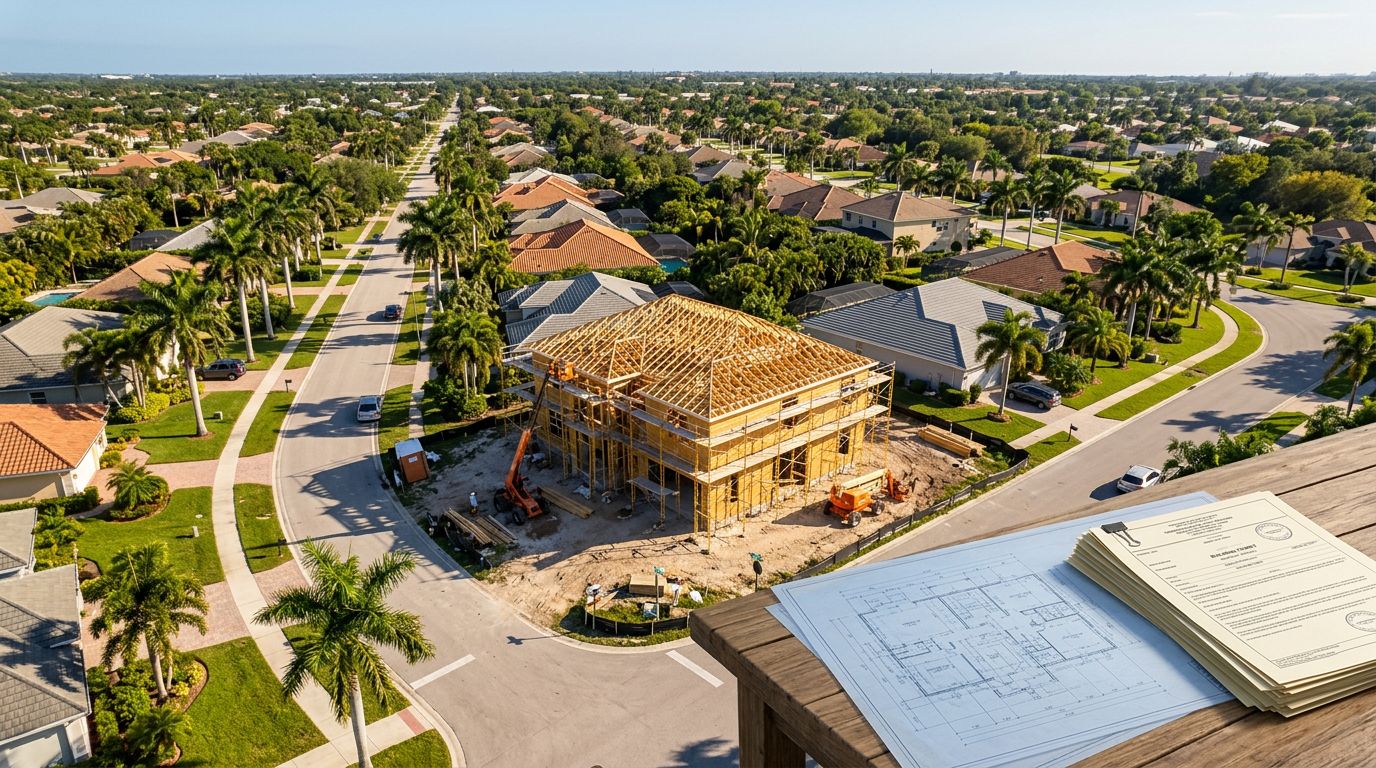



Signing a florida construction contract for a new home can feel like picking a map before a road trip. If the map is vague, you still might arrive, but you'll pay for wrong turns.
In Southwest Florida, contracts need to handle real-world issues like flood elevation, wind requirements, long lead times, and lender draw rules. The right wording also reduces the most common fights, scope gaps, surprise costs, and "that wasn't included" moments.
This is general information, not legal advice. Before you sign, it's smart to have a Florida construction attorney review your final contract language.
Start with "who, what, and where", then lock the scope to real documents
A strong florida construction contract starts by naming the parties clearly and tying the job to the exact property. That sounds basic, yet it's where confusion begins, especially when buyers build from out of state.
Identity, licensing, and the property description
Ask the contract to list the contractor's legal business name and their Florida license number (Florida regulates contracting under Chapter 489). Also include your full legal names, plus the property's legal description (from the deed or survey), not just a street address.
Sample language starter (non-binding):
"Contractor represents that it is properly licensed in the State of Florida for the Work described herein, and will maintain such licensure during the Project."
Plans, specs, and what "included" really means
Your scope section should point to a specific plan set and a specific specs package, each with a date. If the plans change, the contract should require a written change order.
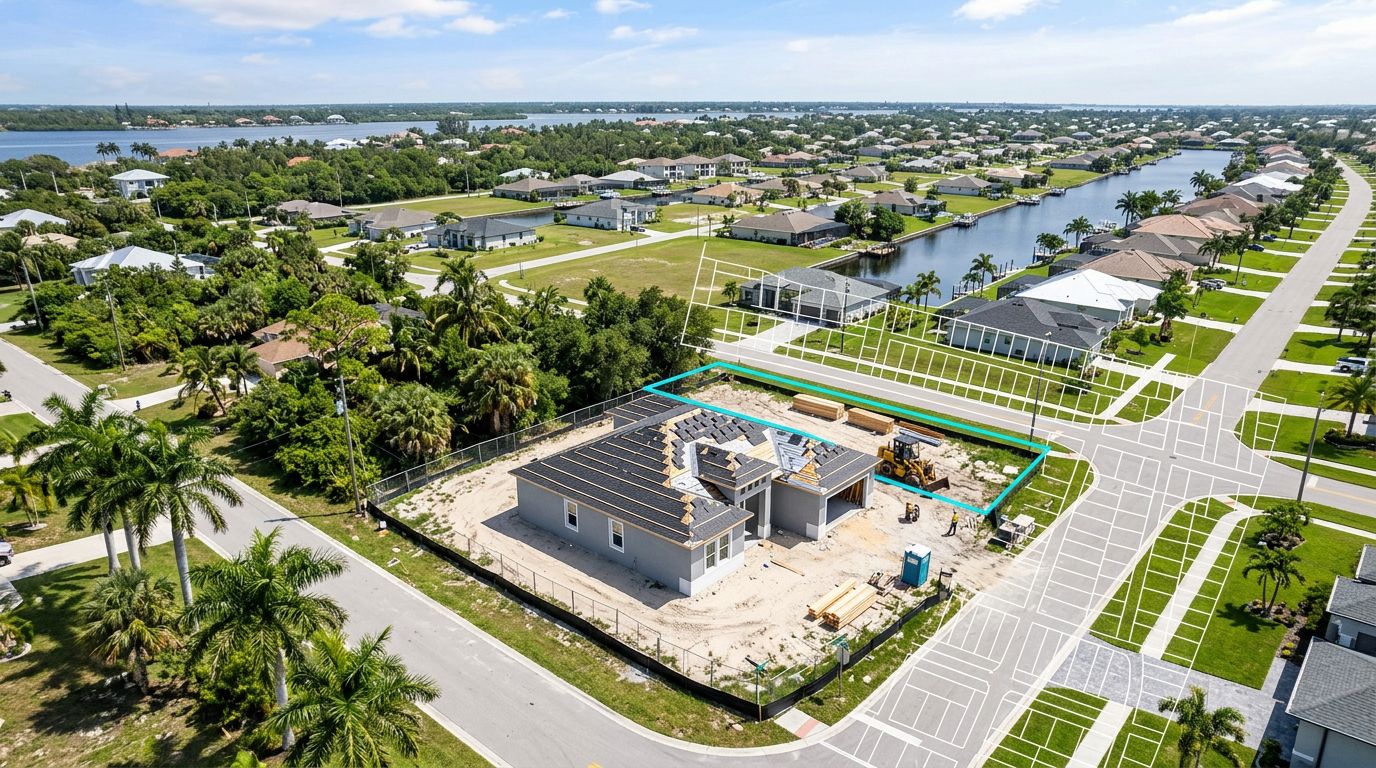
If you're building on a waterfront or canal lot, scope should also call out extra steps like seawalls, surveys, or tighter setbacks. Those site items are common budget breakers when they show up late. For local context, see Building on canal lots in Cape Coral.
To keep the scope tight, ask for these contract attachments:
- Exhibit A (Plans) : "Stamped plans dated ___, prepared by ___."
- Exhibit B (Specifications) : Products, finishes, and performance notes (windows, roof, insulation, HVAC, appliances).
- Exhibit C (Allowances) : Each allowance with a dollar amount and what it includes (labor, tax, delivery, install).
- Exhibit D (Owner responsibilities) : Items you will provide or pay directly (design fees, owner-supplied fixtures, HOA approvals).
Sample language starter (non-binding):
"Contractor shall perform the Work in accordance with the Plans and Specifications attached as Exhibits, and any work not expressly included is excluded unless added by written Change Order signed by Owner."
Money terms that prevent budget shock, especially with allowances and change orders
Pricing language is where good intentions go to die. You want clear math, clear documentation, and a process that forces decisions before money leaves your account.
Choose a pricing structure you can actually monitor
In 2026, many custom builds use either a fixed-price model or a cost-plus model. A cost-plus setup can be a great fit when it's paired with transparent pricing , meaning itemized costs, receipts or invoices, a defined builder fee, and owner approvals.
This quick comparison helps frame your questions:
| Contract type | What you're buying | What to demand in writing |
|---|---|---|
| Fixed price | One price for a defined scope | Detailed inclusions, exclusions, and exact change order pricing rules |
| Cost-plus | Actual costs plus a defined builder fee | Open-book invoices, fee definition, approvals, and cost reporting cadence |
If you're considering a cost-plus home builder , the contract should spell out what counts as "Cost of the Work," what's excluded from the fee (if anything), and whether the fee applies to change orders. For a deeper explanation of how open-book should work, read Cost-plus home building in Southwest Florida.
Draw schedule, retainage, and lender rules
Payments should follow milestones, not calendar dates. That protects you if progress slows, and it keeps the builder funded when work is actually complete.
Ask for a draw schedule that:
- Ties each draw to a defined milestone (slab, dried-in, rough-ins, insulation, drywall, trim, substantial completion).
- Requires a draw package (inspection sign-off when applicable, invoices for cost-plus, and lien releases).
- States retainage (if any) and when it's released (often after punch list and final inspections).
Sample language starter (non-binding):
"Owner shall pay Contractor per the Draw Schedule attached as Exhibit __, conditioned on completion of the milestone and delivery of required documentation, including lien releases as applicable."
Allowances and contingency need guardrails
Allowances are not "included upgrades." They're placeholders. Your contract should say how allowance overruns are approved and paid. Also consider a contingency line item for unknowns (soil, fill, drainage revisions, engineering changes), with a rule that no contingency gets spent without your written approval.
If the contract doesn't say how allowance overruns get approved, you'll learn the rule at the worst time, when materials are already ordered.
Schedule, permits, liens, and warranties, the risk clauses that matter most in Florida
A build timeline isn't only about weather. It's also about permitting, inspections, long lead items, and how fast decisions get made.
Timeline language that's fair and specific
Avoid a contract that only says "approximately." Instead, ask for start and substantial completion targets, plus a list of common excusable delays (permit review, hurricanes, material backorders). Then require regular schedule updates.
Sample language starter (non-binding):
"Contractor shall provide Owner with a written schedule, updated at least monthly, showing planned activities and critical lead-time items."
Also include a "long lead" section that identifies items like windows, trusses, generators, and cabinets, plus who approves them and when.
Permits and code compliance, including the 2026 code changeover
Your contract should clearly state who pulls permits and who pays which permit-related costs. Most homeowners want the builder to manage permitting and inspections end to end.
It also helps to name the code edition expectation. Florida is currently under the Florida Building Code 8th Edition (effective December 31, 2023). The 9th Edition is scheduled to take effect December 31, 2026. If your permit crosses that line, you don't want a surprise redesign.
Sample language starter (non-binding):
"Contractor shall construct the Project to comply with the Florida Building Code and applicable local amendments in effect at time of permit issuance, including required wind-borne debris protection and floodplain requirements where applicable."
Lien protections: Notice of Commencement and lien releases
Florida's Construction Lien Law (Chapter 713) is why paperwork matters. For many new builds, you'll record a Notice of Commencement and post it on-site before early inspections. Your contract should say who prepares it, who records it, and how you'll handle updates if lenders or contractors change.
Just as important, require lien releases with payments. That reduces the risk of paying twice for the same work.
Ask for these documents at the right times:
- Conditional lien releases with each progress payment.
- Final lien releases at closeout from the GC and key subs and suppliers.
New-home warranty language you should expect in 2026
Florida now has a statutory one-year warranty requirement for newly constructed homes (Section 553.837, effective July 1, 2025). Your contract should reflect that minimum, and it can also add longer coverage for systems or structure if offered.
Sample language starter (non-binding):
"Contractor shall provide the statutory one-year warranty for newly constructed homes as applicable, beginning at first occupancy or closing, and shall remedy covered defects within a reasonable time after written notice."
To avoid end-of-job friction, include a punch list process and a clear definition of "substantial completion," plus what documents you receive at closeout (final inspection approvals, manuals, warranties, survey if required, and as-builts if provided).
For an overview of local building support, services, and what a builder should coordinate, see New Home Builder in Cape Coral.
Conclusion
A florida construction contract in 2026 should read like a clear set of rules, not a brochure. When scope attachments, pricing math, documentation, and warranty language are tight, you get fewer surprises and faster decisions. If you want calmer builds, push for transparent pricing and a written process for changes, draws, and lien releases. Before you sign, have a Florida construction attorney review the agreement so your protections match your lot, your lender, and your timeline.