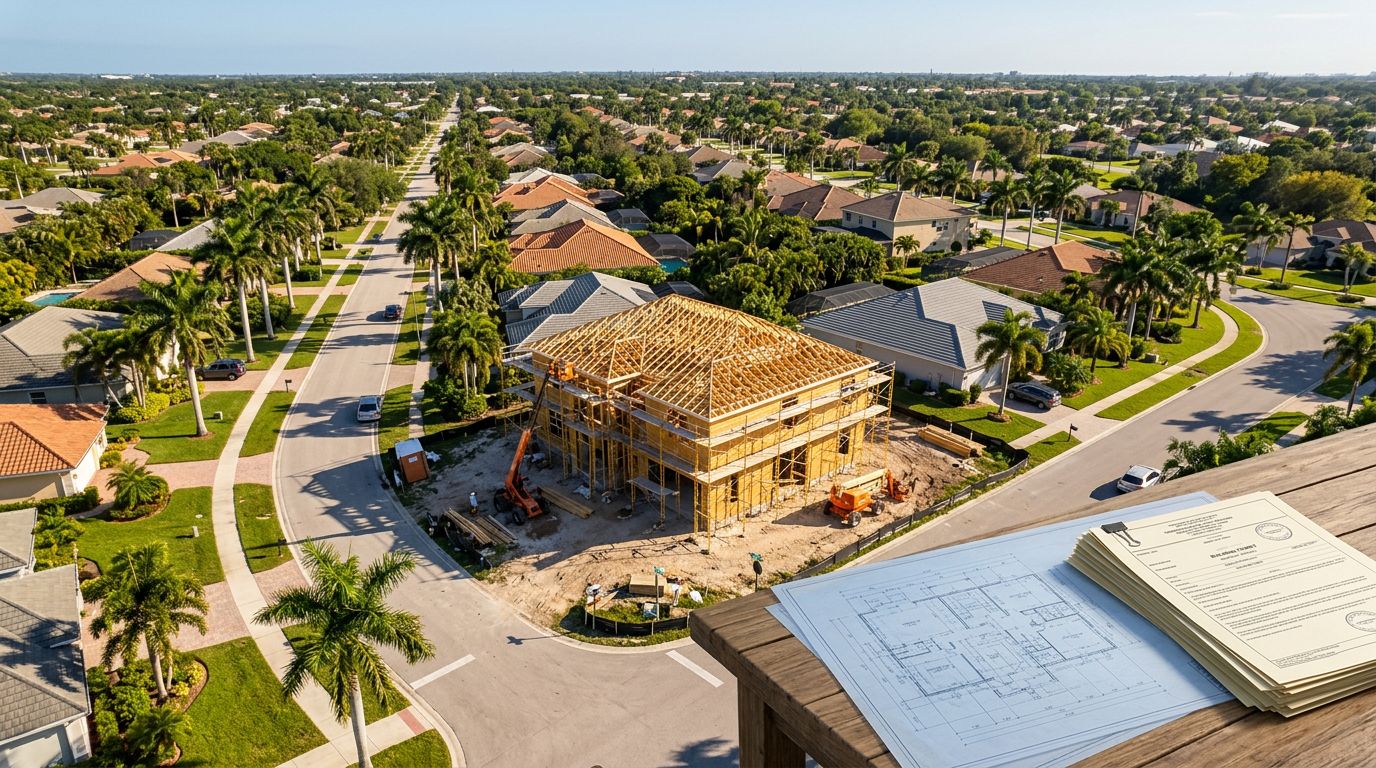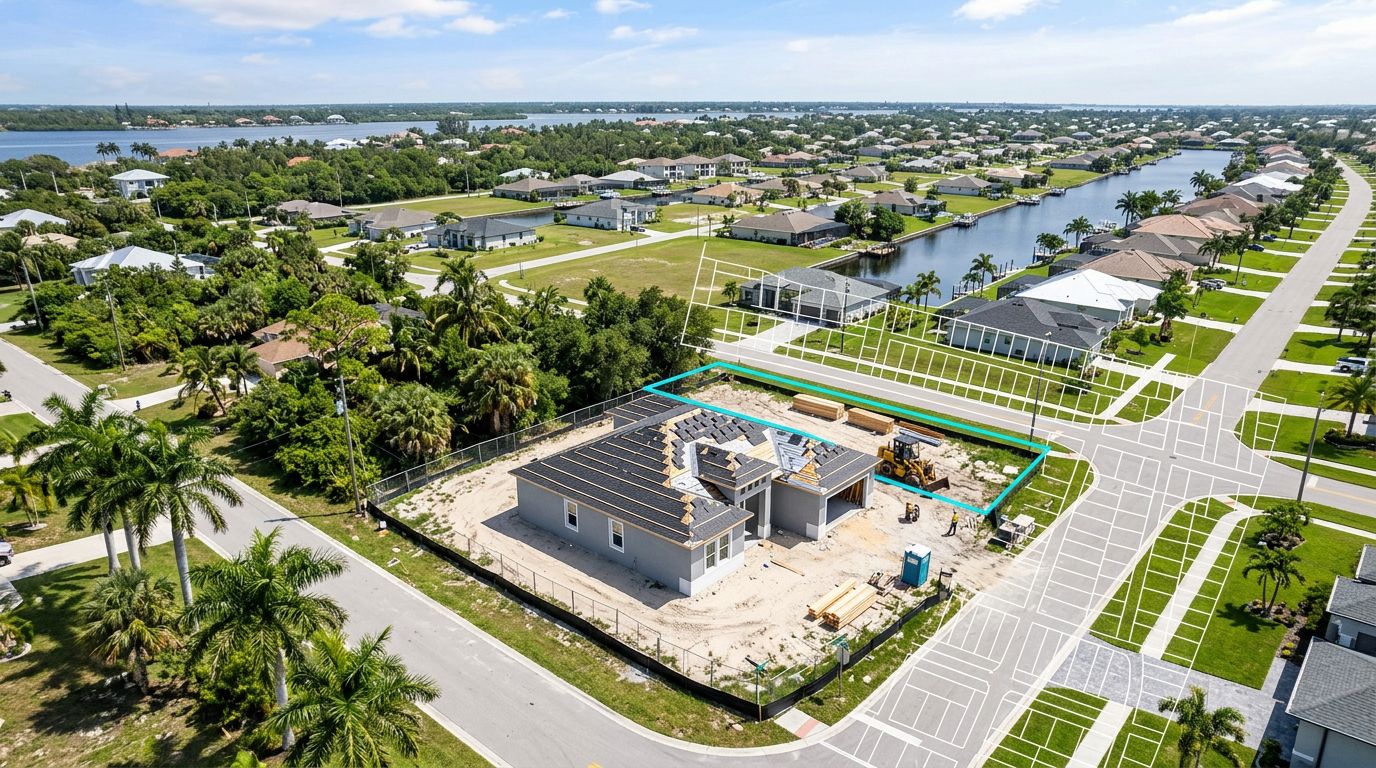
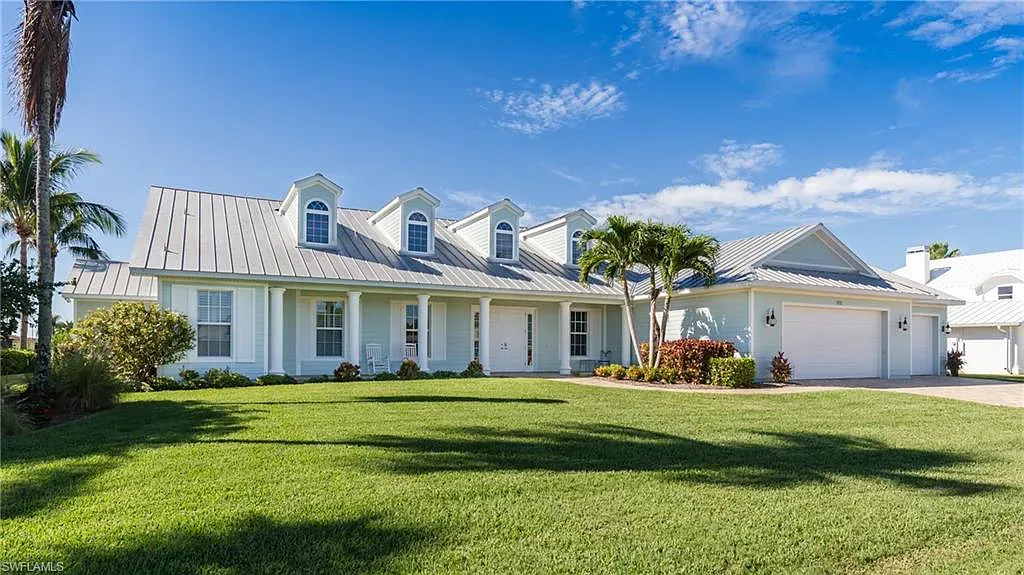



Permit fees are only one part of the budget for a new home in Southwest Florida. Your total may include an expeditor's service fee, county or city permit charges, impact fees, utility connections, plan reviews, and site-related approvals.
For 2026 planning, many homeowners should allow $2,500 to $7,500 for permit expediting on a standard new single-family home. Large custom homes, waterfront lots, flood-zone requirements, and multiple agency reviews can push that fee above $10,000. Government charges are separate and can add several thousand dollars more.
Knowing which costs belong to the expeditor and which belong to public agencies helps you compare builder proposals accurately.
Key Takeaways
- A typical Southwest Florida permit expeditor fee may range from $2,500 to $7,500 for a standard new home.
- Custom, waterfront, coastal, or unusually complex projects may cost $7,500 to $15,000 or more to coordinate.
- Building permit fees, plan review charges, impact fees, and utility fees are separate from the expeditor's invoice.
- Lee, Collier, and Charlotte County properties can follow different fee schedules and approval processes.
- A cost-plus home builder should show permit expenses, government charges, and contractor fees as separate line items.
What a Permit Expeditor Does for a New Home
A permit expeditor manages the administrative work required to move a residential permit through the local approval process. Depending on the agreement, that work may include confirming the correct jurisdiction, checking the application package, uploading plans, tracking review status, forwarding comments, and coordinating resubmissions.
Some expeditors also communicate with the architect, engineer, surveyor, utility provider, and contractor when reviewers request changes. Others provide a narrower service that covers application filing and status checks only. The difference in scope can change the price substantially.
A permit expeditor doesn't design the house or approve structural, electrical, plumbing, mechanical, or site plans. Licensed professionals prepare those documents, and the local authority reviews them. An expeditor also can't guarantee approval by a certain date. The final schedule depends on complete plans, agency workloads, reviewer comments, and how quickly the project team answers questions.
For a straightforward new home with a complete plan set, a reasonable 2026 planning allowance is often $1,500 to $3,500 for limited administrative help. Full-service coordination commonly falls between $3,500 and $7,500 . A large custom home, a difficult site, or a project with several review agencies may reach $7,500 to $15,000 or more .
These are planning estimates, not fixed Southwest Florida permit expeditor costs. The written scope matters more than the lowest number on a proposal.
2026 Cost Breakdown: Expeditor Fees Versus Government Charges
A complete permitting budget should separate private service fees from charges imposed by the city, county, utility authority, or another public agency.
| Cost category | 2026 planning estimate | Who receives the payment |
|---|---|---|
| Limited permit assistance | $1,500 to $3,500 | Permit expeditor or builder |
| Full-service new home expediting | $3,500 to $7,500 | Permit expeditor or builder |
| Complex custom or waterfront coordination | $7,500 to $15,000+ | Permit expeditor or builder |
| Building permit and plan review fees | $3,000 to $10,000+ | City or county |
| Impact fees | $5,000 to $30,000+ | County, city, utility, school, fire, or other district |
| Utility connection and meter charges | Varies widely | Utility provider |
| Survey, engineering, flood, and soil documents | Varies by scope | Licensed consultants |
A new home's building permit and plan review charges often depend on declared construction value, square footage, project type, local surcharges, and the agency handling the application. A high-value custom home may therefore carry higher government fees than a smaller residence.
Impact fees are not permit expeditor fees. They are charges connected to public facilities or services. Depending on the property and jurisdiction, they may involve transportation, parks, schools, fire protection, mobility, water, wastewater, or other infrastructure. Not every project pays every category.
Utility connection charges also deserve separate attention. A home connecting to public water and sewer may have different fees than a property using a well or septic system. A new meter, capacity charge, or system development fee may appear outside the building permit invoice.
Because local schedules can change, use the fee schedule in effect when the application is submitted. A builder estimate prepared months earlier may need an adjustment after the plans, valuation, or jurisdiction are confirmed.
Why Location Changes Southwest Florida Permit Costs
Southwest Florida doesn't have one universal permit price. The approving authority depends on the property's location.
A home in unincorporated Lee County may follow a different process than a home inside Fort Myers, Cape Coral, Bonita Springs, or another incorporated municipality. Collier County, Naples, and Marco Island also have their own procedures and fee schedules. Charlotte County properties can involve separate requirements in Punta Gorda and other incorporated areas.
The first cost question is therefore simple: Who has jurisdiction over the lot? A permit quote that doesn't identify the city or county is incomplete.
Site conditions create another layer of expense. Flood-zone properties may require elevation information, flood-resistant construction details, drainage documentation, or additional review. Waterfront lots can involve seawalls, docks, environmental restrictions, stormwater concerns, or coastal construction requirements. These items may increase consultant costs and expeditor hours even when the basic building permit fee stays the same.
A lot with an existing structure can also require demolition documentation, utility disconnection records, or confirmation that previous permits were closed. A vacant parcel may need additional site plans, driveway approvals, tree information, drainage plans, or utility documentation.
The expeditor's workload grows when several agencies review different parts of the project. However, increased coordination time doesn't mean every government fee rises by the same amount. Keep those costs separate when reviewing your budget.
How Builders Should Show Permit Costs
Builders handle permit expenses in different ways. A traditional fixed-price builder may include permit administration in its general conditions or contract price. A cost-plus home builder may charge the actual government fees as project costs and list its own administrative or contractor fee separately.
Neither structure is automatically better. The important issue is whether you can see what you are paying for.
A transparent pricing format should identify:
- The expeditor's flat fee, hourly rate, or percentage
- Government permit and plan review charges
- Impact fees and utility charges
- Survey, engineering, flood, and soil work
- Fees for resubmissions caused by design changes
- Any contractor markup on pass-through expenses
Some builders pay the expeditor first and then bill the homeowner. Others ask the owner to pay the agency or expeditor directly. Both arrangements can work when the contract explains the process and includes receipts or copies of invoices.
Ask whether the expeditor's fee covers the first review cycle only or continues through permit issuance. Find out how the contract handles plan revisions caused by the owner, code comments, incomplete documents, or changes requested by the builder. A low initial price can become expensive if every resubmission carries a separate charge.
Your construction agreement should also state who controls the permit account, who receives reviewer comments, and who approves additional services. Those details prevent confusion when the project needs another round of corrections.
How to Compare Permit Expeditor Quotes
When comparing Southwest Florida permit expeditor costs, look beyond the total price. Two proposals may show similar numbers while covering very different services.
First, ask for a written list of included tasks. Does the fee cover application preparation, plan uploads, status tracking, correction letters, resubmissions, inspection scheduling, and certificate-of-occupancy support? The answer should be clear.
Next, confirm whether the price is fixed or based on hourly work. If the expeditor charges a percentage of construction cost, ask which costs form the calculation. A percentage based on the entire home price can be much higher than a flat administrative fee.
Also ask who pays for corrections. If a reviewer requests a structural revision, the architect or engineer may charge separately. If the homeowner changes the floor plan after submission, the expeditor may charge for a new application or another review cycle.
Local experience can help, especially when a project involves flood requirements, coastal restrictions, multiple utilities, or a municipality with detailed submission rules. Still, familiarity doesn't replace complete plans. The best quote is the one that matches the actual scope of your home and lot.
Finally, ask for a schedule of expected payments. Government fees and impact fees may be due at different stages. Your builder should tell you which amounts are estimates and which figures came directly from the applicable agency.
When Hiring an Expeditor Makes Financial Sense
Permit expediting can be useful when you live outside Southwest Florida, have limited time, or are building a highly customized home. It can also help when the project involves several consultants and agencies that need regular coordination.
A builder with an established permitting process may handle this work internally. In that case, the service may appear inside the contractor's fee rather than as a separate expeditor invoice. You should still receive a clear explanation of the charge.
For a simple home using a complete plan set, separate expediting may not be necessary if the builder already manages applications and corrections. On the other hand, assigning the task to someone without enough time or local experience can lead to missed documents, delayed responses, and additional review cycles.
The right question is not whether an expeditor is always required. Ask whether the fee buys defined work that your builder, architect, or project manager isn't already providing.
Building a Realistic 2026 Permit Budget
Start with the lot's jurisdiction and confirm whether the property uses public water, public sewer, well, or septic. Then ask for current estimates for the building permit, plan review, impact fees, and utility charges.
Add the expeditor's fee as a separate line. For many standard new homes, that means setting aside $2,500 to $7,500 , then increasing the allowance if the project has a large footprint, unusual design, flood exposure, coastal conditions, or several reviewing agencies.
Keep a contingency for plan revisions and administrative changes. A permit budget should account for the possibility that the declared construction value changes or that the authority requests additional documentation.
Most importantly, don't treat one combined "permit allowance" as enough detail. A clear budget shows where every dollar goes, which charges are estimates, and whether the builder adds a markup.
Conclusion
Southwest Florida permit expeditor costs in 2026 depend on the home's design, the lot's conditions, the local jurisdiction, and the level of service included. A standard project may need a few thousand dollars for expediting, while complex coastal or custom construction can cost much more.
Government-required permit charges, impact fees, and utility fees are separate expenses. When a builder provides transparent pricing and itemizes each category, you can see the real cost of getting your new home approved before construction begins.