Which Roof Repairs Should Come First in Naples?
Explore Our Services
Contact Us Today!
(239) 322-9295
A ceiling stain after a Naples downpour can leave you wondering which roof problem needs attention first. When you're weighing roof repairs in Naples, start with safety and water intrusion , then let a licensed roofer determine the repair order.
Missing tiles, damaged flashing, and faded shingles don't all carry the same risk. Southwest Florida's heavy rain and strong winds make that distinction important.
The first step is separating problems that need immediate help from work that can wait for a planned appointment.
Sort Roof Problems by What They're Affecting
A roof's appearance alone won't tell you how urgently it needs work. A small opening can admit water, while a noticeable color change may be cosmetic.
Use the conditions below to guide your first call, rather than treating them as a diagnosis.
| What you notice | Practical next step |
|---|---|
| A bulging ceiling, apparent structural movement, or water near electrical equipment | Keep people away and seek immediate help appropriate to the hazard. |
| Active dripping or a storm-created roof opening | Contact a licensed roofer about assessment and temporary protection. |
| Missing roofing material, shifted tiles, or loose metal after wind | Arrange a prompt inspection, even if rooms remain dry. |
| An old stain, surface discoloration, or minor wear without new symptoms | Schedule an inspection to confirm whether repair is needed. |
The roofer should set the actual scope and timing after examining the damage. Also mention approaching rain when you call, because temporary protection may need attention before permanent work can begin.
Don't downgrade a concern simply because the rain has stopped. A dry interval gives you time to arrange help; it doesn't establish that the roof is watertight.
Address Safety and Active Leaks Before Cosmetic Work
Keep clear of unstable ceilings and electrical hazards
If a ceiling is sagging, bulging, or shedding material, move people and pets out of the affected area. Don't stand underneath it, puncture it, or place a container where reaching it could expose you to falling debris.
Water around light fixtures, outlets, or electrical equipment also requires caution. Avoid touching wet fixtures or entering standing water near electrical hazards. Contact an electrician or emergency services as the situation requires.
Roof repair won't resolve every indoor hazard. Tell the roofer about these conditions when requesting help so the response accounts for more than the exterior damage.
Ask for temporary protection when water is entering
An active leak deserves attention even if the damaged spot looks small. Water can reach insulation, ceilings, walls, and flooring before the exterior repair is complete.
If it's safe, move belongings away and catch dripping water from a stable floor position. Leave roof access and tarp installation to professionals.
Cutting Edge Homes & Renovations offers temporary roof tarping after storm damage throughout Southwest Florida. Ask whether that protection suits your roof's condition. A tarp is an interim measure, so confirm the plan for permanent repairs and what to do if leaking continues.
Check for Warning Signs Without Leaving the Ground
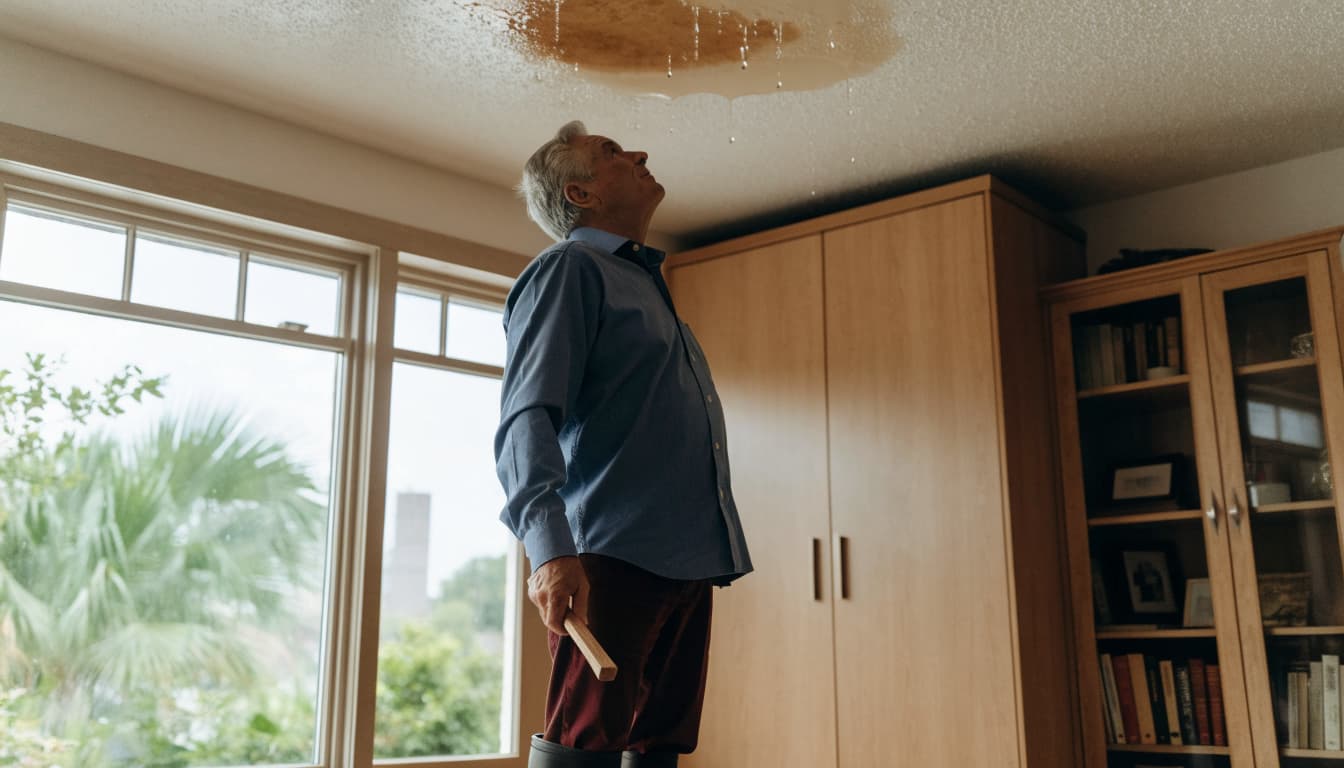
Look for changes inside the home
Check ceilings and upper walls for fresh stains, peeling paint, damp patches, or dripping after rain. A musty smell can also warrant investigation, although it doesn't establish that the roof is responsible.
Photograph changes from a safe location and note when they appeared. Tell the contractor whether water shows up during every shower or only during wind-driven rain.
An old, dry stain still needs an explanation if you don't know its history. However, it doesn't prove that water is entering today. Also remember that water can travel before becoming visible, so the stain may not sit directly beneath the roof defect.
Observe exterior damage from a safe distance
From the yard or driveway, look for missing shingles, displaced tiles, hanging gutters, and roof debris on the ground. Binoculars or a phone's zoom can help without requiring a ladder.
After strong winds, note any obvious change along roof edges and ridges. Keep away from loose material that could fall, and don't move storm debris resting on the roof.
Avoid walking on roofing, leaning ladders against damaged sections, or entering an attic with questionable access. Ground-level observations help explain your concern, but they can't confirm the condition of concealed roofing layers.
Have the Roofer Find the Cause, Not Just the Visible Damage
Check the covering and the water-shedding details
Naples homes have several roof types, and each needs an appropriate repair approach. For shingles, a roofer may investigate missing pieces and lifted edges. With tile, displaced or cracked pieces call for an assessment of the covering and underlying protection.
For metal roofing, the inspection may include seams, attachments, and penetrations. Flashing around walls, vents, and other transitions also deserves attention because these details help direct water away from openings.
Ask the roofer to explain how the visible damage relates to the leak. Replacing one obvious broken piece may leave another water-entry point unresolved.
Include underlayment and decking when the damage calls for it
Roofing material is only part of the assembly. Underlayment, flashing, roof decking, and installation details all contribute to performance in Florida's weather.
After storm damage, a professional should examine the roof covering and any exposed decking before recommending a scope. If damaged layers require removal, ask how the contractor will check the material beneath them.
Cutting Edge's professional roof leak and damage repairs include work involving leaks, flashing, and roof decking. Request a written explanation of the proposed repair, including how concealed damage would affect the work. That makes the estimate easier to evaluate than a broad promise to "fix the leak."
Schedule Lower-Risk Work After Its Condition Is Confirmed
Some roofing work can fit a planned appointment once a professional confirms that the roof isn't admitting water or presenting a safety concern.
Surface discoloration, routine maintenance, and appearance-related improvements often fall into this conversation. However, don't assume a stain is harmless or a loose component is cosmetic without an assessment.
Gutter and drainage concerns also need context. Overflow may require gutter work, but water reaching the fascia or interior deserves closer investigation.
Ask the roofer which items can wait, what changes would raise their priority, and whether scheduled work should happen before the next wet-weather period.
A dry room doesn't prove that storm-damaged roofing is intact. Missing or displaced material still warrants inspection before you classify the repair as routine.
For roof repairs in Naples, a useful maintenance plan names the defect and explains the proposed timing.
Choose a Licensed Roofer and Get a Specific Scope

Before authorizing work, verify the contractor's license through the Florida Department of Business and Professional Regulation. Also request current insurance information and confirm who will perform the roofing work.
Cutting Edge Homes & Renovations lists Florida roofing contractor license CCC1331068 . The company also holds general contractor and pool contractor licenses, but verify the license relevant to your project.
Your proposal should identify the repair area, materials, and work included. Ask who handles any required permit and inspections through the applicable City of Naples or Collier County building department.
Three questions can make the conversation more useful:
- What evidence supports this repair, and can you show me photographs?
- How will you address damaged underlayment, flashing, or decking if you find it?
- What warranty applies, and what does the quoted price exclude?
Compare estimates by scope, not price alone. Roof access, material matching, concealed damage, and temporary protection can affect the proposal. A low number provides little guidance if the document doesn't say what the contractor will repair.
Also confirm how the crew will protect landscaping, collect debris, and communicate unexpected findings. These details matter when your family remains at home during the work.
Decide Between Repair and Replacement Before Repeating Patches
A targeted repair may be appropriate when a contractor identifies a localized problem and confirms that the surrounding assembly remains serviceable.
Repeated leaks, widespread damage, or problems beneath the covering call for a broader discussion. Ask whether another patch will address the cause and how the remaining roof condition affects that recommendation.
Roof age belongs in the assessment, but it shouldn't decide the project by itself. Request photographs and a clear explanation of why repair or replacement fits the findings.
If replacement is planned, don't leave an existing leak unaddressed while waiting. The roof replacement preparation guide recommends discussing temporary protection or a separate repair before installation begins.
Also distinguish a damage inspection from a wind mitigation inspection. Wind mitigation documents features related to wind resistance; it doesn't replace investigating an active leak. Ask which inspection matches the question you need answered.
Document Damage and Coordinate the Work
Keep dated photographs of visible damage, ceiling stains, and affected belongings. Record when you first noticed the problem and what weather occurred around that time.
Save estimates, invoices, inspection findings, and communications. If you're considering an insurance claim, contact your insurer to confirm its documentation requirements and the process for temporary protection. Don't assume that every repair or replacement will receive coverage.
For a remodel, address the roof's water-entry problem before repairing stained drywall or installing new finishes in the affected area. Wet building materials may also need drying or assessment by qualified professionals.
Finally, ask the contractor how completion will be documented. Photos and a written description help you understand what changed and retain a useful maintenance record. Keep those records with your roof warranty and prior repair paperwork so the next inspection starts with accurate information.
Put Safety and Water Protection First
A ceiling stain is a reason to investigate, not enough information to choose a repair. Keep away from unsafe areas and have a licensed roofer assess active leaks, storm openings, and missing material.
Let confirmed conditions determine what comes next. Once the home has appropriate water protection , you can schedule lower-risk work with a clear scope.
The right priority is the repair that addresses the documented problem before you restore the finishes beneath it.