Fort Myers Exterior Lighting for Entries and Walkways
Explore Our Services
Contact Us Today!
(239) 322-9295
Your front entry shouldn't disappear when the sun goes down. A thoughtful Fort Myers exterior lighting plan starts with a clear route to the door, comfortable light at the landing, and fixtures that suit your home.
For a custom home, those decisions belong alongside porch design, paving, landscaping, and electrical planning. Start by looking at how your family and guests will approach the house after dark.
Start with the Route Guests Actually Use
Before selecting fixtures, trace the route between parking and the front door. Include the driveway connection, walkway bends, porch steps, and any changes in paving or elevation.
The main entry may look obvious on an architectural drawing, yet feel less clear from the passenger side of a parked car. Review the approach from the places where visitors will actually arrive.
Also consider everyday use. Your family may enter through the garage, while deliveries come to the front porch. These routes need separate attention rather than one general lighting treatment.
A useful plan identifies where people need to recognize an edge, find a door handle, or pause while someone answers. Decorative lighting can follow those priorities.
Bring the site plan and front elevation into the same conversation. That gives the builder, electrician, and landscape team a shared reference before they choose mounting locations or wiring routes.
Finally, consider nearby bedrooms and neighboring homes. An entry lighting plan should account for where light travels beyond the walking surface, not just how the house looks from the street.
Design a Welcoming Front Entry
The doorway should feel connected to the porch and approach. Review decorative fixtures and practical illumination together rather than treating them as separate purchases.
Match Fixtures to the Architecture
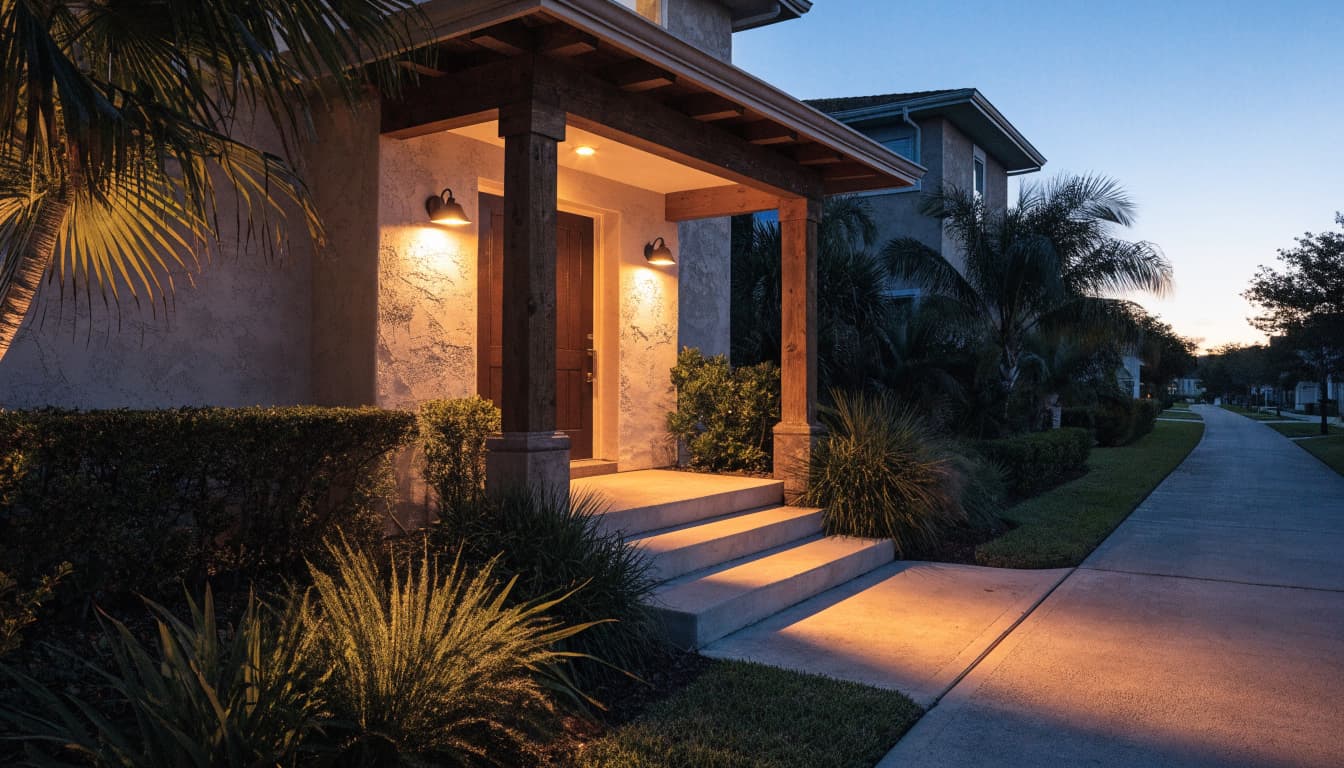
Compare fixture shapes and finishes with the front door, columns, railings, and exterior hardware. A broad stucco wall presents different design choices than a narrow entry framed by stone.
Review fixture proportions on the elevation before ordering. Catalog photography doesn't show how a fixture will relate to your particular door surround or porch ceiling.
For a contemporary home, a simple fixture may suit clean wall surfaces. A more traditional elevation may call for a lantern-style form. In either case, discuss the light distribution as carefully as the appearance.
Consider the Landing and Door Hardware
Plan the doorway as a working space. Guests need to locate the bell, recognize the threshold, and stand comfortably while waiting.
A porch ceiling fixture and wall-mounted lights perform different roles, so review them together. Ask the project team to check whether a selected fixture leaves shadows around the lock or creates reflections in door glass.
Keep the door swing, screen door, and decorative trim in view when choosing locations. Also consider maintenance access. A fixture that looks attractive above a tall entry may require more effort to service.
Place Walkway Lighting Around Turns and Transitions
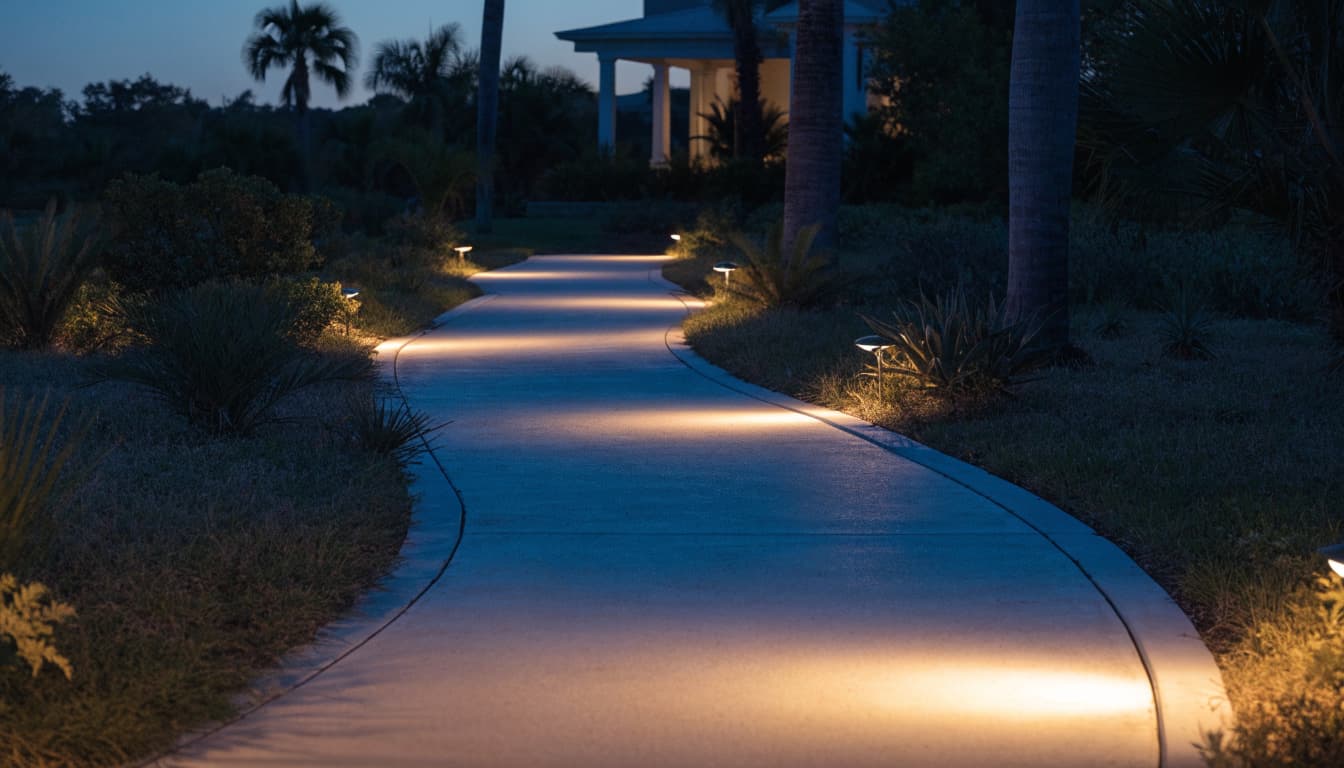
Walkway lighting should follow the route people use. Fixture placement needs to respond to the actual paving layout rather than a repeated pattern chosen in advance.
Follow the Walking Surface
Discuss bends, steps, and connections between the driveway and entry first. Then review how each fixture's light reaches those areas.
Spacing depends on the selected fixture, path width, surrounding surfaces, and planting. Ask for placement based on the product's documented light distribution, followed by an evening review where practical.
Keep fixtures out of the usable walking area. Their locations should also account for edging, lawn equipment, and irrigation. A neat arrangement on paper can become inconvenient if a fixture blocks routine yard work or sits where visitors step off the path.
Leave Room for Landscape Growth
Review mature planting sizes, not just the landscape shown on installation day. Shrubs and ornamental grasses can eventually cover fixtures or interrupt the intended light pattern.
Coordinate lighting with custom walkways and backyard features so the paving, planting, and electrical layout work together.
Ask who will handle adjustments after the landscape establishes. Accessible connections and a documented fixture layout give future maintenance crews a useful starting point.
Also identify planned changes, such as a later garden walk or porch expansion, before the paving crew begins.
Control Glare Before Adding More Light
A visible light source can feel uncomfortable even when the walkway itself remains poorly defined. Review the direction of the light before deciding that the entry needs additional fixtures.
Ask the designer or electrician to assess shielding, lens visibility, and aiming from the approaching visitor's viewpoint. Then check the same fixtures from the porch and nearby interior windows.
Review glare from both the approach and inside the house; a fixture can look comfortable from only one direction.
Glass doors and wet paving deserve attention because their reflections change the nighttime scene. Compare the lighting with the surfaces and finishes selected for your home.
Discuss color appearance with the project team as well. Entry sconces, porch lighting, and path fixtures should look intentional together, even when they come from different fixture families.
Finally, separate decorative emphasis from route lighting. A light aimed at a palm or architectural column doesn't replace a review of the walking surface. Give each part of the plan a defined purpose, and avoid adding decorative fixtures simply to fill empty space.
Plan Fort Myers Exterior Lighting for Local Exposure
Southwest Florida's humidity, seasonal rain, and varying coastal exposure belong in fixture selection and installation planning. Suitability should follow the actual location and manufacturer documentation.
Check Each Fixture's Location
A light under a deep porch roof faces different conditions than one beside an open walkway. Wind-driven rain, irrigation spray, and nearby drainage can affect the installation.
Ask the electrician to confirm the required product suitability for each location. Review the fixture body, finish, fasteners, connections, and maintenance instructions together.
For properties with coastal exposure, discuss material compatibility rather than relying on a finish name or marketing description. Don't assume that every fixture sold for outdoor use is appropriate for every Southwest Florida site.
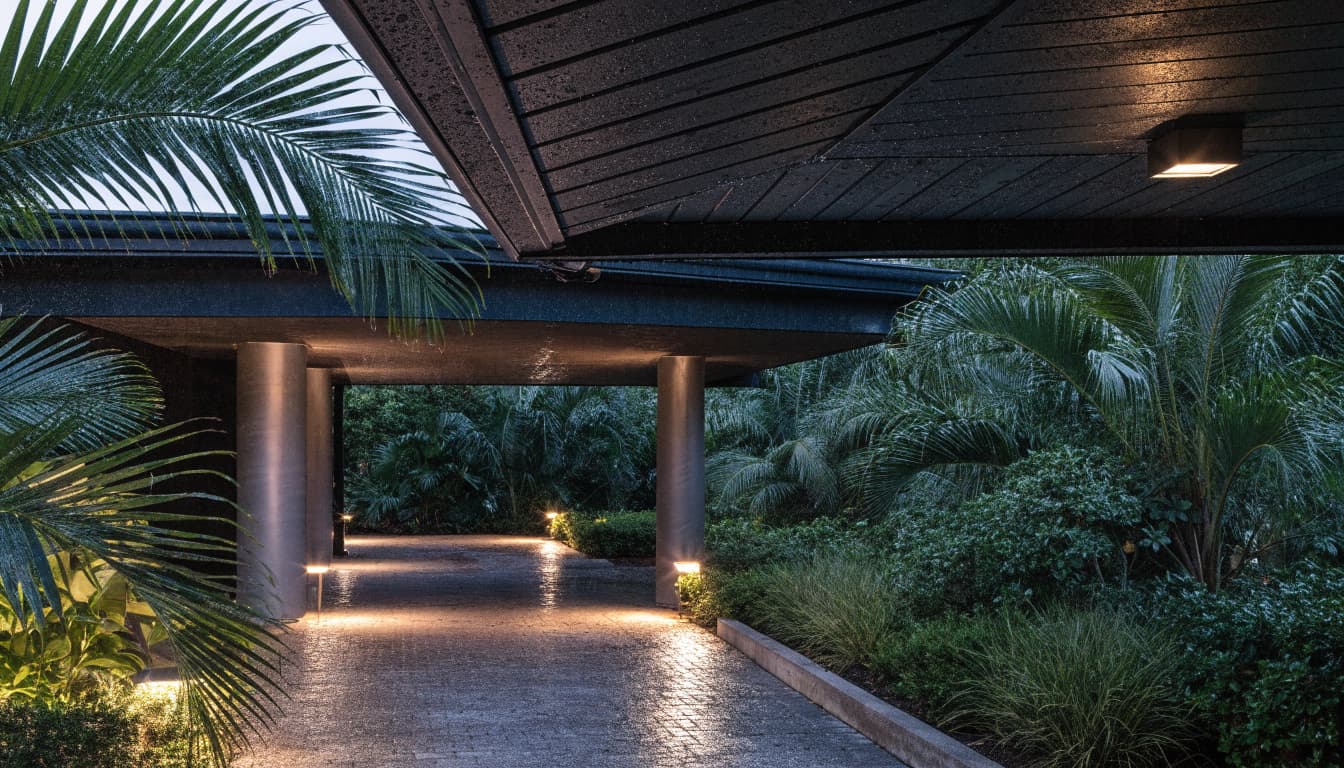
Coordinate Wall and Ground Installations
Wall-mounted fixtures involve more than attaching a decorative plate. The project team should coordinate mounting, electrical connections, and the exterior wall's water-management details before finishes become permanent.
Similarly, ground fixtures need placement that accounts for drainage, planting beds, and future service access. Keep installation decisions tied to the selected equipment and project documents.
Cutting Edge Homes & Renovations includes regional climate considerations in its approach to custom home building in Fort Myers. Discuss entry lighting within that broader planning process, including porch coverage, wall finishes, and site drainage.
Discuss Efficiency and Everyday Controls
Efficiency involves equipment selection and operating habits. Ask your electrician to compare suitable LED options, documented power use, and maintenance needs without sacrificing the intended lighting pattern.
Also review how the lights will operate. A simple wall switch, scheduled control, photocell, or motion sensor creates a different daily experience. The right choice depends on when you use the entry and how much manual control you want.
Motion activation may suit a secondary approach, but review sensor coverage carefully. Passing vehicles, vegetation, and the arrival route all belong in that discussion.
For connected controls, confirm compatibility with the selected fixtures and any dimming equipment. Decide whether the system should remain usable without an app or internet connection.
Separate control zones are worth discussing when the front porch and landscape lights have different schedules. That gives you a way to operate them independently rather than treating every exterior fixture as one group.
Ask the installer to explain settings, overrides, and what happens after a power interruption. Keep those instructions with the home's electrical and lighting records.
Set the Scope Before Construction Starts
Lighting decisions affect several trades. Resolve the layout early enough for the electrician, framing crew, stucco installer, and paving contractor to coordinate their work.
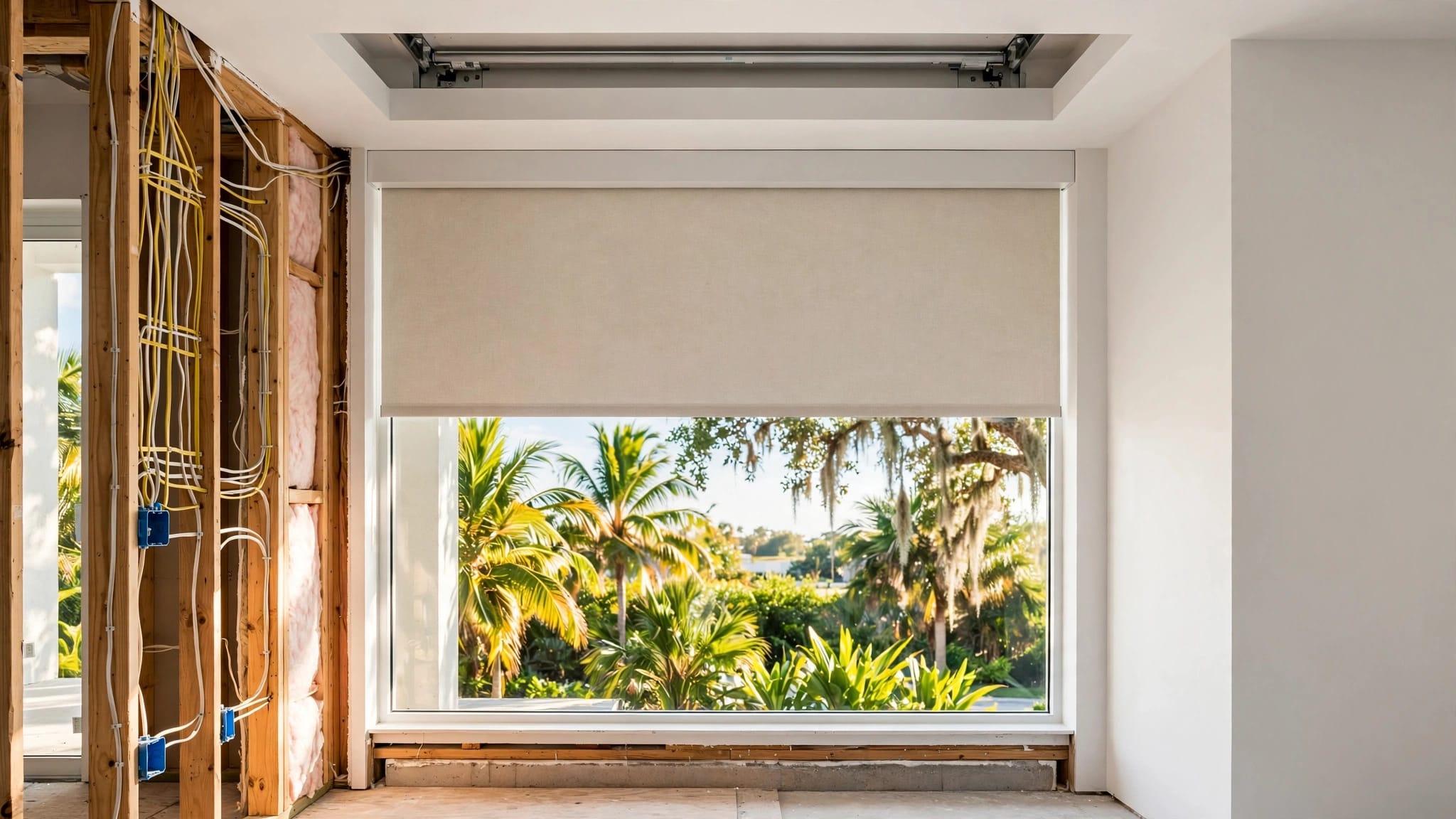
For new construction, discuss wall boxes, porch ceiling locations, control positions, and landscape wiring routes before those areas close up. For remodeling, ask what access and finish repairs the proposed installation will require.
Cutting Edge Homes & Renovations offers architectural planning assistance, fixture personalization, and outdoor-space coordination through its custom home construction services. Its project-management approach includes scheduling trades and communicating decisions throughout construction.
Request an itemized lighting scope. Fixture purchases, wiring, controls, landscape work, and finish repairs should be identifiable rather than buried in a single allowance.
Also clarify whether the quote includes final aiming, control setup, and an evening walkthrough. Those tasks need an owner and a place in the schedule.
At the walkthrough, follow the route a guest would take. Check the doorway, steps, path edges, and views through nearby windows. Document adjustments before the team closes the project.
Keep the fixture schedule, equipment instructions, and control information afterward. These records help when replacing components or changing landscaping.
Key Takeaways for Your Lighting Plan
A Fort Myers exterior lighting plan should connect architectural choices with everyday use.
- Map the complete arrival route before choosing decorative fixtures.
- Review glare, light direction, and reflections from more than one viewpoint.
- Confirm each fixture's suitability for its exposure with the project team.
- Coordinate lighting with paving, planting, wall details, and electrical controls.
The most useful conversation starts with drawings and site conditions, then moves to product selection.
Create an Entry That Works After Dark
A welcoming entry depends on coordinated planning . The doorway, walking surface, landscape, and controls all need attention before installation.
Bring your builder and electrician into the discussion while the design can still change. Review the finished lighting after dark, then resolve any adjustments before calling the work complete. Your front entry should remain understandable and comfortable long after sunset.