Bonita Springs Broken Tile Roof Repair Guide
Explore Our Services
Contact Us Today!
(239) 322-9295
A tile roof can look mostly intact after a Southwest Florida storm while rain is already moving beneath it. For Bonita Springs homeowners, broken tile roof repair involves more than swapping a few visible pieces. Wind, wind-driven rain, heat, humidity, and salt air can affect the layers that keep your home dry.
After a storm, don't climb up to inspect the roof yourself. Walking on clay or concrete tiles can crack sound tiles, loosen overlaps, and create additional damage. Use ground-level observations, then call a properly licensed and insured roofing professional. The right inspection separates cracked, slipped, or missing tiles from damage to the underlayment, flashing, battens, or decking.
That distinction determines whether a small repair protects your home or delays a larger roofing project.
Why Tile Roof Damage Needs a Closer Look in Bonita Springs
A tile roof has a visible covering and a water-shedding system beneath it. Tiles protect the underlayment from sun and rain, while flashing directs water around walls, valleys, vents, and other openings. Battens or fastening systems help hold tiles in place, and roof decking provides the structural base.
A problem in any layer can appear as a ceiling stain or attic leak several feet away from the actual entry point.
Southwest Florida Conditions Speed Up Wear
Bonita Springs roofs face long periods of heat, high humidity, intense rain, and strong seasonal winds. Heat can dry and crack sealant around flashing and roof penetrations. Humidity and repeated wetting can expose weaknesses in underlayment and wood decking.
Near the Gulf, salt-air exposure also makes the condition of exposed metal flashing, fasteners, and connectors worth checking during a professional inspection. The effect depends on the materials, installation quality, maintenance history, and distance from the coast.
Tile Damage Is Often a Symptom
A cracked tile may result from wind-blown debris, age, impact, or foot traffic. A slipped tile can expose the underlayment to sunlight and direct rainfall. Missing tiles create a clear opening, but the damage underneath may be less obvious.
Repair crews should inspect the surrounding area instead of replacing only the piece that caught your eye. Adjacent tiles, attachment points, flashing, and the underlayment can all require attention.
What broken tile roof repair Should Include
Visible damage is easy to spot, but it doesn't reveal the full repair scope. Ask for a roof-surface inspection and an attic-side review when conditions allow. A proper report should identify the tile type, affected areas, likely entry points, and condition of the layers below.
Exterior Warning Signs to Watch For
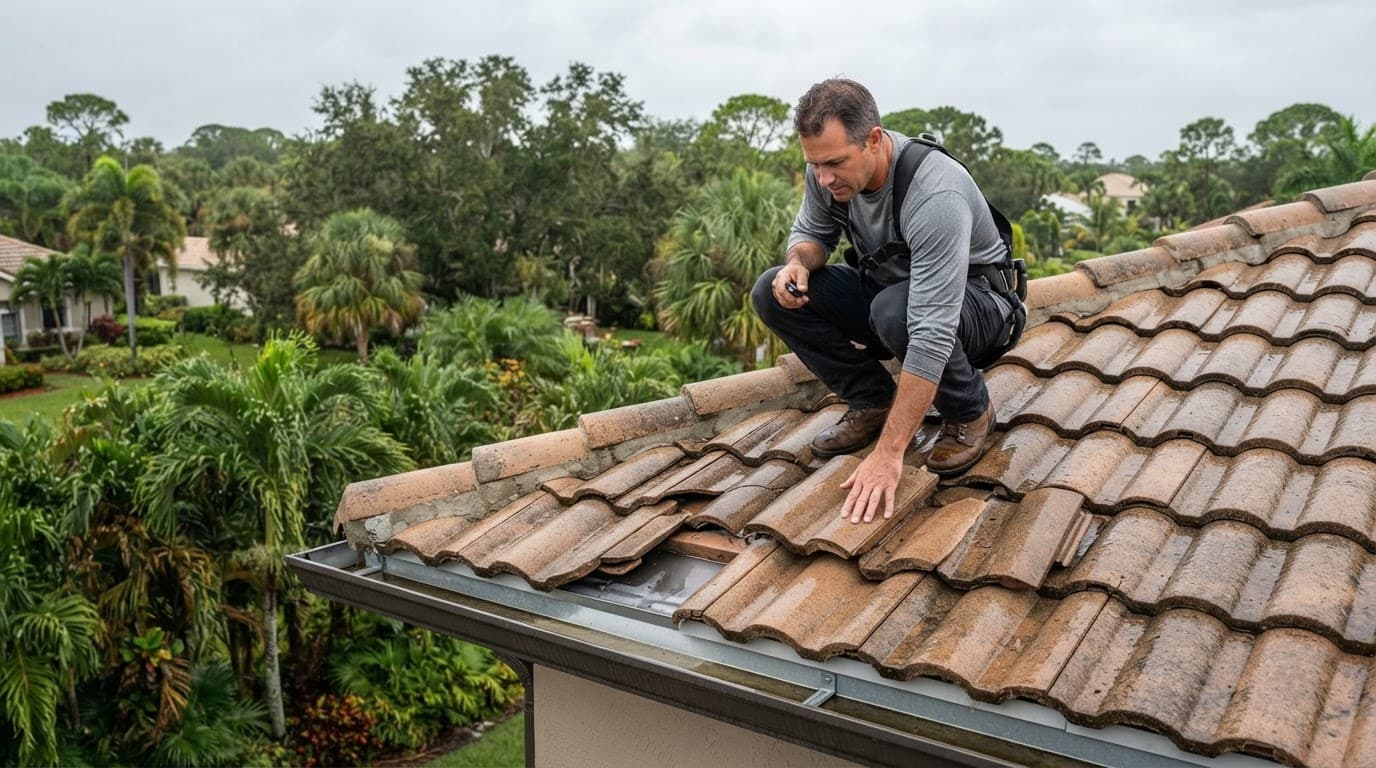
From the ground, look for tiles that are cracked, lifted, shifted, or missing. Check for broken ridge tiles, loose-looking edges, exposed underlayment, and pieces in gutters or around downspouts.
Dark stains, loose flashing, or gaps around vents also deserve attention, especially after wind-driven rain. Use binoculars or a camera with a zoom lens rather than a ladder or your own feet.
Tile roofs can be brittle in ways that aren't obvious. Even a sound-looking tile can break under concentrated weight, while a misplaced step can disturb nearby tiles. Stay off the roof, and don't lift tiles, pull flashing, or apply sealant as a do-it-yourself fix.
Interior Clues Can Appear Later
Inside the house, inspect ceilings, upper walls, and attic areas for new stains, damp insulation, musty odors, daylight through the roof deck, or peeling paint. Water may travel along rafters before it reaches a visible room, so the stain's location doesn't always match the roof entry point.
If active water is near electrical fixtures, keep clear and contact an appropriate professional. A qualified roofer can inspect the roof safely and coordinate with other contractors if water has damaged ceilings, insulation, drywall, or electrical components.
What to Do After a Hurricane or Severe Rain
When a storm passes, focus first on people, water entry, and evidence. Don't wait for a ceiling stain if you can see missing or shifted tiles from the ground. Early action can limit interior damage, but temporary protection needs a follow-up repair.
Make the Area Safe and Limit Water Entry
Keep people away from rooms with sagging ceilings, active leaks, or loose debris. Place containers under drips only when the floor is safe, and move furniture away from water. Don't use a ladder in wet or windy conditions.
A roofer may recommend a tarp or another temporary covering. Temporary protection doesn't replace permanent repair, and emergency measures should follow current local requirements. Ask the contractor how the temporary work will be documented and when the permanent repair can begin.
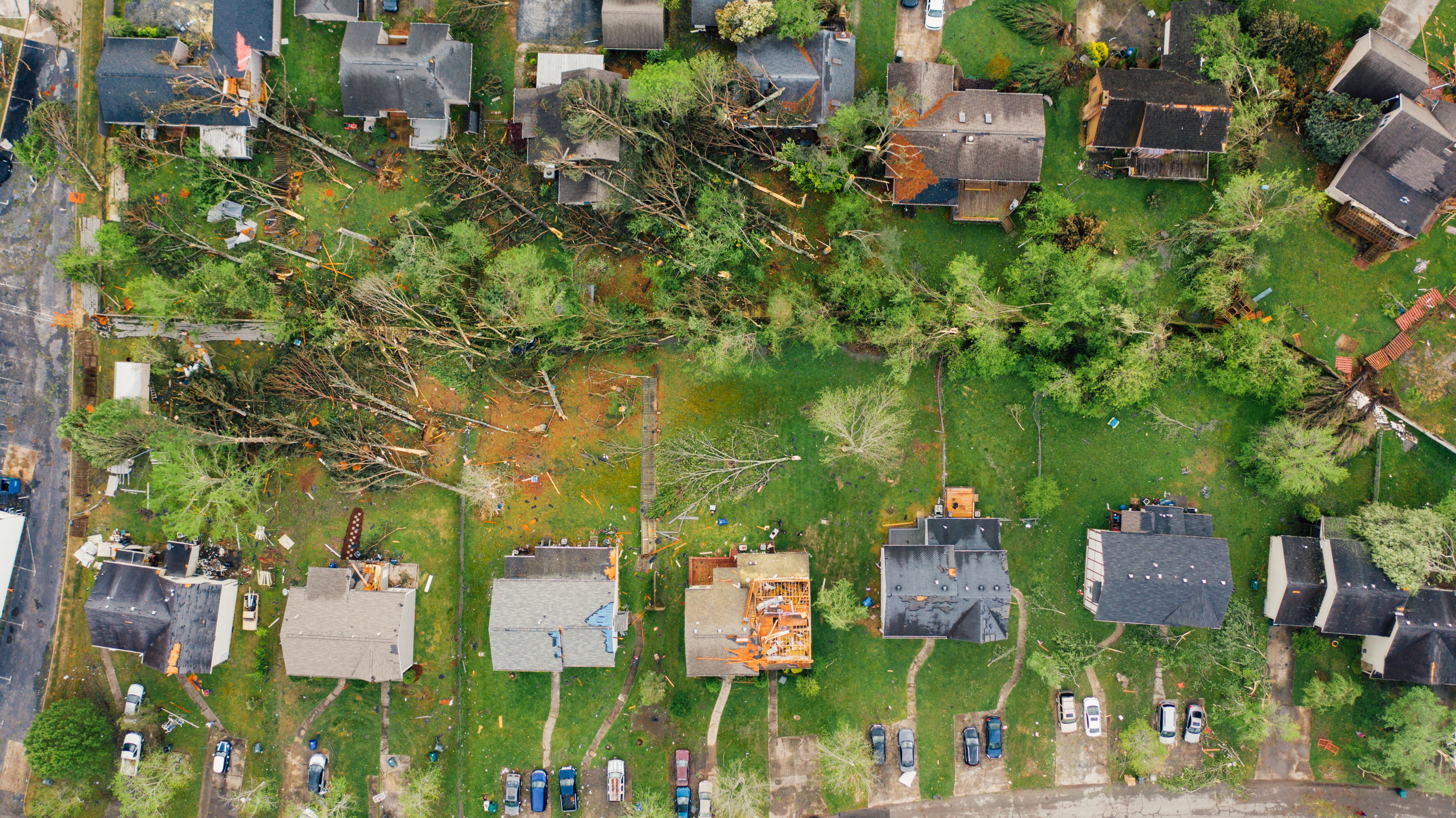
Photo by K
Build a Useful Damage Record
Take wide photos that show the roof slope and property, then closer images of broken tiles, debris, ridge areas, flashing, gutters, ceilings, attic stains, and damaged belongings. Add the date and time to filenames or a written log.
Save storm alerts, inspection reports, invoices for emergency work, and contractor messages. Keep broken tile pieces only if you can collect them safely from the ground. Never climb onto the roof to retrieve evidence.
Contact your insurer promptly if you may file a claim, and ask what documentation and emergency steps it requires. Coverage, deductibles, exclusions, matching rules, and roof-age provisions depend on your policy and current Florida guidance. A licensed contractor can document observed damage, but your insurer decides coverage.
When Broken Tile Roof Repair May Not Be Enough
A repair decision should follow the water path and the roof's condition, not only the number of broken tiles. The proper scope can range from a few replacement tiles to underlayment work or a full roof replacement.
A Localized Repair Can Make Sense
Replacing individual tiles may be reasonable when damage is limited, surrounding tiles remain secure, the underlayment is in good condition, and flashing and battens still function as intended.
The contractor should match the existing profile, size, color, and installation method as closely as available materials allow. A repair should also include checks for displaced neighboring tiles, loose fasteners, and debris beneath the covering.
Ask for photos of the repaired area and a written description of the work. A clear scope helps you understand whether the contractor addressed only the tile or inspected the complete roof assembly.
Hidden Damage Changes the Scope
A leak that returns after tile replacement can point to torn or aged underlayment, failed flashing, damaged battens, or wet roof decking. Underlayment may age out long before the visible tile does. American Roofing Florida's tile-maintenance guidance places a typical underlayment replacement interval around 20 to 25 years, even when the tiles still look sound, but the actual condition depends on the product and installation.
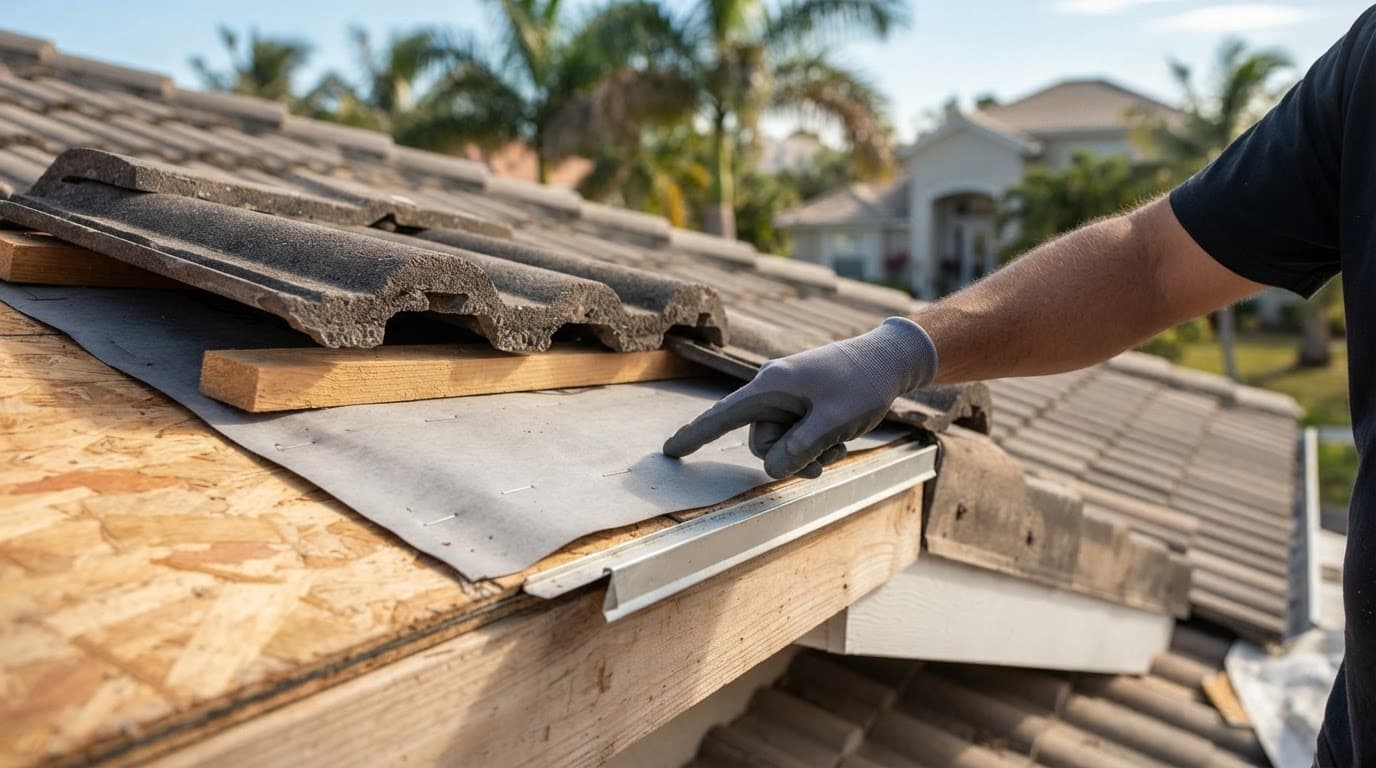
Wind can also weaken attachment points without leaving dramatic cracks. If the decking feels soft, flashing has corroded, or the tile system no longer has reliable fastening, replacing surface pieces alone won't restore the roof.
Widespread cracked tiles, recurring leaks, extensive underlayment deterioration, and multiple damaged slopes may support a larger repair or replacement plan. Ask the roofer to explain why the recommended scope fits the observed damage.
Choosing a Bonita Springs Roofing Contractor
Roof work should be handled by a qualified, properly licensed, and insured professional. Compare the written scope and documentation, not only the quickest appointment or lowest verbal estimate.
Verify Florida License and Insurance
Use the Florida Department of Business and Professional Regulation's MyFloridaLicense portal to check the contractor's current record before signing. Florida recognizes Certified Roofing Contractor and Registered Roofing Contractor classifications.
Review the license status, expiration date, qualifying business name, and any listed discipline. Ask for a current certificate of general liability insurance and workers' compensation. Then contact the insurer to confirm the certificate and policy period.
The business name on the contract should match the licensed entity, or the contractor should explain the relationship clearly. Avoid large upfront cash requests, pressure to sign immediately, and promises about insurance approval.
Ask How the Inspection Will Be Handled
A detailed estimate should state whether it includes tile removal and replacement, underlayment, flashing, battens, fasteners, decking, disposal, cleanup, and final inspection steps. Ask who will handle permits if the work requires them, who performs the work, and how hidden damage could change the price.
Confirm warranty terms in writing. Tile, labor, underlayment, and flashing may have separate warranty terms.
For a Southwest Florida roofing assessment or storm-damage estimate, you can contact Cutting Edge Homes & Renovations.
Insurance, Permits, and Records to Verify
Roofing rules and insurance decisions can change, so Bonita Springs homeowners should verify details before work begins. Check current requirements with the City of Bonita Springs or Lee County building department, depending on the property's jurisdiction.
Ask whether the planned repair needs a permit, inspections, product approvals, or documentation for closeout. Don't rely on an old neighbor's project or a contractor's broad promise. The scope of work and the property's location can affect the process.
Insurance policies differ as well. Send the insurer dated photos, written contractor findings, estimates, invoices, and temporary-protection receipts through the claim process it provides. A Florida 4-point inspection guide can help explain how roof condition fits with other major home systems, but a 4-point inspection isn't a substitute for a storm-specific roof assessment.
Make the Repair Decision Before the Next Storm
Broken tile roof repair in Bonita Springs should begin with a safe inspection, not a trip onto the roof. Cracked, slipped, and missing tiles matter, yet the lasting fix depends on the underlayment, flashing, battens, fasteners, and decking beneath them.
After a storm, protect people, document what you can see, contact your insurer, and hire a licensed, insured contractor. Localized damage may need only tile replacement, while recurring leaks, widespread movement, or aging underlayment may point to a larger project. A careful diagnosis can keep a visible roof problem from becoming interior water damage later.