Saltwater Pool Tile Choices for Naples Gunite Pools
Explore Our Services
Contact Us Today!
(239) 322-9295
The waterline tile in a pool does more than add color. It sits where water, sunlight, sunscreen, evaporation, and cleaning products meet every day.
Choosing saltwater pool tile for a Naples gunite pool requires more than picking a pattern from a showroom. The tile, grout, setting materials, and water chemistry must work together in Southwest Florida's coastal conditions. The right choices help protect the pool's appearance and reduce avoidable repairs.
Before comparing materials, it's important to understand what saltwater actually means for your pool.
What Saltwater Conditions Mean for Pool Tile
A saltwater pool can feel smoother and less harsh than a traditionally chlorinated pool, but it still depends on chlorine for sanitation. The difference is that a salt chlorine generator produces chlorine from dissolved salt through electrolysis.
That process doesn't make the water chemical-free. Your pool still needs regular testing and balanced chemistry.
Saltwater pools still use chlorine
Most residential salt systems operate with a salt concentration around 3,000 to 4,000 parts per million, although the correct level depends on the generator. The system converts chloride in the water into chlorine, which sanitizes the pool before cycling back toward salt.
For many residential pools, free chlorine stays in the range of 1 to 3 parts per million. Pool pH commonly needs to remain between 7.2 and 7.8. Your equipment manual and pool professional should determine the exact targets for your system.
Salt systems can also cause pH to rise over time. As a result, homeowners still need to test pH, free chlorine, alkalinity, calcium hardness, and salt levels. Poor chemistry can affect grout, metal fittings, plaster, and tile surrounds even when the tile itself is well made.
Saltwater reduces the need to add chlorine manually, but it doesn't remove the need for chlorine testing or water balancing.
Why Naples' coastal air matters
Naples pools face more than the water inside the vessel. Salt-laden air, strong ultraviolet exposure, heat, heavy rain, and windblown debris all affect the waterline area.
Evaporation leaves concentrated minerals behind. Splash-out can dry on the tile and grout, creating white residue or scale. Sunscreen and body oils can also collect along the waterline, especially in a busy family pool.
Saltwater alone doesn't automatically damage every pool tile. The greater concern is repeated exposure combined with poor water balance, porous materials, weak grout, or incorrect installation. That is why product documentation matters more than appearance alone.
Choosing saltwater pool tile for a Naples Gunite Pool
Gunite gives homeowners considerable freedom with pool shape, steps, benches, tanning ledges, and raised walls. Tile can follow those details, but each transition creates another area where installation quality matters.
Start with pool-rated specifications
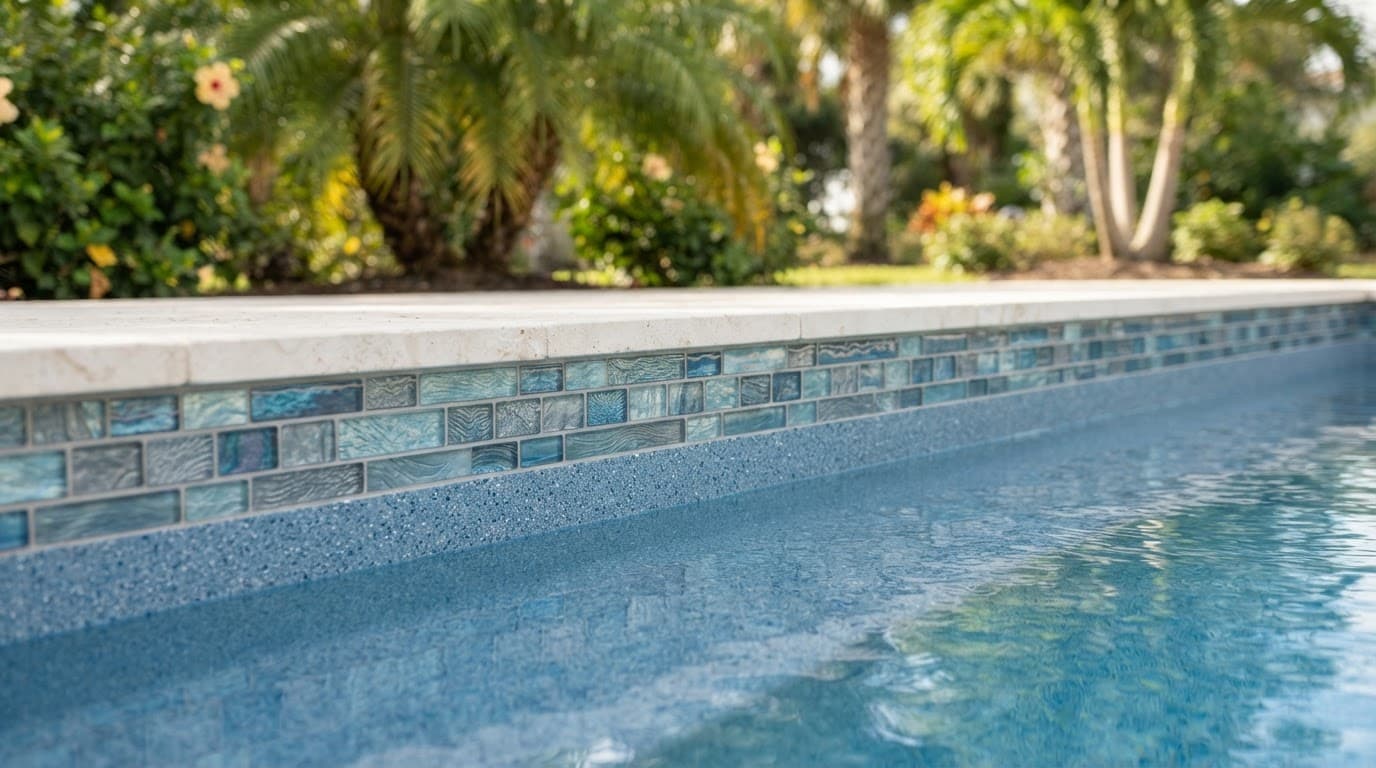
Don't assume that a tile is suitable because it's marketed for a bathroom, shower, backsplash, or outdoor wall. A pool has continuous water exposure, chemical contact, direct sun, and regular temperature changes.
Ask for documentation that confirms the tile is approved for pool or submerged use. Pay attention to:
- Water absorption and porosity ratings
- Resistance to pool chemicals and ultraviolet exposure
- Slip characteristics for steps and shallow areas
- Compatibility with the planned grout and setting materials
- Manufacturer instructions for submerged or waterline installation
For most Naples homeowners, porcelain is a strong starting point for a waterline application because many porcelain products are dense and designed for wet environments. The exact product still matters, so your contractor should verify its pool rating before ordering.
Treat grout and setting materials as part of the tile choice
Tile is only one part of the finished surface. Grout joints, mortar, adhesives, waterproofing details, and expansion joints also affect long-term performance.
A beautiful tile can fail when the substrate wasn't prepared correctly or when the installer used materials that weren't rated for constant immersion. Ask which grout system fits the tile and joint width. In some installations, an epoxy grout may offer useful resistance to water and chemicals, but the product must be compatible with the tile and installation method.
The gunite shell also needs proper curing, surface preparation, and detailing around fittings and changes in plane. Tile can't compensate for shell movement or poor bonding. A Southwest Florida pool contractor can coordinate the shell, tile, equipment, deck, and screen enclosure as one construction plan.
Tile Materials Compared for a Coastal Pool
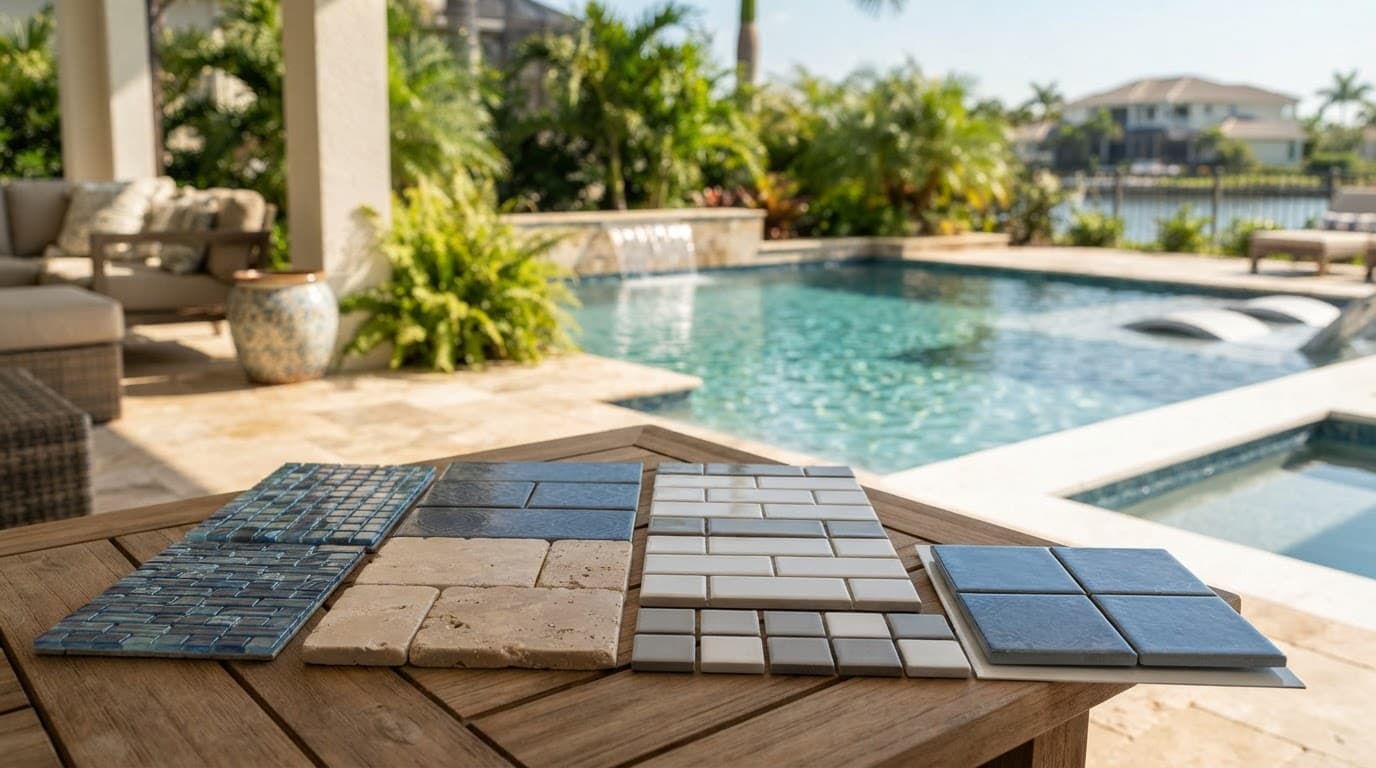
Each material can work in the right application, but none should be selected without checking the manufacturer's pool-use requirements.
| Material | Common pool use | What to verify |
|---|---|---|
| Porcelain | Waterline bands, steps, walls, and raised features | Pool rating, absorption, shade consistency, and grout compatibility |
| Glass | Accent bands, mosaics, spas, and water features | Full-submersion approval, backing, adhesive, and installation method |
| Ceramic | Decorative waterline applications | Pool-specific rating, glaze durability, and absorption |
| Natural stone | Coping, select accents, and feature walls | Porosity, sealer requirements, salt compatibility, and cleaning plan |
Why porcelain is often the practical default
Porcelain offers a wide range of colors, formats, textures, and surface patterns. It can create a clean modern waterline or imitate stone without requiring the same level of sealing as many natural stones.
For a Naples gunite pool, a pool-rated porcelain tile is often the easiest material to maintain at the waterline. Light and medium tones can also hide minor mineral residue better than very dark polished surfaces.
Where glass, ceramic, and stone fit
Glass tile adds color and reflected light, which makes it popular for narrow accent bands and spa details. It can be an excellent choice when the product and setting system are approved for submerged use.
Ceramic may work well, but homeowners shouldn't assume that every ceramic tile is suitable for a pool. Natural stone requires the most caution. Some stones absorb water or need regular sealing, and coastal salt deposits can leave staining or surface changes. Stone can still be appropriate when the exact material, sealer, and maintenance plan have been reviewed.
A balanced design often uses porcelain as the primary waterline finish with glass used selectively for an accent. That approach keeps the main surface practical while adding visual detail.
Design Details That Affect Long-Term Appearance
Color gets most of the attention during tile selection, but size, layout, texture, and placement affect maintenance just as much.
Give the waterline a practical job
The waterline band catches residue that would otherwise collect on the pool shell or coping. Choose a surface that is easy to wipe and brush. Highly textured tile may look attractive, yet its grooves can hold sunscreen, algae, and mineral deposits.
Mosaic sheets can follow curves and rounded steps, but they also create more grout lines. Larger formats reduce joint maintenance when the pool design allows them. On a raised spa or spillway, confirm that the tile layout won't create awkward cuts or exposed edges.
Color also matters. Dark tile can show calcium deposits and dried salt more clearly. Very pale tile may blend with light coping but can show organic residue. Bring samples outside and view them in direct sun, shade, and pool water before making a final decision.
Plan the transition around the shell
A gunite pool often includes tanning ledges, benches, integrated steps, raised beams, and water features. Tile should transition cleanly around these elements without forcing narrow slivers or sharp exposed corners.
Review the layout before installation begins. Confirm the height of the waterline band, where grout joints will fall, and how tile will meet coping, plaster, stone, and deck surfaces.
The tile line should also account for normal water-level changes. An auto-fill system, splash-out, and evaporation can shift the visible waterline. A contractor who coordinates the elevations during design can reduce uneven exposure and difficult finishing details.
Maintaining Saltwater Pool Tile in Naples
Good maintenance protects both the tile and the surrounding pool finishes. It also helps you spot small problems before they become a remodel.
Test chemistry on a regular schedule
Test free chlorine and pH routinely, even when the salt system runs automatically. Check salt concentration according to the generator's instructions, especially after heavy rain, draining, adding water, or servicing the system.
Keep the chlorine generator cell clean as recommended by the manufacturer. Mineral buildup on the cell can reduce performance. The same water imbalance that creates scale inside equipment can leave deposits on tile and grout.
During periods of heavy use, warm weather, or storms, test more often. A pool service professional can help establish a schedule based on the pool's size, equipment, shade, usage, and water source.
Remove residue before it hardens
Wipe the waterline when you see a film forming. Use a soft brush or nonabrasive pad that won't scratch the tile or loosen grout. Never use metal tools on the surface.
For calcium scale, dried salt, or stubborn organic residue, use a cleaner approved for the specific tile and grout. Natural stone may require a different product than porcelain or glass. Avoid treating every white deposit as salt, since calcium scale and grout haze need different solutions.
Inspect the grout, corners, fittings, and coping joints during routine cleaning. Cracked grout, loose tiles, rust marks, or recurring deposits deserve a professional inspection rather than repeated scrubbing.
Final Checklist for a New or Remodeled Gunite Pool
Before approving a tile selection, review these points with your pool designer or contractor:
- Confirm the exact tile is rated for pool or submerged use.
- Request the product's water absorption and chemical-resistance information.
- Decide whether the tile will sit at the waterline, below the waterline, on steps, or on a raised feature.
- Check that the selected grout, mortar, adhesive, and waterproofing materials work as a complete system.
- Review the tile layout around curves, benches, tanning ledges, drains, return fittings, and spillways.
- View physical samples outdoors in direct sun and shade.
- Consider how easily the surface will show calcium, salt residue, sunscreen, and algae.
- Ask how the tile and grout should be cleaned, sealed, and repaired.
- Confirm who will inspect the substrate and tile installation before the pool is filled.
- Match coping, deck, drainage, screen enclosure, and equipment access to the pool plan.
If you're building during a home project, settle the tile and waterline elevations before the shell, deck, and outdoor finishes are finalized. For a remodel, identify whether loose tile comes from a localized bonding issue, shell movement, water chemistry, or a failing grout system. The repair method depends on the cause.
Conclusion
The best saltwater pool tile for a Naples gunite pool is a pool-rated product matched with compatible grout, proper substrate preparation, and balanced water chemistry. Porcelain is often the practical primary choice, while glass can add accents when its installation requirements are clear. Ceramic and natural stone can work in selected applications, but they need closer review.
Saltwater pools still contain chlorine, and coastal conditions still demand routine care. Choose tile with the same attention you give the gunite shell and equipment, then keep the water balanced and the waterline clean.