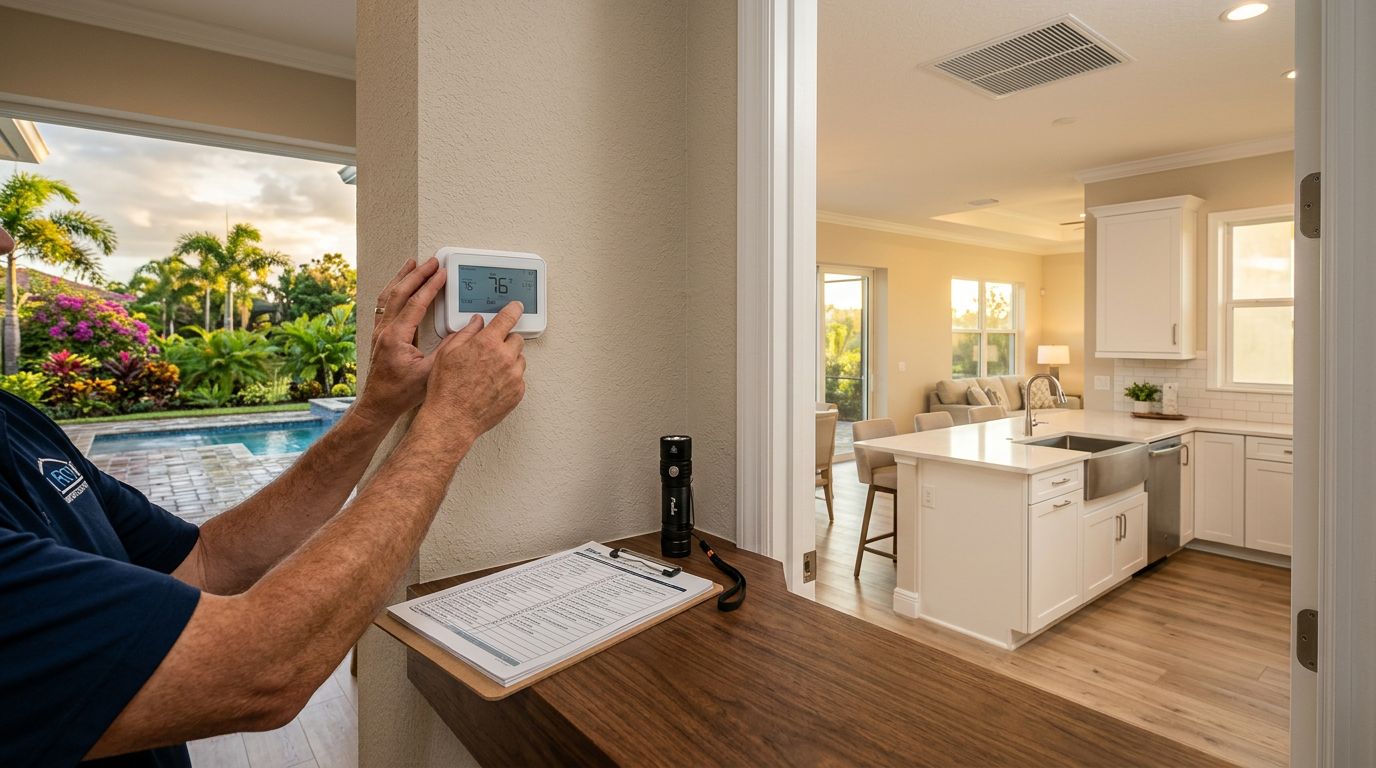
Bonita Springs Roof Cleaning Methods for Shingles and Tile
Explore Our Services
Contact Us Today!
(239) 322-9295
Black streaks, green growth, and dirt can make a roof look older than it is. In Bonita Springs, roof cleaning also has to account for intense heat, heavy rain, high humidity, and salt-laden coastal air.
The right Bonita Springs roof cleaning method depends on the roof material. Asphalt shingles and tile respond differently to water pressure, chemicals, foot traffic, and moisture. A careful cleaning can improve curb appeal without damaging the surface, but an aggressive approach can shorten the roof's service life.
Why Southwest Florida roofs collect growth
Bonita Springs roofs stay warm for much of the year. Humid air and frequent rain create damp conditions where algae, mold, mildew, and lichen can develop. Shaded roof sections often show the most discoloration because they dry more slowly.
Salt air adds another concern. Salt residue can settle on metal flashing, fasteners, vents, and other roof components. Cleaning removes surface buildup, but it won't repair corrosion or replace worn materials.
Heat, rain, and humidity affect every roof
Heavy summer rain can wash leaves and dirt into valleys and gutters. When debris stays in place, it holds moisture against the roof surface. Over time, that moisture can contribute to staining and organic growth.
Strong sun also breaks down exposed roofing materials. If cleaning removes protective granules from shingles or damages the finish on tile, the roof becomes more vulnerable to heat and rain. That is why water pressure must remain low and controlled.
Roof material changes the cleaning plan
Asphalt shingles have a flexible fiberglass mat covered with mineral granules. Those granules protect the shingles from ultraviolet light and weather. Excessive pressure can loosen them, leaving bare or thin areas.
Concrete and clay tiles are harder, but they can crack under concentrated force. Their overlapping design also creates spaces where water can enter beneath the surface. A method that may be acceptable for a driveway can damage a roof in minutes.
Bonita Springs roof cleaning for asphalt shingles
Soft washing is usually the safer approach for asphalt shingles. It uses a low-pressure application of a roof-safe cleaning solution, followed by a controlled rinse when the product and roof manufacturer call for one.
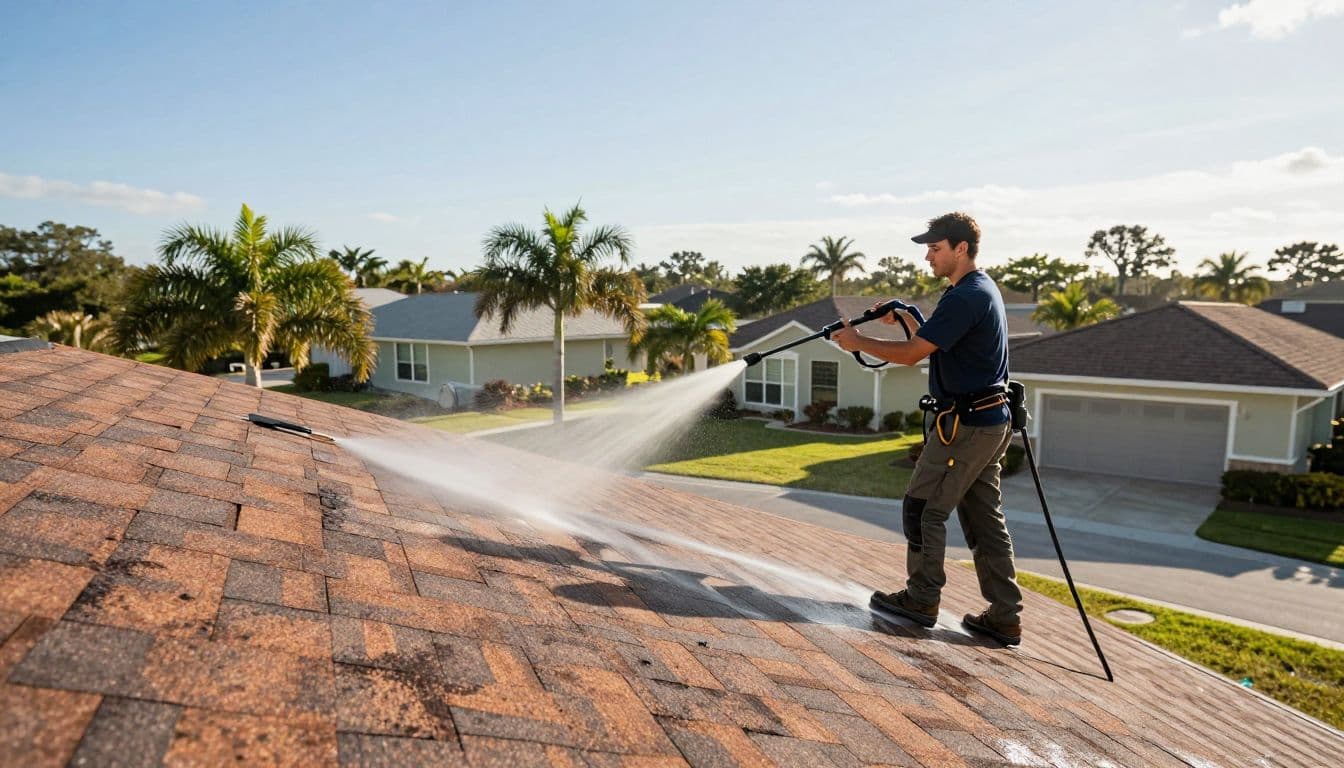
How soft washing protects shingles
A trained technician should inspect the roof before applying any solution. The inspection checks for brittle shingles, exposed underlayment, damaged flashing, loose vents, active leaks, and areas that can't safely support foot traffic.
The cleaning solution should match the roof condition and manufacturer care requirements. Technicians apply it with low pressure so the solution can break down algae and organic staining without stripping away granules. After the proper dwell time, they use a gentle rinse or allow the approved treatment to work as directed.
Plants, outdoor furniture, walls, windows, and painted surfaces also need protection. A responsible crew wets and covers sensitive landscaping, controls runoff, and rinses nearby surfaces after the work.
Why pressure washing can cause damage
High-pressure washing can force water beneath shingle tabs and into roof openings. It can also loosen granules, lift edges, damage flashing, and expose weak areas that weren't leaking before cleaning.
Harsh chemicals create another risk. Strong or improperly mixed products can discolor shingles, corrode metal, harm plants, or damage exterior paint. Never mix bleach with acids, ammonia, or other household cleaners. The product label and roof manufacturer's guidance should control the cleaning plan.
Tile roof cleaning needs a lighter touch
Tile roofs need a different process because their shape, weight, and installation method create unique risks. Soft washing can remove algae and dirt, but the technician must control both pressure and access.
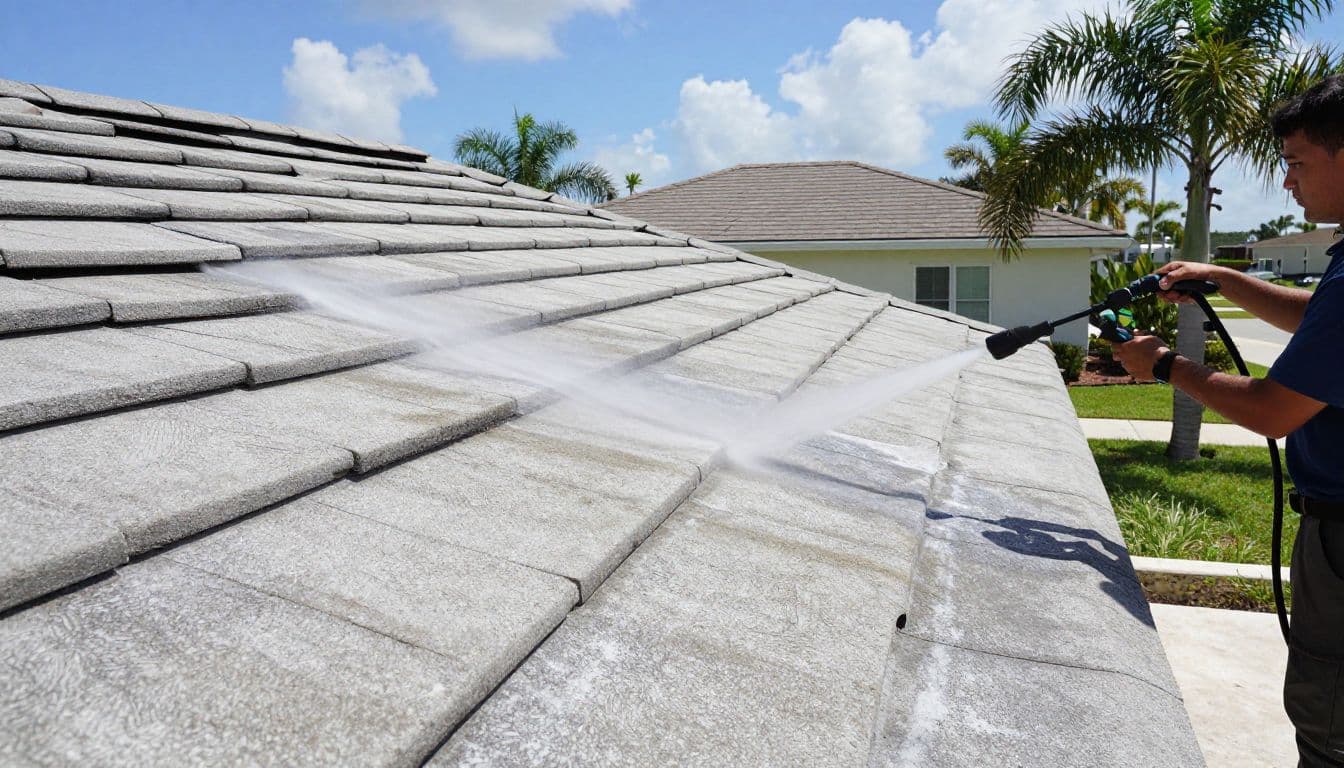
Cleaning concrete and clay tile
Concrete tile often develops dark staining, algae, and mildew in damp or shaded areas. Clay tile may have a finish that abrasive tools or forceful spraying can damage. Both materials need a solution that won't harm the tile, underlayment, nearby metal, or painted surfaces.
A low-pressure treatment helps loosen organic growth without blasting across the tile profile. The technician should work in manageable areas and check the surface as the treatment progresses. Broken, chipped, or loose tiles need repair before or after cleaning, depending on the condition and the risk of water entry.
Pressure washing can also drive water under tile overlaps. That water may reach the underlayment or roof deck, where it can cause hidden moisture problems.
Foot traffic and runoff matter
Walking on tile is not a routine task for homeowners. Stepping on the wrong part of a tile can crack it, and repeated traffic can damage both tile and underlying support. A professional should limit roof access and use an established safety plan.
Runoff needs control as well. Cleaning solutions can harm lawns, shrubs, pool water, storm drains, and painted walls. Downspouts may need temporary diversion, while landscaping and outdoor areas should receive protection and thorough rinsing.
Signs you need professional Bonita Springs roof cleaning
Some roof staining is cosmetic, but it still deserves attention when it spreads or returns quickly. Dark streaks often come from algae, including the type commonly associated with black staining on asphalt shingles. Green patches, moss, or lichen can hold moisture against the surface.
Look for these warning signs:
- Black streaks that run down shingle courses or tile faces.
- Green growth in shaded roof sections, valleys, or around vents.
- Leaves, pine needles, and branches collecting on the roof.
- Granules appearing in gutters or around downspouts.
- Cracked, slipped, chipped, or missing tiles.
- Shingles with lifted edges, exposed mat, or visible bald spots.
- Water stains on ceilings, attic framing, or upper walls.
A roof with surface growth may need cleaning. A roof with exposed underlayment, damaged flashing, or interior water stains needs an inspection before anyone applies water or chemicals.
Cleaning is not a substitute for roof repair
Roof cleaning improves the appearance of a sound roof. It doesn't seal leaks, replace missing shingles, reset loose tile, repair flashing, or restore exhausted materials.
If the roof is older or shows damage, schedule a roof condition assessment before choosing a cleaning service. A professional roof inspection can help separate removable staining from problems that require repair or replacement.
Homeowners planning a remodel should also coordinate roof work with other exterior projects. Cleaning a roof before a roofing inspection can make the surface easier to view, but cosmetic cleaning isn't a good investment when replacement is already necessary.
Maintenance tips for Bonita Springs homes
Routine care reduces the amount of buildup a roof collects between professional cleanings. It also helps you find small problems before heavy rain exposes them.
Keep debris and moisture under control
Have gutters and downspouts cleared before the rainy season and after major storms. Blocked drainage can send water back beneath roof edges or leave standing moisture around the foundation.
Trim branches that rub against the roof or drop heavy debris. Check that irrigation heads don't spray the shingles or tile. Keep an eye on shaded areas, since they usually need attention before sunny sections.
After severe weather, look from the ground for missing shingles, shifted tile, torn screens, or loose metal. Don't climb onto the roof to investigate. A ladder or wet roof can turn a minor concern into a serious fall.
Choose the right time for cleaning
Schedule roof cleaning during dry, calmer weather. High winds can spread cleaning solution, while heavy rain can wash it away before it works and carry runoff into unwanted areas.
Bonita Springs roof cleaning may be needed more often on shaded homes, properties near trees, and buildings close to the Gulf. A visual check every few months is more useful than following a fixed schedule. The roof's material, surrounding vegetation, and amount of staining should guide the timing.
How to choose a roof cleaning contractor
A qualified contractor should explain the proposed method before work begins. Ask whether the crew has experience with your exact roof type, what pressure range it will use, and which cleaning products are approved for the material.
The written scope should cover plant protection, runoff control, surface rinsing, roof access, cleanup, and the treatment of damaged areas. It should also state whether the price includes only cleaning or any minor repairs.
Questions homeowners should ask
Ask the contractor:
- Will you inspect the roof before cleaning?
- Do you use soft washing for asphalt shingles?
- How will you protect tile from cracking and excessive foot traffic?
- What will you do with chemical runoff?
- How will you protect plants, pool water, windows, and painted walls?
- Will you document damage that cleaning cannot correct?
- Are you licensed and insured for the work?
A contractor who promises to make every roof look new may be overlooking age, wear, and structural problems. Good roof cleaning starts with an honest assessment of what cleaning can and cannot change.
Stay off the roof when conditions are unsafe
DIY roof access is risky, especially on hot tile, damp shingles, steep slopes, and two-story homes. Cleaning solutions can make surfaces slippery, while heat can cause fatigue and poor footing.
Homeowners can inspect from the ground, clear small amounts of debris from safe locations, and watch gutters for excess granules. Leave roof access, chemical handling, and pressure decisions to trained and insured professionals.
Conclusion
The safest Bonita Springs roof cleaning method matches the roof material and follows manufacturer-safe practices. Low-pressure soft washing can treat algae and dirt on shingles and tile, while high-pressure spraying, harsh chemicals, and careless foot traffic can cause expensive damage.
Southwest Florida homeowners should also treat staining as a reason to look closer, not as proof that cleaning is the only service needed. When a roof shows leaks, missing materials, corrosion, or granule loss, an inspection should come before cleaning. A careful assessment protects the roof you have and helps you plan the right next step.