Built-Up Roofing: A Cape Coral Property Owner's Guide
Explore Our Services
Contact Us Today!
(239) 322-9295
A low-slope roof can look straightforward while hiding problems beneath its surface. If you're considering built-up roofing for your Cape Coral property, start with the building and existing roof assembly.
The right choice depends on a professional assessment , especially when moisture, drainage, or previous repairs complicate the project. A material name alone won't tell you whether a proposed roof makes sense.
First, understand what built-up roofing means, then examine the details that should shape your contractor's recommendation.
Key Takeaways
- Built-up roofing is a layered roof covering, but its materials and specifications can vary.
- Your building, existing roof assembly, drainage, and moisture conditions should guide the recommendation.
- A written proposal should identify the complete roofing system, project responsibilities, and warranty terms without promising a guaranteed lifespan or hurricane outcome.
What Built-Up Roofing Means
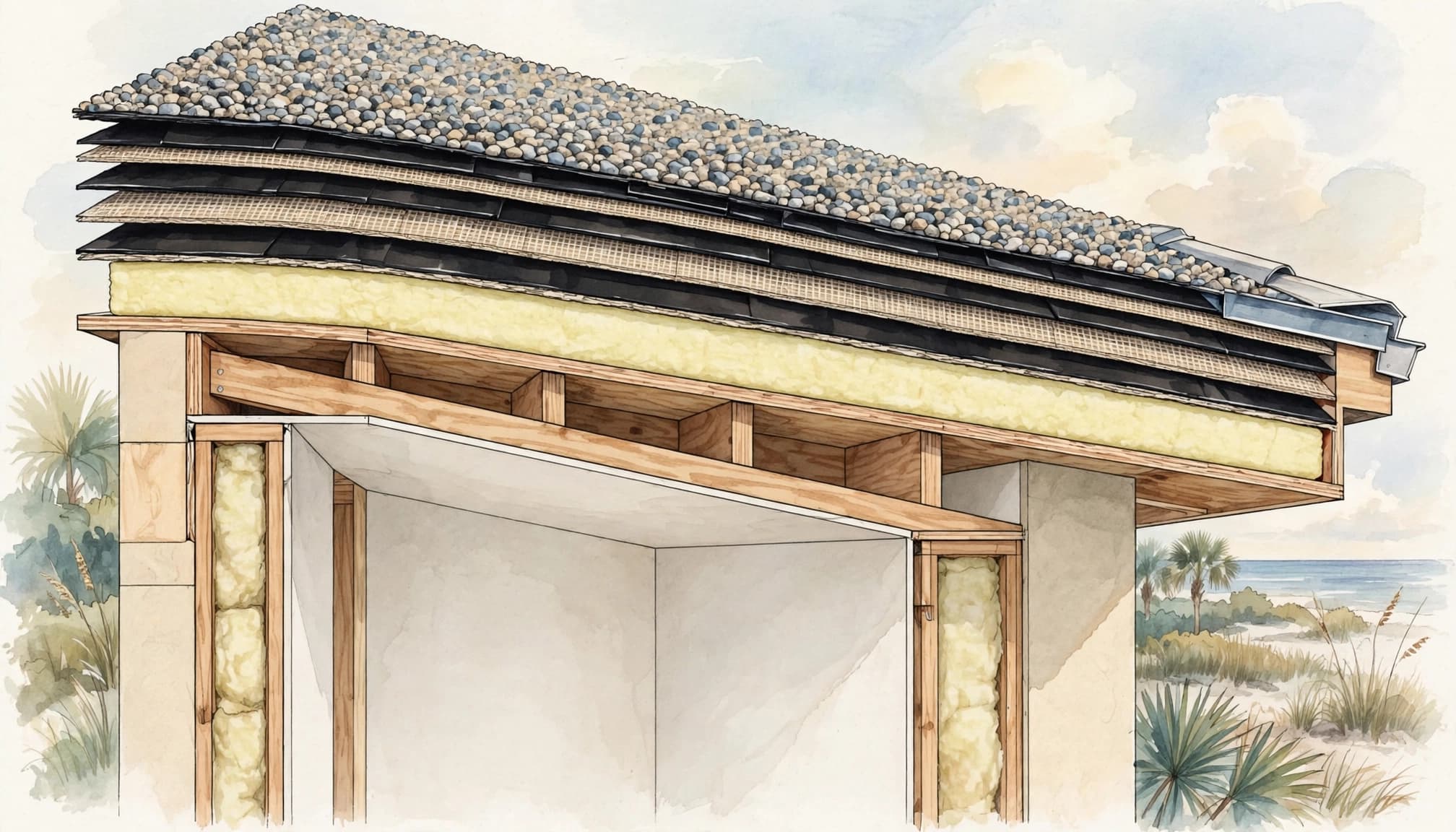
Built-up roofing, often shortened to BUR, consists of alternating layers of bituminous material and reinforcing sheets. Asphalt is a common bituminous material, while reinforcing sheets may contain fiberglass.
The finished roof includes a protective surface. However, appearance alone doesn't identify everything underneath.
The roof covering is one part of the assembly
The complete roof also includes the deck, insulation where present, flashing, edges, and drainage components. Each part has a separate job, so a discussion focused only on the exposed surface leaves important questions unanswered.
For example, the deck supports the roof assembly. Flashing addresses connections around walls and openings. Meanwhile, drainage components direct rainwater toward designated outlets.
Ask your contractor to identify these components in the existing roof and proposed replacement. That explanation should distinguish what stays, what changes, and what needs further investigation.
Similar-looking roofs can have different systems
The familiar term "tar-and-gravel roof" doesn't describe every built-up system. Likewise, a roof with an asphalt-based surface could involve a different roofing product.
Modified bitumen uses sheets made with polymer-modified asphalt. BUR and modified bitumen belong to the broader asphalt roofing family, but the names aren't interchangeable.
Existing plans, product records, and an on-site assessment can help establish what you have. That identification matters before anyone recommends a repair material or new covering.
Start With the Building and Existing Roof
A roofing recommendation should account for your particular property. A new home, older residence, addition, and commercial building may present different conditions, even within the same Cape Coral neighborhood.
Roof shape, support, and drainage
Ask the contractor to evaluate roof slope, deck condition, existing materials, and structural capacity. These findings help determine which options deserve further consideration.
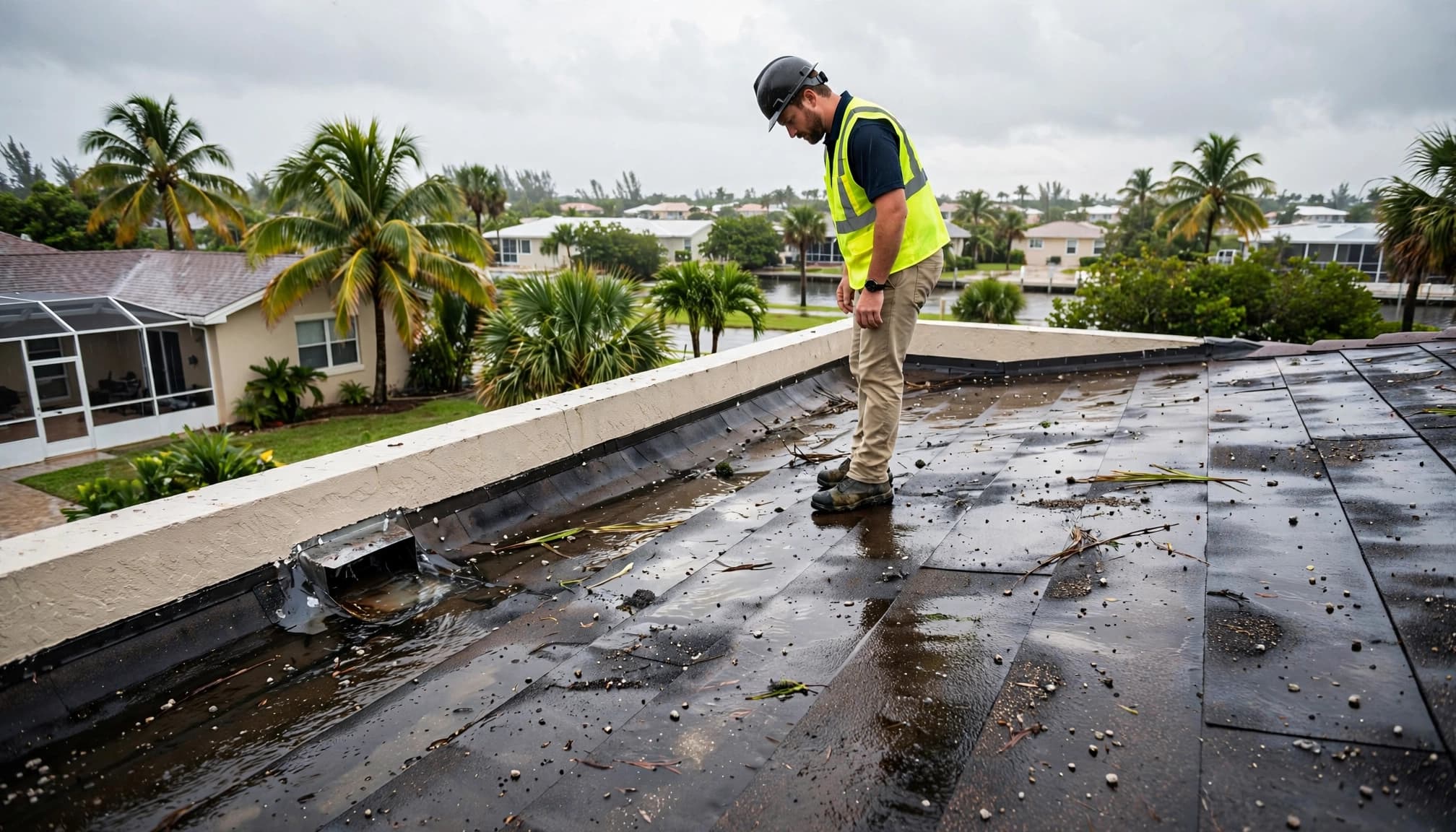
Drainage needs its own review. Low-slope roofs depend on planned routes for water to leave the surface, such as drains, scuppers, or gutters. Scuppers are outlets through roof perimeter walls.
An estimate should explain whether drainage needs correction, rather than treating standing water as a surface problem alone. Also discuss transitions where an addition meets the original house, since those connections can complicate the scope.
Moisture beneath the surface
A roof may look acceptable while concealing damp insulation or deteriorated decking. Ceiling stains, musty odors, and recurring leaks deserve investigation before material selection.
Where access allows, the assessment should include interior areas beneath the roof. Ask whether the contractor needs additional moisture testing or exploratory openings to clarify the condition.
These findings can change the replacement plan and budget. Hidden moisture matters because covering an existing problem can leave damaged materials in place. Request a written explanation of uncertain conditions and how the contractor will address discoveries during construction.
Cape Coral Weather Requires Attention to Details
Southwest Florida roofs face strong sunlight, humidity, heavy rain, and tropical weather. These exposures make the condition of the entire roof assembly important.
They don't establish that one material is automatically right for every property.
Sun, rain, and drainage conditions
UV exposure and repeated heating and cooling place stress on roofing materials over time. Meanwhile, heavy rain can reveal blocked drainage routes or weaknesses around roof openings.
Ask how the proposed system addresses your roof's exposure and drainage conditions. If the proposal includes a reflective surface or coating, request the exact product information and an explanation of compatibility.
Indoor comfort also depends on insulation and the building's ventilation design where applicable. A surface treatment alone doesn't resolve every source of heat gain or moisture trouble.
Roof edges, openings, and coastal accessories
Wind-driven rain can reach wall intersections, perimeter details, vents, and other penetrations. Therefore, the proposal should address flashing and attachment details alongside the main roof covering.
Near coastal waterways, ask whether metal accessories and fasteners suit the property's exposure. Corrosion-resistant components still need compatible materials and correct detailing.
Also request the project's applicable wind-design information and supporting product documentation. A salesperson's broad storm claim can't replace a property-specific assessment.
A product approval doesn't automatically establish that every configuration is appropriate for your building. Ask how the proposed assembly matches the project's requirements.
Compare Roofing Options by System, Not Nickname
When discussing alternatives, ask your contractor to distinguish the roofing families clearly. Comparing labels alone can create confusion about what's actually included.
These terms describe different materials or project components.
| Term | What it describes | What to clarify |
|---|---|---|
| Built-up roofing | A layered bituminous roof covering | The proposed complete assembly |
| Modified bitumen | Roofing sheets containing polymer-modified asphalt | The specified product and supporting components |
| TPO or PVC | Types of single-ply roofing membranes | The exact membrane and assembly |
| Roof coating | A surface treatment applied over a roof | Existing-roof condition and product compatibility |
The useful comparison is between complete proposals for your building. One estimate may include insulation, drainage changes, and new flashing while another excludes them.
Also separate appearance preferences from technical decisions. If you're remodeling or designing an addition, coordinate roof height, transitions, and exterior details with the overall plans. Don't assume the covering used elsewhere on the property belongs on every roof section.
What Belongs in Your Roofing Proposal
A detailed proposal makes expectations easier to understand before work begins. It should explain the recommended scope and identify unresolved conditions.
Cost drivers and exclusions
Request a property-specific estimate rather than relying on a general built-up roofing price. Ask the contractor to separate tear-off, disposal, deck repairs, insulation, flashing, drainage work, access, and permit-related responsibilities.
Replacement and new construction involve different starting conditions. An existing roof may conceal damage, while a new build requires coordination with structural plans and other trades.
The contract should also explain allowances, exclusions, and change orders. For concealed damage, ask how the contractor will document the discovery and obtain your approval before additional work proceeds.
Product records and project responsibilities
Ask who will obtain permits, coordinate required inspections, and provide closeout documents. Request the manufacturer's specifications and applicable Florida Product Approval information for the proposed materials.
The paperwork should match the products and assembly actually specified. Confirm substitutions in writing rather than accepting an unexplained change during construction.
Cutting Edge Homes & Renovations provides residential roof installation services throughout Southwest Florida. When discussing your project, ask which systems the team recommends evaluating and why.
Before signing, verify current licensing, insurance, and responsibility for the work. The company's roofing page lists roofing contractor identifier CCC1331068.
Repair, Restoration, or Replacement?
A leak doesn't establish that the entire roof needs replacement. However, a small visible stain doesn't establish that the damage is limited either.
The decision should follow diagnosis. Ask the contractor to identify the water-entry point, affected materials, and evidence supporting the recommendation. Water can travel before appearing indoors, so the ceiling stain may not sit directly beneath the defect.
A coating also needs careful evaluation. It won't correct a damaged deck, replace wet insulation, or solve an inadequate drainage layout. Ask what repairs would be necessary before any coating proposal deserves consideration.
Cutting Edge's roof repair services cover residential roofing problems throughout Southwest Florida. An assessment can help clarify the available paths without assuming that every leak requires the same solution.
After storm damage, prioritize safe temporary protection and documentation. Stay off wet roofs and keep photographs, invoices, and correspondence together for contractor and insurance discussions.
Protect the Warranty When Planning Future Work
Warranty terms should be part of the contract discussion. Ask for the actual documents and distinguish manufacturer coverage from the contractor's workmanship coverage.
Check exclusions, maintenance responsibilities, claim procedures, and any transfer provisions. Also ask who investigates a leak and whether that inspection carries a charge. A stated warranty period doesn't establish a guaranteed service life.
Future home projects deserve coordination, too. Solar equipment, satellite dishes, additions, and pool enclosure connections may affect the roof or nearby details.
Before another trade creates an opening or attachment, contact the roofing contractor. Document the approved work and who performed it, because later leaks can involve more than one contractor or warranty.
Finally, ask for written care instructions tied to the selected system. Use safe observation points to monitor visible changes, and arrange professional access when roof-level examination is necessary. Don't substitute aggressive cleaning or an unapproved coating for a diagnosis.
Frequently Asked Questions
How long does built-up roofing last?
Request an assessment tied to the proposed assembly or existing roof condition. Materials, exposure, drainage, workmanship, and previous damage can affect performance. A general lifespan figure won't establish how long your property's roof will remain serviceable, and a warranty shouldn't be treated as that prediction.
Can a new covering go over my existing roof?
Ask the contractor to evaluate the existing assembly, moisture conditions, structural capacity, and applicable project requirements. Don't assume a recover is available because the surface looks intact. The recommendation should explain what evidence supports keeping existing materials or removing them.
Does built-up roofing guarantee hurricane protection?
No roofing label guarantees a hurricane outcome. Ask how the proposed assembly addresses the building's wind-design requirements, edges, flashing, and attachment details. Also keep insurance questions separate: the insurer determines coverage and any applicable credits, rather than the roofing material name alone.
Make the Decision Around Your Property
Built-up roofing deserves the same careful review as any roof system: start with the building, investigate existing conditions, and compare complete written scopes.
The strongest recommendation explains why the assembly fits the project without promising a fixed lifespan or storm outcome.
For help evaluating your options, contact Cutting Edge Homes & Renovations at (239) 322-9295. Bring previous roofing records, leak history, and remodeling plans so the discussion begins with your property's actual needs.