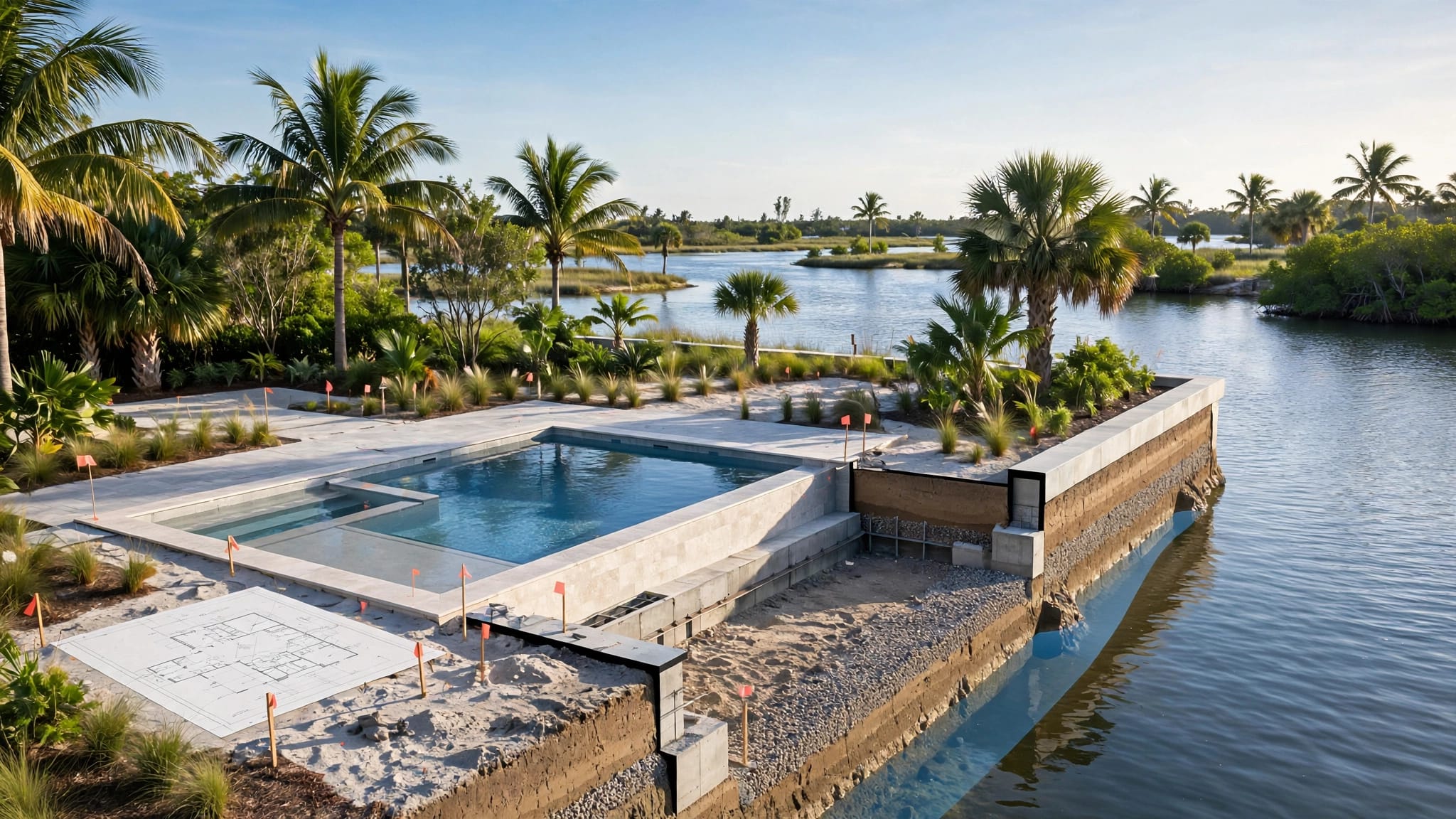
Cape Coral Bathroom Grab Bar Blocking Before Tile
Explore Our Services
Contact Us Today!
(239) 322-9295
A tiled shower can look finished for decades, but the wall behind it decides whether a future grab bar is truly secure. Bathroom grab bar blocking gives a bar solid material to fasten into instead of relying on a hollow wall.
For Cape Coral homeowners planning a new build or bathroom remodel, this work belongs early in the schedule. Once backer board, waterproofing, and tile cover the studs, adding reinforcement becomes slower, messier, and more expensive.
Bathroom Grab Bar Blocking Starts With a Placement Plan
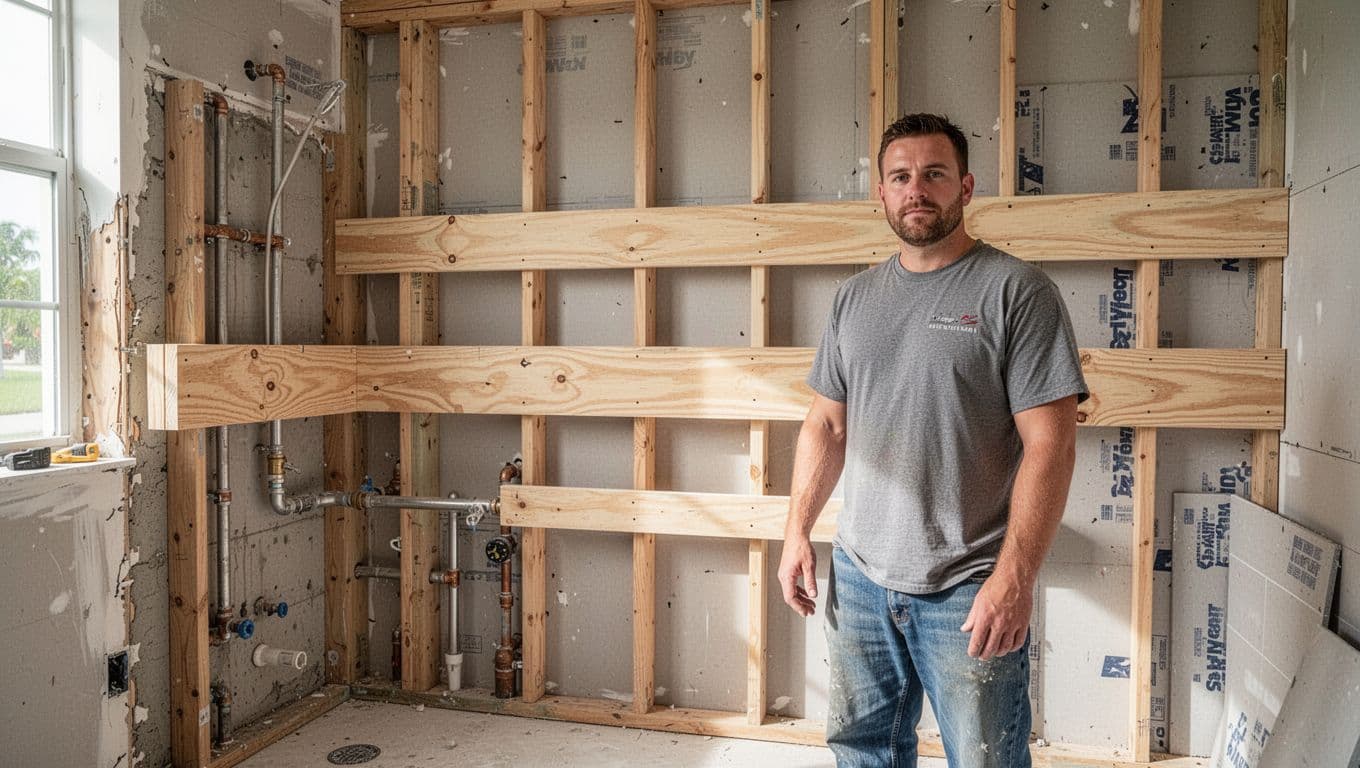
Blocking is solid lumber or engineered wood installed horizontally between wall studs. It creates a reinforced fastening zone for a future grab bar. It is not a drywall anchor, and it should never be treated as a shortcut for mounting a safety device on a finished hollow wall.
The grab bar's mounting screws should pass through the finished wall and bite into substantial blocking or framing. A qualified installer should select corrosion-resistant fasteners that match the grab bar manufacturer's instructions and the wall assembly.
Decide locations before closing the walls
Meet with the homeowner, designer, and installer while the studs are visible. Discuss how the bathroom will be used now and later. A shower entry, tub, toilet area, and bench wall can all benefit from planned reinforcement.
Confirm the final fixture layout first. Moving a toilet, changing a shower curb, or shifting a vanity after blocking goes in can leave reinforcement in the wrong location. Photos and measured notes of every blocked wall also give the homeowner a useful record after tile covers the framing.
Build for a solid attachment
A contractor should fasten blocking securely between studs and keep it flush with the stud faces. The material must provide enough surface area for the planned bar mounting points, not just one narrow target behind a single screw.
Where a bar lands near a corner, niche, valve wall, or exterior wall, the framing plan may need adjustment. That is why bathroom grab bar blocking works best when the general contractor, plumber, tile installer, and homeowner agree on the layout before the wall system begins.
Protect Plumbing Before Backer Board and Tile
Open walls are the right time to coordinate reinforcement with pipes, valves, wiring, and shower controls. A misplaced fastener can puncture a water line or damage electrical wiring. The plumber should identify protected zones before the framing crew installs blocking.
Use appropriate nail plates where piping or wiring runs close to the face of a stud. Do not force blocking into a wall cavity without checking what is inside it. In a shower, framing details also need to support the chosen backer board and waterproofing system.
A well-built grab bar depends on the whole wall assembly, not only the bar itself.
Waterproofing comes after structural planning. The tile installer should know every intended mounting location so they can follow the waterproofing manufacturer's repair and sealing instructions when the bar is installed. Randomly drilling through a finished shower wall can compromise the waterproof layer and create a hidden leak path.
For more planning on moisture-resistant finishes and proper wall systems, review this guide to choosing materials for a Cape Coral bathroom remodel.
Pre-tile checklist for Cape Coral bathrooms
Before backer board goes up, confirm these details on site:
- The homeowner has approved grab bar locations based on the final toilet, tub, shower, bench, and entry layout.
- Solid blocking or framing supports each planned mounting area.
- The plumber has checked pipe and valve locations, and protective plates cover vulnerable areas.
- The electrician has identified wiring routes before fasteners go into the wall.
- The waterproofing and tile installer knows where future bars will mount.
- The contractor has photographed the open walls with measurements from fixed reference points.
Florida Code and Cape Coral Permit Considerations
In August 2026, Florida's active statewide code is the 8th Edition (2023) Florida Building Code. The Florida Accessibility Code distinguishes between private residential dwelling units and code-governed accessible facilities.
For ordinary private homes, installed grab bars are generally not required when wall reinforcement is provided for later compliant installation. That makes bathroom grab bar blocking a smart planning step in a Cape Coral residence. However, accessible commercial spaces and other regulated facilities can have mandatory installed-bar requirements, including technical rules for placement and gripping surfaces.
Do not assume accessibility best practices are optional on every project. A qualified professional should review the building type, scope, and applicable code before construction.
Cape Coral uses its Residential Remodel permit process for qualifying projects. Plumbing work is not exempt, and wet-area work involving shower pans, receptors, or waterproofing systems should not be treated like a simple tile swap. Because permit needs depend on the scope, property location, flood-zone status, and structural work, confirm the project requirements with the City of Cape Coral before work begins.
If the Bathroom Wall Is Already Finished
A finished tiled wall does not rule out grab bars, but it changes the approach. First, locate studs and review any available renovation photos. A professional may use noninvasive locating tools, small exploratory openings, or access from the opposite side of the wall.
If solid framing is available at the needed location, the installer can mount the bar with manufacturer-approved fasteners. When framing does not align, opening and rebuilding part of the wall may be the safest choice. Specialty anchoring systems exist, but they must be rated for grab-bar loads and installed exactly as their manufacturer requires.
Avoid ordinary plastic anchors, improvised toggle bolts, and any attachment method that ignores the wall's condition. Tile can conceal weak drywall, water damage, or an improperly built shower wall. A licensed contractor can assess the framing, plumbing, waterproofing, and permitting questions before recommending a repair.
A Safer Wall Starts Before Tile
Bathroom grab bar blocking is inexpensive when the walls are open and difficult to add after the room is finished. Plan the locations early, attach bars to solid reinforcement, and protect the waterproofing when installation day arrives.
A Cape Coral bathroom remodel should pair attractive tile with reliable structure behind it . That combination supports safer use today and gives the home more flexibility for the years ahead.