Pool Plumbing Pressure Test Before Backfill in Naples
Explore Our Services
Contact Us Today!
(239) 322-9295
A buried pool leak can turn a beautiful Naples backyard into an expensive excavation project. A pool plumbing pressure test catches weak joints, cracked fittings, and damaged pipe while every line is still visible and accessible.
For homeowners and contractors, the rule is practical: test the plumbing, complete the required inspection, and get approval before final backfill hides a problem. Sand may cover a trench in minutes, but finding a leak later can mean removing pavers, decking, or landscaping.
Why Pool Plumbing Must Be Tested Before Backfill
Pool circulation lines carry water between the skimmer, drains, returns, spa, features, and equipment pad. A small leak underground may not show up until the pool is filled and the pump runs daily.
In Naples, sandy soil can make a hidden leak harder to spot at first. Water may drain away instead of pooling at the surface. Meanwhile, a slow leak can wash out soil near plumbing, waste treated water, and place extra strain on pool equipment.
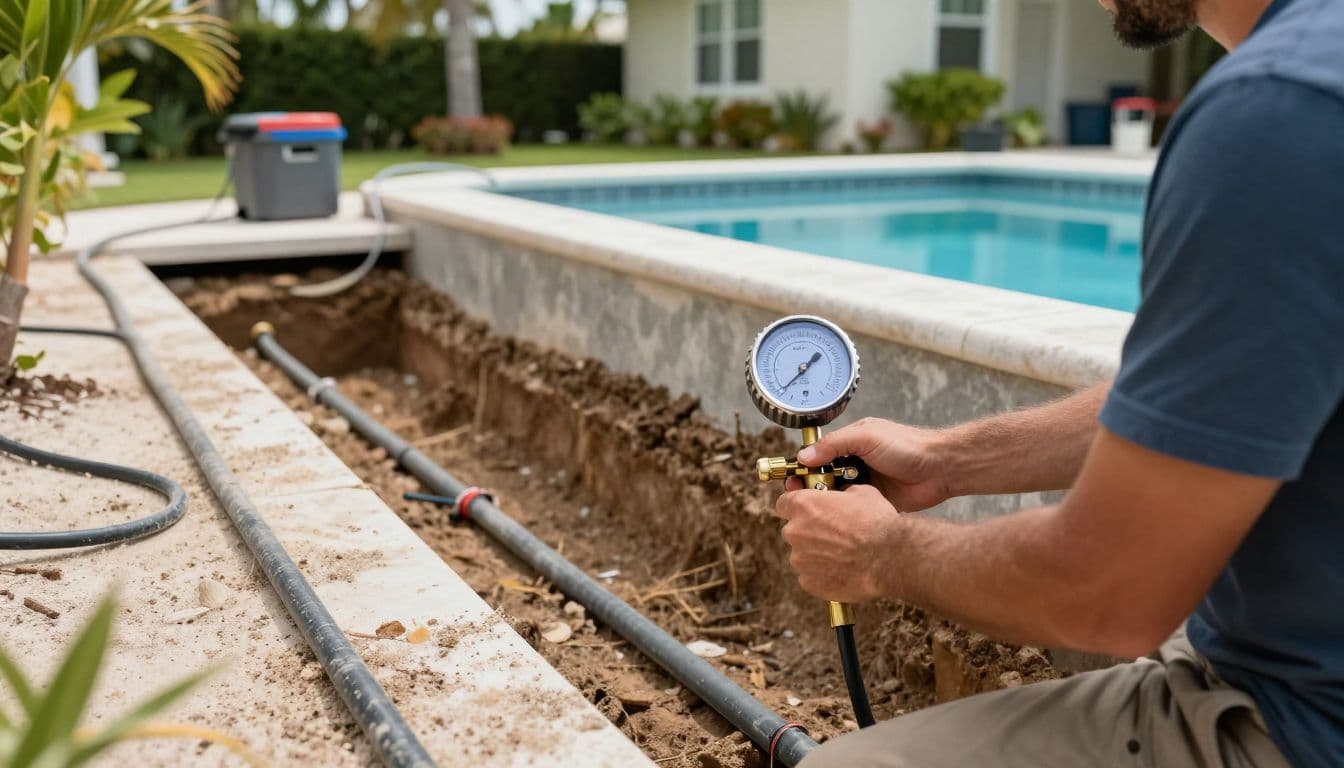
Open trenches allow a real repair
Before backfill, a contractor can inspect every visible fitting, pipe run, valve connection, and penetration through the pool shell. If pressure falls, the crew can isolate the affected line and repair it without demolition.
Once soil covers the piping, the repair scope changes fast. A failed line under a future deck may require saw-cutting concrete or lifting pavers. This is why professional new inground pool installation should include careful plumbing checks before the next phase begins.
A pressure test does more than find leaks. It confirms that the installed plumbing can hold pressure before the finished yard makes access difficult.
How a Pool Plumbing Pressure Test Is Set Up
A proper pool plumbing pressure test starts after crews glue the PVC connections and allow them to cure according to the pipe, cement, and fitting manufacturers' instructions. Rushing this step can create a false failure at a joint that has not cured fully.
The contractor caps or plugs the line being tested, then connects a suitable gauge and controlled air or water source. Each plumbing circuit should be isolated when possible. Separating suction, return, spa, and water-feature lines makes it easier to locate a problem.
Test each circuit, not only the whole system
Testing the complete network as one closed system can confirm that something is wrong, but it may not show where. Individual tests narrow the search and prevent an issue in one line from masking another.
Common circuits to identify include:
- Skimmer and main-drain suction lines
- Pool return lines and spa returns
- Cleaner, bubbler, or water-feature plumbing
- Lines that run to future equipment or a detached spa
Leave pressure-test caps, gauges, and exposed joints accessible. Take photos before backfill, especially where lines change direction or pass beneath planned decking.
Use pressure safely
Compressed air stores energy, so treat pressurized plumbing with care. Use rated test plugs and fittings, keep people out of the line of fire, and never stand over a cap or fitting while adding pressure.
Don't use excessive pressure to force a result. Follow the pool plans, current permit requirements, and product instructions for the pipe, valves, pumps, and test equipment. Circulating pumps are commonly excluded from static piping tests, so they need their own manufacturer-directed checks.
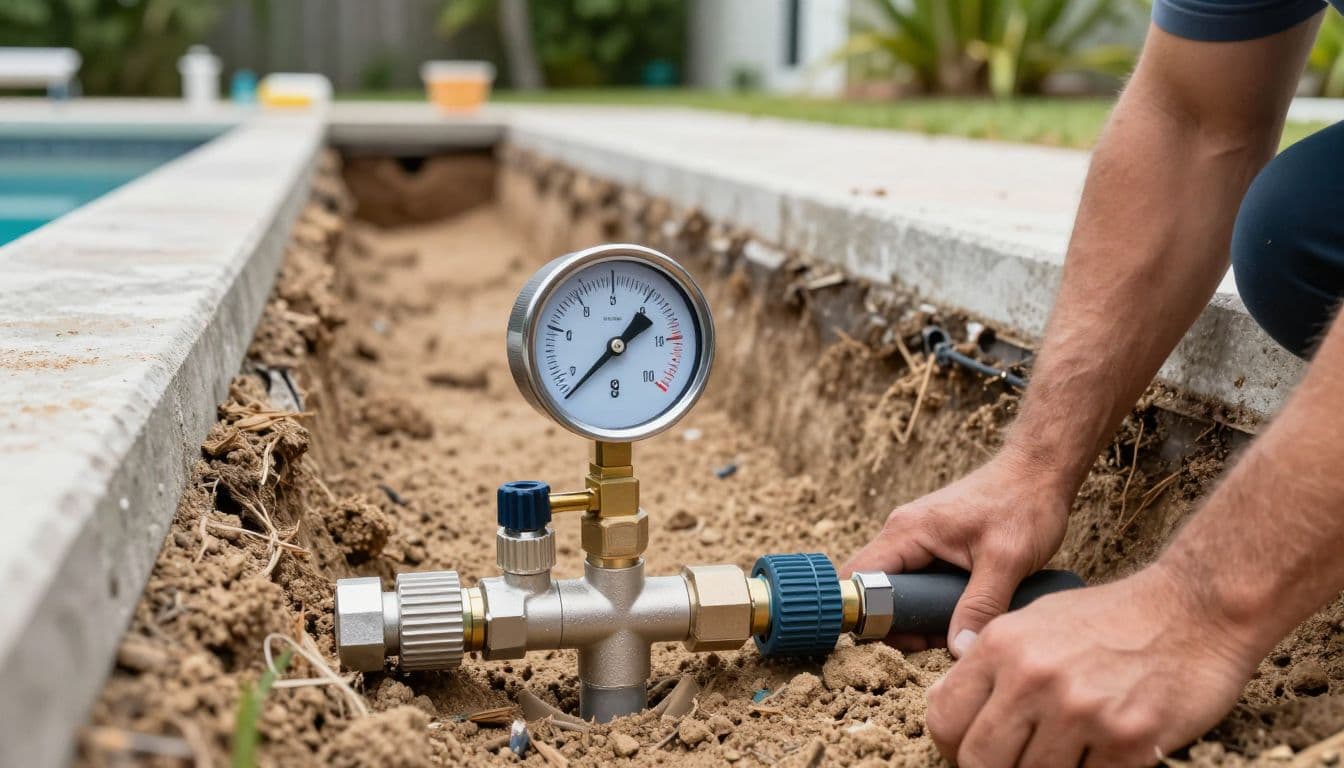
Reading a Pool Plumbing Pressure Test Correctly
A gauge needle that drops is a reason to investigate, but it does not always prove a plumbing leak. Air pressure changes when air temperature changes. Direct Florida sun can heat a gauge and pipe, while a passing afternoon storm can cool them.
Separate temperature changes from true pressure loss
First, let the system stabilize after pressurizing it. Record the starting pressure, time, weather, and whether the gauge sits in direct sunlight. Then compare readings after the required hold period without adjusting the system.
A pressure change that tracks a major temperature change may call for a repeat test under steadier conditions. However, a consistent decline after stabilization points to a leak, a loose plug, a faulty gauge connection, or an open valve.
Soap solution can help reveal escaping air at exposed connections. For a water test, crews may find visible moisture around a fitting. If the line fails, isolate smaller sections rather than burying it and hoping the loss stops.
Naples Permits, Inspections, and Approval Timing
Naples pool projects fall under Collier County permitting and inspection procedures. Collier County inspection records list "709 - Pool Pipe Pressure Test" as a distinct pool inspection item, so don't treat this check as an informal jobsite step.
Florida pool code materials cite a static water or air test benchmark of 35 psi for 15 minutes for pool piping. Yet test sequence, acceptance, and permit notes can change. Confirm the current requirements with Collier County, the approved plans, and the assigned inspector before setting a test pressure or covering pipe.
Hold final backfill until the required signoff
Older local ordinance language called for testing before piping was covered or concealed. Other records reference a final pressure test after backfilling and tamping. That difference is why crews should verify the current inspection sequence for the specific permit.
Schedule the inspection while the gauge setup and critical connections remain accessible. Keep photos, test notes, and any inspector direction with the project file. Then backfill only after the required test has passed and the permit workflow allows the trench to close.
Protect the Work Before It Disappears
A pool plumbing pressure test is inexpensive insurance against a disruptive repair after the backyard is finished. It gives the contractor a clear chance to correct defects and gives the homeowner proof that the underground work received attention.
For Naples pools, follow the approved plans, local permitting direction, Florida requirements, and manufacturer instructions. Test first, document the result, and backfill only when the plumbing is ready to stay buried.