Commercial Roof Walk Pads: Protection in Fort Myers
Explore Our Services
Contact Us Today!
(239) 322-9295
A commercial roof can take repeated wear along the same maintenance route, even when the rest looks undisturbed. Commercial roof walk pads add targeted surface protection where foot traffic would otherwise contact the membrane directly.
For Fort Myers property owners, that matters because rooftop service adds wear to roofs already exposed to sun, rain, and humidity. Pads help reduce abrasion and maintenance-related damage, but they don't repair leaks or strengthen the roof structure.
Start with how people use the roof, rather than how much surface you can cover.
Key Takeaways for Commercial Property Owners
- Walk pads provide a protective surface between routine foot traffic and the roof membrane.
- Maintenance patterns help identify areas that deserve attention, without creating a universal placement rule.
- Pads don't replace leak repairs, sound flashing, proper drainage, or safe rooftop work practices.
- Product selection and installation should follow the roofing system manufacturer's requirements and involve qualified roofing professionals.
The goal is focused protection for a working roof. Covering more membrane doesn't automatically produce a better result, especially if the added protection interferes with drainage or access.
How Commercial Roof Walk Pads Protect Membranes
The roof membrane keeps water out of the building. However, regular service visits expose its surface to footwear, grit, and movement that have nothing to do with weather resistance.
Reducing repeated abrasion
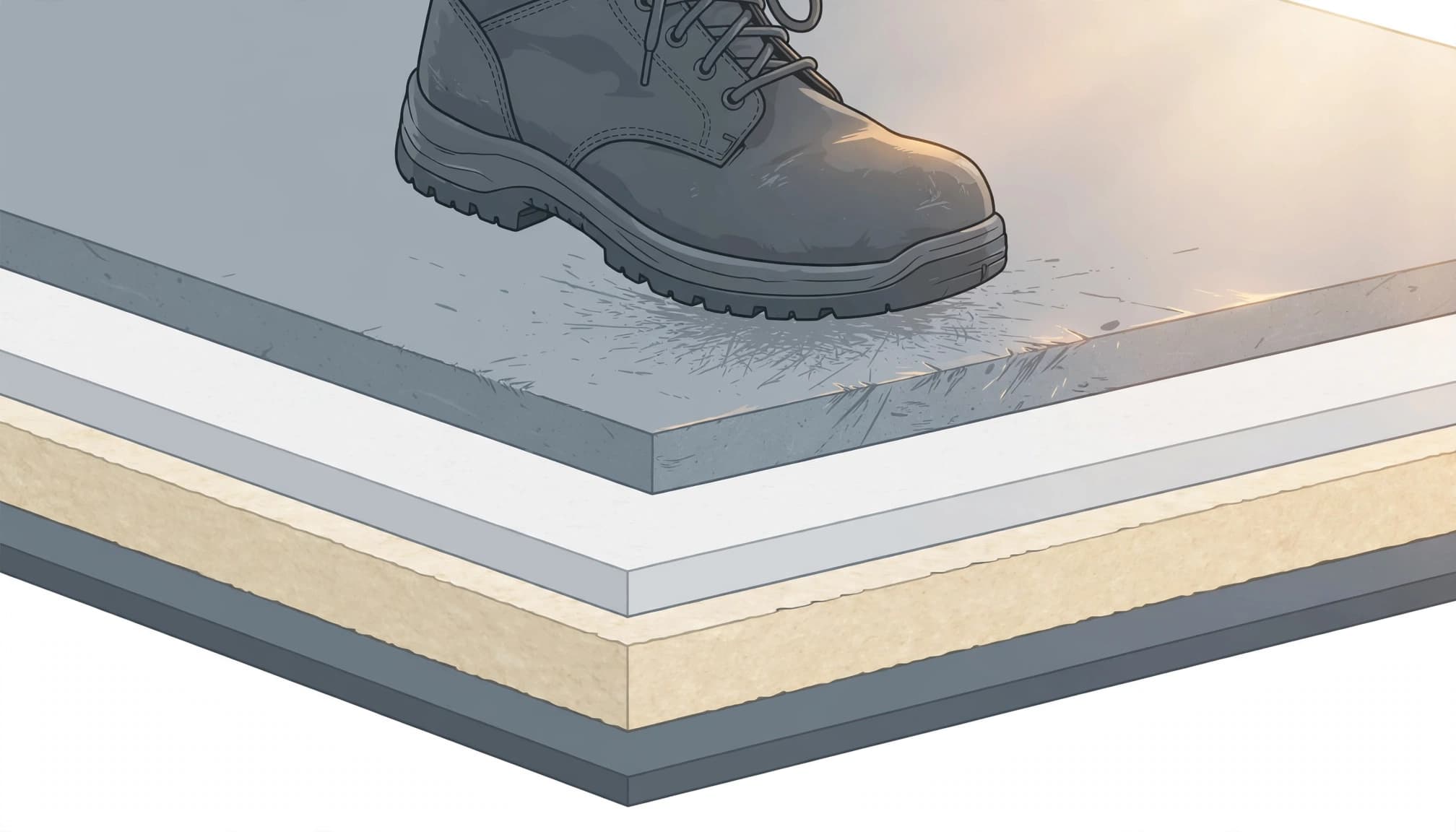
Walking creates friction, especially when someone turns, pivots, or steps repeatedly in one area. Dirt carried onto the roof can add abrasive contact beneath footwear.
A walk pad gives that activity a separate protective surface. As a result, routine movement doesn't bear directly against the exposed membrane wherever the pad provides coverage.
This matters because traffic rarely spreads evenly across a commercial roof. Technicians tend to return to the same equipment and approach it along familiar paths. Repeated contact can concentrate wear in a small portion of an otherwise serviceable roof.
Limiting incidental maintenance damage
Equipment service also involves kneeling, repositioning, and handling tools near the roof surface. Protective walk areas help reduce direct contact during those activities.
However, a pad doesn't make careless handling harmless. Sharp objects, dropped tools, and dragged equipment can still damage roofing components.
Surface protection has limits. Workers still need controlled tool handling and suitable procedures for moving equipment. Walk pads support those practices; they don't remove the need for them.
Likewise, they can't make an unsuitable roof surface ready for heavy storage or unrestricted access.
Where Foot Traffic Concentrates on Commercial Roofs
The useful starting point is a traffic assessment, rather than a standard layout applied to every building. Roof access, equipment arrangement, service frequency, and existing wear all influence where protection may help.
Access areas and recurring travel paths
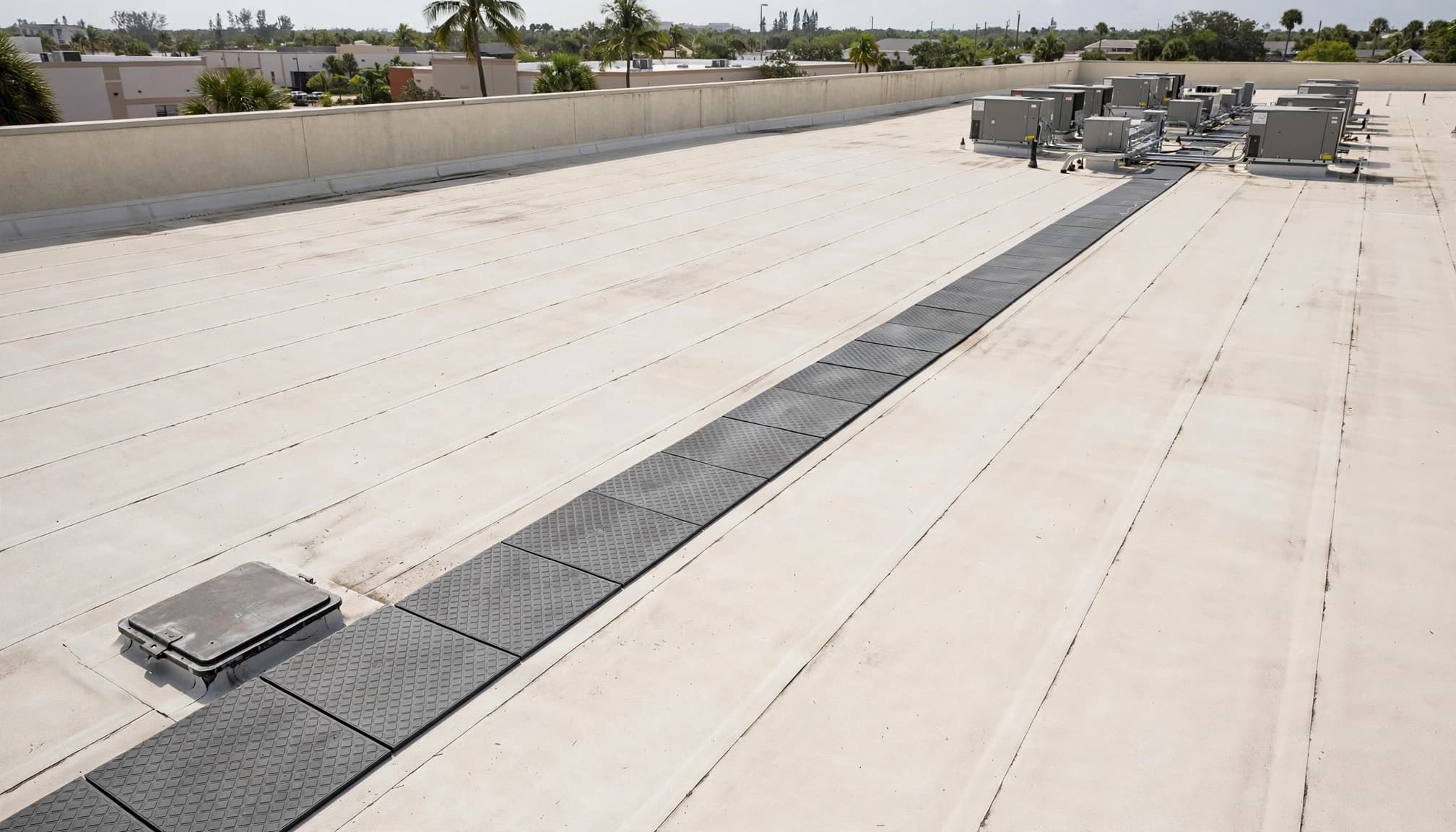
An access hatch or other roof entry introduces people onto the roof at a predictable location. Beyond that point, their destinations determine how traffic spreads.
For example, a building with several rooftop systems may have multiple service paths. Another roof may receive visits to only one equipment area.
These patterns identify places to assess for wear and possible protection. They don't establish that pads belong at every entry or along every possible route.
The proposed layout should also respect roof drainage, flashing, and other details. A visually convenient path can still conflict with how the roof needs to function.
Work areas around rooftop equipment
Travel is only part of the traffic pattern. Technicians also spend time standing, turning, and working near equipment.
Air-conditioning service is relevant in Southwest Florida, but the assessment should include other equipment that receives regular attention. Exhaust systems and rooftop electrical equipment can create their own maintenance demands.
Service-side activity matters more than simply outlining an equipment footprint. The roof professional needs to understand where workers operate and how they reach those areas.
That distinction helps focus protection on actual use, rather than adding pads where maintenance traffic rarely occurs.
Why Fort Myers Conditions Matter
Fort Myers commercial roofs face strong sunlight, heavy rainfall, humidity, and tropical weather. Those exposures make the condition of the entire roof assembly important, including its membrane, drainage, flashing, and perimeter details.
Walk pads address a different source of wear: people working on the roof. They don't provide hurricane protection or correct weather-related defects.
Meanwhile, wet surfaces and debris can complicate rooftop maintenance. A protected walking area doesn't establish safe footing under every condition, and roof access still requires appropriate safety practices.
Rainwater also needs a clear path to drains and other outlets. Any added rooftop component should fit that drainage arrangement rather than obstruct it.
Sun exposure and repeated moisture further reinforce the need for roofing-system requirements to guide product selection. Appearance alone is a poor basis for choosing a protective product.
Our commercial roofing in Fort Myers includes new roofs, repairs, and replacements for business properties. Walkway protection belongs within that broader roofing plan, alongside the details that keep the building dry and its operations protected.
What Walkway Protection Can't Fix
A walk pad can protect the surface beneath it from some routine contact. However, it can't resolve defects elsewhere in the roof or restore damaged components beneath the membrane.
Existing leaks and deteriorated roofing
Punctures, open seams, damaged flashing, and wet materials require appropriate diagnosis and repair. Adding a protective surface over a problem doesn't address its cause.
This distinction matters when a roof already shows wear near equipment. The visible scuffing may be only part of the condition, so a qualified roofer should assess the membrane and surrounding details before additional protection goes in.
Repair decisions should come first. Otherwise, pads can make the roof look more organized while leaving an unresolved source of water intrusion.
A recurring leak can also disrupt business operations or damage inventory, making cosmetic coverage a poor substitute for repair.
Structural loads and unrestricted use
A protective walkway doesn't increase the roof's structural capacity. It also doesn't turn a maintenance roof into a public deck or storage area.
Equipment supports, concentrated loads, and movement of heavy components require separate consideration. The membrane is only one part of the assembly beneath a worker's feet.
Walk pads protect a contact surface; they don't establish that the roof can carry a new load.
Property owners should keep maintenance access separate from other proposed roof uses. If rooftop activity changes, the roofing and structural implications deserve professional attention before that activity begins.
Planning Walk Pads During Roof Work
Roof replacement offers an opportunity to consider maintenance access before the project is complete. The planning can account for existing equipment, expected service activity, and the intended roof assembly.
For an existing roof, the starting point is its condition. Extra protection makes sense only within a plan that addresses damage and preserves the roof's ability to shed water.
The roofing system manufacturer's requirements should govern product selection and installation. Qualified roofing professionals should handle the work, including the assessment of how the proposed protection interacts with the roof.
The written scope should describe the intended protective areas and distinguish walkway work from membrane repairs. That helps owners understand what the project includes without treating every roof issue as part of the pad installation.
Clear scheduling also matters for occupied commercial buildings. Roofing work and equipment service may need coordination so one trade doesn't disturb another's completed work.
Finally, keep the completed layout and project records with the building's roofing documents. These records give future maintenance teams useful context when equipment changes or additional roof work begins.
A documented plan is more useful than a roof that has pads but no clear expectations for how people should use it.
Keeping Maintenance Traffic Under Control
Even well-planned protection depends on how people behave during service visits. Property managers can reduce unnecessary roof contact by giving maintenance teams clear access expectations.
Explain the designated travel and work areas before service begins. When several contractors maintain equipment on the same building, consistent instructions help prevent each crew from choosing a different path.
Tool and debris control deserve equal attention. A protected area doesn't justify leaving screws, wire offcuts, or discarded equipment parts on the roof. Loose items can reach exposed membrane areas or interfere with drainage.
After maintenance, the responsible crew should remove its materials and report any damage it notices. Early reporting gives the property owner a chance to address a small defect before another visit adds more wear.
Routine roof assessments should also include the walk pads themselves. Damaged or displaced protection needs attention, as do changes in the surrounding membrane or drainage conditions.
Keep maintenance records alongside roof repair records. Knowing which equipment received service, and when, helps organize follow-up work without guessing about recent activity.
If equipment moves or a new system goes in, reconsider the traffic pattern. Protection planned around an old service arrangement may no longer match how workers use the roof.
Frequently Asked Questions About Roof Walk Pads
Are walk pads necessary on every commercial roof?
There isn't one layout or coverage rule that fits every roof. The need depends on the roofing system, manufacturer requirements, expected traffic, and maintenance activity.
A roof with frequent equipment service presents different surface-protection needs than one with limited access. The decision should reflect those conditions rather than the building's commercial label alone.
Walk pads also aren't a substitute for controlling unnecessary access. Reducing avoidable traffic remains useful even where protective areas exist.
Can walk pads be added to an existing membrane roof?
An existing roof may be a candidate, but its condition matters. Damage, water intrusion, and drainage problems need attention before the owner treats added protection as an improvement.
Product selection and installation must follow the roofing system manufacturer's requirements, with qualified professionals handling the work.
The purpose remains the same on an existing roof: reduce direct maintenance contact in selected areas while preserving the function of the roofing assembly. Pads don't reverse wear that has already occurred.
Protect the Areas Your Roof Actually Uses
Commercial roof walk pads are most useful when their purpose matches real maintenance activity. They provide targeted protection while repairs, drainage, and the rest of the roof assembly receive their own attention.
For Fort Myers buildings, the sound approach combines traffic planning with manufacturer-directed selection and professional installation. Protecting recurring contact areas helps keep routine service from adding avoidable wear to the membrane.