Comparing Gunite Pool Builder Proposals in Fort Myers
Explore Our Services
Contact Us Today!
(239) 322-9295
The lowest pool proposal can become the most expensive choice when major site work or finish items appear later as extras. A fair comparison of gunite pool builders Fort Myers homeowners are considering starts with matching scope, not matching a bottom-line number.
Your lot, drainage, access, and permit jurisdiction can change both the work and the price. Ask every builder to price the same plan, then read the exclusions as closely as the included features.
Gunite Pool Builders Fort Myers: Normalize the Scope
A proposal is only comparable when every builder works from the same pool layout and feature list. Provide the same survey, conceptual design, desired pool dimensions, depth, spa, sun shelf, water features, finish selections, deck area, and enclosure plans to each company.
Give every builder the same design brief
Confirm whether the drawing shows waterline dimensions or outside shell dimensions. A few added feet, a deeper end, or an integrated spa changes excavation, steel, plumbing, concrete, water volume, and equipment sizing.
Include existing conditions in the brief. Note the location of septic systems, utility lines, mature trees, drainage swales, easements, property lines, and the home's electrical panel. A builder who visits the site can identify access limits before giving a firm number.
For a clear view of the typical build sequence, review the scope described for new pool construction in Fort Myers. Design, permitting, excavation, structural work, finishes, and startup should connect in one written plan.
Separate fixed prices from allowances
An allowance is a budget placeholder, not a final price. It may cover tile, coping, pavers, landscaping, lighting, or equipment. Ask what product level and quantity each allowance assumes.
Also ask whether the proposal is lump sum, cost-plus, or a fixed price with stated allowances. If one quote includes 600 square feet of decking and another includes 400, their totals don't describe the same backyard.
A complete proposal identifies the work, materials, quantities, and exclusions before a deposit changes hands.
Compare the Pool Shell and Site Work
The visible finish matters, but the shell and ground below it determine how the pool is built. Fort Myers properties may have sandy soil, shallow groundwater, limestone, tight side-yard access, or drainage constraints that change the excavation plan.
Put excavation and groundwater in writing
Each proposal should state who handles layout, excavation, spoil removal, haul-off, and restoration of disturbed areas. Ask where excavated material will go and whether the price assumes ordinary soil conditions.
High groundwater may require temporary dewatering during excavation. The proposal should explain who supplies it, how water is managed, and what happens if conditions require added pumping, soil replacement, drainage work, or engineering review. Never assume these items are included because they are common concerns in Southwest Florida.
Compare steel, gunite, and curing details
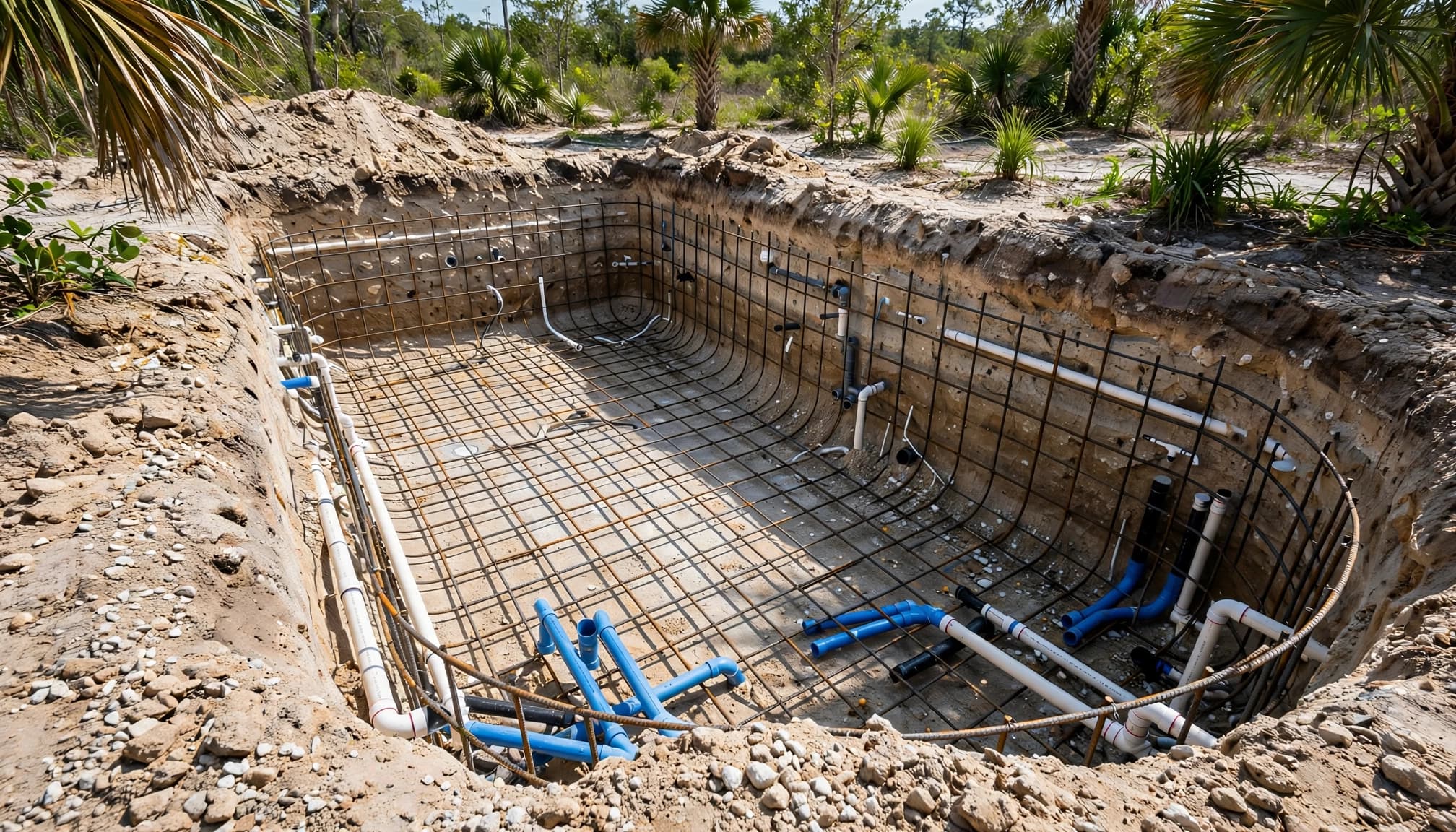
Don't accept a generic line for "gunite shell." Request the approved shell dimensions, reinforcing-steel schedule, bond beam details, plumbing penetrations, and inspection points shown on the plans.
Gunite and shotcrete are both pneumatically applied concrete systems. Dry-mix gunite receives water at the nozzle, while wet-mix shotcrete is batched with water before placement. Neither name alone proves a stronger pool. Crew skill, reinforcement placement, mix design, application, consolidation, curing, and finish preparation all matter.
Ask each builder to identify the specified compressive strength, application method, thicknesses shown on approved documents, curing approach, and any required testing. Fort Myers does not have one verified shell thickness that fits every residential pool. The permitted structural plan for your property controls.
Evaluate Plumbing, Equipment, and Electrical Work
A pool that looks identical at completion can have very different mechanical systems beneath the deck. Read the equipment and electrical pages line by line.
Match the hydraulic and equipment package
List the pump, filter, heater or heat pump, sanitizer, automation controls, valves, skimmers, main drains, returns, lights, and any spa or water-feature equipment by manufacturer and model. Confirm the number of lights, returns, skimmers, and water-feature lines.
Ask whether the equipment pad includes a poured base, plumbing, electrical connections, startup, programming, and homeowner orientation. If automation or a salt system appears as an allowance, get the exact model and installed price.
A lower bid may omit a heater, automation, upgraded filtration, or the dedicated plumbing needed for a future feature. Those omissions are expensive to correct after the deck is complete.
Clarify the electrical scope
The proposal should state who handles bonding, grounding, the pool subpanel, GFCI protection, disconnects, light transformers, and required electrical permits and inspections. It should also say whether the existing house panel has enough capacity.
Panel upgrades, long trench runs, relocation of utilities, and repairs to landscaping after trenching often fall outside a basic pool number. Have the builder identify each exclusion before construction begins.
Check Permits, Inspections, and Local Requirements
Permit responsibility belongs in the contract, not in a verbal promise. First, determine which office has jurisdiction. A home within Fort Myers city limits follows the City of Fort Myers process, while an unincorporated Lee County address follows county procedures.
Confirm the permit path before final pricing
Lee County requires a residential pool permit for in-ground pools. City applications for pools, spas, and fountains call for project documents such as plans, specifications, site information, and drainage details for site-built pools.
Ask who prepares the drawings, coordinates engineering when required, submits the application, responds to plan-review comments, pays fees, and schedules inspections. Approved plans and inspection records should remain available at the job site.
Current instructions, fee schedules, and review requirements can change. Use Southwest Florida pool permit fees as a budgeting reference, then verify the current details with the applicable authority and your builder.
Include every inspection and final approval
The contract should identify inspections for steel, bonding, plumbing, electrical work, shell construction, barrier requirements, and final completion when applicable. It should also say who corrects failed inspections and who pays for re-inspections caused by contractor work.
Lee County's process ends with a Certificate of Compliance or Certificate of Occupancy, depending on the project. Don't schedule final landscaping, plaster, or enclosure work so tightly that an inspector can't access the areas that need review.
Price the Deck, Drainage, Enclosure, and Yard
Outdoor work is where proposals often drift apart. A pool can be priced accurately while the surrounding backyard remains vague.
Define decking and drainage quantities
Compare deck square footage, material, pattern, coping type, expansion joints, steps, drains, and demolition of existing concrete. Confirm whether the quote includes grading, drainage adjustments, sod repair, irrigation repairs, and cleanup.
The City of Fort Myers flags a possible stormwater user fee adjustment when a pool project adds more than 500 square feet of impervious area. Your property and current local rules determine whether this applies, so ask the builder to address it before work starts.
Treat the enclosure as its own scope
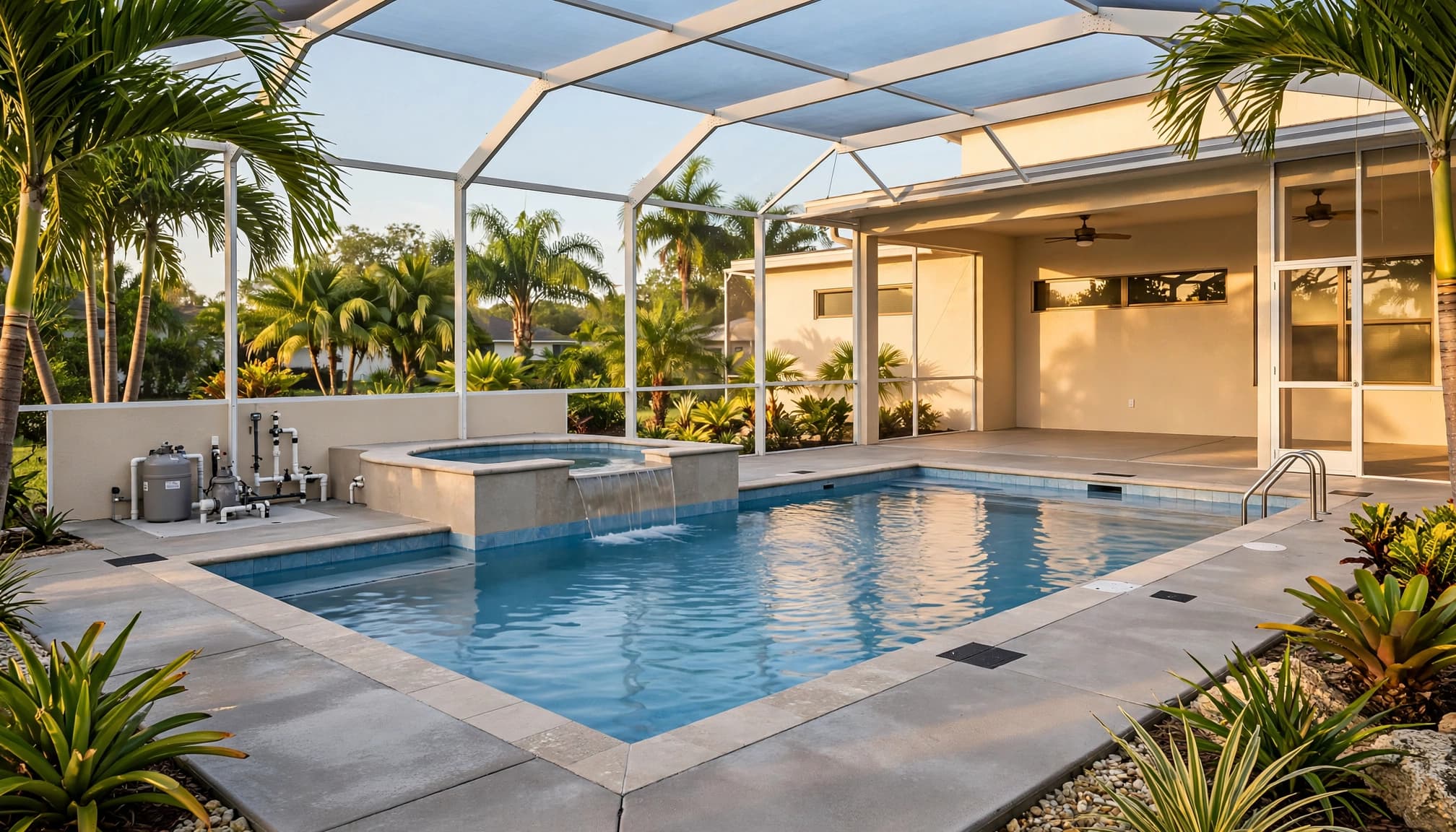
A screen enclosure or lanai package should list engineering, wind-load design, footers, permits, doors, screen type, lighting changes, and integration with the house. If it is excluded, state that clearly.
Florida's residential pool-barrier rules require a barrier at least 4 feet high on the outside. Gates must open outward, self-close, and self-latch. A cage, fence, or approved house-wall arrangement may form part of the safety plan, but the design must meet current requirements for the property.
Landscaping needs the same detail. Specify plant allowances, edging, mulch, lighting, irrigation modifications, and debris removal, or label them excluded.
Control Change Orders, Payments, and Warranties
Change orders are appropriate when owners revise the design or unexpected site conditions require more work. Trouble starts when a proposal leaves routine components undefined.
Set rules for allowances and changes
Require written pricing and your signed approval before change-order work begins, except for an urgent safety issue. The document should explain the reason, added or credited amount, schedule effect, and any related permit revision.
Ask builders to list likely variables, including groundwater management, unsuitable soil, difficult access, buried obstructions, electrical panel capacity, utility relocation, owner-driven upgrades, and weather-related delays. Then compare how each contract handles them.
For broader budget context, review Southwest Florida pool construction costs. Use it to frame questions, not as a substitute for a site-specific proposal.
Tie payments to visible milestones
Payment milestones should track work you can verify. Common stages include approved plans and permit progress, excavation, steel and plumbing inspections, shell completion, tile and coping, deck work, equipment startup, and final approval.
Avoid a schedule that collects most of the contract value before major construction stages are complete. Keep copies of signed changes, permits, inspection records, product manuals, lien releases when applicable, and final payment documents.
Review warranty terms separately for the shell, interior finish, tile, equipment, plumbing, decking, enclosure, and workmanship. Confirm start dates, exclusions, maintenance obligations, transfer terms, and who handles warranty service.
Key Takeaways
- Compare proposals only after every builder receives the same pool plan, site information, features, finishes, deck area, and enclosure expectations.
- Put shell specifications, excavation assumptions, dewatering, equipment models, electrical work, permit duties, and cleanup in writing.
- Treat allowances and exclusions as part of the price. A smaller initial number may leave costly work outside the contract.
- Verify current City of Fort Myers or Lee County requirements before finalizing the design, especially for drainage, barriers, permits, and inspections.
- Use payment milestones tied to completed work, then preserve every approval and warranty document in one project file.
Frequently Asked Questions
Should every proposal specify gunite thickness?
Yes, but the proposal should refer to the thicknesses and structural details on the approved plans rather than a generic local rule. Pool shape, depth, reinforcing steel, soil conditions, water features, and engineering affect shell design.
Ask for the steel schedule, bond beam notes, concrete strength specification, curing plan, and inspection sequence. That gives you a meaningful comparison of structural scope.
Does a pool builder's price include a screen enclosure and landscaping?
Sometimes, but never assume it does. Some proposals include a basic enclosure and a limited landscaping allowance, while others price both as separate contracts or exclude them entirely.
Request quantities, materials, engineering, permit responsibilities, and cleanup details. If an item is outside the contract, decide whether you will add it later or price it before selecting a builder.
Choose the Proposal With the Clearest Commitments
A dependable pool proposal reads like a construction plan, not a wish list with one total at the bottom. It accounts for the property, approved documents, structural shell, mechanical systems, permits, finished yard, and final approvals.
The right comparison gives gunite pool builders Fort Myers homeowners a way to choose clear commitments over vague promises. That clarity protects your budget before excavation begins.