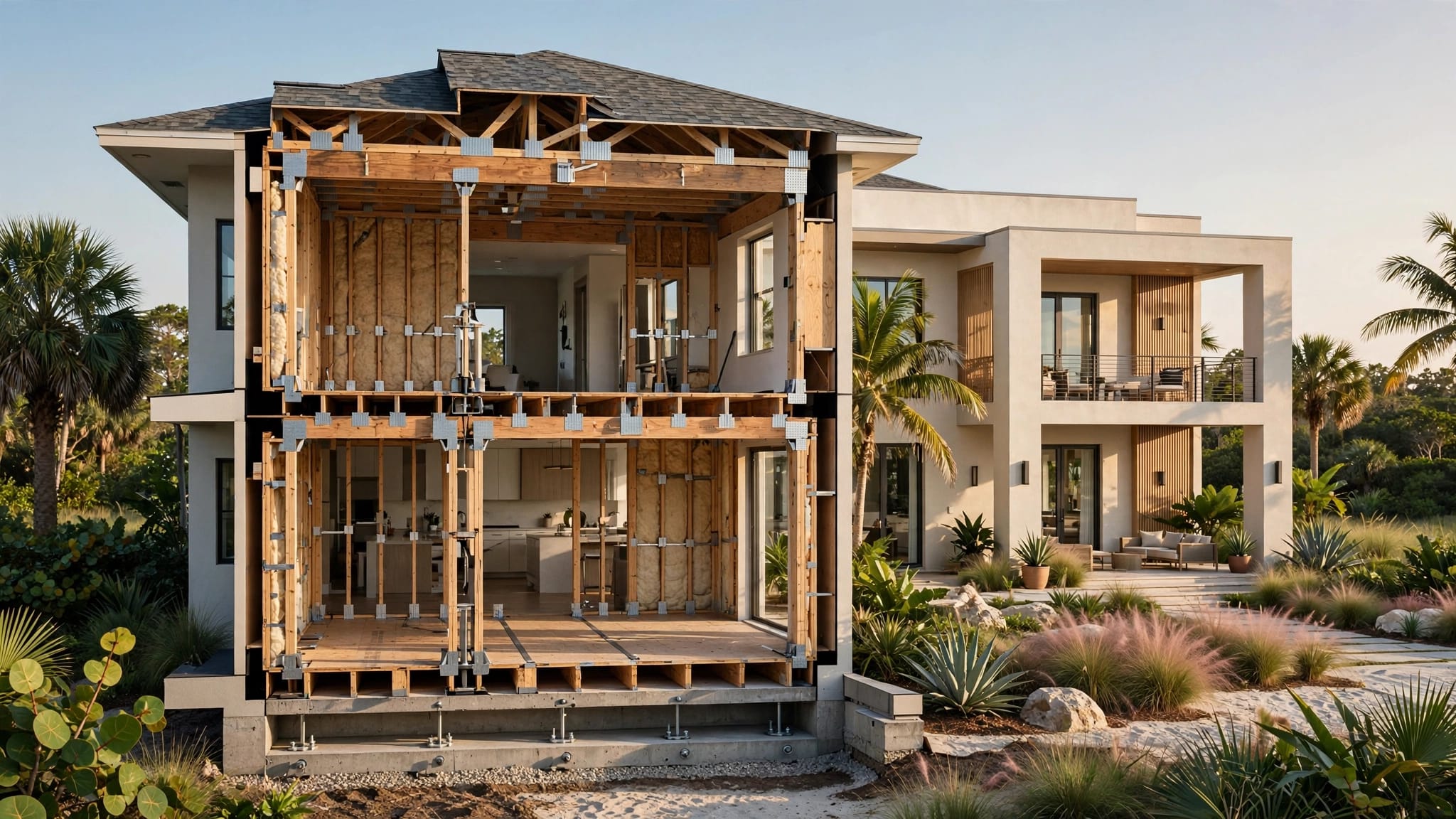
Can a Gunite Pool Support a Diving Board?
Explore Our Services
Contact Us Today!
(239) 322-9295
A gunite pool can support a diving board when its dimensions, structure, anchoring system, and selected equipment meet the applicable requirements. However, the gunite shell alone doesn't establish that diving is safe.
A deep end or an old set of mounting holes isn't enough to approve an installation. A qualified pool professional or structural engineer must evaluate the pool, board manufacturer's specifications, anchoring, and local requirements before installation.
Start with the complete design, because the board and the pool must work together.
Key Takeaways
- Gunite construction allows custom pool designs, but it doesn't automatically make a pool suitable for diving.
- Safe installation depends on the entire diving envelope, including water depth, width, floor slopes, and clearances.
- The board, stand, anchors, and supporting concrete must meet the selected manufacturer's requirements.
- An existing pool needs an inspection before anyone treats a diving board retrofit as feasible or safe.
The Gunite Shell Is Only Part of the Design
Reinforcement and shell design work together
Gunite surrounds a reinforcing steel framework to create the pool shell. Its structural performance depends on the concrete, steel placement, shell geometry, soil support, and engineered details.
Thickness by itself doesn't establish capacity. The structural plans also need to address reinforcement size, spacing, concrete cover, and connections at transitions.
Our guide to gunite pool shell thickness planning explains how these details work together. A diving-board proposal adds requirements beyond the shell's ability to hold water.
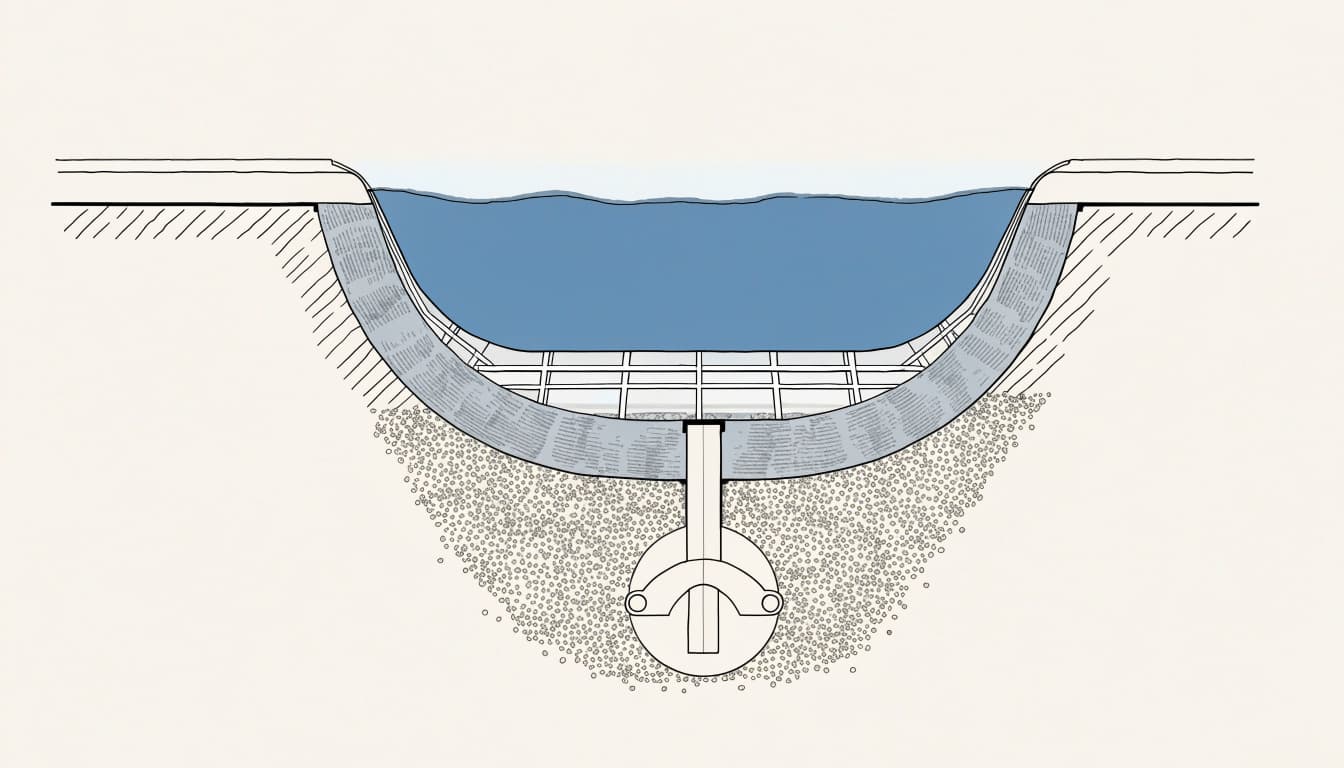
Conceptual illustration only. Actual reinforcement and anchoring require project-specific design.
The board may load a separate deck foundation
Many residential diving stands anchor into supporting deck concrete rather than directly into the pool shell.
That distinction matters because the shell, coping, deck, and stand foundation may have different structural functions. A sound pool shell doesn't prove that nearby concrete can resist repeated diving loads.
The professional evaluating the installation must identify the intended load path and the structure supporting the anchors.
Water Depth Must Fit the Entire Diving Envelope
One deep measurement doesn't establish suitability
The diving envelope is the required three-dimensional water space beneath and ahead of the board. It includes depths at defined locations, widths, distances, and floor transitions.
A pool can have a deep pocket yet lack sufficient clearance farther forward. Similarly, a long pool may narrow where the selected diving system requires more width.
Measurements must describe the finished pool , using the normal operating waterline and completed interior surface. Excavation depth or an unfinished shell drawing doesn't establish the final diving envelope.
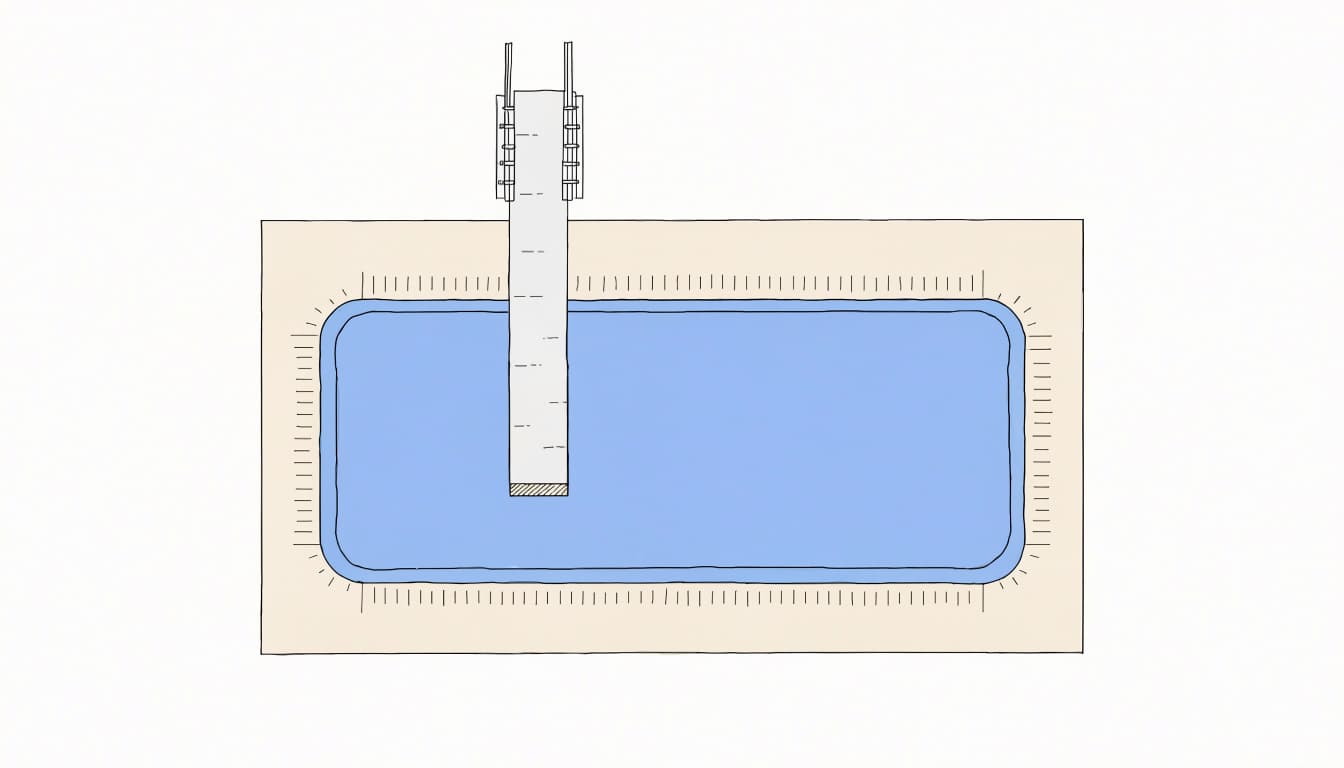
This conceptual layout shows open water ahead of a board, not approved diving dimensions.
Steps, shelves, and slopes affect clearance
Benches, tanning ledges, swim-outs, and projecting spa walls can interfere with required diving space. Their locations matter even when the deepest point appears adequate.
The board's tip position and mounting height also affect the required geometry. Moving the stand backward or choosing a different board can change how the system fits.
For a gunite pool diving board installation, the professional must compare the measured pool profile with the selected equipment's complete diving-envelope requirements.
Match the Diving Board to the Correct Stand
A board and stand form a coordinated system. Similar appearance, matching bolt holes, or the same advertised board length doesn't establish compatibility.
Manufacturers specify equipment combinations, eligible pool configurations, and installation limits. For example, S.R. Smith publishes separate instructions for its Edge boards, T7 stands, and Flyte-Deck II systems.
The board's weight limit also belongs in the selection process. That rating applies to the equipment; it doesn't approve the surrounding pool or compensate for insufficient water clearance.
Installation angle matters too. The S.R. Smith Edge installation manual requires a level board or a limited upward slope toward the tip. It prohibits a downward slope toward the water.
A replacement should therefore follow the specified board-and-stand pairing. Improvised shims, substituted hardware, or a more flexible board can change the installation beyond its intended configuration.
The equipment review should include the exact model, board length, stand, mounting position, and manufacturer instructions. Choosing the board after the pool is complete can severely restrict the available options.
Anchoring Needs More Than Solid-Looking Concrete
Supporting concrete must meet the selected system's requirements
A deck surface can look substantial while concealing inadequate thickness, poor reinforcement, cracks, or unsupported areas.
As one product-specific example, the Flyte-Deck II installation instructions specify surrounding concrete at least 6 inches thick, 4 feet wide, and 8 feet long.
Those dimensions belong to that system. They aren't a universal footing design or permission to install a different stand.
The structural review must address the actual concrete, reinforcement, anchor arrangement, edge distances, and required foundation details. Pavers alone don't establish suitable anchor support.
Joints and electrical bonding need coordinated review
Anchors near slab edges, cracks, or movement joints require particular attention. The manufacturer's restrictions and engineered design determine acceptable placement.
Our explanation of pool shell and deck separation joints covers why adjoining surfaces may need to move independently.
A matching bolt pattern shows where hardware fits. It doesn't establish that the concrete beneath it can carry the loads.
Metal stands and associated conductive components also need electrical bonding review. A licensed electrical professional must determine the applicable bonding requirements and coordinate any connections before concrete conceals them.
Existing Pools Need an Inspection Before a Retrofit
An older gunite pool may be suitable for a diving board, require substantial modifications, or be unsuitable for diving altogether. An inspection must establish which situation applies.
Old mounting holes only show that hardware once occupied that location. They don't establish the original installation's compliance, the current concrete condition, or compatibility with a replacement system.
The evaluation should include the shell, bond beam, deck foundation, anchors, finished dimensions, and available construction records. Cracks, spalling, settlement, corrosion, loose coping, and previous repairs may affect the proposed installation.
If dimensions fall short, replacing anchors won't solve the problem. Changing the diving envelope can require major reconstruction rather than a simple accessory installation.
Southwest Florida groundwater adds another concern when renovation involves excavation or lowering the water level. Our guide to pool planning for groundwater pressure explains why an empty shell needs separate consideration.
Leave pool draining and structural modifications to qualified professionals. A preliminary appearance-based assessment isn't approval to use a board.
Southwest Florida Permits and Backyard Clearances Matter
Design approval must include the proposed work
Florida law generally requires permits for covered construction and alterations, subject to exceptions. Florida's building permit statute provides that framework.
The project professional must establish the applicable local requirements and include the board, foundation, electrical work, and related alterations in the appropriate review.
For site-built pools, the City of Fort Myers requires signed and sealed plans. Those plans should describe the actual pool profile and structural details, rather than relying on a sales rendering.
Required inspections must occur while the relevant work remains visible. Photographs are useful records, but they don't replace inspections.
Screen enclosures and barriers remain part of the layout
A diving board needs adequate clearance around and above its operating area. Screen enclosure framing, roof members, nearby walls, and other obstructions belong in the design evaluation.
The board and stand must also avoid creating an unintended climbing route across a safety barrier.
Barrier permitting can be separate from pool permitting. Since March 1, 2026, Cape Coral has required separate permits for pool safety barriers, including fences, screen enclosures, and screen room pan roofs.
A completed shell doesn't mean the entire pool project has final approval. Electrical work, barriers, gates, equipment, and other required inspections still matter.
Frequently Asked Questions
Is a deep end enough for a diving board?
A deep end alone doesn't establish diving suitability. The pool must provide the required depths, widths, slopes, and clearances throughout the selected system's diving envelope.
A qualified professional must compare measured field conditions with the manufacturer's requirements. A single depth reading can't replace that assessment.
Can an old diving board be replaced with the same size?
The same length doesn't guarantee an acceptable replacement. The new board must match the stand, mounting arrangement, pool classification, and installation requirements.
Existing anchors and supporting concrete also need inspection. Corrosion, cracking, or unknown installation details can make an apparently simple replacement more involved.
Is it easier to include a board during new construction?
New construction allows the designer to coordinate the diving envelope, shell profile, foundation, bonding, and enclosure before crews build them. That usually offers more design flexibility than retrofitting an existing pool.
However, available yard space, setbacks, groundwater conditions, and the intended pool layout can still limit feasibility. Early planning doesn't eliminate the need for engineering and permit review.
Plan the Pool and Diving Board as One System
A gunite pool can accommodate a diving board when the water geometry, equipment, supporting structure, and installation requirements all align. The shell material alone can't establish that alignment.
For an existing pool, professional inspection comes first . For new construction, include diving requirements before finalizing the pool shape and backyard layout.
We build custom gunite pools in Southwest Florida. We can help you plan a new pool or renovation around your intended use, with safety requirements addressed before construction.