Construction-to-Permanent Loans for Fort Myers Custom Homes
Explore Our Services
Contact Us Today!
(239) 322-9295
Building a custom home takes more than a construction budget. You also need financing that can fund the work as it progresses, then support your long-term mortgage once the home is complete. Construction-to-permanent loans combine those stages in one financing plan, though the terms and approval steps depend on the lender and project.
In Fort Myers, the lot itself can affect the plans, permits, and costs a lender reviews. Understanding the loan sequence and local building conditions helps you prepare a realistic financing package before construction begins.
How construction-to-permanent loans work
A construction-to-permanent loan finances a home's construction and then transitions to permanent mortgage financing. In a common single-close arrangement, you close once before construction. The lender releases money in stages as work advances, then converts the loan after the project meets its completion conditions.
One closing, staged funding
Before construction, the lender reviews the proposed home, project budget, builder, and borrower's financial details. Instead of paying the full construction amount upfront, the lender typically releases funds through scheduled draws. The draw plan is tied to project milestones and the lender's inspection or documentation requirements.
During construction, you may make payments based on the amount drawn rather than the full approved loan. Some lenders require interest-only payments during this phase, but that isn't a universal rule. The note, draw process, and payment schedule set out how a particular loan works.
Conversion depends on completion conditions
The permanent mortgage doesn't begin simply because construction has stopped. The lender must be satisfied that the home is complete and that required closeout items are in place. Depending on the loan, those items may include final inspections, a certificate of occupancy, updated title work, proof of insurance, or a completion appraisal.
After approval, the balance moves into the permanent repayment phase under the loan's agreed terms. A delayed inspection, unresolved lien, or incomplete permit closeout can affect the timing, so construction and financing schedules should account for the lender's process.
What happens during the construction phase
The construction period is when the loan's draw system connects financing to work on site. The approved budget and construction contract provide the framework for those payments.
Draw requests follow the work
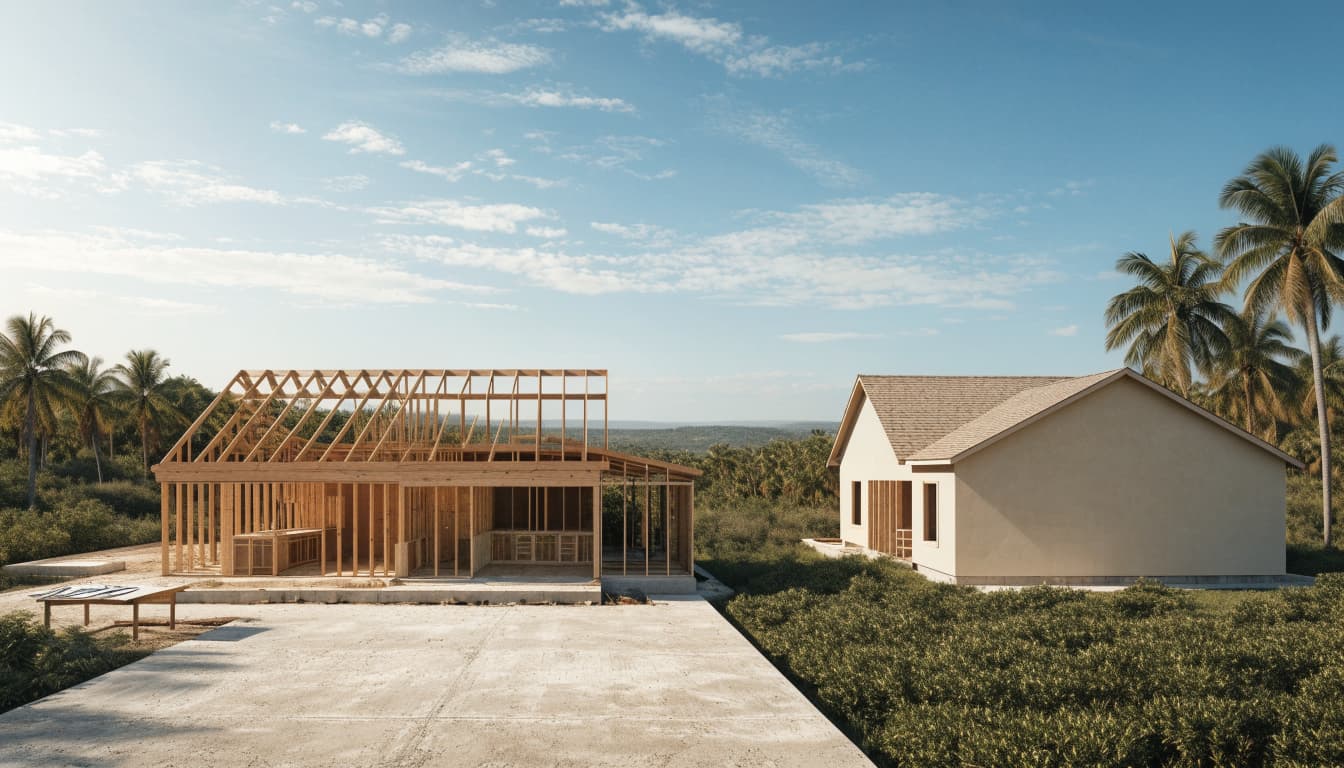
A builder may request a draw after completing an agreed stage, such as site preparation, foundation work, framing, or major systems. The lender may require an inspection, invoices, or other supporting documents before releasing funds. Exact milestones and paperwork vary by lender and loan agreement.
The draw schedule should match the actual scope and sequence of the home. If a project includes a pool, outdoor living space, or substantial site work, those elements should appear clearly in the plans and budget. Otherwise, the approved financing may not reflect the full cost of the project.
Delays can affect cash flow
Construction schedules can change when permitting, weather, material delivery, or site conditions affect progress. A lender's inspection and draw processing also takes time. If a subcontractor or supplier needs payment before a draw arrives, the builder's payment schedule and the loan's release procedures need to work together.
A written construction contract should spell out payment timing, what counts as a completed milestone, and how changes are priced and approved. That clarity helps limit disputes over whether work qualifies for a draw.
What changes when the home becomes a mortgage
When the lender approves the completed project for conversion, construction financing ends and permanent mortgage payments begin. The loan documents determine the permanent rate structure, term, payment amount, and any escrow requirements.
Some single-close loans establish key permanent-loan terms before construction starts. Others may handle rate selection or locking under different rules. Ask the lender to explain when the rate is set, what could change before conversion, and how the payment will be calculated. Don't assume the construction-phase payment will resemble the future mortgage payment.
A two-close structure is another option: one loan finances construction, then a separate mortgage pays it off when the home is finished. That creates another closing and a second underwriting process, but it can provide a different choice of permanent loan at completion. Compare the full costs, timing, and risks of both structures rather than focusing on the number of closings alone.
Typical lender requirements for a custom build
Approval usually involves both the borrower and the construction project. A lender needs to assess whether you can repay the loan and whether the proposed home can be built within the approved budget.
Borrower and property review
Lenders commonly assess income, credit history, existing debt, assets, and available funds. They may also consider whether you own the lot, plan to buy it with the loan, or have an existing land loan. How land equity affects the application depends on the lender's underwriting rules.
The lender may order an appraisal based on the plans and the home's expected value when complete. A project's budget, site costs, and selected features matter because the financing must support the actual scope, not only the house's basic footprint.
Builder, plans, and budget
The lender may review the builder's license, insurance, experience, contract, construction schedule, plans, specifications, and cost breakdown. It can also require inspections before draws and documents at completion. Requirements differ, so no one checklist applies to every construction loan.
A detailed budget is especially useful when plans include upgrades or site-specific work. Include design and engineering costs, permits, utility connections, grading, drainage, driveway, landscaping, and major features such as a pool. Allowances and exclusions should be visible rather than buried in a general contract total.
Benefits and tradeoffs to weigh
A single-close loan can reduce the need to qualify and pay closing costs on a second mortgage after construction. It also ties construction funding and long-term financing together from the start, which can make planning easier.
However, that convenience comes with less room to change the permanent financing later. If your income, interest rates, or project costs change before completion, the loan's terms and lender rules determine your options. Construction loans can also involve draw inspections and documentation that don't exist with a standard mortgage.
A two-close loan may give you another chance to select permanent financing at the end, but it introduces a second approval and closing. Neither arrangement is automatically cheaper or more flexible. Compare lender fees, rate terms, draw requirements, conversion conditions, and what happens if construction runs late.
Fort Myers and Lee County considerations
The property's jurisdiction matters. A Fort Myers mailing address doesn't always mean the parcel lies within the City of Fort Myers. City properties, unincorporated Lee County parcels, and homes in nearby municipalities can follow different permitting and floodplain review processes.
Wind design and local permitting
Lee County's 2026 Residential Building Guide calls for plans to identify wind-design information, including design wind speed, risk category, exposure, and enclosure classification. These details are project-specific. Lee County code also states a minimum requirement of 110 mph fastest-mile wind velocity for major structures, except mobile and manufactured homes. That figure is not interchangeable with the guide's ultimate and nominal design wind-speed fields.
Those requirements can shape structural plans and the selection of exterior components. The loan's construction documents should match the plans submitted for the applicable permit review. Our custom home building in Fort Myers brings the project into the local context from planning through construction.
Flood zones affect design and cost
Flood conditions can change foundation, elevation, drainage, and enclosure plans. Lee County's flood brochure identifies zones A, AH, AE, and VE as Special Flood Hazard Areas that typically have a minimum base-flood-elevation requirement for the first livable floor. For X zones, the brochure describes no base-flood-elevation requirement, while stating that the livable floor must sit one foot above the road crown.
Lee County's residential building guide separately states that buildings in flood hazard areas, including Coastal A Zones, must place the lowest floor at or above base flood elevation plus one foot, or the design flood elevation, whichever is higher. The applicable requirements depend on the property and review path. In a regulatory floodway, land disturbance may require a Florida-licensed engineer's signed and sealed no-rise or no-impact analysis.
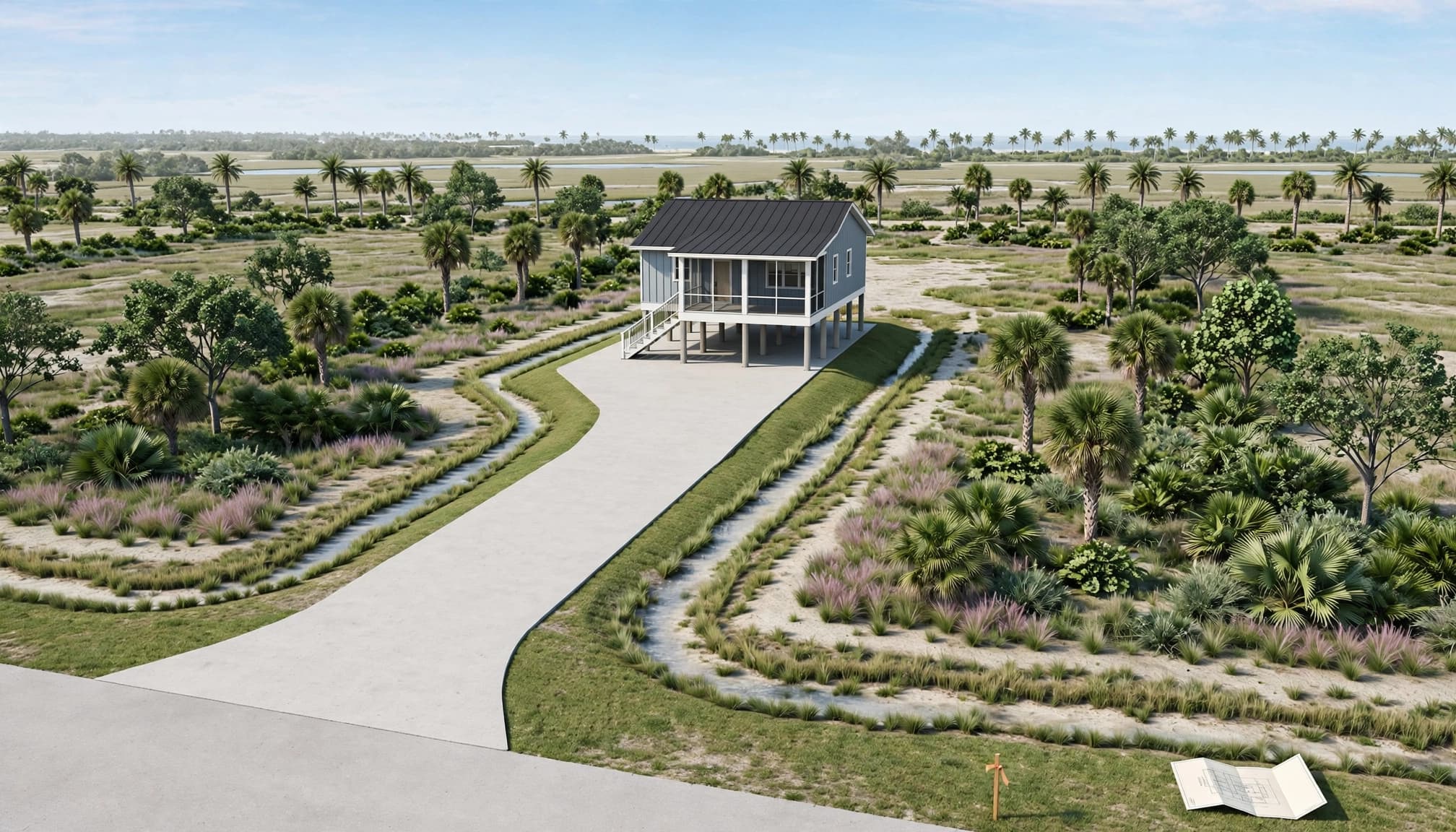
These details matter to financing because elevation work, engineering, drainage, and flood-related construction can change the project budget. Lee County's residential building guide describes local plan and floodplain considerations. Insurance needs also vary by property and policy. Florida's Department of Financial Services says wind damage should be covered subject to other policy provisions, but that doesn't establish identical coverage for every home.
Build a budget that matches the plans
A loan amount based on an early estimate can leave a gap if the approved plans later include costly site work or upgraded features. Before finalizing the financing package, align the construction contract, plans, specifications, and budget so they describe the same project.
For a Fort Myers custom home, the budget may need to account for surveys, soil or engineering work, utility service, drainage, elevation, permitting, and landscaping, in addition to construction. Include the pool and outdoor areas in the original scope if you intend to build them with the house. Adding major work later can require a revised budget, additional approval, or cash beyond the loan.
Keep a written process for change orders. A change to finishes may affect only the price, while a change to the footprint or foundation can affect plans, permits, appraisal, and timing. The lender's rules determine whether a change needs prior approval.
Frequently asked questions
Do construction-to-permanent loans require one closing?
Not always. A single-close loan uses one closing for construction and permanent financing. A two-close arrangement uses a construction loan first and a separate permanent mortgage later. The options, costs, and eligibility rules depend on the lender.
Do payments start before the home is finished?
Often, yes. Some loans require payments during construction, and some calculate them based on funds already drawn. The payment structure is set by the loan documents, so it shouldn't be assumed to be interest-only or deferred.
Can the loan cover a pool or other outdoor features?
It may, if the features are included in the approved plans, contract, appraisal, and budget. Leaving a pool or major site improvement out of the original project can make it harder to finance as part of the construction loan.
What if construction takes longer than expected?
The loan agreement governs the construction period and any extension process. A delay can affect draw timing, payment obligations, and conversion, so the builder's schedule and the lender's requirements should be coordinated from the beginning.
Choose financing around the whole project
Construction-to-permanent financing can connect staged building costs with a long-term mortgage, but approval and conversion depend on the specific lender, contract, and completed home. In Fort Myers, the parcel's jurisdiction, wind design, flood conditions, and site work can shape the plans and total budget.
The soundest financing plan is the one that reflects the home you intend to build, including its land and site costs, rather than a base estimate that leaves important work outside the scope.