Robotic vs. Pressure-Side Cleaners for Gunite Pools
Explore Our Services
Contact Us Today!
(239) 322-9295
A cleaner can cut down on daily pool work, but it can't replace brushing or balanced water chemistry. When comparing robotic vs pressure-side cleaners , the practical differences are how they move and collect debris, what your pool needs for installation, and how much upkeep each adds.
In Southwest Florida, leaves, pollen, insects, grass clippings, and storm debris can keep a pool busy. The right cleaner depends on the pool's shape, equipment, and the debris it collects most often.
Key takeaways
- A robotic cleaner may suit owners who want a separate cleaning cycle and less dependence on pool circulation.
- A pressure-side cleaner uses water pressure to move around the pool. Some models also need a booster pump or additional plumbing.
- Gunite pools still need regular brushing, water testing, and filter care, regardless of cleaner type.
- Equipment prices vary by model, and pressure-side installation can cost more if the pool needs equipment or plumbing changes.
How the two cleaner types work
The names describe how the cleaners move and collect debris. The details vary by model, so compare the equipment specifications with your pool's existing setup.
Robotic cleaners
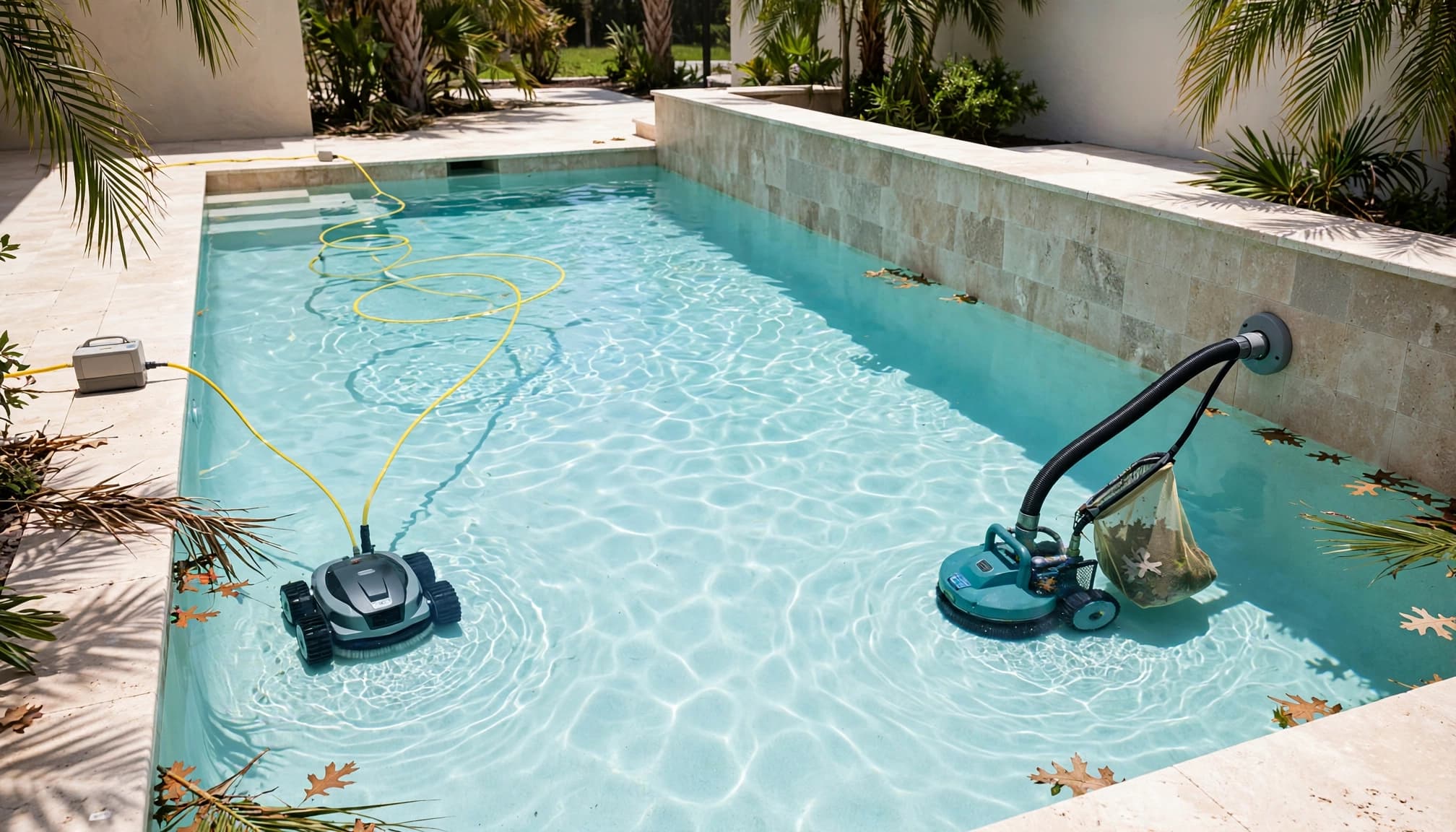
A robotic cleaner travels along the pool floor and, on models designed for it, climbs walls or cleans steps. Brushes loosen material from the surface while the unit gathers debris. Cleaning coverage and ability to handle steps, benches, and waterlines depend on the model.
The cleaner has its own operating cycle, separate from the pool's ordinary circulation schedule. That can make it convenient when you want to run cleaning without adjusting the pool's normal pump routine.
Pressure-side cleaners
A pressure-side cleaner uses water pressure to move through the pool. Depending on the design, it may run from a pool return or use a booster pump. Some models collect debris in a bag attached to the cleaner, while others route it differently.
Because pressure-side designs vary, the pool's plumbing and equipment matter. A cleaner that fits the existing system may be a straightforward choice; one that needs a booster pump can require additional work and operating expense.
Cleaning performance in everyday use
Neither type handles every pool equally well. Shape, steps, ledges, surface conditions, debris size, and cleaner programming all affect how much cleaning is done in a cycle.
Floor, wall, and detail coverage
Robotic models often offer programmed routes and, depending on the model, can scrub walls or waterlines as well as the floor. That may help in pools with broad floor areas or walls where dust and fine debris settle. However, tight corners, shallow shelves, raised features, and unusual curves can challenge some cleaners.
Pressure-side models travel under water pressure and can collect larger debris. Their path may be less predictable, and their ability to clean walls or steps depends on the specific unit. In a pool with many ledges or changes in depth, look at the cleaner's stated coverage rather than assuming all models perform alike.
Fine debris and larger leaves
Robotic filters can be suited to fine particles, but basket or filter capacity affects how often they need attention. Pressure-side cleaners can be useful when the pool collects larger leaves, though bag capacity and the debris path vary by model.
In Southwest Florida, a pool can collect both fine material and larger debris, especially after windy or rainy weather. A cleaner that handles the regular load may still need help after a storm. Skimming and clearing baskets remain useful parts of routine care.
Installation and equipment needs
Installation is one of the clearest distinctions between these systems. A cleaner that works with the existing pool layout can avoid extra changes, while a pump or plumbing addition can raise the project cost.
Robotic cleaner setup
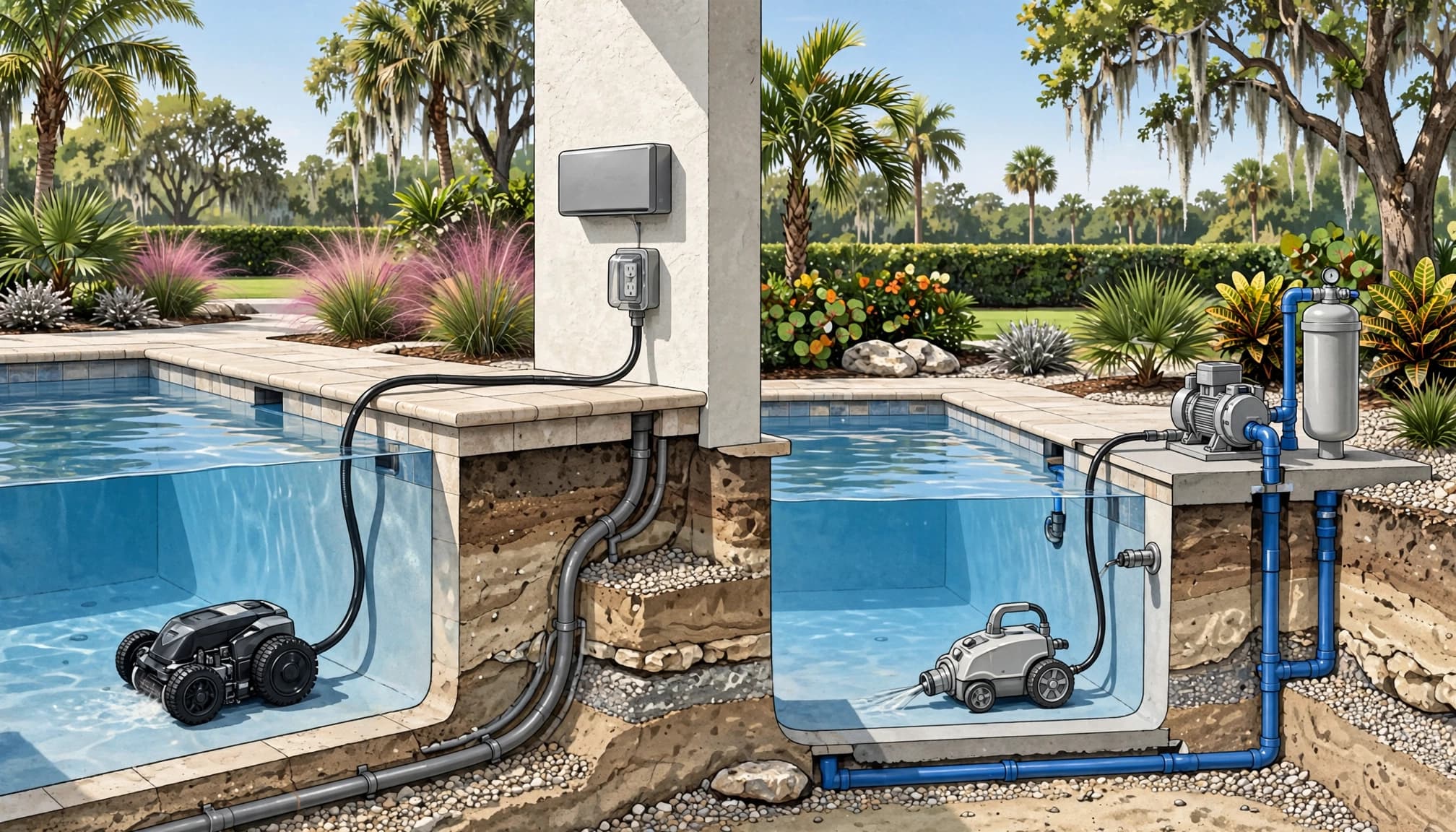
Robotic cleaners generally need access to an appropriate outdoor power source and a place for the power supply to stay dry. The cord must reach the pool without creating an obstruction across a busy deck. Pool shape and dimensions also affect cord reach and usable coverage.
For a new pool, consider the cleaner's planned storage spot and access to power while the deck and equipment layout are being designed. For an existing pool, the most convenient outlet location may not be near the point where the cleaner will be stored.
Pressure-side connections
A pressure-side cleaner connects to the pool's pressure plumbing. Some units work with existing return flow; others need a booster pump and associated plumbing. If the pool lacks the required equipment, installation may involve changes at the equipment pad or pool wall.
That work is easier to plan during construction or a major equipment upgrade than after the deck and pool finish are complete. A pool renovation is also a natural time to consider equipment changes, especially if plumbing, returns, or the equipment pad are already part of the project.
What gunite pools and Southwest Florida add to the decision
Gunite gives a pool designer flexibility in shape and features. A freeform pool, raised spa, tanning ledge, or beach entry can create more places for debris to collect and more surfaces for a cleaner to negotiate.
Surface care still matters
A cleaner helps remove debris, but it doesn't eliminate the need to brush a gunite pool. Brush the walls, floor, steps, and ledges regularly, particularly where dust and debris settle or circulation is weaker. Follow the care instructions for the pool's interior finish, since surface materials and water chemistry affect maintenance.
Balanced water also helps protect the finish. Test and adjust the water according to the pool's needs, and clean baskets and filters as part of routine care. If the finish becomes rough, stained, or discolored, a cleaner alone won't address the underlying surface issue.
Plan around local debris and pool layout
Leaves, pollen, grass clippings, and insects can collect at the surface, while heavier material settles on the floor. Nearby trees and seasonal shedding may increase the workload. Rain and wind can also bring extra debris, so a single cleaner cycle may not cover every post-storm cleanup.
Pool shape and circulation influence where floating debris travels. Curves, shelves, spillways, and corners can hold leaves outside a cleaner's path. During new pool planning, consider how skimmers, return jets, landscaping, and the cleaner will work together. Our guide to gunite pool designs for lanais and outdoor kitchens looks at how pool and outdoor living layouts fit together.
Maintenance and ongoing ownership
Both cleaner types need regular attention. The difference is in what you'll inspect, empty, rinse, and maintain after each cycle.
Robotic cleaner upkeep
Remove collected debris from the filter or basket, then rinse it as directed by the manufacturer. Check the brushes and intake for trapped leaves or other material, and store the unit in a way that protects its cord and power supply. Filter maintenance matters: a clogged filter can limit collection.
Pressure-side cleaner upkeep
Empty and clean the debris bag if the model uses one. Also inspect the hose, wheels, and moving parts for wear or blockages. If the cleaner uses a booster pump, that pump adds another piece of pool equipment to operate and maintain.
Neither cleaner replaces brushing, skimming, water testing, or routine filter care. Adjust cleaning frequency during rainy periods or when nearby trees shed heavily. After storms, clear debris from the pool and baskets before it overwhelms the cleaner.
Typical purchase and operating costs
Prices depend on features, capacity, and whether existing equipment supports the cleaner. The following are broad equipment-only U.S. retail ranges, not installed quotes.
| Cleaner type | Typical equipment price | Potential added costs |
|---|---|---|
| Robotic | About $500 to $1,500, with premium models costing more | Replacement filters, brushes, or other parts |
| Pressure-side | About $300 to $700 | Booster pump, plumbing, or electrical work if required |
A pressure-side system can cost less to buy at first, but that advantage may shrink if the pool needs a booster pump or plumbing changes. A robotic cleaner may cost more upfront, while its ongoing electricity use depends on the model and cleaning schedule.
Pump settings affect the running cost of pressure-side systems. Under comparable system conditions, reducing a variable-speed pump's speed by 20 percent can cut its power use by about 49 percent. That relationship doesn't set a fixed bill for every pool, but it shows why operating conditions matter alongside the purchase price.
Before choosing, compare the cleaner's required setup, consumable parts, and normal cycle needs. If an equipment change is already planned, include the cleaner in the wider project budget. Our pool renovation services in Southwest Florida include projects where equipment and other pool upgrades can be considered together.
Which cleaner fits your pool?
Start with the equipment you already have and the debris that causes the most work. A robotic cleaner may be a good fit if you want a separate cleaning cycle and the pool's layout suits the model's coverage. A pressure-side cleaner may make sense when the existing plumbing can support it and its debris handling matches the pool's needs.
Then consider the pool's details. A gunite pool with a complex shape, sun shelf, or raised spa calls for close attention to coverage and maneuverability. If reducing setup changes matters most, compare what each option requires at your equipment pad and deck. The right choice is the cleaner that suits the pool you have , not a category that sounds better in isolation.
Frequently asked questions
Do robotic cleaners replace brushing in a gunite pool?
No. They remove debris and may scrub surfaces, depending on the model, but regular brushing remains part of gunite pool care. Brush steps, ledges, and other areas that a cleaner may miss, and follow the interior-finish care instructions.
Is a pressure-side cleaner a good choice for leaves?
It can be, particularly when the model is designed to collect larger debris. Capacity and cleaning path differ, though, so heavy leaf fall or post-storm debris may still call for manual skimming and basket cleaning.
Which type costs less to run?
There isn't one answer for every pool. Robotic models use electricity according to their cycle and design. Pressure-side costs depend on the pool pump and, when present, a booster pump. The pool's equipment and operating schedule affect the total.
Choose for the pool, not the label
Robotic and pressure-side cleaners can both reduce routine debris cleanup, but their installation needs and upkeep differ. For a Southwest Florida gunite pool, match the cleaner to the pool's shape, plumbing, equipment, and typical debris.
Whichever you choose, keep brushing, water balance, and filter care on the schedule. A cleaner works best as one part of regular pool maintenance.